Parents, give your kids room to fail

It’s important for children to try, fail, and try again. Parents need to give them room to do that.

I’ve written before about the power of failure. How we learn our best lessons from falling down and lifting ourselves up again. As a teacher of 20 years, I encouraged my students to try new things, even if it meant feeling awkward in front of others. A few took my advice, but many did not.

It’s strange that this fear of failure is sometimes caused by well-meaning parents who seem convinced their job is to protect their child from any form of disappointment. Their kid must be happy and fulfilled every moment of the day. Children must be shielded from frustration and stress and told how great they are on a regular basis.

But what does that teach them? Imagine the 18-year-old, fresh from graduation, who was gently shepherded through school by parents who defended them against teachers who wanted the child to work harder in class, insisted the coach put them in a starting position, and asserted that the drama teacher was a dope for not giving their child the leading roll. Now, when it’s time for the kid to enter college or the business world, they have not learned to deal with criticism or disappointment. They know nothing about taking responsibility for their own actions and trying again. Then they’re lost because they should have been practicing these important lessons all their lives.
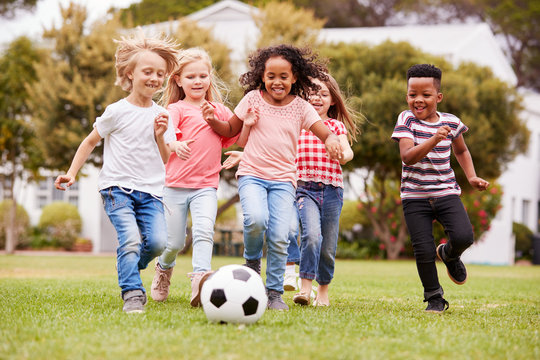
Unstructured play where children can work out their own issues is an important tool for growth.

Now, I’m not saying adults shouldn’t stand up for their children when need be. I’m just asking parents to let out the reins a little. Let your child know that failure is just another learning experience, that everyone fails, and you’re proud of them for trying.

Note that this over-protection begins early. For example, many parents often play too strong
a role in organizing children’s playtime. Perhaps if kids are given a little more latitude to interact with other children without adults hovering nearby, kids might be forced to work through difficult or uncomfortable situations themselves. They won’t always get what they want, but when they’re older, they’ll have the basics for dealing with challenging issues, which just might help them develop enough self-esteem to feel comfortable trying new things.

The bottom line is we learn little from success. I challenge you to look back on your life and remember the mistakes that changed the way you did things. With that in mind, give your kids
the freedom to fail. Ask them what they learned. Then encourage them to go back and try again.

It’s the best gift you’ll ever give them.

Anne Montgomery’s novels can be found wherever books are sold.

Goodreads

Amazon

A little tree and second chances

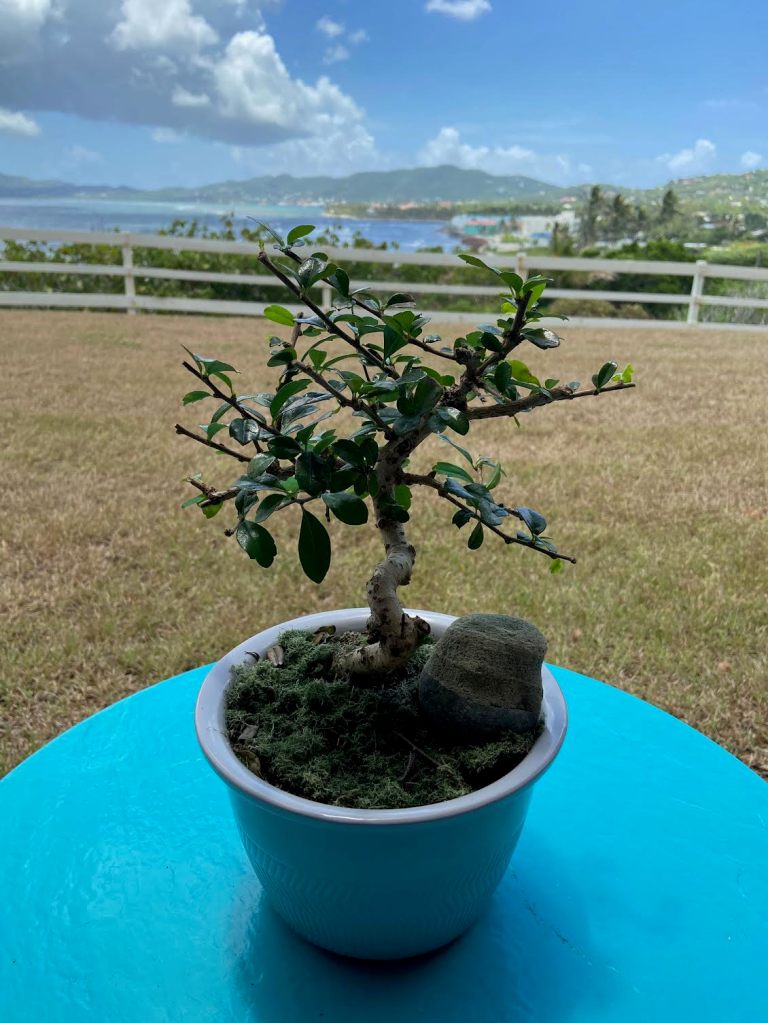
A little bonsai tree reminded me of second chances.

I have a home on the small island of St. Croix in the U.S. Virgin Islands, a place I don’t get to be very often because of family obligations.

That said…I’m a plant person. Ever since I was a little kid and my parents gave me my own small strip of ground behind the garage, I’ve marveled at the way things grow. I planted my first rock garden—rocks being my other love—when I was 12. And the interior of the many of the homes I’ve occupied during my travels through eight states always had plants pretty much everywhere.

I mention this because there are no plants in my home in St. Croix. The logic is simple, really. My sweetie pie and I haven’t been able to stay in our little place on the hillside overlooking Christiansted Harbor for more than a few weeks at a time. Whenever I would look longingly at an orchid in full bloom or some happy, glossy-leafed tropical, he’d say, “It will just die when we leave.” So, I’d gently put it back on the shelf.

Until yesterday.

I was walking through Home Depot, one of the only big-box stores on the island, where we were in the garden center looking for a new hose. Out of habit, I perused the plants and as I rounded one corner I noticed a garbage can filled to the brim. On top of that pile of dead and dying plants was a little bonsai tree in a gray ceramic pot.

I don’t know why I fished it out of the trash, but when I held it up, I noticed some brown leaves, though certainly not enough to indicate the tree was dying. I held the pot in both hands and looked around, wondering why anyone would have thrown the little tree away. Then I carried it over to Ryan. I was surprised when he didn’t remind me that we would be headed back to Phoenix in a few weeks.

I walked over to the customer service counter and was directed to a man named Dane. I explained that the tree had been dumped in the trash and wondered if, under the circumstances, he might lower the $22 sticker price. He looked at me like I was a bit odd, then pulled a black marker from his top pocket and scrawled $6 on the bottom of the pot along with his name.

When I got home, I plucked the brown leaves, checked the moisture level, and then placed the pot on the table on the porch. I must admit here that I haven’t had much luck with bonsai trees in the past, but I’m willing to give it another try. And, when I head home to Phoenix, I’ll leave it with a friend who will tend to it while I’m gone.

The bonsai seems quite happy right now. But it’s funny that sometimes when I look at it I don’t see a tree. I see second chances. I have failed and tried again on many endevours over the years, but I’m not sure I’ve always appreciated the opportunity to give things another go.

Now…I will.

Anne Montgomery’s novels can be found wherever books are sold.

Goodreads

Amazon

Of sunglasses and sports officials

For the first 20 years of my sports officiating career, I wasn’t allowed to wear sunglasses. Then things changed.

Once upon a time, no self-respecting sports official would have been caught dead wearing sunglasses. The reason? “Hey, ump, whadaya, blind?”

The simple idea that an official might be judged as having poor eyesight if they were seen sporting shades kept millions of umpires and referees squinting in the sun.

I know this because I spent 40 years officiating sports: football, baseball, ice hockey, soccer, and basketball to varying degrees, but I spent the vast majority of my officiating career out on fields calling football and baseball games. So perhaps my eye doctor’s response should not have been surprising.

He peered at my eyeballs through his ophthalmoscope. (Just wanted to sound smart there. That’s the round thingy with the little ledge that the eye doctor makes you put your chin on so he can look inside your eyes.) “You need to wear sunglasses,” he said.

“But I can’t!” I whined. “It’s not allowed.”

“What do you mean you can’t?”

“The officiating group I work for says we’re not allowed to wear sunglasses on the field.”

He moved the ophthalmoscope out of the way and sat back. “That’s ridiculous. We live in a desert. Do you want to go blind?”

I shook my head.

“Then tell your boss you want that in writing.”

While I considered that idea, I looked into how sunlight can damage our eyes. According to Web.MD, “One type of UV radiation— UVA rays—harm something in the back of your eye called the macula. It helps you see detail clearly. It’s part of the retina, which sends signals to your brain to translate light into images. The blue and violet parts of the sun’s rays can also hurt your retina.

“The front part of your eye, where your cornea and lens are, can get damaged by another type of UV radiation called UVB rays. The lens of your eye lets in light and works with the cornea to focus it on the retina.”

Sadly, the rule about sunglasses didn’t change until my eyes were already damaged.

I found a whole bunch of bad stuff sunlight can do to your eyes, things like macular degeneration, cataracts, and even eye skin cancer. Sufficiently scared, I asked my boss for a letter explaining why we weren’t allowed to wear sunglasses when officiating. “It’s for my eye doctor,” I said.

He stared at me for a few beats and then a miracle occurred. The policy was dropped and sports officials in Arizona could now wear sunglasses while working games. (I’m still waiting for a thank you from me peers.)

Sadly, the miracle didn’t happen early enough to save my eyes. When I was in my early 50s, I started having trouble seeing baseballs. One evening, while working a men’s league game, I was in the infield when a player ripped a line drive right at me. I couldn’t see the ball and took a shot in the thigh. If you’ve never been hit by a baseball, let me say it hurts. But the nasty bruise on my leg wasn’t the only outcome. I suddenly found myself uncomfortable working in the field, fearful I might get hit in the face. Then I started having trouble seeing footballs on kicks as I would lose the ball in the lights, so off to the doctor I went.

I had cataracts in both eyes. And while many people get the cloudy vision and sparkly glare caused by cataracts, mostly it happens when they’re really old. My parents had them in their eighties. Had I been allowed to wear sunglasses, I too might have gone another 30 years or so with clear vision. Instead, I had surgery on both eyes and can now see a mile or two, but the operation left me needing glasses to read.

Today, it’s common to see sports officials wearing sunglasses. The stigma is gone. That there was ever any concern about appearances seems silly and ironic, because when officials don’t wear sunglasses, they might indeed go blind.

Anne Montgomery’s novels can be found wherever books are sold.

Goodreads

Amazon

When you meet a bear, DO NOT do what I did!

There are rules one should follow when meeting a bear in the wild. I wish I could say I followed them, but I did not.

It’s tough for wildlife here in the Arizona this time of year. Especially this summer, when the heat in the southern half of the state has broken all kinds of records. We recently went 31 straight days when the thermometer rose above 110 degrees, which nearly doubled the record set 50 years ago.

But we humans mostly get to live in air-conditioning. Our wild animals do not. I mention this because despite the fact that our creatures are suited for the heat, these extremes are putting pressure on them.

A case in point: Recently, a man was sitting by his cabin in the woods drinking a cup of coffee and a black bear attacked him for no apparent reason. Both the man and the bear were killed in the altercation. Attacks by bears are extremely rare, and after a necropsy found the bear had no underlying health conditions that might have precipitated the attack, researchers were puzzled. Though the bear was well-fed, the idea now is the animal was just hunting for food, the hot, dry weather having made those searches more difficult. Bears have a great sense of smell and perhaps it was scavenging and sensed a meal at the cabin.

I bring this up because when living around bears and other wild creatures, we should know what to do when one appears. I have spent a great deal of time in wilderness areas and have always prided myself on being ready in case of an emergency. Of course, knowing what to do and actually doing it are two different things.

One day outside of Greer, Arizona, up in the White Mountains, my outdoor skills were seriously tested, and I failed miserably. Georgiemy beautiful little black-and-white collieand I got into a jam on a mountain trail. It was a spectacular blue-sky-puffy-white-clouds kind of day. The sweet scent of pine and moist forest earth permeated the air.

Georgie was a little embarrassed by her behavior, and so was I. So we never discussed our encounter again.

Then a noise made me stop and look uphill. I noticed thick vegetation swaying back and forth. My first thought was an elk, but the foliage was not very tall, so an elk would have been visible. The plants continued moving as I remained still on the narrow trail. Georgie stood beside me. I sensed it was a bear heading toward us, because I knew of no other creature that could move those plants with such force.

I’d never met a bear on foot in the wild.  My understanding was that I should make myself look as big as possible by raising my arms in the air and create a lot of noise. Most importantly, I should not run.

I thought about those things, but stood frozen. I glanced at Georgie, who sniffed the air beside me. Our eyes met. Then, to my surprise, my dog bolted back up the trail and disappeared around a rocky bend. I looked toward the swaying shrubs trying to gage the size of the animal that was approaching. I ran over the rules in my head: Stay calm. Stand upright. Make loud noises. Slowly back away. Do not run!

And what did I do?

I ran…skittering over loose stones, dodging roots and rocks. I didn’t turn around, afraid of what I might see. The famous quote from the great Satchel Paige popped into my head. “Don’t look back. Something might be gaining on you.”

I ran until I doubled over, out of breath.

Georgie was waiting for me on the trail, looking a  little guilty. Other than the thumping of my heart, the woods were quiet, only a breeze pushing through the pines.

Later, Georgie and I made our way back to civilization. Perhaps, because we were both embarrassed by our reactions, we never spoke of our encounter again.

So, the next time you’re out in nature and run into a bear DO NOT do what I did. Follow the rules and be safe. And have a chat with your dog ahead of time.

Anne Montgomery’s novels can be found wherever books are sold.

Goodreads

Amazon