Apparently, it’s never a good idea to call a Millennial on the phone

Please don’t call a Millennial! You’ll make them anxious. You should text instead.

I was watching the news the other day and there was a story about what today is proper cellphone etiquette. I have to say, I was as surprised as the two female anchors to learn what is appropriate by current standards.

“It is not okay to call someone on the phone, prior to texting,” said the guest talking-head, who was some kind of media specialist.

I, like the two anchors, said, “What?”

Yep, it seems that Millennials, as well as Gen Xers, are horrified when they receive a phone call without warning. It seems people in these age groups get flustered when they actually have to pick up the phone and mutter “Hello.”

I thought this quite strange, so I put on my old reporter’s cap to see what’s happening, and it turns out the talking-head was spot on. According to the Forbes article, “Millennials Hate Phone Calls, And They Have a Point” by Brianna Wiest, “…phone calls seem invasive because it demands an instant response. In a world where their messages, emails and DMs pile up, they are at least afforded somewhat of a buffer when given time to respond on their own terms.”

Got it! Millennials are afraid to have to make a quick decision, because the idea of having to deal with something immediately is too stressful. That had me wondering where the next generation of air traffic controllers or brain surgeons or any other career that is based on quick thinking might be coming from, but I digress.

Millennials think small talk is awkward, so a text keeps them calm.

And there’s more. The Antsy Labs article “Why Millennials Have a Fear of a Phone Call” by Alex Jeffries, points out that, “While 75% of Millennials say they’re avoiding phone calls because they’re too time consuming, there’s an even bigger reason they don’t like to talk on the phone. It turns out that, according to BankMyCell, 81% of Millennials get apprehension anxiety ‘before summoning the courage to make a call.’”

As a person who spent endless hours on the phone as a teenager without a hint of anxiety, I wonder what these young people are so afraid of. Turns out that on top of the aforementioned avoidance of decision making, they’re panicky that the person on the other end of the phone might disagree with them in some way, the idea of which is apparently appalling.

As a former teacher of 20 years, I worry that perhaps we have failed these young people in some monumental way. They are completely ill-equipped in the niceties of small talk, which they consider “awkward”, so if you want to get in contact a text or email are preferred. That way they don’t have to use that silly old skill called conversation.

Sadly, I now understand when my kids, all now in their 20s, say they are “talking to someone.” This phrase means they are texting another person who they are interested in dating, which is quite the misnomer, as there is zero talking involved. My daughter explained that this is how two people get to know one another. When I suggested coffee or a drink she rolled her eyes.

I know it makes me sound old, but I don’t understand how you can become acquainted with another person with a few lines of text. In my world we look one another in the eye and have a conversation or…pick up the phone and have a chat.

Anne Montgomery’s novels can be found wherever books are sold.

Goodreads

Amazon

My new novel! Your Forgotten Sons

Your Forgotten Sons is the story of Sgt. Bud Richardville, a soldier who served in the Graves Registration Service during World War II and who never returned at the end of the war.

I’m excited to announce that I recently signed a contract for my historical fiction novel Your Forgotten Sons. Next Chapter Publishing, the same company that released my book Wild Horses on the Salt, will publish the novel June 6th, 2024, the 80th anniversary of the storming of the beaches at Normandy: D-Day.

How did I learn about Sgt. Bud Richardville? My dear friend Gina Liparoto was facing a risky spinal surgery, one that could have left her paralyzed from the waist down. Her soldier husband— traumatized by two tours in Afghanistan and one in Iraq—was uncomfortable in hospitals, so I was tasked with being Gina’s healthcare power of attorney.

The evening before the surgery, Gina handed me a Ziplock bag containing fragile, 75-year-old letters from her Uncle Bud, a man who served in the Graves Registration Service and who never returned at the end of the war. Then she made me promise that, no matter what happened to her, I’d tell Bud’s story.

Your Forgotten Sons is a departure for me, as it’s my first book that takes place outside of Arizona. Still, I had the great fortune of studying World War II and its aftermath in depth when I went to school in Luxembourg at Miami University’s branch campus, so when I was asked to write the story, I decided to take it on.

We are currently heading into the editing phase of Your Forgotten Sons, so I have my author’s cap squarely on.

Find below a little about Bud’s story.

Your Forgotten Sons

Inspired by a true story

Anne Montgomery

Next Chapter Publishing

Release Date: June 6, 2024

Historical Fiction

Bud Richardville is inducted into the Army as the United States prepares for the invasion of Europe in 1943. A chance comment has Bud assigned to the Graves Registration Service where his unit is tasked with locating, identifying, and burying the dead. Bud ships out, leaving behind his new wife, Loryane, a mysterious woman who has stolen his heart but whose secretive nature and shadowy past leave many unanswered questions. When Bud and his men hit the beach at Normandy, they are immediately thrust into the horrors of what working in a graves unit entails. Bud is beaten down by the gruesome demands of his job and losses in his personal life, but then he meets Eva, an optimistic soul who despite the war can see a positive future. Will Eva’s love be enough to save him?

Anne Montgomery’s novels can be found wherever books are sold.

Goodreads

Amazon

The joys of home ownership: Maybe not!

I’m guessing most people would like to own a home, but maybe you should reconsider.

There’s been a lot of news lately about young people and their deep-down desire to own a home. I get it. We’ve all been raised on the hankering to have a nice house with a beautiful yard surrounded by the proverbial white picket fence. But, as with all dreams, I thought you should know, there can be a downside to home ownership.

I’m not saying this just because a few months back my air conditioner quit. I can’t say it was entirely unexpected. The old girl had been pumping out cold air for over twenty years, quite the life span for an appliance of that sort, especially when you consider I live in a desert. After she died, some nice men arrived with a crane to replace her. While I gasped as I handed over my credit card to pay that $8,200 bill, I was mollified when I remembered that all those dollars would transfer to travel points. Still, as you might expect, the total stung.

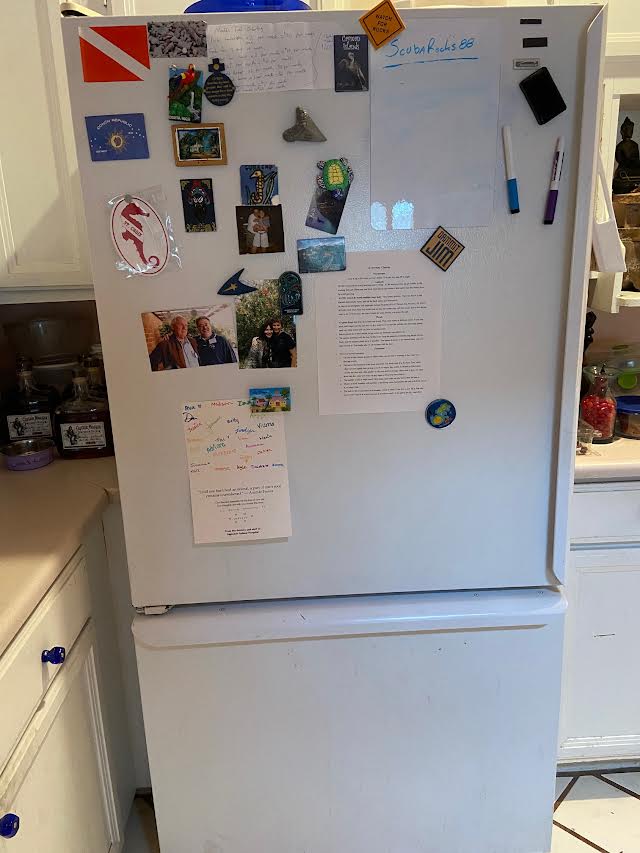
The fridge was 20 years old when it quit while we were on vacation.

Today, since we are still in the midst of the hottest summer on record here in Phoenix—we’ve had 55 days over 110 degrees so far—I have never regretted the expense. However, it’s been all downhill appliance-wise since then.

Recently, we were on vacation when our son Troy called and said the refrigerator had died. Anyone who has dealt with that particular nightmare knows it’s best to be as far from said appliance as possible if it’s been down a while. The thought of sorting through rotting fish and meat and vegetables made me glad I wouldn’t be home for a few days, so that lovely chore was left to the kid. (Thank you, Honey!)

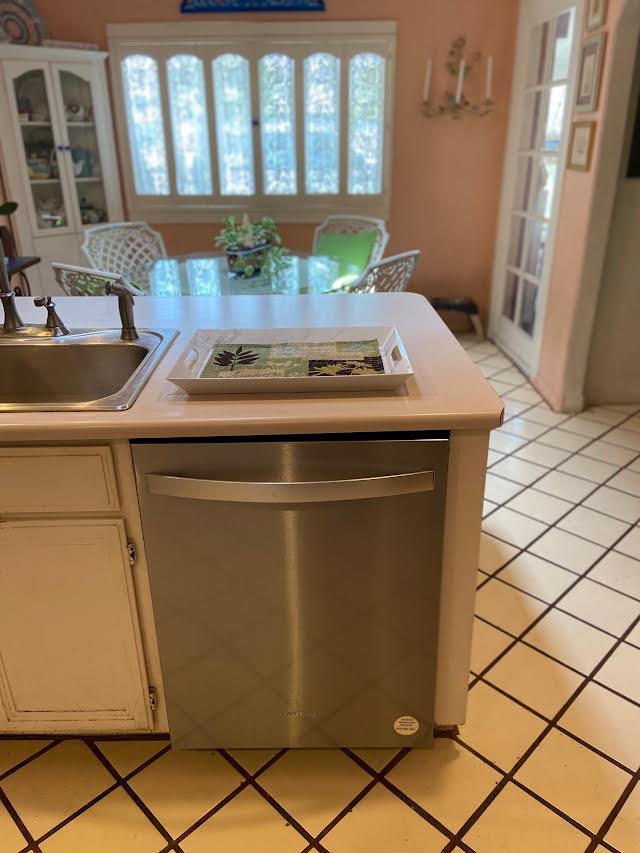
When my sweetie pie and I arrived home a few days later, imagine our surprise when we discovered the dishwasher had quit, as well. So, Ryan and I trudged off to Home Depot and handed off the credit card again, charging a little over $1,500 this time. We lived out of two coolers for a week, before the replacement fridge arrived. But the thing was damaged and had to be returned.

We now have a pretty new dishwasher to replace the one that died while we were away.

“We’ll have to order another one,” said a Home Depot supervisor. “It’ll be delivered in three weeks.”

Ryan was not amused and insisted they provide us with a loaner, which they did. But it’s a wee baby fridge and not much fits inside. Still, at the moment, it’s all we have.

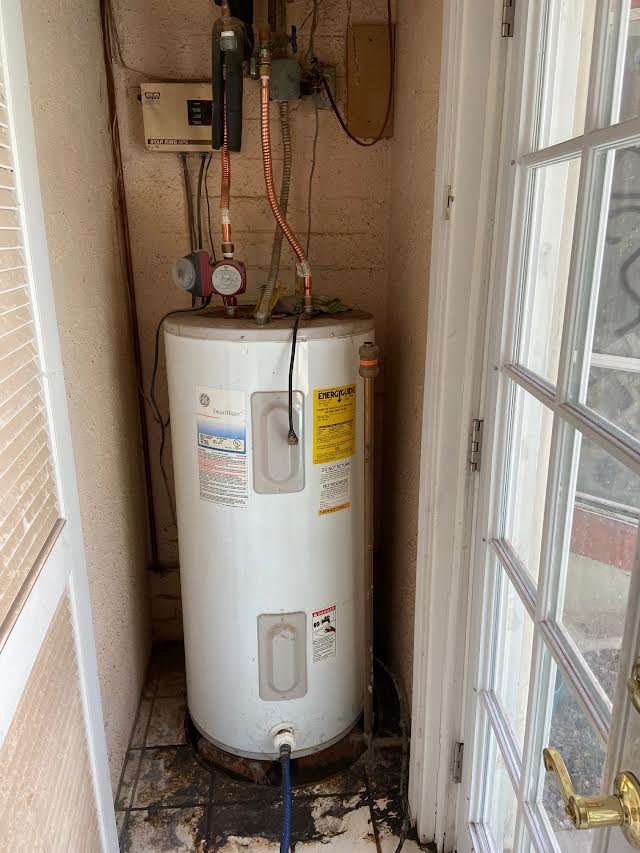
And our appliance woes weren’t over. This morning, as I was preparing brunch for week one of the NFL season, I noticed some water by the backdoor. I wondered where that moist stuff had originated— we hadn’t seen rain here in Phoenix since March 22—and was stumped, until I considered that just inside the sliding glass door was the water heater.

“It’s done,” Ry said after looking through the cobwebs at the appliance that is probably the most ignored in every home. “But the good news is it was only supposed to last seven years. We replaced it 16 years ago.”

I never gave the water heater much thought, until it died

That’s my sweetie pie! Always thinking positively.

I just watched Ry and Troy head off to find a new water heater. The good news is the baby fridge is still cold and the air conditioner is working. On the downside, the dishwasher functions, but it’s not much good without water.

The point, of course, is that all of you hopeful home owners might want to rethink that dream, because sometimes homeownership can be a nightmare.

In all honesty, right now, I’d rather be a renter.

Just sayin’.

Anne Montgomery’s novels can be found wherever books are sold.

Goodreads

Amazon

Criticism isn’t easy to take, but we should consider it a gift

“Don’t judge me!” students would often say when I was a teacher. And that always made me laugh, though not outwardly. I usually wanted to respond, “Well, of course I’m judging you. That’s what they pay me for.”

I don’t know when everyone decided that judgement was a negative thing. And before I go on, please note that I’m not talking about destructive critiques like I hate your new hair style or that dress you bought is really ugly. I’m talking about being evaluated for the work we do and our personal behaviors that might interact negatively with others.

Because of the career paths I chose, I was often criticized loudly and in public. I spent 40 years as an amateur sports official calling football, baseball, ice hockey, soccer, and basketball games where I regularly fended off angry coaches and fans who didn’t like my calls, which sometimes resulted in me needing a police escort to my car. I was also a sportscaster, and whenever I erred on TV, local writers and viewers would have a field day pointing out my stupidity.

Did these attacks hurt my feelings? Of course, they did. But I had to learn to accept the fact that I wasn’t always right, and even though the delivery method was sometimes cruel, I often realized later that those critiquing me had a point. I did make a bad call and I needed to do better.

When I was a sports official, criticism was part of my everyday life.

The fact is we need judgement if we are to grow and become better people. However, most of us bristle when someone tells us we should change.

“Very few people can take criticism graciously,” said Dr. Leon F. Seltzer in his Psychology Today article “Why Criticism is so hard to take”. “ For most of us, being criticized is uncomfortable at best — and de-stabilizing (or even devastating) at worst. The ability to take criticism in stride, it seems, is almost universally elusive.”

If you’re wondering why most of us struggle with criticism, feel free to blame the people who raised you.

“Very few parents are enlightened enough, or sufficiently skilled, to carry out the kind of “loving correction” that doesn’t end up making us hypersensitive—and therefore over-reactive—to criticism,” Seltzer said. “As a result, negative judgments we receive as adults can automatically remind us of the inadequacies we so keenly felt when criticized as a child.”

While we can’t change the past, we can consider ways to improve how we handle judgement. First, don’t take criticism personally, especially if it comes from a boss or peer. Consider the interaction an opportunity, and remember that sometimes we don’t have the full story. Pause and try to understand the other person’s point of view. Focus on what they need from you, and see if you can do something to improve the situation.

It’s also important to realize that all criticism is not created equal. Everyone is periodically faced with comments that are destructive and you should feel free to ignore those taunts. However, embracing constructive criticism, learning from it, and making improvements is one of the best ways to get ahead in the world.

Anne Montgomery’s novels can be found wherever books are sold.

Goodreads

Amazon