Mental health and the military: Isn’t it time we did better?

Sixty to 70% of military personnel do not seek mental health assistance when they need it, concerned perhaps that the knowledge will destroy their careers.

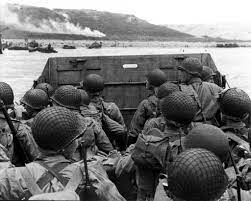
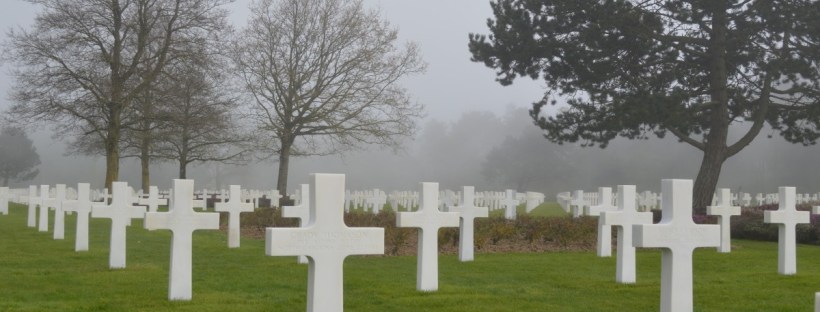
In my new novel Your Forgotten Sons, a work of historical fiction which is inspired by a true story, World War II soldiers in the Graves Registration Service are relentlessly bombarded with the horrors of war, as their job entails retrieving, identifying, and burying the dead, a breeding ground for psychological damage. No doubt, many came home with deep invisible wounds that no one acknowledged as real. And that attitude about mental illness continued until recently.

Today, with the help of many well-known individuals, the stigma has lifted, especially with athletes like Simon Biles and Michael Phelps, and artists like Lady Gaga and Dwayne “The Rock” Johnson having come forward with their own mental health issues.

Now mental health is an everyday conversation in America. Unless, of course, one is in the military. A scene in the 1970 movie Patton still resonates. Actor George C. Scott—who won an Academy Award for playing the title character—slaps a hospitalized soldier suffering from PTSD and calls him a “yellow-bellied coward.” Yes, the film is over 50 years old, still the continued denial that service people can struggle with mental illness remains.

During World War II, General George Patton slapped a soldier who was suffering from “battle fatigue”, which we now refer to as PTSD. The military response to mental illness today has not improved significantly.

But why? Dr. Jeffrey A Liberman in his Psychiatric Times article “Solving the Mystery of Military Mental Health: A Call to Action, said, “…the idea of psychological weakness is antithetical to military culture with its ethos of strength and invulnerability. Thus, military leaders were disinclined to recognize and accept the possibility of psychic injury.”

Liberman goes on to say that because mental health issues like PTSD, which “is commonly associated with functional impairment, substance abuse, suicidal ideation, impulsivity and violence,” have no visible signs and can’t be proven by diagnostic tests the military can easily ignore them.

The sad thing is the military establishment has put its collective mind to a problem in the past and good things happened. Note that 80% of severely wounded combatants prior to the first World War I died. Today, 80% survive. So why can’t they put that same positive effort behind helping military personal suffering from mental illness?  

The United States Department of Veterans Affairs says an average of 20 veterans die by suicide daily. In the United Service Organizations article “Military Suicide Rates Are at an All-Time High; Here’s How We’re Trying to Help” Danielle DeSimone wrote, “Suicide rates among active-duty military members are currently at an all-time high, since record-keeping began after 9/11 and have been increasing over the past five years at an alarmingly steady pace…For military families and parents, whose active duty loved one already sacrifice so much to protect our freedom, this trend is extremely troubling.”

Sadly, it’s estimated that 60 to 70% of military personnel who experience mental health issues don’t seek help, fearing their careers will be in jeopardy if their commanding officers find out.

Isn’t it time we did better?

Your Forgotten Sons

Inspired by a true story

Anne Montgomery

Bud Richardville is inducted into the Army as the United States prepares for the invasion of Europe in 1943. A chance comment has Bud assigned to a Graves Registration Company, where his unit is tasked with locating, identifying, and burying the dead. Bud ships out, leaving behind his new wife, Lorraine, a mysterious woman who has stolen his heart but whose secretive nature and shadowy past leave many unanswered questions. When Bud and his men hit the beach at Normandy, they are immediately thrust into the horrors of what working in a graves unit entails. Bud is beaten down by the gruesome demands of his job and losses in his personal life, but then he meets Eva, an optimistic soul who despite the war can see a positive future. Will Eva’s love be enough to save him?

Release Date: June 6, 2024

Pre-Order your copy today

Amazon

Apple Books

Barnes & Nobel

Google Books

Kobo

Review a copy early by going to NetGalley. Sign in here.

Bookstores, libraries, and other booksellers can order copies directly from the Ingram Catalog.

Anne Montgomery’s novels can be found wherever books are sold.

Goodreads

Amazon

Why Your Forgotten Sons is necessarily gruesome

Approximately 73,000 Allied troops died during the Battle of Normandy. Did you ever wonder where all the bodies went?

There’s no way to sugarcoat it. My new historical fiction novel Your Forgotten Sons, which will be released on June 6, 2024 in honor of the 80th anniversary of D-Day, is necessarily gruesome. For those who have seen the first 24 minutes of Saving Private Ryan, or Apocalypse Now, or the more recent 1917, the violence of war is hard to ignore.

But can there be too much carnage in our artistic representations of battle? That probably depends on who you ask. I sense many young people, raised on bloodbath video games like Resident Evil, Mortal Combat, and Grand Theft Auto, might not find the graphic vestiges of war a big deal. Yet today’s average TV viewer—sheltered from the actual violent aftermath of crimes and war and natural disasters by anchors who warn them that “the following video might be disturbing” only to see anything remotely upsetting blurred out on the screen—perhaps might disagree.

The problem for me was trying to mitigate the horrors those in the Graves Registration Service experienced in World War II without discounting the morale-destroying realities of the consequences of battle. The job of the GRS was simple but ghastly: retrieve, identify, and bury the dead. Think about that for a minute.

For Sergeant Bud Richardville and his men who served in the GRS during the invasion of Normandy, the incredible brutality of the Battle of the Bulge, and beyond, their jobs were no doubt horrifying. It’s interesting, I think, that the efforts of these soldiers who labored to literally piece fallen soldiers back together to discern who they were in life and then lay them to rest in the elegant cemeteries they built, have been dismissed from history. Don’t believe me? When was the last time you even caught a glimpse of anyone in a movie caring for the dead. I’m guessing almost never, as war movies are about shooting and exploding bombs, fast-moving tanks and fighter planes, but rarely about the carnage left behind.

Not surprisingly, those who’ve served in the GRS have the highest rates of post-traumatic stress disorder in the military, psychological pressure that follows them the rest of their lives. And yet, they have rarely gotten praise for the grueling duties they performed. I read one startlingly sad description of a convoy of GRS soldiers who drove down a road in France where they encountered a unit of American soldiers. When those troops realized it was GRS men bearing the dead in their trucks, the soldiers turned their backs and looked away.

Initially, my goal in writing Your Forgotten Sons was to tell the story of Bud Richardville and his service to our country. But in the end, I wanted to shine a light on all the unsung heroes who toiled in the Graves Registration Service, who, despite the horrors of the tasks they were assigned, did their jobs with grace and honor.

Your Forgotten Sons

Inspired by a true story

Anne Montgomery

Bud Richardville is inducted into the Army as the United States prepares for the invasion of Europe in 1943. A chance comment has Bud assigned to a Graves Registration Company, where his unit is tasked with locating, identifying, and burying the dead. Bud ships out, leaving behind his new wife, Lorraine, a mysterious woman who has stolen his heart but whose secretive nature and shadowy past leave many unanswered questions. When Bud and his men hit the beach at Normandy, they are immediately thrust into the horrors of what working in a graves unit entails. Bud is beaten down by the gruesome demands of his job and losses in his personal life, but then he meets Eva, an optimistic soul who despite the war can see a positive future. Will Eva’s love be enough to save him?

Release Date: June 6, 2024

Pre-Order your copy today

Amazon

Apple Books

Barnes & Nobel

Google Books

Kobo

Review a copy early by going to NetGalley. Sign in here.

Anne Montgomery’s novels can be found wherever books are sold.

Goodreads

Amazon

Taking license with setting: France becomes Luxembourg

Though I wanted to go to Europe to follow in the footsteps of Sergeant Bud Richardville, the pandemic made travel impossible.

When I first accepted the responsibility for telling the story of Sergeant Bud Richardville and his work in the Graves Registration Service during World War II, I intended to follow his footsteps, beginning with the area north of London where he was stationed in a castle as the Allied forces prepared for D-Day. I wanted to walk the beaches of Normandy and the forests of the Ardennes where the Battle of the Bulge was waged. And I wanted to visit the American Cemetery in Épinal France where Bud was laid to rest following his strange death near the end of the war.

But as I was considering my plans, a worldwide disruption occurred. The Covid-19 pandemic shut everything down and all of us in, leaving travel out of the question.

I have never written a book without studying the locations involved firsthand, an effort to capture the sights and sounds and smells of a story, so my initial thought was to put off writing the book until a later date. But as the lockdown dragged on, Bud’s story lured me in, almost demanding to be told.

So…I began writing, but every time I needed what I call “color”—meaning what Bud might have seen and sensed—I had to pause, because I had no notes reminding me of the color of the landscape or the smells in the air or the feel of crossing the English Channel.

Then, after a long period of frustration, I realized that I already had memories that would work in the telling of Bud’s story, recollections of my time living in the tiny country of Luxembourg. I was attending Miami University in Oxford Ohio when, near the end of my sophomore year, I passed a table in the student center. Glossy photos of castles, and rivers, and and rolling green hillsides were displayed, advertising the school’s small branch campus in Luxembourg. I was entranced!

Luxembourg is one of the most beautiful countries in Europe, and though I originally had no factual evidence that Sergeant Bud Richardville was deployed there, I made the country the backdrop for some of the scenes in my World War II historical novel Your Forgotten Sons.

I would spend six months living and studying in that small country, where in one day you could board a train for breakfast in France, have dinner in Belgium, then late-night drinks in Germany. The more I thought about my travels from my base in Luxembourg, the more I realized that I had perhaps already overlapped Bud’s trail.

Note that Bud’s military records were destroyed along with those of 80% of Army servicemen and women who were discharged between 1912 and 1960 in a fire in St. Louis in 1973, so the only way I was able to track him was through the postmarks on the fragile letters that were saved by his family and entrusted to me. Those stamps showed that Bud was most likely in England, France, Belgium, Germany, and Czechoslovakia.

Still, it made sense that Bud might have also been in Luxembourg, since the Luxembourg American Cemetery—built by the GRS and today holding over 5,000 American war dead—is located just outside the capital city. And so, though I had no physical evidence that Bud was actually in Luxembourg, I placed him there.

Then, just as the book was going to press, Gina—Bud’s niece and the driving force behind the book—sent me an obituary about Bud that had appeared in his hometown newspaper. It read, “He landed in France on D-Day and was with Hodge’s First Army as a member of the 606th Graves Registration Company. Action took him from France to Luxembourg, Belgium, Czechoslovakia, and Germany.” And there it was. Proof that Bud had been in Luxembourg.

Your Forgotten Sons will be launched June 6, 2024 in honor of the 80th anniversary of D-Day.

Your Forgotten Sons

Inspired by a true story

Anne Montgomery

Bud Richardville is inducted into the Army as the United States prepares for the invasion of Europe in 1943. A chance comment has Bud assigned to a Graves Registration Company, where his unit is tasked with locating, identifying, and burying the dead. Bud ships out, leaving behind his new wife, Lorraine, a mysterious woman who has stolen his heart but whose secretive nature and shadowy past leave many unanswered questions. When Bud and his men hit the beach at Normandy, they are immediately thrust into the horrors of what working in a graves unit entails. Bud is beaten down by the gruesome demands of his job and losses in his personal life, but then he meets Eva, an optimistic soul who despite the war can see a positive future. Will Eva’s love be enough to save him?

Release Date: June 6, 2024

Pre-Order your copy today

Amazon

Apple Books

Barnes & Nobel

Google Books

Kobo

Review a copy early by going to NetGalley. Sign in here.

Anne Montgomery’s novels can be found wherever books are sold.

Goodreads

Amazon

Finding Bud: Following a damaged trail

When my dear friend Gina Liparoto asked me to tell the story of her uncle “Bud” Richardville, a soldier who served in the Graves Registration Service in World War II, I didn’t realize the difficulties I would face in ferreting out who Bud was and what had happened to him.

The years leading up to Bud’s service in the U.S. Army, as well as his marrige to the enigmatic Lorraine, were pieced together in part thanks to the memories of surviving family members. Gina, who grew up hearing stories about her mother’s rakish older brother, contributed accounts of Bud’s poverty-stricken youth in Vincennes Indiana, where the Great Depression had yet to retract it’s spidery reach.

Gina also provided me with a packet of letters that Bud had written to relatives and which had been lovingly protected over the years, writings that helped me glimpse the man who never came home.

The big problem came when I tried to track Bud’s trail through the carnage of World War II. My first thought was to locate Bud’s military records, but I soon discovered that in 1973 a massive fire raged through the National Personnel Records Center in St. Louis, destroying approximately 17 million official military personnel files. The records for servicemen and women who had been discharged between 1912 and 1960 were wiped away, the flames consuming 80% of the Army’s archives.

My only option for discovering where Bud’s service took him was through the postmarks on his fragile letters, which listed the dates and locations from which the mail was sent. While the process was probably not exact, I was able to confidently follow Bud through his induction at Camp Warren in Wyoming, his posting outside of London as he and the other Allied troops waited for D-Day, and the horrors of the landing at Normandy. Though censors forbade the discussion of anything war-related in letters home, those postmarks indicated that Bud was most likely at the Battle of the Bulge, at multiple locations throughout France and Germany, and with General George Patton on his charge to liberate Czechoslovakia from the Nazis.

During my research, I could find almost nothing written about those who served alongside Bud in the GRS, where men were tasked with locating, identifying and burying the dead, their efforts—with the exception of the elegant cemeteries they left behind—seemingly ignored by history. Then, I discovered the eyewitness account of Lt. Col. Joseph James Shomon, who, as a captain, served two years in the GRS in the European Theater and wrote about his experiences in the book Crosses in the Wind. I will be forever grateful for Shomon’s memories which allowed me to see those in the GRS clearly. Ultimately, I took literary license with some of the situations in which I placed Bud and his men by utilizing the events Shomon shared.

Though Your Forgotten Sons tells the story of Bud Richardville, it is my hope that readers will remember all those who toiled in the GRS, soldiers who worked tirelessly to gave the fallen the respect and honor they deserved as they were gently laid to rest.

Your Forgotten Sons

Inspired by a true story

Anne Montgomery

Bud Richardville is inducted into the Army as the United States prepares for the invasion of Europe in 1943. A chance comment has Bud assigned to a Graves Registration Company, where his unit is tasked with locating, identifying, and burying the dead. Bud ships out, leaving behind his new wife, Lorraine, a mysterious woman who has stolen his heart but whose secretive nature and shadowy past leave many unanswered questions. When Bud and his men hit the beach at Normandy, they are immediately thrust into the horrors of what working in a graves unit entails. Bud is beaten down by the gruesome demands of his job and losses in his personal life, but then he meets Eva, an optimistic soul who despite the war can see a positive future. Will Eva’s love be enough to save him?

Release Date: June 6, 2024

Pre-Order your copy today

Amazon

Apple Books

Barnes & Nobel

Google Books

Kobo

Review a copy early by going to NetGalley. Sign in here.

Anne Montgomery’s novels can be found wherever books are sold.

Goodreads

Amazon