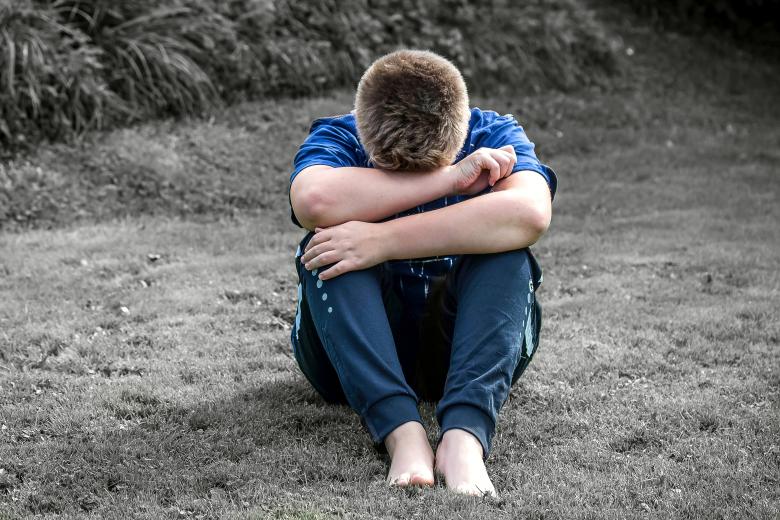
I’ve been thinking about social-emotional learning lately and wondering what all the fuss is about. I say this as a person who entered the classroom at 45 with little understanding of my job.
I became a teacher following a reporting career where absolute professionalism was required 100% of the time: dependability, competence, punctuality, and strong communication skills were compulsory every minute of every day. So it’s perhaps not surprising that I required the same of my high school students. I truly believed I was preparing them for the “real world” and had no doubts about holding them accountable.
When a colleague pulled me aside and pointed out that I was dealing with children and could perhaps be a bit nicer, I scoffed. That most of my students hated me was obvious, still I believed I was right.
I finally began to understand the day I dragged a habitually late student from my first period class. As I was lecturing him about how he would fail in life if he couldn’t manage to be on time, he stared at his shoes. Then the 14-year old stared up at me. “I’m so sorry, Ms. Montgomery. I had to sleep on my uncle’s couch last night and I don’t understand the bus system from there. And I don’t know where I’m going to sleep at night and…”
And…that’s when the lightbulb went off. I was haranguing a homeless child. I instantly realized that punctuality and school work might certainly take a backseat when one is homeless. Note here that I taught in a Title I school where the vast majority of my students lived in poverty, so many dealt with hunger, abuse, gangs, neglect, foster care and all of the other ills that often live in that realm.
And what does this have to do with social-emotional learning? Everything. A child in stress needs both physical and emotional assistance. At my school we fed hungry children and provided clothing, shoes, back packs, and toiletries to those in need. We also listened. I made it a point to get to know all of my students to determine if there was anything I could do to make them more comfortable in the classroom. And, when my limited skills were not enough, I called in our social worker, who worked tirelessly behind the scenes helping kids in crisis.
So, while the role of a teacher is to impart subject matter to students, we can’t do that effectively unless children are able to manage the stresses in their lives. We have to help them acquire the skills and understanding to manage the many emotions they face in healthy constructive ways. Because if we don’t, some might give in to despair and one day pick up a weapon.
And that is social-emotional learning.
So tell me, please, why do so many people think this process is inherently evil?

Wolf Catcher
Anne Montgomery
Historical Fiction
In 1939, archeologists uncovered a tomb at the Northern Arizona site called Ridge Ruin. The man, bedecked in fine turquoise jewelry and intricate bead work, was surrounded by wooden swords with handles carved into animal hooves and human hands. The Hopi workers stepped back from the grave, knowing what the Moochiwimi sticks meant. This man, buried nine hundred years earlier, was a magician.
Former television journalist Kate Butler hangs on to her investigative reporting career by writing freelance magazine articles. Her research on The Magician shows he bore some European facial characteristics and physical qualities that made him different from the people who buried him. Her quest to discover The Magician’s origin carries her back to a time when the high desert world was shattered by the birth of a volcano and into the present-day dangers of archeological looting where black market sales of antiquities can lead to murder.
Bookstores, libraries, and other booksellers can order copies directly from the Ingram Catalog.
Anne Montgomery’s novels can be found wherever books are sold.


 Author Anne Montgomery
You know, the school system should be rigged in a child’s success not failure, including social-emotional learning. Thank you for sharing your experience, Anne. Your words are worth their weight in gold. Cheers!
LikeLike
Thank you, Sharon! I hope more people learn that social-emotional learning is a necessary component of teaching.
LikeLiked by 1 person
As a medical student I had residents tell me, “ look there’s some patients who just don’t care enough about their health to keep there appointments”. As I practicing physician I looked a little deeper and learned how hard it is to make the bus schedule work to get your kids to school and make it to your fasting lab tests. So much we never know about the challenges other face just to make their lives work.
Thanks for sharing this.
Get Outlook for iOShttps://aka.ms/o0ukef
LikeLike
You’re welcome, Sherm. I wish it hadn’t taken me so long to catch on. I wasted a few years in the beginning of my teaching career. I worry sometimes that I could have helped more than I did.
LikeLike