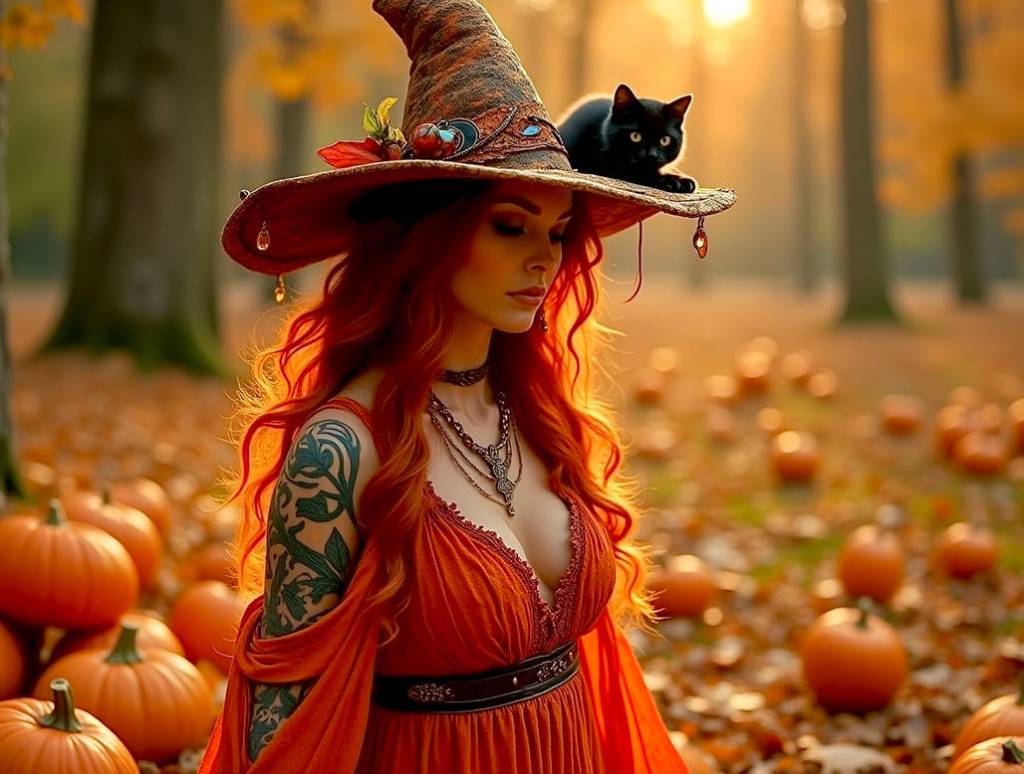
While I sometimes worry about our turbulent times, I often reflect on the fact that things could be significantly worse. Consider the late 1700s, for example, when I probably would have been running for my life. My crime? I’m a ginger. In fact, the first thing the doctor said to my mother as I was zooming out of the womb—I say zooming because I came precariously close to being born in the backseat of a cab—was, “It has red hair!”
We who are gingers were considered rather suspect several centuries back, the bright hue of our locks sparking ideas that we might consort with the devil in our spare time. While there are no exact records, it’s estimated that many thousands of gingers were executed between the 16th and 18th centuries.
But we redheads were not the only ones targeted as witches, and another motive for securing one’s neighbor to a stake for a barbeque might surprise you. While the usual religiosity sparked witchy rumors, many of the accusations were of a more fiscal variety. The vast majority of those accused of sorcery were, of course, women. No surprise there. But many were widows. It seems that back then women could only own property if they inherited it from their husbands, and sometimes they held the titles to nice farms and shops and maybe the local pub, possessions that sparked envy in others in the community. So, if one could get say an impressionable young girl to swear that a woman had tried to bewitch her, the pitchforks came out in force. When said witch was convicted and executed, her property was taken by the authorities and offered for sale. Hummm?
You’re probably wondering, in the absence of convincing testimony, how the locals could prove a woman was a witch. My favorite was the old tie-her-up-and-throw-her-in-the-water test. It seems the defendant was bound and heaved into the nearest stream or lake where the townsfolk stood and watched…waiting. If the woman in question managed to undo her bonds and escape, she was clearly guilty and would be burned at the stake. As for the ones who drowned, they were pronounced innocent of practicing witchcraft with the locals giving themselves an oopsy.
I suppose I shouldn’t worry about any of this, as my red locks have faded and no longer stand out. But there’s also the issue of freckles that some believe are “witch’s marks”, so called evidence that I’ve made a pact with Satan. Gosh! There’s no hiding those. (Note here that I prefer to think of my freckles as chocolate chips, but I digress.)
And then there’s the black-cat thing. While I’m currently down to one such kitty, I’ve had a bunch over the course of my life. But you non-cat folks shouldn’t feel too smug because you’re not out of the haunted forest yet. It was once believed that anyone with a pet of any kind was suspected of sorcery.
Then there are those of us who exhibit clearly nonconformist behavior. I’ve spent my whole life speeding down that particular highway: sports reporter, umpire, referee. If there was a place I didn’t fit in, I’d find it and set up housekeeping.
Under the circumstances, I’m glad I live in today’s world where people are kind and accepting and give one another the benefit of the doubt.
Oh, wait.

Wolf Catcher
Anne Montgomery
Historical Fiction
In 1939, archeologists uncovered a tomb at the Northern Arizona site called Ridge Ruin. The man, bedecked in fine turquoise jewelry and intricate bead work, was surrounded by wooden swords with handles carved into animal hooves and human hands. The Hopi workers stepped back from the grave, knowing what the Moochiwimi sticks meant. This man, buried nine hundred years earlier, was a magician.
Former television journalist Kate Butler hangs on to her investigative reporting career by writing freelance magazine articles. Her research on The Magician shows he bore some European facial characteristics and physical qualities that made him different from the people who buried him. Her quest to discover The Magician’s origin carries her back to a time when the high desert world was shattered by the birth of a volcano and into the present-day dangers of archeological looting where black market sales of antiquities can lead to murder.
Bookstores, libraries, and other booksellers can order copies directly from the Ingram Catalog.
Anne Montgomery’s novels can be found wherever books are sold.


 Author Anne Montgomery
Actually, having red hair was reserved for the gods and goddesses, according to some research I did, so the Egyptians looked down on regular humans with red hair. Jealous, much? LOL! Great post, Anne. Love this kind of history. Bet we were a couple of witches in a past life together. Oh, the trouble we probably got into! Wink.
LikeLike
I agree, Sharon, they were all just jealous. I do think it’s interesting that wealthy Romans often purchased redheaded slaves to show how well off they were, as those slaves cost a lot of money. So, apparently, some people liked us. 😉
LikeLike