What am I thankful for? The gift of curiosity

As often happens this time of year, we are called upon to consider that for which we are thankful. And while I am of course grateful for family and friends and a roof over my head and food in the fridge, I’ve been leaning toward adding to that list, and it’s something that might come as a surprise.

Curiosity.

When I was a teacher, part of my job was helping teenagers prepare for the future. “What do you like to do?” I’d ask, hoping to steer them toward planning for a profession they might enjoy. But way too frequently, the answer would be, “Nothing.”

“How about sports?” I’d press. “Or hobbies?”

“Sleeping.”

I would try not to roll my eyes.

“Shopping!” many girls would pipe up.

These conversations routinely frustrated me, because I liked to do so many things. In fact, I still do. Which got me wondering why I run out of fingers when counting up subjects I find fascinating and why many of my students did not.

Turns out the answer is curiosity, something all humans are said to have in varying degrees. According to a Columbia University/Zuckerman Institute study, At its core, curiosity evolved as a survival mechanism. It encourages living things to explore their environment, learn what is safe, and find resources.”

Consider ancient hunter-gatherers who came across an unfamiliar plant. I’m sure the puzzled about whether it was eatable, good for healing, or useful in construction of some kind. And so the experimentation began. Thanks to curiosity, they might have located something that could potentially enhance their survival.

Jacqueline Gottlieb, a PhD and lead investigator of the study, explained that humans can be curious even without the possibility of obvious rewards. “Curiosity entails a sort of enthusiasm, a willingness to expend energy and investigate your surroundings. And it’s intrinsically motivated, meaning that nobody is paying you to be curious; you are curious merely based on the hope that something good will come when you learn.”

Which had me wondering again why some of us seem to be innately curious and others are not. It turns out that curiosity is a skill, one we can learn and improve upon. But how do we do that?

This is where parents and teachers come in. We can encourage young people to develop curiosity in numerous ways. We can model curiosity by wondering aloud. “Wow! That shooting star was beautiful! Where do you think it came from?” or “Why do you think ancient people built those pyramids?”

We can take children to museums and libraries, parks and natural habitats, and let them explore, noting what they might be instinctively drawn to, subjects we can build on. For example, I’ve been a rock collector since I was in elementary school—I have about 400 specimens in my living room alone— a hobby that often prompts the question, “Why?” I finally realized it was those trips to the Museum of Natural History in New York where I was fascinated by the gem and mineral collection, and the camping trips where I’d find rocks strewn in forests and streams. Note that when I was 12, my parents gave me a geology science kit for Christmas, containing, among other things, a book with colorful pictures of rocks, a tiny hammer, and a collection of mineral samples. I was charmed. Perhaps today I would not be a rock collector, a hobby that gives me immense joy, had my parents not exposed me to them at such an early age.

I’m hoping my grandson Adrian might one day love rocks as much as I do.

I realize in today’s frantic world some parents just don’t have the time to explore with their children, so supporting such efforts at school could be the answer. Those field trips you might recall from your youth were learning experiences chosen to broaden your horizons, events to prompt questions, and, yes, boost curiosity.

And while we must do our best to instill a sense of curiosity in the generations that follow, we shouldn’t forget ourselves. I’ve learned that, as we age, we are often no longer able to do some of the things we love, which is why it’s so important to be curious. We should never stop looking into new subjects and hobbies. Nor should we forget that “Why?” is a beautiful gift, one for which we should all be thankful.

Wolf Catcher

Anne Montgomery

Historical Fiction

In 1939, archeologists uncovered a tomb at the Northern Arizona site called Ridge Ruin. The man, bedecked in fine turquoise jewelry and intricate bead work, was surrounded by wooden swords with handles carved into animal hooves and human hands. The Hopi workers stepped back from the grave, knowing what the Moochiwimi sticks meant. This man, buried nine hundred years earlier, was a magician.

Former television journalist Kate Butler hangs on to her investigative reporting career by writing freelance magazine articles. Her research on The Magician shows he bore some European facial characteristics and physical qualities that made him different from the people who buried him. Her quest to discover The Magician’s origin carries her back to a time when the high desert world was shattered by the birth of a volcano and into the present-day dangers of archeological looting where black market sales of antiquities can lead to murder.

Universal Book Link

Amazon

Apple Books

Barnes and Noble

Google Books

Rakuten Kobo

Bookstores, libraries, and other booksellers can order copies directly from the Ingram Catalog.

Anne Montgomery’s novels can be found wherever books are sold.

Goodreads

Amazon

The legacy of painter Bob Ross

I opened my desk drawer recently and noticed a palate of paints and a book of canvas paper. I bought them a while back believing I would learn to paint, spurred by one of those TV artists who ever so gently instructed me on the simple nuances of painting a landscape. It wasn’t the famously coiffed Bob Ross, still like the legendary TV oil painter known for his warm delivery and the of-course-you-can-do-it attitude, I was encouraged to believe that I too could paint like Monet or van Gogh.

As anyone who’s ever watched those shows can attest, that will never happen. And yet, some estimates say Ross’s program, The Joy of Painting, at its peak attracted up to 80 million viewers worldwide on a daily basis when it was broadcast on almost 300 PBS stations from 1983 to 1994. And the funny thing is, it’s suspected that the vast majority of those viewers never picked up a paintbrush.

So, why watch? There are a number of theories. One is the Zen-like quality of the show. Ross’s soothing voice and messages of self-confidence charmed his audience, especially when a splat of paint would go awry and he would correct what he called a “happy accident”, leaving the landscape even lovelier than before.

Ross could produce an oil painting in 27 minutes, and yet his show was a calm island in a frenzied world. Today, long after his death in 1995, Ross remains a popular icon, with his show appearing on YouTube and Twitch, where a whole new generation of viewers are succumbing to his quiet demeanor and colorful strokes, paintings that evoke feelings of tranquility and peace.

It’s interesting that few believe Ross was a great artist. However, his idea that anyone could be a painter endeared him to many. If you don’t believe me, watch one of his shows and tell me whether, at the end, you feel that twitch to grab a paintbrush, since Ross made it all seem so easy. And his fans loved him for that.

I have been thinking about Ross because three of his pieces went up for auction recently where those “not so great” paintings garnered over $600,000—more than twice as much as pre-sale estimates—funds that will go directly to public broadcasting stations, which are suffering from the government’s recent funding cuts. And there are 27 more Ross paintings going on the block, a boon for public television that needs all the help it can get.

I can’t bring myself to discard those painting supplies in my drawer. Maybe, someday, I’ll sit down, take a breath, watch Bob Ross work his magic, and be inspired.

I’ll let you know how it goes.

Wolf Catcher

Anne Montgomery

Historical Fiction

In 1939, archeologists uncovered a tomb at the Northern Arizona site called Ridge Ruin. The man, bedecked in fine turquoise jewelry and intricate bead work, was surrounded by wooden swords with handles carved into animal hooves and human hands. The Hopi workers stepped back from the grave, knowing what the Moochiwimi sticks meant. This man, buried nine hundred years earlier, was a magician.

Former television journalist Kate Butler hangs on to her investigative reporting career by writing freelance magazine articles. Her research on The Magician shows he bore some European facial characteristics and physical qualities that made him different from the people who buried him. Her quest to discover The Magician’s origin carries her back to a time when the high desert world was shattered by the birth of a volcano and into the present-day dangers of archeological looting where black market sales of antiquities can lead to murder.

Universal Book Link

Amazon

Apple Books

Barnes and Noble

Google Books

Rakuten Kobo

Bookstores, libraries, and other booksellers can order copies directly from the Ingram Catalog.

Anne Montgomery’s novels can be found wherever books are sold.

Goodreads

Amazon

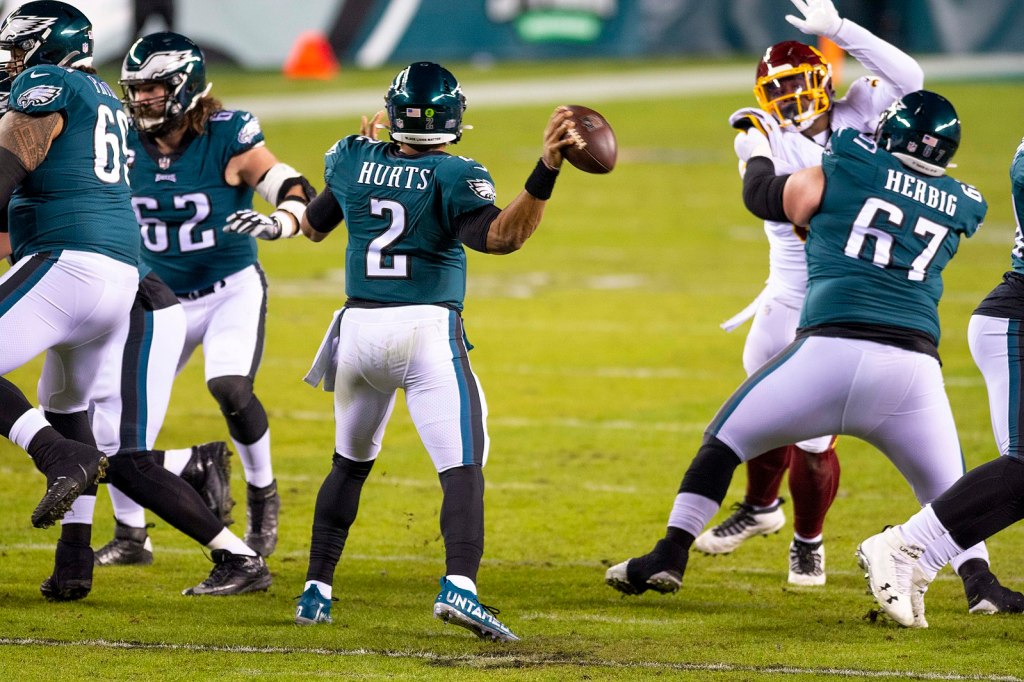
TV football coverage could be better: Here’s how!

While I love watching football the broadcasts need some updating. (Photo Courtesy All-Pro Reels Photography)

I love football, but I think broadcasts could be improved on various fronts.

First, I realize those in charge are in a collective tizzy to shorten games. It seems younger folks don’t have the attention spans needed to stick around for anything longer than the average Instagram reel, so keeping them engaged is a monumental issue. In case you’re wondering, studies show that Gen Zers and Millennials can stay focused eight  and 12 seconds respectively, while Baby Boomers can pay attention for between 25 and 30 minutes. (Talk among yourselves.)

Since we older folks are dying off,  the NFL has been scrambling to make rule changes regarding timing and game pace, all to keep broadcasts under the golden three-hour mark. (Not sure why that’s the sweet spot, but there you have it.) Clearly, dumping some of the commercials might help, but I’m guessing that’s the last thing the league wants to do.

With all this in mind, the NFL decided that those pesky officials were not capable of speedily determining whether the ball had reached the line to gain. So, the guys on the sidelines holding the chains were told, “No more!” I know what you’re thinking. “But, Anne, AI is so much more accurate in regard to measurements.”

As a former amateur football referee, I’ve stared at the space between the ball and stick on myriad occasions. Note here: Not rocket science. It’s simply that the machine does it more quickly.  So now those sweet moments of anticipation preceding the ref’s announcement are gone, a bit of football pageantry eliminated. All in the interest of shaving a little time off the clock.

A better option is eliminating the two-minute warning, a rule that is archaic and completely unnecessary with all those clocks pasted onto our stadiums and screens. I’ll let my AI friend handle it here:  “The two-minute warning is a legacy rule that remains because it provides a scheduled commercial break…” There is also something about it building game-end drama and a shift to endgame rules, none of which I’m buying. So, if only advertisers would miss it, why not dump the two-minute warning and save some time?

Another change I’d like to see involves reporters on the sidelines, which of course is the most useless “sportscasting” job there is. The only reason the position exists is so the networks can point and say, “Look how diverse our crew is!” That’s because it’s mostly women manning those mics. I say give those girls a shot in the booth or as commentators on those pre-halftime-and-post-game shows. Here’s where you’ll remind me that there are women on those programs and you’d be right. But why are they generally the ones asking the questions and not those giving the answers? Do the networks doubt women can provide pithy, clever comments about football? And don’t say it’s because they never played football. There are plenty of male sports reporters who never played either. That said, the only real reason to have announcers on the sidelines involves player injuries. So I say scrap the reporters, grab a few nurses, mic them up, and let medical professionals do the updates.

Don’t get me wrong. I love watching football, but the broadcasts can be better. Here’s hoping someone is listening. I’ll let you know whan I have some more good ideas.

Wolf Catcher

Anne Montgomery

Historical Fiction

In 1939, archeologists uncovered a tomb at the Northern Arizona site called Ridge Ruin. The man, bedecked in fine turquoise jewelry and intricate bead work, was surrounded by wooden swords with handles carved into animal hooves and human hands. The Hopi workers stepped back from the grave, knowing what the Moochiwimi sticks meant. This man, buried nine hundred years earlier, was a magician.

Former television journalist Kate Butler hangs on to her investigative reporting career by writing freelance magazine articles. Her research on The Magician shows he bore some European facial characteristics and physical qualities that made him different from the people who buried him. Her quest to discover The Magician’s origin carries her back to a time when the high desert world was shattered by the birth of a volcano and into the present-day dangers of archeological looting where black market sales of antiquities can lead to murder.

Universal Book Link

Amazon

Apple Books

Barnes and Noble

Google Books

Rakuten Kobo

Bookstores, libraries, and other booksellers can order copies directly from the Ingram Catalog.

Anne Montgomery’s novels can be found wherever books are sold.

Goodreads

Amazon

The day a spider saved me from an angry coach

Some people felt I didn’t belong officiating football, and they didn’t hide their displeasure at seeing me. Then, one day, a spider helped change that perception.

I retired from officiating amateur football six years ago, after throwing flags since 1979. As a women in stripes, there were often issues with my presence inside those white lines, as many felt I didn’t belong, which brings me to the day I was rescued by a spider.

One afternoon, upon arriving at the field, I got what my crewmates referred to as “the look”, a noticeable squint from a head coach. The “Couldn’t they have sent a real referee!” expression announced his displeasure at me wearing the white hat, feelings he made loud and clear on just about every play.

The coach, who resembled someone who might have been sent over by Central Casting—well-over six feet, arms folded over a big belly, hat pulled low over his eyes—complained constantly. Note that no official wants to toss a coach, because it gives the impression that we’ve lost control of the game, and though he hadn’t yet crossed the invisible line that would have had me saddled with paperwork following the game, I was worried that I might have to eject him.

Then, late in the first half of the game, my line judge ran toward me, frantically blowing his whistle and waving his arms overhead to kill the clock. “Tarantula!” Phil stared wide-eyed and pointed downfield where a large spider inched across the field.

The barrel-chested coach spotted the creature, grinned, and crossed his thick arms. “What are you going to do about it?” he yelled in my direction.

download-1
It wasn’t until later that I learned tarantulas are gentle creatures who get a bad rap. As long as you don’t frighten or harm them, they won’t harm you.

Phil and I ran over to investigate and soon crouched over the meandering orange-and-black beast. I envisioning some hapless kid with a fist-size spider wriggling from his facemask. I bit my lip and glanced at the players who eyed me from midfield. Phil and I stared at one another, then he raised both palms up.

“What are we going to do?” I asked.

“What are you going to do?” he mimicked the coach.

I took a deep breath and watched the hairy animal inch forward, moving all eight legs in a silent ballet.  Then I glanced at the coach and saw he was laughing. At me.

Without thinking, I shot my arm into the tarantula’s path, and cringed as it crawled onto the back of my hand.

Phil stood and backed away.

The tarantula seemed to pick up speed, as it crossed my wrist and headed up my arm, its fuzzy feet tickling my skin.

I stood up slowly. “Please don’t bite me,” I silently pleaded over and over, as visions of old horror movies played in my head. I walked carefully toward the end of the field and when I reached the outer edge of the track I bent over, shook my arm, and dropped the creature near a patch of rocky desert. The tarantula landed upright and marched on.

I swallowed several times, pasted on a confident look, and trotted back upfield as if nothing out of the ordinary had just occurred. I herded the players to the line of scrimmage, took my position behind the quarterback, and blew my whistle to put the ball in play.

But no one moved.

Phil’s whistle sounded. He signaled time-out and doubled over. I thought he might be ill, but then I saw he was laughing.

“What?” I stared as he ran toward me.

He leaned in and looked around to make sure no players were nearby. “The coach said…” Then he started laughing again.

“What!” I glanced at the coach who was now looking at me in an entirely a new way.

“The coach said, ‘She has a pair hangin’ and they ain’t tits.’”

I eyed at the coach, who nodded toward me, deferential, all remnants of his previously condescending attitude having disappeared with the spider.

For the rest of the game, no matter the situation—whether a flag went for or against his team, whether he agreed or disagreed with a ruling—the coach only addressed me with two words. “Yes, ma’am,” was all he said.

No ejection. No paperwork. And I owed it all to a spider. And it wasn’t just the coach. For years after that, fans would come up to me and smile, a gleam in their eyes that seemed to signal acceptance. Then they’d ask, “Are you the tarantula referee?”

And I’d smile back and say, “Yes. Yes, I am.”

Wolf Catcher

Anne Montgomery

Historical Fiction

In 1939, archeologists uncovered a tomb at the Northern Arizona site called Ridge Ruin. The man, bedecked in fine turquoise jewelry and intricate bead work, was surrounded by wooden swords with handles carved into animal hooves and human hands. The Hopi workers stepped back from the grave, knowing what the Moochiwimi sticks meant. This man, buried nine hundred years earlier, was a magician.

Former television journalist Kate Butler hangs on to her investigative reporting career by writing freelance magazine articles. Her research on The Magician shows he bore some European facial characteristics and physical qualities that made him different from the people who buried him. Her quest to discover The Magician’s origin carries her back to a time when the high desert world was shattered by the birth of a volcano and into the present-day dangers of archeological looting where black market sales of antiquities can lead to murder.

Universal Book Link

Amazon

Apple Books

Barnes and Noble

Google Books

Rakuten Kobo

Bookstores, libraries, and other booksellers can order copies directly from the Ingram Catalog.

Anne Montgomery’s novels can be found wherever books are sold.

Goodreads

Amazon