To bathe or not to bathe?

If you bathe everyday, you might want to reconsider.

I’m guessing you had a shower today. Or maybe a bath. Perhaps you’re a person who bathes daily.

It’s here where I confess that I do not.

Now don’t get all judgmental, because there’s a perfectly good reason I let a few days go by before stepping into the shower. And I have the medical community on my side.

“Showering every day may be a habit, but unless you’re grimy or sweaty, you may not need to bathe more than a few times a week,” said the good doctors at WebMD.

I know! Surprising. Especially since I remember the days, back when I was still involved with sports on a regular basis, when I was known to lather up twice a day, but it seems doing so was bad for my health.

“Washing removes healthy oil and bacteria from your skin, so bathing too often could cause dry, itchy skin and allow bad bacteria to enter through cracked skin.”

That I live in the Sonoran Desert—one of the driest places in the U.S.—also adds to the bathing conundrum. Since the skin of desert dwellers is already quite crispy, adding a daily shower to the mix means there isn’t enough moisturizer in the world to keep us from scratching our flesh off.

I will now put on my history teacher hat.

Those ancient Greeks were all about competing in the nude, so daily baths were important.

In ancient times, bathing was a communal operation. One massive construction, the Great Bath of Mohenjo-daro in Pakistan that encompassed 880 square feet, dates back about 5,000 years. Then the Greeks came along and invented the shower, because of all those sleek athletes heading to gymnasiums, the name for which comes from the word “gymnós” which means, you guessed it, naked. Back then sporting folks practiced and competed au naturel, so their bits no doubt needing a bit of soaping up at the end of the day. Jump ahead to Medieval times and bathing had mostly disappeared, with the exception of the very rich who were known, on occasion, to throw dinner parties in baths, where food was placed on boards situated over the water. However, when the Black Plague appeared people developed hyper aversions to bathing, because they believed the illness could sneak through their pores and that dirt on one’s skin would block the bubonic bugs from entering one’s system. Even into the late 1800s doctors didn’t bother washing their hands before surgery. But a bathing resurgence occurred in the 1900s when the Saturday night soak became popular with the whole family jumping in and out of the same tub of water to scrub away a week’s worth of grime. Ewwww!

Which brings us to today, where daily bathing is the norm, something we should reconsider. According to WebMD, “When you expose your body to normal dirt and bacteria, it actually helps strengthen your immune system.”

As a desert dweller, there’s also a conservation issue to consider, because showering can waste a lot of water. So, while I’m certainly not suggesting you stop bathing, perhaps you might think about the frequency with which you step into all that lovely water.

To bathe or not bathe? Something to consider.

Find Anne Montgomery’s novels wherever you buy books.

Goodreads

Amazon

In the weeds

All those pretty desert wildflowers are really just weeds.

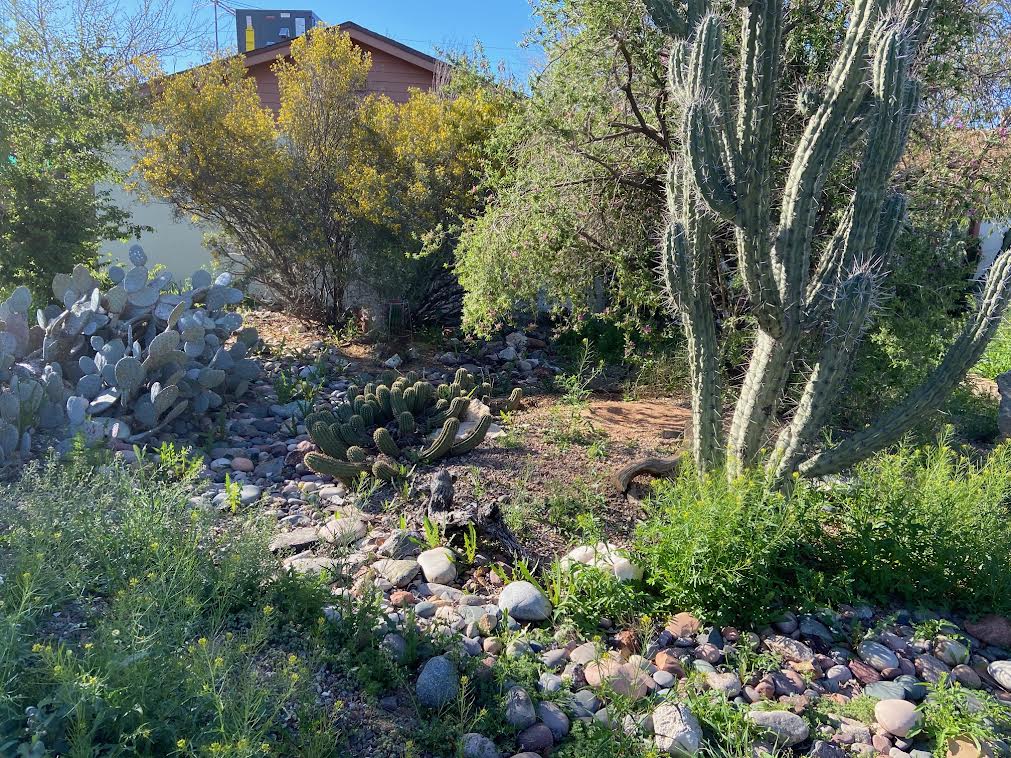
We’ve had an abundance of rain in my beautiful desert recently—a rarity in this part of the world—and it’s now wildflower season, something the local chamber of commerce pumps up every year to out-of-state visitors. Don’t get me wrong. Our wild flowers are lovely, especially following a wet winter, but let’s call those plants what they really are. Weeds!

There are various definitions of  weeds: plants that were not sewn in a particular location or plants that produce abundant seeds or simply plants that grow where you don’t want them to. But does that mean said plants are not worthwhile?

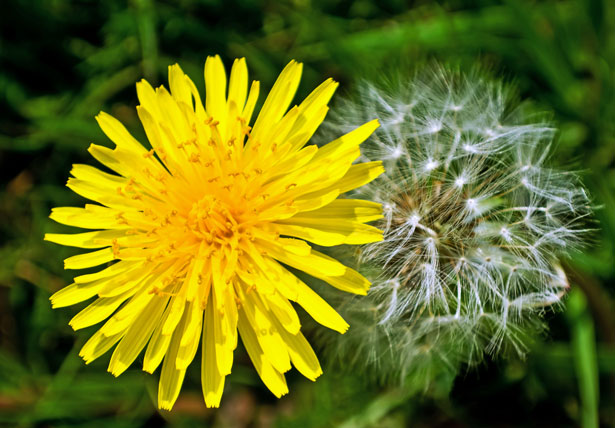
I remember as a child growing up in New Jersey the annual ritual that had me on my knees in the yard every spring pulling dandelions under my dad’s watchful eye. Apparently those small yellow flowers that turned into delightful, fluffy-white seed balls one could blow into the wind were the worst weed that could invade that lush greenness, a plant that I later learned can be eaten and used as a medicinal for arthritis and intestinal issues, heart and liver diseases, jaundice and gallstones, but that still became the bane of suburban yard owners everywhere.

Lo, the poor dandilion. So villified. So misunderstood.

But here’s the thing. A weed is actually no different from any other green, growing thing. It’s just how they’re perceived. Humans, for reasons I can’t quite ascertain, seem to feel the need to organize things into respectable little areas, designed to present order and uniformity. Having gone out and conquered the planet, we apparently feel compelled to eliminate anything considered remotely wild.

But I’m rebelling against that idea, and not just because my yard is currently a mass of weeds. You see, I have science on my side. I read that weeds help prevent soil erosion, act as fertilizer, and attract pollinators—bees, butterflies and hummingbirds—creatures without which our diverse diet of nuts, fruits, and vegetables would be severely diminished.

I think my weeds look quite lovely. Not sure what the neighbors think.

In the interest of unbiased journalism, I searched for the other side of the story, the real reason there are so many weed haters out there. I found data claiming weeds can carry diseases, alter the pH of the soil, and use more water than native plant species. But on closer inspection that information was often forwarded by those in the lawn-care industry, which made my old reporter’s brain twitch a bit.

Are my weeds unsightly? I don’t think so, but lawn purists might disagree. Still, I’ve decided to let my “flowers” grow and attract those all-important birds, bugs, and butterflies. Then, when they’ve served their pollinating purpose and our desert sun has scorched them to dust, I’ll thank them for their environmental service and pay someone to harvest what’s left. (Sorry, Dad. My weed-pulling days are long behind me.)

P.S.

Got a letter from the city. “It has been observed there is grass/weeds above six inches scattered in the front yard.” I was given ten days to rectify the situation. I expected a fight, so I put on my Eco Annie Superhero suit and explained that I let the weeds grow intentionally to help our environment thrive. And you know what? The kind man on the phone understood and gave me a few more weeks when I promised to cut everything down after the blooms were spent. Isn’t that nice? I feel better about the planet already!

Find Anne Montgomery’s novels wherever you buy books.

Goodreads

Amazon

A little piece of rainbow

My kitty Westin on the right with his brother Morgan.

Those of us who’ve had the great privilege of having pets in our families understand the joy these creatures give us. I have been incredibly fortunate over my life to have cared for myriad animals that delighted me—even when they misbehaved—and which comforted me when I was sad.

The problem, of course, is that their lifespans are so much shorter than ours, which necessitates tough decisions for those of us who love them. I should be used to that special room at the vet by now, but it never gets easier.

I just said goodbye to my dear cat Westin, one of the most endearing animals I’ve ever met. Westin’s life was difficult. He was deaf and had severe allergies that necessitated monthly shots and daily medication. Whenever I was asked if I’d like a receipt from the vet, I always said I didn’t want to know the price of his medical care. I’m pretty sure Westin cost more than the 50 or so animals I’ve tended to over the years put together. But he was such a joy, that I always smiled when I handed over my credit card.

The vet made it clear that Westin would not live a normal kitty lifespan as eventually the medications would take their toll. Westin was eight and he died peacefully surrounded by those who loved him.

In his honor, I thought I’d share the story I wrote about the day we brought Westin home.

A cat, a boy, a bond

There was nothing extraordinary about the cat that stared at me from the pages of my local newspaper. He was black. Gold eyes. His name was Westin. He’d been at the Humane Society way too long. His $20 price tag a clear indication that if he did not find a home soon, well…

I called my son Troy to come look at the picture. I told him about Westin. “Should we go get him?” I asked. His eyes lit up.

Within the hour we bounded through the door at the shelter, waving the newspaper article. “We’re here for Westin.” We grinned at the receptionist. A woman standing nearby frowned. I pointed at the picture again, wondering at her odd reaction.

“The story did not tell you everything,” she said, leading us toward a glassed-in enclosure, a place called the Campus for Compassion, where hard-to-adopt animals are placed for one last push to find them a forever home.

My son and I glimpsed Westin briefly through a large window as the woman ushered us through a doorway, around a corner, and through another door.  We somehow missed the sign that would have tipped us off that Westin was no ordinary kitty. The woman escorted us into the tidy room scattered with cat toys and shelves ascending one wall, where Westin quickly displayed his climbing skills. I sat on a small couch. Westin stared at me, then bounded into my lap.

“You get acquainted. I’ll get Westin’s records.” She left, closing the door behind her.

A short time later, a young volunteer appeared, bearing a thick folder.

“Where did he come from?” I asked as Westin head-butted my hand for the rub.

“He was one of thirty cats found abandoned in a hotel room,” she said. “We named them all after hotels.”

The thought that there were kitties nearby named Radisson, Hilton, Sheraton, and Howard Johnson made me want to laugh. Perhaps she read my mind.

“They’re all gone. They’ve been adopted. Westin is the only one left.”

I stared at the cat, now happily ensconced in my son’s lap. “Why?”

“Westin is sick.”

Troy and and I simultaneously stared at the cat, who appeared quite healthy and happy.

“When he came to us, he had lost a lot of his hair. We almost put him down. The vets here did a lot of testing and, well, Westin is deaf and has horrible allergies. He’s on daily medication and will be for the rest of his life. He has to be fed special food that’s about $60 a bag. I’ll leave you two to think about it,” she said, a hint of sadness in her voice. “He’s been here a long time.”

“It’s a lot of money,” I said when my son and I were alone. “And a lot of responsibility.” We already had four cats and a cattle dog.

When the volunteer came back, I asked if anyone else had ever wanted to adopt Westin.

“Oh, yes,” she said. “Until they found out about his problems.”

The boy with the blue eyes stroked Westin’s head. “He’s just like me, Mom. No one wanted me either.”

I stared at the ground. Troy is my third son. All of my boys spent time in the foster care system, before entering my life when they were teenagers, having been shuttled between group facilities and foster homes too many times to count, clearly understanding that there didn’t seem to be any families that wanted them.

Of course, we took Westin home. I can’t say it hasn’t been a struggle. Westin suffered a ruptured ear drum and only wants to eat food that he’s allergic to. Still, he gets along fine with the other animals and is under the watchful eye of our vet. We are hoping that, someday, he can go without the daily doses of medication and the special expensive food. In the meantime, Troy takes care of Westin. They seem to have an understanding.

Today, I’m sad, which I know from experience is to be expected. There’s a small hole in my heart that hurts. But I know eventually that space will fill in. Joy will take its place. Joy that I had the pleasure of knowing Westin. And perhaps a small piece of rainbow will lodge in my heart, color and light left behind from the moment Westin mounted the storied Rainbow Bridge.

Five years ago, Westin was featured on the Arizona Humane Society’s Pets on Parade.

You can watch the video here.

Find Anne Montgomery’s novels wherever you buy books.

Goodreads

Amazon

If you suffer from wrap rage, listen up!

Easy open? One wonders if anyone at the factory ever tried to get into one of these packages.

All I wanted was a cracker: a Triscuit to be precise.

But  I…couldn’t…open…the… package! Which had me saying all kinds of impolite things as I wrestled with the plastic bag inside the hermetically sealed cardboard box that had already tried my patience.

But it’s not just crackers that have me irritated. There’s the pet food bags that come with a string one just needs to pull and voilà the kibble bag is opened. But the thing rarely works, which has me reaching for a bone-handled camping knife I now keep on hand so I might stab those bags open. Then there are the drink containers which require me to fiddle with tiny plastic tabs that periodically break off leaving the cap useless. And let’s not forget those seals inside the peanut butter jar where one must attempt to grasp a miniscule flap and pull. I suppose the manufacturers intend for the lid to come off in one pretty, round piece, but more often than not the cover just rips and I’m off to find that camping knife and the stabbing begins anew.

My frustration no doubt stems from the fact that I’m old enough to remember when opening packages was simple. Today, however, just about everything we buy is encased in practically indestructible plastic clamshells and blister packs, shrink wrap and cling film. And though manufacturers insist their products are easy to open, we know they’re not.

I blame it all on the Tylenol Killer, a still unknown person who thought it would be just fine to lace acetaminophen capsules with cyanide back in 1982. Seven people died. And just like that, food and drug packaging changed. While I don’t generally believe in the death penalty, in this case I’d volunteer to push that plunger filled with potassium chloride, if only we could find the perp.

My go-to implement when attacking difficult packaging is my bone-handled camping knife.

So you know, I’m not the only one complaining. There’s actually a name for this “syndrome.” It’s called wrap rage, which is defined as “the common name for heightened levels of anger and frustration resulting from the inability to open packaging, particularly some heat-sealed plastic blister packs and clamshells.”

The thing is, it’s not like all this iron-clad packaging has made us safer. In fact, a British study revealed about 60,000 people suffer injuries annually that require hospital treatment—6,000 in the U.S. alone—because of their herculean attempts to open packages. The reason for these wounds is because, as I’ve already mentioned, we get frustrated and resort to dangerous implements—razors, box cutters, scissors, ice picks, and even bone-handled camping knives— in our efforts to open containers.

I looked for tips on how to deal with wrap rage, but I didn’t find much except that you should “never hold the item between your legs to stabilize it.” One wonders why that particular situation stands out, but I don’t want to think about it.

How can we avoid wrap rage? Next time you’re hungry try a banana or an apple. But since we can’t completely dodge impenetrable packaging, always have your bone-handled camping knife nearby.

Find Anne Montgomery’s novels wherever you buy books.

Goodreads

Amazon

Don’t let age differences get in the way

That I’d anchored SportsCenter in my youth did nothing to prevent one of my former students from saying I was too old to teach sports reporting.

Most of us understand that people should not be discriminated against because of who they are. In fact, there are hate laws protecting people against bigotry based on race, color, religion, national origin, sexual orientation, gender, gender identity, and disability.

But there is one big category missing. How about discrimination based on age? (There is, of course, a law banning ageism in the workplace, but here I’m talking about the social implications of the issue.)

Ageism is generally understood to be a dislike that focuses on older adults. But why? Shouldn’t mature people be respected for the wisdom they’ve acquired over their long lives, knowledge that if shared can help younger folks be happier and more successful?

Asian, Native American, and Indian cultures, among others, respect their elders and, in fact, celebrate older adults. But venerating the elderly seems almost nonexistent in the U.S. The question is why. Some of this attitude—as is the case with most prejudice—is based on stereotypes. Older people are considered slow workers, poor drivers, hard of hearing, unable to embrace new technologies, and generally weak and unattractive. Ugh!

Alice was my dear friend, despite the decades that separated us in age.

Now I’m not saying older people don’t also harbor ageist attitudes against the young. As a Baby Boomer, I’m embarrassed when my peers mumble derisively about the “younger generation.” I want to yell, “Don’t you remember when our parents said the same things about us? How they didn’t like our clothes and hair and music and political views?” Still, while agism can go both ways, today it generally tilts toward the denigration of the elderly.

I ran into this problem after teaching a course in sports reporting at Arizona State University. At the end of the semester, students are encouraged to rate their instructors and one comment hit me hard. “Next time ASU hires someone to teach sports reporting, they should hire someone younger!” I was 67. That I’d worked as a sports reporter and anchor at five TV stations both locally and nationally, including a stint at ESPN where I anchored SportsCenter, and had been a print reporter for three magazines and three newspapers, did nothing to up my stock. It was only my age that mattered. (It might have been my gender, too, but that’s for another time.)

I thought about that critique for a while and then recalled something I did back in my forties. I’d been sent to interview a woman who was a competitive swimmer. She was 64 and I remember gushing about how amazing it was that she was still swimming “at her age.” She was kind and polite, but there was a look on her face, bemusement perhaps, that I didn’t understand at the time. Later, when I turned 64 and was still swimming laps, I finally understood. She didn’t feel old or act old, and yet I’d labeled her that way.

I know we can do better, and I think a good way to do that would be more social mixing of the generations. I was fortunate in my youth to have several older friends. One in particular stands out. Alice was my rocking buddy. We met when she was in her seventies and I was in my thirties. I would head out into the Arizona desert with Alice where we wandered along wild washes, hiked up and down mountains, and frequently got lost in our quest for mineral specimens. We were still at it when Alice was approaching 90. I never thought of her as old. Ever!

Getting to know one another is the key, I think.  So, let’s not allow stereotypes to get in the way of what might become a beautiful friendship.

Find Anne Montgomery’s novels wherever you buy books.

Goodreads

Amazon

Dear Doctor…

I have a few requests.

My sweetie pie and I have been dealing with a lot of your appointments lately. Many involve his mom, who’s in her late eighties and has dementia, but he and I also sometimes run back and forth see you.

I mention this because, nice as you are, some things you do are bugging me. First, what’s with all the texts, e-mails, and calls beginning the week before my scheduled appointment? “This is a reminder! You have an appointment!” These messages come almost daily, as if you’re already accusing me of forgetting to appear. Though, when you consider the number of medical appointment no-shows—roughly 18% of scheduled appointments are missed nationwide—I can see your point.  Still, the constant barage of notifications gets tiresome.

The other thing that annoys me is the time of my appointments. As I no longer have to use an alarm clock—Ain’t retirement grand?—I rarely schedule appointments before noon, if I have a choice. I pick my times carefully to coincide with other plans. But then come the texts, e-mails, and calls asking me to arrive 30 minutes before my scheduled appointment. If I pick a 1:00 PM appointment time, doesn’t that mean I’d like to be there at 1:00 PM? If I wanted to be there at 12:30, I would have said so. I realize you want us to fill out endless paperwork, but I’d rather you just schedule me for the time you want me to appear.

Finally, it would be nice if I got to see you at my actual appointment time, especially if I’ve been kind enough to show up 30 minutes ahead of schedule. There’s something grating about arriving early only to have to wait long past our arranged meeting time. While I do understand that emergencies happen, I think sometimes you’re just overbooked.

Don’t get me wrong. I realize your time is valuable. But so is mine. Note that I’m truly grateful to be able to visit you when I’m in need and my complaints are nothing personal, still time is the most important thing we have. And, since we never know when our time will be up, wouldn’t it be nice if we could all manage it wisely?

Sincerely,

Anne Montgomery

Find Anne Montgomery’s novels wherever you buy books.

Goodreads

Amazon

Tony Soprano and the Killer Cats

Aren’t my kitties sweet? Yet, I’ve learned that looks can be decieving.

I love my cats, but sometimes I wonder if they love me back. Cats are not generally like dogs, who wear their hearts on their sleeves, if they had them. Those wagging tails and loving gazes usually get the point across.

But cats’ feelings are often harder to discern.

Take for example the morning I smelled gas in my home. That rotten-egg stink was emanating from the kitchen and I was surprised to see one of the burner nobs was on. Swearing silently at whichever kid left the thing on, I switched it off. But then it happened again, and this time I caught sight of one of my cats cruising atop the stove, teetering on the edge for no reason I could ascertain. He stopped and stared at me like he’d been caught committing a crime.

“I think the cats are turning on the stove,” I said to my sweetie pie.

“Why would they do that?”

I shrugged. “I don’t know.”

“Do you think they’re trying to kill us?” He looked up from his phone.

“Why would they? They have a pretty cushy life here.”

As I didn’t want to die in my sleep of asphyxiation, I ordered a box of nob covers, the kind people with toddlers use to keep those little fingers from turning on the stove. Sometimes, when people visit they stare at those nobs, as if wondering whether I’ve squirreled away a three-year old somewhere. At which point I explain that my cats binged watched all six seasons of The Sopranos with us and perhaps picked up some very bad ideas.

The carnage is on-going and the cats won’t tell me why?

I started to feel better about my feline friends, until they began smashing stuff. I heard a crash late one night, bolted from bed, and rushed to the kitchen. Both of my black cats sat placidly and stared at me, ignoring the shattered plate, now a stream of colorful shards spread across the tile floor. I considered going all detective inspector on them—we watch a lot of British murder mysteries—but it was clear they wouldn’t talk. So, while swearing under my breath and considering whether they’d fixated on the time Tony took a baseball bat to Angie’s new Cadillac, I cleaned up the mess and placed a heavy blue teapot in the spot where the plate had resided.

Two weeks later, while we were watching TV, said pot suffered the same sad fate as the plate. Again, my kitties were stone-faced. They plopped together into a chair and groomed one another as if I wasn’t even there, cheeky creatures.

Then there are the Kitty Olympic Games. At night, both my boys zoom around the house leaping on and over anything they can find as if practicing for some kind of kitty steeplechase. Somehow they mange to knock over my recliner on a regular basis.

Since I was interested in their feline motivation, I googled “What’s in a cat’s mind?” and almost 120 million results appeared, so it seems I’m not the only one wondering what’s going on inside their little noggins. I checked a few of those links and came to the conclusion that nobody really knows.

But I did find this: Humans domesticated cats about 10,000 years ago in what is today the Middle East to keep rodent populations at bay. But about a decade ago scientists discovered that your kitty is only half domesticated, which means our little bundles of fluff are in fact half wild and remain “predatory hunting mammals.”

That said, maybe letting them watch The Sopranos was a bad idea.

Find Anne Montgomery’s novels wherever you buy books.

Goodreads

Amazon

The perfect class for high school kids!

Kids in high school study lots of different subjects and still they’re missing out on some really important things.

I spent twenty years in a high school classroom, doing my best to impart some modicum of wisdom to my students. I’ve seen some of those kids grow up. I also have four foster children now in their twenties. I mention these young people because sometimes they baffle me with the things they don’t know.

I realize now that with all the science, history, math, English, and other courses we made them take, some practical stuff might have gotten lost along the way. So, even though I’m retired from teaching, I’ve put together the perfect course that should be required for all high school students in the country.

First, every child must take what we used to call home economics. I’m sure women in my age group remember the girls-only class where we learned home management, how to cook simple healthy meals, and the basics of sewing. But why were boys not required to take home ec? Of course, back then, those jobs were considered “women’s“ work, still don’t you agree that today everyone needs those skills?

You’ll notice the word economics in that dusty, old course, and wow is that important. Often, my students didn’t know the difference between a credit and a debit card. Nor did they understand what an interest payment was or a mortgage or a budget. Checking and savings accounts were mostly foriegn. I used to show them my paycheck and tried to explain Social Security and state and local tax deductions and they were stunned by the idea that they didn’t get to keep their entire paychecks.

“Why are they taking our money?” they’d bark back.

Wouldn’t it be cool if girls learned about auto mechanics?

“To pay for things like schools and roads, police and firefighters, health programs and the military,” I’d explain.

“The government should pay for that!”

And then I’d try very hard not to roll my eyes. “Taxpayers are the government!”

Another important class was auto mechanics, which—perhaps not surprisingly—was only taught to boys. In my world, girls would understand how to change a tire, jump start an engine, and decode the meaning of some of those strange noises that periodically emanate from under the hood. And they would all understand the importance of having roadside assistance, so they don’t have to wake up Mom and Dad in the middle of the night when the car is misbehaving. (You know who you are!)

Speaking of cars…whatever happened to driver’s ed? Anyone who takes to the roads knows that many people have no idea what they’re doing out there. No one seems to understand what a turn signal is for, or the meaning of those lines painted on the road, or why it’s a bad idea to text a buddy when behind the wheel. So let’s require some professional intruction, as opposed to learning from some family member who may know nothing about good driving.

And how about a few lessons on simple home repairs, like fixing a running toilet, or patching a hole in the drywall, or clearing a clogged drain. Useful, yes?

I would definitely make my students talk with one another face-to-face.

Health class is currently required in many schools, though I’m unsure of what exactly they’re teaching. I still recall the young lady who pointed out that it is simply impossible to get pregnant the first time you have sex. Methinks a little sex ed, though highly controversial in some states, should be required in this day and age. That and physical education, which used to be obligatory, but is now reserved for coaches to keep their team members lifting weights on a regular basis. Instead, I’d get my students outside, sans electronic devices, if only to give them a chance to walk a mile or so on the track on a regular basis.

Finally, I’d teach communication skills, which are sadly disappearing at an alarming rate. Yep, I’d make them put those phones down and actually talk to one another in person, making actual eye contact in the process. I’d add that dreaded of all skills, public speaking, as well as resume writing and career planning.

Now, I know what you’re thinking. How could I possibly get all of this into one class? Because it would be a year-long, two-semester course. I know working everything in is possible because I once taught world history where I was expected to teach the beginning of humankind to the French Revolution. Compared to that, my course would be easy.

At this point, you’re probably wondering what I’d call my class.

That’s easy. I’d call it Life.

Find Anne Montgomery’s novels wherever you buy books.

Goodreads

Amazon

Joining the pretty people at the gym

I’ve been working out my entire life, but the new gym in my area was unlike anything I’ve ever seen.

One of the nifty things about getting older is that sometimes we get things for free. In this case, I’m referring to that golden moment I turned 65 and Medicare kicked in. While medical insurance is certainly nice, it’s the little side bonus that got me excited. I was informed that Medicare would spring for my gym membership.

Since I’ve been working out my whole life, I was delighted to let someone else pick up the monthly tab. But when I entered my club recently, I was informed that my membership had expired.

“Don’t worry,” said the nice lady at the desk. “Just contact your insurance company and they’ll reinstate you.”

So, I did. It was then I discovered I had gym-membership options. There were apparently a number of clubs nearby that were part of the program. Instantly, I thought of the brand-new, three-story facility that had just sprung up, a fancy club at the Biltmore, a name that here in Arizona is associated with what we call the “pretty people.” I was almost embarrassed to ask if that club was on the list. Surely that wasn’t possible. The dues at my usual gym amounted to $30 a month. At the Biltmore it was $250.

“Yes, we can get you in there. It’s one of our premier clubs,” said the insurance lady.

For the uninformed, here’s what a real lap pool looks like. Aren’t those lane lines pretty?

Though I was dubious, I agreed to a visit. And what I saw at this “gym” was astounding. There were of course the usual floors filled with aerobic machines—all pristine—with separate areas for weight lifting, spinning and yoga classes, as well as basketball and tennis courts. Then I was escorted to the rooftop pool with its unobstructed view of iconic Camelback Mountain, a dining and bar area, and myriad poolside lounging cabanas. Now, I must mention here that the sparkling pool was pretty, but I paused as my guide pointed out all the amenities.

“There are no lines on the bottom,” I said.

“Um, no,” he said spreading his hands wide.

“Then how are lap swimmers supposed to get from one end to the other in a straight line?” I asked.

“I guess they forgot.”

My old Speedo just didn’t match up wih the women in thong bikinis.

As a life-long lap swimmer, I wondered how one could build a lap pool without lane lines, but then he whisked me down the elevator where I found a spa that would provide me with a manicure, pedicure, haircut and style, and a massage, if I felt so inclined. We walked past the chiropractor’s office with its warm-water massage chairs, then the sushi bar that later in the afternoon reverted to a real bar where I might have an adult beverage. Next to that was a large café boasting high-end carry-out meals, snacks—lots of them vegan—and big comfy couches where people lounged while plugged into their computers.

I considered the time of day. “Don’t these people have jobs?” I whispered to my tour guide.

“I’ve wondered about that myself,” he said quietly.

It was after I entered the women’s locker room that I realized I wasn’t in Kansas anymore. It was the preponderance of women wearing thong bikinis. As I pulled on my royal blue Speedo, I felt like I was donning something akin to a prairie dress. But as those bare bottoms sauntered by no one gawked at me. In fact, no one said a word or made eye contact, as I waded into the pristine whirlpool, followed by a cold plunge—52 degrees: Eieee!—then a steam. Fresh white towels were everywhere. When I padded into the shower area I discovered that no one carried their own products. Shampoo, conditioner, body soap, shaving cream, and razors were all arranged prettily in each shower stall. I’d been lugging around a big pink gym bag full of stuff for years. Now, I could get by with nothing more than my bathing suit, cap, and goggles.

If you’re wondering, yes, I joined, because I’m not a dope. But I’m still a bit conflicted about my membership, which, as the insurance lady said, is completely free. As I walked through the parking lot past a gleaming black Maserati and a host of top-dollar late-model SUVs that will never be driven off road, I felt perhaps I didn’t belong. Would I miss my dingy old club and the regular folks who populate the place?

We’ll see.

Find Anne Montgomery’s novels wherever you buy books.

Goodreads

Amazon

Ladies, can’t we see some pictures of you actually doing something?

Many young women seem to prefer posting photos of themselves posing scantily clad.

I’ve enjoyed keeping up to date with some of my former students via social media, still sometimes what I see is disturbing, especially the posts from my female students. Almost universally these young ladies—who are mostly in their twenties— post what we old timers call cheesecake: shots where there is little in the way of clothing involved and the emphasis is on butts, cleavage, and pursing ones lips in what, I’m guessing, is supposed to be a provocative pose.

Now, don’t get me wrong. The human body is a beautiful thing. And I do recall growing up in the world of no bras, miniskirts, low-rider bell bottoms, and halter tops, so now you’re probably wondering what has me so anxious. The problem is these young women are posting nothing else; they’re social media streams are just endless views of their barely-covered bodies. They never seem to say what they’re doing in life, what they’ve accomplished, or where they hope to go.

I’m worried because nothing seems to have changed in regard to women being valued only for their looks, a message that girls understand loud and clear. Still, I would sometimes point out in class that only being pretty is never enough, because as beauty fades, one needs skills and training to be successful. Often my comments were laughed off, the girls shaking their heads at the absurdity of losing their looks.

Still, there are plenty of women who understand that beauty is fleeting. A 2019 study showed 92% of all plastic surgery procedures in the U.S. were performed on women, and in 2020 the number of those aged 30-39 who’d undergone facial and body augmentation numbered almost two million. It used to be plastic surgery was the realm of those 50 and over, but not anymore. The question is where does it end? And why are so many women so unhappy with the way they look?

I think I understand the point, but wouldn’t it be better to show yourself actually doing something positive?

We can probably blame social media, though in my time it was the impossible proportions of Barbie and those glossy fashion magazines that worshipped whip-thin models like Twiggy that had me and many of my peers feeling insecure about our bodies. Today, one just needs to switch on any social media site to see how beautiful everyone else is. And no worries if you don’t stack up. If you can’t afford plastic surgery, those cute little filters can crop out any body parts you don’t like. We can tweak our faces and give ourselves cheek bones, shave fifty pounds off our bellies, and even change the color of our eyes. We can all look like super models.

But to what end? I sometimes try to imagine how much time women spend chasing pretty. Then I wonder what wonderful things might have been accomplished had they put as much effort into studying, or working, or volunteering.

I’m not naive. I understand all this posing is about attracting a mate. But if someone only wants you for your looks, can the relationship last? Note that over 44% of marriages fail every year, with infidelity being the leading cause. The chances of divorce go up when one person is deemed no longer attractive enough. So, if a lasting relationship is what one yearns for something other than looks needs to be involved.

I learned a lesson years ago when I was attracted to a man who paid no attention to me whenever our paths crossed. One of my friends observed these interactions and dragged me to her house, where she dressed me in her clothes. While my attire was generally sporty, Debbie’s wardrobe featured sheer, low-cut dresses with slits up to her hip and four-inch spikes in every color.  

Later, I toddled back to the restaurant where we worked, with lots of makeup and bright red lips, body parts I rarely exposed on full display, wincing at the pain in my feet. When the guy saw me, he grinned and started chatting with me as if we’d never met before.

It would be nice if your photos actually show who you really are?

Of course, I was thrilled. But it didn’t take long for me to realize that the person he saw in that pushup bra and stilettos wasn’t me. In that moment, I lost all interest in him. He was attracted to someone who didn’t exist.

I mention this because while pretty is fine there has to be more. You need to have interests, because, eventually, couples need to talk to one another, conversations where pretty is irrelevant.

So, go ahead and emphasize your looks, if you want, but remember if the goal is to meet someone who loves you for who you are, you might think about cultivating interests, hobbies, volunteer work, and a sense of humor.

Then take some pictures that show you actually doing something.

Find Anne Montgomery’s novels wherever you buy books.

Goodreads

Amazon