One week into Covid, the gift that keeps on giving

So glad I got my shots, even if I did get Covid-19.

Got my shots.

Got Covid anyway.

Still, I’m grateful to be muddling through without the fear of my lungs filling up and drowning me. Since my diagnosis, I’ve learned that the shots were created to place a warm, soothing womb around our lungs with a bunch of bad-ass Covid-killing assassin cells guarding the periphery. (Okay, maybe that’s not what’s really occurring, but you get the picture.)

That said, the headaches suck. If someone said, “Hey! Put a nail through your eye. That’ll fix it!” I’d honestly consider seeking out a hammer.

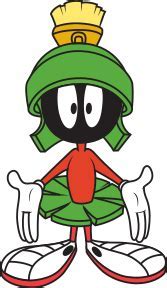
I have always pictured my lovely immune-system protecting white blood cells as Marvin the Martian.

Then there are the dreams. Strange barrages of images and words. In one case, I was trying to solve a problem and hundreds of solutions appeared and attacked me. Some of these ideas were clearly wrong, so I batted them away, but then more came zipping at me. It was like that new commercial with Serena Williams where she’s dressed up as Wonder Woman and whacks tennis balls to stop the monsters, but not as athletic. Or sexy. I wondered if my brain was fighting off Covid bugs and if my own immune-system defenders were winning the battle. (For some reason, I have always pictured my little guys as Marvin the Martian in his Roman helmet and basketball shoes. No idea why.)

Covid also gives one a dry cough that constantly wakes you up when ALL YOU WANT TO DO IS SLEEP! Hence, you will understand why I reached for that codeine-laced cough medicine. Which I took. Then, I passed out. I awoke on the bathroom tile, splayed out like one of those TV villains who plunges ten stories and splats on the sidewalk, limbs going in all the wrong directions. Yep! I fell on my own ankle and broke it in two places, which means the next time I watch a football game and some lineman gets his ankle rolled by some other 300-pound behemoth, I will have to leave the room. Then I’ll send flowers.

Fractured my ankle in two places after I passed out. Ugh!

While I would like not to whine, at the moment it’s hard. I must constantly remind myself that I get to be ill in a nice bed in a nice room in a nice house where I’m tended by people who love me. And, medical professionals were there for me when I cracked my ankle in two. Note that next to my hospital room door the sign said BIOHAZARD, and my name was listed below, along with the rest of the hallway’s Covid patients. I’ve been called a lot of things, but biohazard is definitely new to the list.

Do bear in mind that I’m writing this while on pain meds, so if nothing makes sense, please forgive me. And, if you haven’t gotten the jab yet, I highly recommend it.

Now, I will crawl back in bed and see if I can sleep through the next five days.

PS

I know I’m supposed to be launching my new novel The Castle right now, but I promise I’ll get back to it when I’m not overly medicated, because who knows what I might say when my brain is addled.

This image has an empty alt attribute; its file name is the-castle_front-cover-1.jpg

Ancient ruins, haunted memories, and a ruthless criminal combine with a touch of mystic presence in this taut mystery about a crime we all must address.

THE CASTLE

Anne Montgomery

Contemporary Women’s Fiction/Suspense

TouchPoint Press

Release Date: September 13, 2021

Maggie, a National Park Ranger of Native American descent, is back at The Castle—a six-hundred-year-old pueblo carved into a limestone cliff in Arizona’s Verde Valley. Maggie, who suffers from depression, has been through several traumas: the gang rape she suffered while in the Coast Guard, the sudden death of her ten-year-old son, and a suicide attempt.

One evening, she chases a young Native American boy through the park and gasps as he climbs the face of The Castle cliff and disappears into the pueblo. When searchers find no child, Maggie’s friends believe she’s suffering from depression-induced hallucinations.

Maggie has several men in her life. The baker, newcomer Jim Casey, who always greets her with a warm smile and pink boxes filled with sweet delicacies. Brett Collins, a scuba diver who is doing scientific studies in Montezuma Well, a dangerous cylindrical depression that houses strange creatures found nowhere else on Earth. Dave, an amiable waiter with whom she’s had a one-night stand, and her new boss Glen.

One of these men is a serial rapist and Maggie is his next target.

In a thrilling and terrifying denouement, Maggie faces her rapist and conquers her worst fears once and for all.

REVIEW COPIES OF THE CASTLE AVAILABLE UPON REQUEST

Also available on NetGalley

Contact: Jennifer Bond, Publicity Manager, Media Liaison

Review/interview requests: media@touchpointpress.com

Register & Order Online: TouchPointPress.com/Bookstore
Orders: info@touchpointpress.com
Also from Ingram and major retailers

Get your copy here

2 The Castle: A book about rape and healing

We must bring sexual violence out of the shadows.

Why write a novel about rape? For me, the reason was personal. I was a victim of sexual assault when I was a student in college. According to statistics gathered by the Rape, Abuse & Incest National Network, over 23% of female college students experience rape or sexual assault through physical force, violence, or incapacitation. All women between the ages of 18 and 24 are the most likely to be targeted by sexual predators. While it’s true that males are also sexual assault victims, the numbers clearly indicate that the vast majority – 90% – of adult rape victims are female.

I taught high school journalism for 20 years, so my students and I often examined important and often difficult to discuss issues on a daily basis. Nothing was out-of-bounds. My students were encouraged to ask me anything. My promise was that I would always tell them the truth. Periodically, I was asked whether there was anything in my life I regret. And the answer was always the same.

I look back on that night in 1975 when I went on a dinner date with a sweet-faced farm boy I’d met in the dining hall. He was on crutches, convalescing from a football injury. If memory serves, he was about six-foot-three and probably around 250 pounds, still I never for a moment had a bad feeling, nor the least concern when, after dinner, he invited me up to his dorm room. The stare from his roommate still registers. Another member of the football team who would go on to play in the NFL simply picked up his typewriter, walked out, and closed the door. My date, in what seemed like an instant, stripped my clothes from my body. I fought, which made him smile. “You know I can do anything I want to you,” he said. “And there’s nothing you can do about it.”

I trusted my date to do the right thing. Sadly, he did not.

This was the moment in my life I would come to understand that I couldn’t fight my way out of a situation. I’d always considered myself strong and athletic, so I resisted. But as he pinned me to the bed, I realized he enjoyed the battle. The more I struggled the more aroused he became. Strangely, I recalled something my father said before sending me off to college. He’d given me just one piece of advice. He looked me in the eye and said, “Nothing is worth your life.” When I didn’t respond, my dad repeated the message. “Nothing is worth your life.”

I stopped fighting my attacker, believing my father’s words. To my astonishment, the man backed off. He yelled, “What’s the matter with you?” It was then I understood he wanted me to fight, to scream. I laid on the bed motionless. Nothing was worth my life. He got off me and threw my clothes on the bed. I dressed and ran, expecting him to reach out and grab me every moment until I reached my own room.

The next morning a small girl approached me in my dorm hallway. “Can I ask you a personal question?” she said. She wanted to know if I’d gone out with the man. I said I had. “Did he strip you?” she asked. I nodded. “He stripped me, too.” Our conversation ended there, when she just walked away.

Later that day, a dear friend who played on the football team marched angrily toward me at lunch and pulled me aside. “Why did you go out with him?” he asked. “Everyone knows about him!” Clearly, he was wrong. I didn’t know there was a rapist living in the quad. Neither did the girl who approached me. But apparently others were aware. How many of them were victims? And if his behavior was common knowledge, why was he still living on a college campus?

So, what do I regret? According to the National Research Council, 80% of sexual assaults go unreported to law enforcement. Like the vast majority of victims, I said nothing. I sometimes wonder how many women he has attacked over the years? Could I have prevented some of these assaults, had I found the courage to speak up? My logical mind tells me nothing would have been done, had I gone to the police. I’d been on a date. I’d had a few drinks. I willingly went to his room, so what did I expect?

Sadly, forty years later, this attitude still prevails and we now face an epidemic, a plague with life-long effects. The following statistics come directly from RAINN:

If you need help, contact the National Sexual Assault Hotline.

• 33% of women who are raped contemplate suicide. 13% of women who are raped attempt suicide.

• People who have been sexually assaulted are more likely to use drugs than the general public.

• Sexual violence also affects victims’ relationships with their family, friends, and co-workers.

• Victims are at risk of pregnancy and sexually transmitted infections.

Teachers, like law enforcement officers, medical professionals, and social workers, are mandated reporters of child abuse. In that capacity, I have encountered students who’ve been sexually assaulted and raped, all by relatives and/or family friends, many repeatedly. Primarily female, these victims have been universally blamed for the attacks against them, families seemingly more concerned about protecting men and boys.

I have written The Castle in the hope that we can bring the horrors of sexual assault and rape out into the open. We must encourage victims to come forward, so we can stop these predators. But how can we get people to speak up, if we don’t change the way we think about sexual assault? The blame-the-victim attitude must stop. Telling young people that no means no, has not worked. Maybe, we need to teach them what “yes” looks like. And for those adults who believe that teachers should avoid the discussion of uncomfortable subjects, let me say that ignorance is not the answer. Children can and do find anything they want on the Internet, and they often believe everything they log onto. As adults, it’s our responsibility to give them context and guidance, so the world they grow up to inhabit can be better than the one they live in today.

This image has an empty alt attribute; its file name is the-castle_front-cover-copy-3.jpg

Ancient ruins, haunted memories, and a ruthless criminal combine with a touch of mystic presence in this taut mystery about a crime we all must address.

THE CASTLE

Anne Montgomery

Contemporary Women’s Fiction/Suspense

TouchPoint Press

September 13, 2021

Maggie, a National Park Ranger of Native American descent, is back at The Castle—a six-hundred-year-old pueblo carved into a limestone cliff in Arizona’s Verde Valley. Maggie, who suffers from depression, has been through several traumas: the gang rape she suffered while in the Coast Guard, the sudden death of her ten-year-old son, and a suicide attempt.

One evening, she chases a young Native American boy through the park and gasps as he climbs the face of The Castle cliff and disappears into the pueblo. When searchers find no child, Maggie’s friends believe she’s suffering from depression-induced hallucinations.

Maggie has several men in her life. The baker, newcomer Jim Casey, who always greets her with a warm smile and pink boxes filled with sweet delicacies. Brett Collins, a scuba diver who is doing scientific studies in Montezuma Well, a dangerous cylindrical depression that houses strange creatures found nowhere else on Earth. Dave, an amiable waiter with whom she’s had a one-night stand, and her new boss Glen.

One of these men is a serial rapist and Maggie is his next target.

In a thrilling and terrifying denouement, Maggie faces her rapist and conquers her worst fears once and for all.

REVIEW COPIES OF THE CASTLE AVAILABLE UPON REQUEST

Now available on NetGalley

Contact: Jennifer Bond, Publicity Manager, Media Liaison, TouchPoint Press
Review/interview requests: media@touchpointpress.com

Register & Order Online: TouchPointPress.com/Bookstore
Orders: info@touchpointpress.com
Also from Ingram and major retailers

Get your copy here

The Castle: A Virtual Launch at Changing Hands

I’m delighted to announce to all my book-loving friends that I will be holding a virtual launch for my new novel The Castle at Changing Hands Bookstore in Phoenix on October 4, 2021 at 7:00 PM. (MST)

Mary Jo West will be on hand as the MC.

How’s that work? All you have to do is click here.

Once there, you’ll notice that my dear friend Mary Jo West, the first-lady of Phoenix television, will be on hand to MC the event. (And we know how much fun she can be.) All you have to do is register and order a book. Then, that evening, pour yourself an adult beverage, lean back, and enjoy the talk. You can either head down to the store and pick up your signed copy of The Castle or the book can be mailed to you.

See? Easy.

You’ll receive the Zoom link by email within 24 hours of the event’s start time. For information about participating in virtual events, see the Changing Hands Bookstore FAQ page.

Mary Jo and I are looking forward to seeing you on October 4 at 7:00 PM.

This image has an empty alt attribute; its file name is the-castle_front-cover-1.jpg

Ancient ruins, haunted memories, and a ruthless criminal combine with a touch of mystic presence in this taut mystery about a crime we all must address.

THE CASTLE

Anne Montgomery

Contemporary Women’s Fiction/Suspense

TouchPoint Press

Release Date: September 13, 2021

Maggie, a National Park Ranger of Native American descent, is back at The Castle—a six-hundred-year-old pueblo carved into a limestone cliff in Arizona’s Verde Valley. Maggie, who suffers from depression, has been through several traumas: the gang rape she suffered while in the Coast Guard, the sudden death of her ten-year-old son, and a suicide attempt.

One evening, she chases a young Native American boy through the park and gasps as he climbs the face of The Castle cliff and disappears into the pueblo. When searchers find no child, Maggie’s friends believe she’s suffering from depression-induced hallucinations.

Maggie has several men in her life. The baker, newcomer Jim Casey, who always greets her with a warm smile and pink boxes filled with sweet delicacies. Brett Collins, a scuba diver who is doing scientific studies in Montezuma Well, a dangerous cylindrical depression that houses strange creatures found nowhere else on Earth. Dave, an amiable waiter with whom she’s had a one-night stand, and her new boss Glen.

One of these men is a serial rapist and Maggie is his next target.

In a thrilling and terrifying denouement, Maggie faces her rapist and conquers her worst fears once and for all.

REVIEW COPIES OF THE CASTLE AVAILABLE UPON REQUEST

Also available on NetGalley

Contact: Jennifer Bond, Publicity Manager, Media Liaison

Review/interview requests: media@touchpointpress.com

Register & Order Online: TouchPointPress.com/Bookstore
Orders: info@touchpointpress.com
Also from Ingram and major retailers

Get your copy here

3 A crime: A character

The cost of rape is too much to bear.

My new novel, The Castle, which will be published by TouchPoint Press on September 13, 2021, tells the story of Maggie, a National Park Ranger who is recovering from a gang rape she suffered in the military, as well as other tragedies. The reader follows Maggie through her anger, despair, and recovery.

I fashioned Maggie’s after researching rape survivors, noting the characteristics that bind them together. According to the Rape, Abuse & Incest National Network, rape victims are overwhelmingly young women, though of course older females, children, and males can be victims of the crime, as well.

Maggie, as a former member of the military, is at a higher risk of sexual violence. Women in the military are most likely to be sexually harassed–which is defined as an act that does not involve physical contact–by someone in their chain of command. This behavior easily escalates into sexual assault and rape. Sadly, when these acts are reported, it’s the victim who suffers. Peers no longer want to work with them, fearing that they too will be accused of sexual violence. Often, after reporting these attacks, victims are discharged from the service under less than honorable circumstances, while their attackers are rarely punished.

The fact that Maggie is also of Native American descent further ups her chances of being raped. Statistics show that 1 in 3 American Indian and Alaska Native women will be raped at some point in their lives.

Sarah Deer, a professor at the University of Kansas and author of The Beginning and End of Rape: Confronting Sexual Violence in Native America said, “Native women have told me that what you do when you raise a daughter in this environment is you prepare her for what to do when she’s raped – not if, but when.”

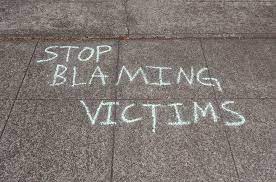
Victims are never at fault!

One of the big problems in regard to rape victims is the fact that many feel shame after their attack, as if they deserved the violence that was perpetrated against them. Perhaps the the attack was caused by the clothes they were wearing, something they said, or because they’d been drinking. This, in turn, makes 80% of them remain silent, so they have no closure–carrying the guilt and shame like a backpack stitched to their skin–and allowing the rapists to go free to attack again.

So, what can we do? First, let’s stop blaming the victim. Let’s encourage them to come forward and report the crimes, and provide them with rape counseling advocates so they can recover from the trauma. Then let’s do away with demeaning verbiage like slut and whore and bitch, words that firmly identify women as “less than” in regard to men. We must agree that jokes about sexual assault and rape are never funny nor acceptable. And finally, let’s teach sex education in every school, so that we can arm our young people with the facts and hopefully give them an idea of what exactly consensual sex looks like.

Rape is a cruel and messy crime, one with lifelong ramifications. It’s also a massively expensive problem. According to a 2018 report by the National Sexual Violence Resource Center, the approximately 25 million rape survivors in the country will cost the US more than $3 trillion dollars over their lifetimes, money spent on health care, criminal justice response, lost productivity, and other costs.

Clearly, rape is crime we can’t afford, both in regard to the financial expense, as well as the horrific personal toll.

Ancient ruins, haunted memories, and a ruthless criminal combine with a touch of mystic presence in this taut mystery about a crime we all must address.

THE CASTLE

Anne Montgomery

Contemporary Women’s Fiction/Suspense

TouchPoint Press

September 13, 2021

Maggie, a National Park Ranger of Native American descent, is back at The Castle—a six-hundred-year-old pueblo carved into a limestone cliff in Arizona’s Verde Valley. Maggie, who suffers from depression, has been through several traumas: the gang rape she suffered while in the Coast Guard, the sudden death of her ten-year-old son, and a suicide attempt.

One evening, she chases a young Native American boy through the park and gasps as he climbs the face of The Castle cliff and disappears into the pueblo. When searchers find no child, Maggie’s friends believe she’s suffering from depression-induced hallucinations.

Maggie has several men in her life. The baker, newcomer Jim Casey, who always greets her with a warm smile and pink boxes filled with sweet delicacies. Brett Collins, a scuba diver who is doing scientific studies in Montezuma Well, a dangerous cylindrical depression that houses strange creatures found nowhere else on Earth. Dave, an amiable waiter with whom she’s had a one-night stand, and her new boss Glen.

One of these men is a serial rapist and Maggie is his next target.

In a thrilling and terrifying denouement, Maggie faces her rapist and conquers her worst fears once and for all.

REVIEW COPIES OF THE CASTLE AVAILABLE UPON REQUEST

Also available on NetGalley

Contact: Chelsea Pieper, Publicity Manager, Media Liaison

Review/interview requests: media@touchpointpress.com

Register & Order Online: TouchPointPress.com/Bookstore
Orders: info@touchpointpress.com
Also from Ingram and major retailers

Get your copy here

4 The Castle: Unparalleled beauty amidst a treacherous landscape

Montezuma Castle perches high on a cliff in Arizona’s Verde Valley.

My new novel, The Castle, which will be released by TouchPoint Press on September 13, 2021, takes place in Arizona’s Verde Valley. The site is an ancient Native American pueblo that perches high on a cliff, a multi-story edifice whose history remains unclear.

What we do know is that The Castle was abandoned by those who resided there about 600 years ago. Today, we call these people Sinagua, which means “without water,” but we have no idea how they referred to themselves. There are no written records from that time. But objects left behind—stone metates for grinding corn, needles for sewing, shell ornaments, pottery, and stone tools—identify the Sinagua as skilled artisans and ardent traders. And, of course, The Castle itself proves they were exceptionally talented builders. Imagine cutting the massive Arizona sycamores and carting them up the cliff face without the benefit of metal tools. And once built, a process archaeologists believe began in the early 1100s, The Castle had to be constantly maintained due to the damaging assault of desert wind, rain, and heat.

President Teddy Roosevelt saved The Castle from destruction by signing the National Antiquities Act in 1906.

When Europeans first arrived in the Verde Valley, they found The Castle abandoned and quite mysterious. With little expertise in regard to southwestern indigenous people, the early settlers assumed that Aztec emperor Montezuma was somehow involved in the building of the edifice. The idea, of course, was nonsensical, since Montezuma was born over 300 years after the construction at The Castle began. Still  the name stuck. So today when you visit, you’ll note the edifice and the 860 acres surrounding the building is called Montezuma Castle National Park.

Upon entering the Visitor Center, tourists will encounter a life-size cut out of President Teddy Roosevelt, resplendent in his bush hat and wired spectacles. Why? Roosevelt was instrumental in saving The Castle from destruction. In the 19th and early 20th centuries, Native American artworks became highly prized worldwide. Archaeological sites were ransacked by those seeking a fortune in ancient pottery and jewelry, and the abundance of foot traffic and unrestrained digging were quickly degrading the areas. So, on December 8, 1906, Roosevelt signed the National Antiquities Act and Montezuma Castle became one of the first four sites in the country to come under federal protection. Then, in 1966, The Castle was added to the National Register of Historic Places.

Why place The Castle at the center of a novel about a woman being stalked by a rapist? While the location is jaw-droppingly gorgeous, just off the safety of the trails, the Sonoran Desert reigns. One of the most complex ecosystems on the planet, this sub-tropical desert is filled with both unparalleled beauty and impending danger. Treacherous plants and animals, as well as hazardous terrain mix with extreme weather that can quickly prove lethal. Just as in life, beauty and terror can often exist side by side. It’s how we negotiate our environment that matters.

Ancient ruins, haunted memories, and a ruthless criminal combine with a touch of mystic presence in this taut mystery about a crime we all must address.

THE CASTLE

Anne Montgomery

Contemporary Women’s Fiction/Suspense

TouchPoint Press

September 13, 2021

Maggie, a National Park Ranger of Native American descent, is back at The Castle—a six-hundred-year-old pueblo carved into a limestone cliff in Arizona’s Verde Valley. Maggie, who suffers from depression, has been through several traumas: the gang rape she suffered while in the Coast Guard, the sudden death of her ten-year-old son, and a suicide attempt.

One evening, she chases a young Native American boy through the park and gasps as he climbs the face of The Castle cliff and disappears into the pueblo. When searchers find no child, Maggie’s friends believe she’s suffering from depression-induced hallucinations.

Maggie has several men in her life. The baker, newcomer Jim Casey, who always greets her with a warm smile and pink boxes filled with sweet delicacies. Brett Collins, a scuba diver who is doing scientific studies in Montezuma Well, a dangerous cylindrical depression that houses strange creatures found nowhere else on Earth. Dave, an amiable waiter with whom she’s had a one-night stand, and her new boss Glen.

One of these men is a serial rapist and Maggie is his next target.

In a thrilling and terrifying denouement, Maggie faces her rapist and conquers her worst fears once and for all.

REVIEW COPIES OF THE CASTLE AVAILABLE UPON REQUEST


Contact: Chelsea Pieper, Publicity Manager, Media Liaison

Review/interview requests: media@touchpointpress.com

Register & Order Online: TouchPointPress.com/Bookstore
Orders: info@touchpointpress.com
Also from Ingram and major retailers

Get your copy here

Never forget, heat can kill you!

People are much more likely to die from heat than from any other natural phenomena.

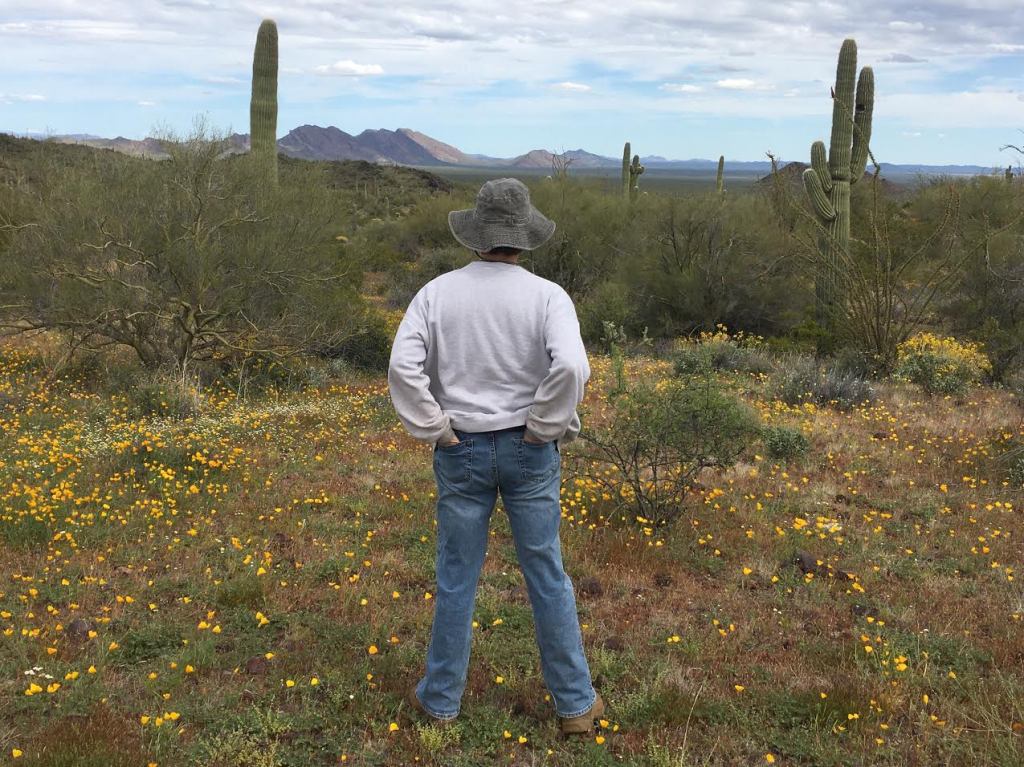
Here in the Sonoran Desert, the heat is upon us. We desert dwellers are forced to understand the dangers lurking in those high thermometer readings. We know they can very quickly lead to death.

Unfortunately, many visitors to our valley don’t seem to understand. Just two week’s ago, a tourist died on one of our city trails, a young woman who tried scaling Camelback Mountain without water. In July! Earlier, when paramedics had to rescue dehydrated hikers from our parks, a dozen firefighters were themselves overcome by the heat. In response, some of our trails have been closed to the public. Others are only open early in the morning and in the evening.

It’s interesting, I think, that so many people fear hurricanes and tornados and floods and earthquakes when the natural event most likely to kill them is heat.

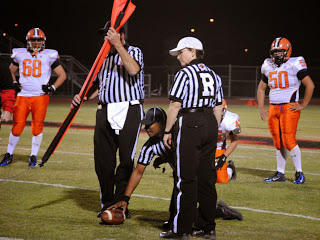
I know first-hand the horrors of heat sickness. The symptoms can arrive frighteningly fast. Dizziness, confusion, headache, nausea, signs that can quickly lead to unconsciousness and death. All but one of my bouts of heat illness were brought on by officiating and my own stupidity. I was an amateur sports official for 40 years, where I called football, baseball, ice hockey, soccer, and basketball games. I was almost always the only woman on the field, a fact that was rarely far from my mind.

My first attack of heat sickness occurred when I umpired a baseball game in extreme heat.

As you can imagine, I was sometimes made to feel I didn’t belong in the officiating ranks, and I was keenly aware that any show of weakness would lay me open to negative comments from my peers, coaches, and fans. So, the first time I got heat sickness, I struggled through it. It was a baseball game and I was clad in the necessary armor required for working behind the plate: chest protector, shin guards, wool cap, polyester shirt and slacks, steel-toed shoes. The sun was relentless. After the game, I went home and balanced myself under a cold shower for what seemed like hours. I drank Gatorade and copious amounts of water. I felt lousy for a day or two, then returned to the field.

One of the problems associated with heat illness is that once you get it your internal thermometer is messed up and you start succumbing to it more easily. I’m a slow learner sometimes, so it took me a while to finally take a stand. One day, in a sub-varsity football game, I called time and went to the trainer. He took one look at me and dragged me into the locker room where he filled me with fluids and applied wet, icy towels to my head and neck. I was rather surprised when my crew mates greeted me at halftime and promptly told me to go home and get well. No derision. No smirks. I realized then that most outdoor officials in the southwest have probably suffered similarly at one time or another.

Most of my bouts of heat sickness came while I officiated football games in Arizona’s scorching Sonoran Desert, where temperatures often exceed 110 degrees.

A few years later, the telltale signs of heat sickness attacked in the middle of a varsity football game, and you’d be proud of me. I signaled time out, struggled off the field, and said I was sick. Later, when I opened my eyes in the school’s nursing office, I found myself surround by four paramedics. They were so attentive and cute. I briefly considered that they might be male strippers with their prominent muscles and appealing uniforms, but that was just my heat-addled brain.

What finally made me understand the true dangers of heat illness was the time I got lost in the desert. I did all the wrong things. I went rock collecting alone. I walked away from my stranded vehicle. I had two dogs with me who drank all my water. When I saw that last half inch of liquid in my bottle and felt the sun beating down, I tied my dogs under a bush and hoped the coyotes would stay away. I built cairns as I tried to find my way back to civilization, so I might locate my sweet pups if I survived. While the whole ordeal only lasted half-a-day and I was safely reunited with my dogs, the episode is etched into my brain. As is the fact that today I might be nothing more than a pile of bleached bones in the vast Sonoran Desert.

While lost in the desert, I suffered from heat sickness, and today I consider myself lucky to be alive.

It’s understandable then that I never go anywhere without water. That bottle is always in my hand, which here in the desert is pretty much normal. In fact, those without a mobile water supply are easily identified as tourists.

The point is, heat can kill you quickly. And when you consider that our world is heating up rapidly, it’s something we should all take into account whenever we leave the bliss of air-conditioning.

This image has an empty alt attribute; its file name is the-castle_front-cover-copy-3.jpg

ANCIENT RUINS, HAUNTED MEMORIES, AND A RUTHLESS CRIMINAL COMBINE WITH A TOUCH OF MYSTIC PRESENCE IN THIS TAUT MYSTERY ABOUT A CRIME WE ALL MUST ADDRESS.

THE CASTLE

Anne Montgomery

TouchPoint Press

Contemporary Women’s Fiction/Suspense

September 13, 2021

Maggie, a National Park Ranger of Native American descent, is back at The Castle—an ancient pueblo carved into a limestone cliff in Arizona’s Verde Valley. Maggie, who suffers from depression, has been through several traumas: the gang rape she suffered while in the Coast Guard, the sudden death of her ten-year-old son, and a suicide attempt.

One evening, she chases a young Native American boy through the park and gasps as he climbs the face of The Castle cliff and disappears into the pueblo. When searchers find no child, Maggie’s friends believe she’s suffering from depression-induced hallucinations.

Maggie has several men in her life. The baker, newcomer Jim Casey, who always greets her with a warm smile and pink boxes filled with sweet delicacies. Brett Collins, a scuba diver who is doing scientific studies in Montezuma Well, a dangerous cylindrical depression that houses strange creatures found nowhere else on Earth. Dave, an amiable waiter with whom she’s had a one-night stand, and her new boss Glen.

One of these men is a serial rapist and Maggie is his next target. In a thrilling and terrifying denouement, Maggie faces her rapist and conquers her worst fears once and for all.

REVIEW COPIES OF THE CASTLE AVAILABLE UPON REQUEST


Contact: Chelsea Pieper, Publicity Manager, Media Liaison

Review/interview requests: media@touchpointpress.com

Get your copy here

Now available on NetGalley

Women must be bold and share their accomplishments

When I was a teacher, I discovered that many young ladies were uncomfortable talking about their accomplishments.

When I was a high school teacher, part of my job was to encourage my students to think about the future. When it came to resume writing, I’d say, “What are you good at? What have you accomplished that you’re proud of?”

Often, I’d be met with blank stares, which was understandable because they were just kids. Still, I’d press on. “When you choose a career, it’s important to think about what you like to do, what you’re good at, and what someone will pay you to do.”

When the conversation would stall, I’d point out some of my own accomplishments. “When I was your age, I discovered I had a good speaking and singing voice, so I performed in a lot of plays. And I really enjoyed sports. I was an ice dancer and I loved swimming and skiing and watching ice hockey. Eventually, these things put me on a path to becoming a TV sportscaster.”

“Your bragging, Ms. Montgomery,” some child would blurt out. Others around the room—mostly girls—would nod their heads.

“So, you don’t think it’s right to talk about your accomplishments?”

“No!” a chorus of them would answer.

In the business world, the inability to discuss our successes is holding women back.

Then, I’d point at a boy who played sports. “How’d your game go? Which would lead the young man on a tangent about how well he’d preformed on the gridiron. Strangely, when I’d ask female athletes the same question, the response was rarely positive. “I could have done better,” one would say. “I missed an important free throw,” another might add.

Bragging, it turns out, is a habitat peopled mostly by males. A young man can walk into a job interview and wax on about his accomplishments, while women of all age groups seem to feel they must be demure, that identifying their skills and successes is unladylike and casts them in a bad light.

A perfect example is the way many women handle compliments. When someone says something nice about our appearance or a job well done, lots of us stare at the floor, or point out something we did wrong, or give credit to someone else in order to counter the accolade.  And this is a problem.

Just smile and say “Thank you!” when you recive a compliment.

I think denying our successes holds us back, especially in the business world where self-confidence and life experience say a lot about who we are and what we might be capable of in the future. Take participating in sports, for example. Business owners are delighted to hire those who’ve been on teams. They know athletes understand punctuality, working with others toward a common goal, following rules, and getting back up when you’ve been knocked down. (Note here that championships and won-loss records are not relevant. Just participating is all that’s important.) And let’s not forget those other “team players”: young people who’ve participated in choir, marching band, theater, debate, and other activities that are equally favored by many human resources departments. But those doing the hiring will not know about a person’s past if the applicant is unwilling to share the information, so it’s important that people speak up. That’s not bragging. It’s smart!

Today, I don’t hesitate to share stories about my past and the things I’ve experienced and exceeded at. And I’ve learned to accept compliments with a smile and hearty, “Thank you!” It was a bit uncomfortable at first, but now it feels great.

Don’t believe me, ladies? Just give it a try.

This image has an empty alt attribute; its file name is the-castle_front-cover-copy-3.jpg

ANCIENT RUINS, HAUNTED MEMORIES, AND A RUTHLESS CRIMINAL COMBINE WITH A TOUCH OF MYSTIC PRESENCE IN THIS TAUT MYSTERY ABOUT A CRIME WE ALL MUST ADDRESS.

THE CASTLE

Anne Montgomery

TouchPoint Press

Contemporary Women’s Fiction/Suspense

September 13, 2021

Maggie, a National Park Ranger of Native American descent, is back at The Castle—an ancient pueblo carved into a limestone cliff in Arizona’s Verde Valley. Maggie, who suffers from depression, has been through several traumas: the gang rape she suffered while in the Coast Guard, the sudden death of her ten-year-old son, and a suicide attempt.

One evening, she chases a young Native American boy through the park and gasps as he climbs the face of The Castle cliff and disappears into the pueblo. When searchers find no child, Maggie’s friends believe she’s suffering from depression-induced hallucinations.

Maggie has several men in her life. The baker, newcomer Jim Casey, who always greets her with a warm smile and pink boxes filled with sweet delicacies. Brett Collins, a scuba diver who is doing scientific studies in Montezuma Well, a dangerous cylindrical depression that houses strange creatures found nowhere else on Earth. Dave, an amiable waiter with whom she’s had a one-night stand, and her new boss Glen.

One of these men is a serial rapist and Maggie is his next target. In a thrilling and terrifying denouement, Maggie faces her rapist and conquers her worst fears once and for all.

REVIEW COPIES OF THE CASTLE AVAILABLE UPON REQUEST
Contact: Chelsea Pieper, Publicity Manager, Media Liaison: media@touchpointpress.com

Get your copy here

Now available on NetGalley.

“A well-rounded story that would be a good read for as many men as the women for whom it is currently promoted.”

My thanks to author and blogger Stuart Aken for reviewing my novel Wild Horses on the Salt.

“The characters, an essential element of any fictional work, are real people. There are no carboard cut-outs here. They are well presented, warts and all. But, as with any author thoroughly at home with their characters, they are drawn with compassion and love. Even the wicked antagonist is given some reason for his appalling actions.”

Stuart Aken

Wild Horses on the Salt, by Anne Montgomery: #BookReview.

A WOMAN FLEES AN ABUSIVE HUSBAND

AND FINDS HOPE IN THE WILDS OF THE ARIZONA DESERT.

Published by Liaison – A Next Chapter Imprint

Rebecca Quinn escapes her controlling husband and, with nowhere else to go, hops the red-eye to Arizona. There, Gaby Strand – her aunt’s college roommate – gives her shelter at the Salt River Inn, a 1930’s guesthouse located in the wildly beautiful Tonto National Forest.

Becca struggles with post-traumatic stress, but is enthralled by the splendor and fragility of the Sonoran Desert. The once aspiring artist meets Noah Tanner, a cattle rancher and beekeeper, Oscar Billingsley, a retired psychiatrist and avid birder, and a blacksmith named Walt. Thanks to her new friends and a small band of wild horses, Becca adjusts to life in the desert and rekindles her love of art.

Then, Becca’s husband tracks her down, forcing her to summon all her strength. But can she finally stop running away?

Order your copy here: http://mybook.to/wildhorsespb

Why do we cry more as we age?

A story about the Rainbow Bridge recently reduced me to tears.

Recently, I looked up the origin of the phrase Rainbow Bridge, the place our pet friends who’ve passed on are said to go. I read the first paragraph of a story and promptly started to cry.

Another time, I was watching the news and one of those adopt-homeless-pets ads filled the screen. That sad doggy face assaulted me, forcing me to quickly change the channel and wipe the tears from my cheeks. Then there’s the news itself, rife with starving children and man’s inhumanity to man, and bingo! I’m crying again.

I find I have the same reaction to certain TV shows and films. I see a flick with cute sailors in their uniforms, think of my World War II veteran Dad who died a few years back, and crumble. I watched a baby humpback on a Discovery program being harassed by killer whales and had to turn the station.

I could go on, but I think you get the picture. The thing is, I didn’t used to cry so much. I always considered myself a tough girl. I realize my past careers in sportscasting and officiating—where, as you can well imagine, crying was verboten—may have played a part in my previous lack of tears. And so I wonder if I stored them up too long and now they just need somewhere to go.

The older we get the more we tend to tear up.

It is normal for humans to cry. In fact, in moderation, it seems to be quite therapeutic. Did you know that in Japan there are crying clubs where people get together to blubber their hearts out? The idea is called rui-katsu or tear seeking. According to data from the International Study on Adult Crying—not making this up—the Japanese are near the top of the list for those least likely to shed a tear. Because of all that stoicism, these clubs have become quite popular. (For those who are wondering, Americans are among those most likely to sob, whimper, and wail.)

The good news is, scientifically speaking, crying is said to have a positive biochemical function. It seems weeping might release stress hormones or toxins from the body.

But none of this addresses the reason why that, as we age, we tend to become more emotional. So, I gave it a good think and came up with a completely unscientific answer to the question. I believe our crying is all about memories. The older we are, the more life experiences we’ve encountered. Those memories can be summoned by a picture, a song, a smell, a TV show, and even the food we eat. These stimuli tickle something in our brains that take us back to moments that were important to us, as in the Rainbow Bridge scenario where we recall our lovely pet pals that have moved on.

Wrong, wrong, wrong! Crying is generally good for us.

Maybe, too, we are just more at ease with our emotions when we’re older, having thrown off the shackles that admonished us to never let anyone see us cry. And I for one have decided to embrace my new found weepiness. What changed my mind? Watching my sweetie pie swipe tears from his face as we watched My Octopus Teacher, the Oscar Award winning documentary about a man’s relationship with a sweet sea creature that would die on his watch.

If my big tough guy can cry, well then, so can I.

This image has an empty alt attribute; its file name is the-castle_front-cover-copy-3.jpg

ANCIENT RUINS, HAUNTED MEMORIES, AND A RUTHLESS CRIMINAL COMBINE WITH A TOUCH OF MYSTIC PRESENCE IN THIS TAUT MYSTERY ABOUT A CRIME WE ALL MUST ADDRESS.

THE CASTLE

Anne Montgomery

TouchPoint Press

Contemporary Women’s Fiction/Suspense

September 13, 2021

Maggie, a National Park Ranger of Native American descent, is back at The Castle—an ancient pueblo carved into a limestone cliff in Arizona’s Verde Valley. Maggie, who suffers from depression, has been through several traumas: the gang rape she suffered while in the Coast Guard, the sudden death of her ten-year-old son, and a suicide attempt.

One evening, she chases a young Native American boy through the park and gasps as he climbs the face of The Castle cliff and disappears into the pueblo. When searchers find no child, Maggie’s friends believe she’s suffering from depression-induced hallucinations.

Maggie has several men in her life. The baker, newcomer Jim Casey, who always greets her with a warm smile and pink boxes filled with sweet delicacies. Brett Collins, a scuba diver who is doing scientific studies in Montezuma Well, a dangerous cylindrical depression that houses strange creatures found nowhere else on Earth. Dave, an amiable waiter with whom she’s had a one-night stand, and her new boss Glen.

One of these men is a serial rapist and Maggie is his next target. In a thrilling and terrifying denouement, Maggie faces her rapist and conquers her worst fears once and for all.

REVIEW COPIES OF THE CASTLE AVAILABLE UPON REQUEST


Contact: Chelsea Pieper, Publicity Manager, Media Liaison

Review/interview requests: media@touchpointpress.com

Register & Order Online: TouchPointPress.com/Bookstore
Orders: info@touchpointpress.com
Also from Ingram and major retailers

Get your copy here

The most important skill in sportscasting: It’s not what you think

My straight hair wouldn’t do for my first job in TV, so my bosses made me perm it.

When being a sportscaster paid my bills, it seemed only one thing was really important. My knowledge of sports? My engaging personality? My ability to write stories. My golden-toned voice?

No, sports fans, it seems none of those things were the least bit crucial. You see, the most critical part of my job was my ability to style my hair. Which is pretty silly in retrospect, but which is true, since even now I find myself watching the local news and exclaiming,  “Geez! What’s with your hair?”

In this case, bigger was apparently better.

You’d think since I know better that I’d cut those anchors some slack. But…I don’t.

I fully remember the day I spoke with my mom following a show that went in spectacular fashion. “How’d you like SportsCenter last night?” I asked proudly. There was a brief pause before she replied. “I didn’t like your hair.”

This is not a coif that made me feel smarter, even though a good hairstyle is said to make one feel brainy.

Sigh…

I should have realized just how important my locks were when I got my first job in TV in Columbus, Georgia. They took a quick look at me, decided they didn’t like my straight tresses, and proceeded to have my hair permed. What followed was a constant progression of consultants who criticized my clothes, my makeup, my jewelry, and, most importantly, my hair.

The 30,000-year-old Venus of Willendorf proved humans have been styling their hair for a very long time.

I recently read an article titled “Ten Reasons Why Your Hair is the Most important Part of Your Look.” The reporter opined that nice hair enhances your beauty, can make you look like a professional or a bum, gives you confidence, and will make you feel smarter. I considered that last comment and couldn’t quite agree. Sherly Temple ringlets did not make me feel like I was a member of MENSA.

It was imperative that I got those bangs just right.

Note that hairstyling is certainly nothing new. Take, for example, the 30,000-year-old sculpture now known as the Venus of Willendorf. As you can see, our Paleolithic ancestors were already well into braids by then. And today there’s a lot of money in the global hair care market, which is expected to grow to $87 billion dollars annually by 2023.

Given a choice, I would have rather mic’d up for a football game instead of a sportscast, because when I was a referee my hair never mattered.

Don’t get me wrong, I’m all for a nice coif, but I do wish my former employers prized me for other things, like, you know, my interviewing skills or how nice I am. (Note that the latter is still under contention, since I wasn’t always nice. I’m working on it.) In any case, it appears our fixation with hair is here to stay, so I’m just going to roll with it. That said, I hope the local anchors understand when I yell at the TV.

PS

I’ve decided that if I’d had to choose between sportscasting and officiating, I’d have just blown whistles, since nobody cared about my hair on the gridiron.

This image has an empty alt attribute; its file name is the-castle_front-cover-copy-3.jpg

ANCIENT RUINS, HAUNTED MEMORIES, AND A RUTHLESS CRIMINAL COMBINE WITH A TOUCH OF MYSTIC PRESENCE IN THIS TAUT MYSTERY ABOUT A CRIME WE ALL MUST ADDRESS.

THE CASTLE

Anne Montgomery

TouchPoint Press

Contemporary Women’s Fiction/Suspense

September 13, 2021

Maggie, a National Park Ranger of Native American descent, is back at The Castle—an ancient pueblo carved into a limestone cliff in Arizona’s Verde Valley. Maggie, who suffers from depression, has been through several traumas: the gang rape she suffered while in the Coast Guard, the sudden death of her ten-year-old son, and a suicide attempt.

One evening, she chases a young Native American boy through the park and gasps as he climbs the face of The Castle cliff and disappears into the pueblo. When searchers find no child, Maggie’s friends believe she’s suffering from depression-induced hallucinations.

Maggie has several men in her life. The baker, newcomer Jim Casey, who always greets her with a warm smile and pink boxes filled with sweet delicacies. Brett Collins, a scuba diver who is doing scientific studies in Montezuma Well, a dangerous cylindrical depression that houses strange creatures found nowhere else on Earth. Dave, an amiable waiter with whom she’s had a one-night stand, and her new boss Glen.

One of these men is a serial rapist and Maggie is his next target. In a thrilling and terrifying denouement, Maggie faces her rapist and conquers her worst fears once and for all.

REVIEW COPIES OF THE CASTLE AVAILABLE UPON REQUEST
Contact: Chelsea Pieper, Publicity Manager, Media Liaison: media@touchpointpress.com

Get your copy here