How a sports reporter ended up writing about history

The fabulous, Palaeolithic cave paintings in Lascaux, France inspired my love of ancient history when I was a child.

This is my 500th blog! Which is shocking. I could never have imagined back in 2017 that eight years later I’d still be at it. Since I like telling stories and enjoy the process, I guess you’re stuck with me.

I know exactly when my interest in ancient history was sparked. I recall a TV program that showcased fabulous 17,000-year-old cave paintings of animals in Lascaux, France, drawings that inspired me to grab a hammer and chisel and head out into my Northern New Jersey garage. I was maybe 12, and can you blame me for wanting to see what ancient people might have left inside the walls of my home? With visions of paintings and arrow points and pottery dancing in my head, I hammered away at that wall. That is until my mother arrived, pointy-toed high heels clacking on the driveway. She gazed at me through black, cat eye glasses. It wasn’t until that moment that I sensed I might be doing something wrong. I dropped my tools and ran. The rest of the weekend I had to stand and watch my father as he repaired the damaged wall, muttering under his breath the whole time.

The Mesoamerican ballgame might have looked like a cross between basketball and ice hockey.

I have been fascinated by what happened long ago for almost 60 years. How human lives have changed in myriad ways, but are the same in many others. Still, history was far from my regular world where I spent much of my time involved with sports as both a journalist and an amateur official.

Still, it was my involvment in sports that gave me my first opportunity to write about history. I was hired by Arizona Highways Magazine to research a story on Mesoamerican ballcourts. It turns out there are over 200 ballcourts in Arizona alone, a testament to the popularity of the contest, which looked a bit like basketball with participants padded rather similarly to modern-day ice hockey players.

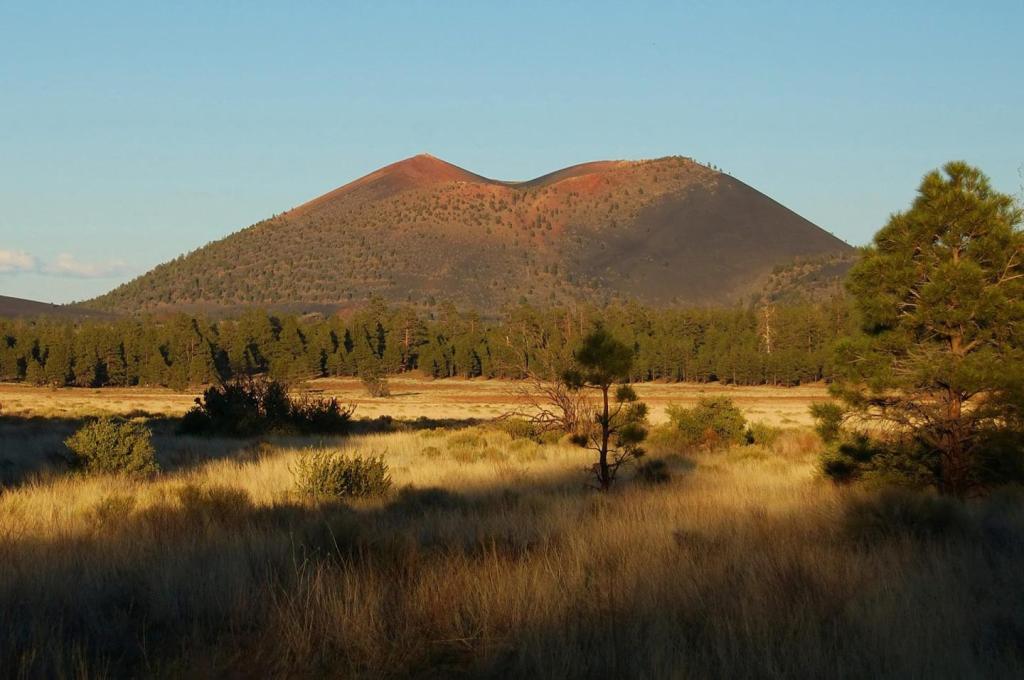
It was while researching that story that I accidentally discovered the man they call The Magician. I remember the day I arrived at the lonely, high-desert site about ten miles from Flagstaff. Cold raindrops fell on scattered junipers, their piney scent mixed with that of dampened earth. The ground was a rocky mixture of small chunks of red basalt and black cinder left from the eruption of the Sunset Crater Volcano almost 900-hundred years earlier. Beautiful pottery fragments with intricate black-and-white designs littered the hillside. I was interviewing an archeologist from the Museum of Northern Arizona about the ballcourts when he pointed up the slope. “That’s where they found The Magician,” he said.

It was while reseraching a story on ancient Mesoamerican ballcourts–this one at the Wupatki National Monument–that I learned about the man they call The Magician.

Later, I looked into the discovery. The fantastic grave was uncovered in 1939 and filled with over 600 exquisite funerary objects: arrow points and pots, mineral specimens and shells from the far-off Pacific Ocean. Fine turquoise jewelry, intricate beaded items, paint pigments, baskets, and mosaics. Then, there were the wooden swords with handles carved into animal hooves and human hands, objects that identified the man as a sword swallower and a magician.

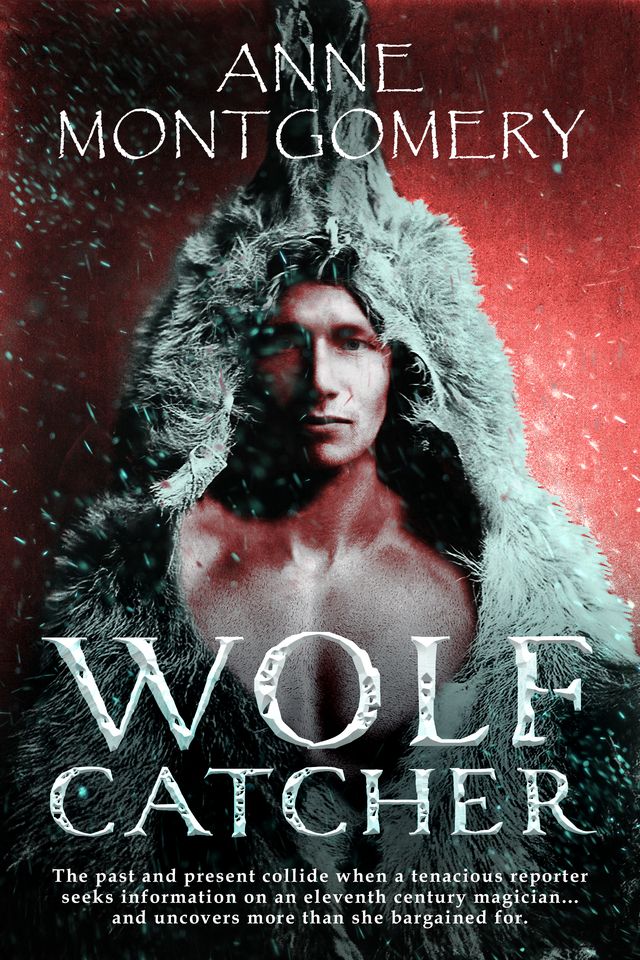
My novel Wolf Catcher tells two stories. One follows Kate Butler, a former TV reporter who’s no longer pretty enough to be in front of a camera. She’s turned to print reporting, but can’t get anyone to talk about the The Magician. Still, Kate, who has given up any dreams of a personal life to concentrate on her work, is determined to finish the job. Kate’s story mirrors my own, with the exception of the time when bullets are flying.

Kaya lives at the Village on the Ridge in the late 11th century, shortly after the waking of the Volcano God, whose eruption changed the lives of the people in the high desert. Some, like those on the Ridge, were blessed, while others were left to wander the landscape homeless and hungry. Kaya is a healer who, like Kate, has given up a personal life for her vocation. She is tasked with tending an odd-looking injured man who the People call Wolf Catcher. The massive white wolf that appears with him is both fascinating and frightening. Some believe the arrival of the two is a harbinger.

Wolf Catcher tells the modern-day story of a reporter’s quest to determine whether the descendants of ancient Euroasian people somehow arrived in the New World thousands of years earlier than previously believed and discusses the problems associated with archeological looting and the black market sales of antiquities. It also delves into personal choices and relationships, proving human beings have not changed all that much over the centuries.

Wolf Catcher

Anne Montgomery

Historical Fiction

Next Chapter Publishing

Released August 4, 2025

The past and present collide when a tenacious reporter seeks information on an eleventh century magician…and uncovers more than she bargained for.

In 1939, archaeologists uncovered a 900-year-old tomb at the Northern Arizona site called Ridge Ruin. The man, bedecked in fine turquoise jewelry and intricate bead work, was surrounded by hundreds of extraordinary funerary objects, including wooden swords with handles carved into animal hooves and human hands. The Hopi workers stepped back from the grave, knowing what the Moochiwimi sticks meant. This man was a magician.

Sixty-five years later, investigative reporter Kate Butler discovers evidence that The Magician looked notably different from those who buried him. Her quest to discover The Magician’s origin carries her back to a time when the high desert world was shattered by the birth of a volcano and into the present-day dangers of archaeological looting where black market sales of antiquities can lead to murder.

Universal Book Link

Amazon

Apple Books

Barnes and Noble

Google Books

Rakuten Kobo

Praise for Wolf Catcher

“Blending archaeology and Native American mythology, “Wolf Catcher” by novelist Anne Montgomery is an original, exceptionally well written, and compelling work of historical fiction…” – Midwest Book Review

“The author’s ability to interweave the past and the present was masterful. The characters were complex and interesting, especially with the underlying theme of rethinking the history of worldly human migration. A real page turner and I am wondering when the movie is going to be made!” – Alicia Williams Goodreads

“The story is very well-paced, reaching a page-turning, action-packed climax to the end. This story has all the elements of a great suspense drama centered around a historical mystery.” – Heidi Slowinski Author

“I was deeply and thoroughly embroiled in this imaginative novel… (that) melds seamlessly much of fact with fiction. Totally recommended! “ – V. Williams Vine Voice

“What a journey! What a story! A truly epic tale that grabs you by a throat and moves your soul. Highly recommend for the readers of all age groups.” – Marina Sardarova Author

“Boy, didn’t this one grip me quickly and keep me glued to the pages! Loved the cliff-hanging chapter endings. Well researched, well-plotted and paced…Trust me, you’ll love it. Totally recommended and out now!” – Rosepoint Publishing

“Once again the author has created a beautiful story with a powerful message. She took a piece of history and brought it to life. I just can’t say enough good things about Wolf Catcher.” – Megan Salcido Wildwood Reads

Bookstores, libraries, and other booksellers can order copies directly from the Ingram Catalog.

Anne Montgomery’s novels can be found wherever books are sold.

Goodreads

Amazon

A reason to celebrate! Wolf Catcher, my most personal book, is now available

Here’s the new cover for my historical fiction novel Wolf Catcher. It’s rather edgy and cool, and a handful of you might recognize the title, because this book came out years ago. However, my life didn’t go exactly as planned back then, so few people ever read the story.

Here’s what happened.

Launch day for an author is huge. Like a wedding, or a milestone anniversary, or celebrating a 100th birthday. Authors plan for these events by locating venues, sending out invitations, courting the media, and soliciting reviews. Then we agonize over the details and hope everything goes as planned.

So imagine when a week before the scheduled launch of my suspense novel The Castle I awoke with Covid. I could barely move. I even hallucinated. The one delusion I still remember is, perhaps, understandable since I’m a writer. I was searching for the answer to a question I don’t recall and was being attacked by words and phrases, none of which gave me what I was looking for. The faster I batted those words away, the quicker they came at me. I felt like a tennis player at Wimbledon. It was like being imprisoned in a vicious writer’s video game.

But that wasn’t the worst part. I got out of bed, walked into the bathroom, and promptly passed out. When I woke up, I tried to stand, but my left leg wouldn’t work. I looked down, saw my foot twisted in the wrong direction, and slowly crawled back to bed. It would be eight months before I could walk properly again. I carry a titanium plate and eleven screws in my leg as a reminder.

So, remember that launch for The Castle? It never happened. As you can imagine, few ever read the book. And, in a sad twist, another novel, Wolf Catcher, came out during the same period and suffered the same fate. There’s a window of opportunity for promoting books, moments that slipped by. Then, the books went out of print when the publisher closed.

But now I’ve been given a another chance. I can’t thank Next Chapter Publishing enough for taking on both Wolf Catcher and The Castle. Do overs are not that common in the publishing industry, so I will be forever grateful for the opportunity.

Of all my books, Wolf Catcher—which was released August 7, 2025—is the most personal. One of the protagonists is a reporter tasked with ferreting out the identity of a man buried outside of Flagstaff, Arizona almost 900 years earlier. A man whose mummified remains looked different from the people who occupied the area at the time, one who was buried with 600 exquisite funerary objects, identifying him as a person of power and prestige.

The story of the man they call The Magician was my assignment when I worked as a journalist for Arizona Highways Magazine. That the reporter’s name in the book is Kate Butler might be a tipoff that she and I traveled the same path in search of the story. With the exception of the time when bullets are flying, just about everything that happened to Kate also happened to me.

Note that as a girl who grew up in New Jersey with little knowledge of Native Americans, the investigation was a long learning curve. I charged into my research with little understanding of the cultural traditions I might be trampling and, like Kate, changed a lot along the way.

So, if you weren’t one of the few who had a chance to read Wolf Catcher you can now.

The past and present collide when a tenacious reporter seeks information on an eleventh century magician…and uncovers more than she bargained for.

In 1939, archaeologists uncovered a 900-year-old tomb at the Northern Arizona site called Ridge Ruin. The man, bedecked in fine turquoise jewelry and intricate bead work, was surrounded by hundreds of extraordinary funerary objects, including wooden swords with handles carved into animal hooves and human hands. The Hopi workers stepped back from the grave, knowing what the Moochiwimi sticks meant. This man was a magician.

Sixty-five years later, investigative reporter Kate Butler discovers evidence that The Magician looked notably different from those who buried him. Her quest to discover The Magician’s origin carries her back to a time when the high desert world was shattered by the birth of a volcano and into the present-day dangers of archaeological looting where black market sales of antiquities can lead to murder.

Note: Ebooks are available on all sites. Paperbacks and hardcovers will be out shortly.

Universal Book Link

Amazon

Apple Books

Barnes and Noble

Google Books

Rakuten Kobo

Bookstores, libraries, and other booksellers can order copies directly from the Ingram Catalog.

Praise for Wolf Catcher

“Blending archaeology and Native American mythology, “Wolf Catcher” by novelist Anne Montgomery is an original, exceptionally well written, and compelling work of historical fiction…” – Midwest Book Review

“The author’s ability to interweave the past and the present was masterful. The characters were complex and interesting, especially with the underlying theme of rethinking the history of worldly human migration … A real page turner and I am wondering when the movie is going to be made!” – Alicia Williams Goodreads

“The story is very well-paced, reaching a page-turning, action-packed climax to the end. This story has all the elements of a great suspense drama centered around a historical mystery.” – Heidi Slowinski Author

“I was deeply and thoroughly embroiled in this imaginative novel… (that) melds seamlessly much of fact with fiction. Totally recommended! “ – V. Williams Vine Voice

“What a journey! What a story! A truly epic tale that grabs you by a throat and moves your soul. Highly recommend for the readers of all age groups.” – Marina Sardarova Author

“Boy, didn’t this one grip me quickly and keep me glued to the pages! Loved the cliff-hanging chapter endings. Well researched, well-plotted and paced…Trust me, you’ll love it. Totally recommended and out now!” – Rosepoint Publishing

“Once again the author has created a beautiful story with a powerful message. She took a piece of history and brought it to life. I just can’t say enough good things about Wolf Catcher.” – Megan Salcido Wildwood Reads

Anne Montgomery’s novels can be found wherever books are sold.

Goodreads

Amazon

A note to young female athletes: Sportsmanship matters!

I love that more girls are playing sports, I’m just worried they might be picking up some bad habits.

Recently, I was on the treadmill at the health club when I looked up and saw the Little League Softball Regionals airing live on ESPN.

How cool is that?

And, yet, I was dismayed. Don’t get me wrong. The sudden rise in interest for girls and women’s sports is fantastic and took a long time coming. That the 2024 NCAA women’s basketball championship game had more eyes on it than the men’s final was a stunning change. WNBA attendance and viewership is at an all-time high. More girls are playing sports than ever before, and the idea of girls as fierce competitors has, for the first time, become socially acceptable.

And this is all good. When girls play a sport—especially a team sport—they learn important life skills, like punctuality, teamwork, and how to follow rules. Sports promote physical fitness, self-esteem, and reduce stress. Did you know that 94% of women holding C-suite positions played sports?

And yet, as I watched those preteens play softball, I couldn’t help being a bit disheartened, because it seemed that every time a girl made a good play, she punctuated the act with a dancing display, complete with finger pointing, twirling, and stomping.

And that’s when I remembered the quote that has been attributed to Green Bay Packers coach Vince Lombardi. “When you get to the endzone, act like you’ve been there before.”

I know what you’re thinking. “Gosh, Anne! Can’t the girls have a little fun?”

Sure, but the time for celebrating is when the game is over. I have no qualms with players jumping into each other’s arms and pumping fists into the air after they’ve won. But one young pitcher “performed” after every strikeout. A nice double into the gap had another girl on second base jumping up and down and pointing at herself. And so it went.

When did it become okay for young athletes to belittle the opposing team? Because, don’t kid yourself, that’s what’s happening here. The girls doing all the dancing were shutting out their opponents and went on to win 7-0. I’m guessing the losing team felt bad enough without having their noses rubbed in it.

Before I go on, note that I spent 40 years officiating amateur sports, mostly football and baseball, so my experience has been primarily with male athletes. The propensity to glorify oneself during a game has become more common, no doubt a trickle-down effect from watching pro players prance around after making a good play. I suppose if you’ve made it to the point where you’re getting paid to put on your gear, you can do what you want, but most athletes will only participate in youth sports and all this self-aggrandizement is missing the point.

I am reminded of football great Larry Fitzgerald, the Cardinals wide receiver and the sure-to-be Hall of Famer who, after making the most spectacular catches, would seek out the nearest official and just hand them the ball. No dancing. No high fives. No previously choreographed displays. He just let his talent do the talking.

That is what sports should be about.

So maybe a little less patting yourselves on the back, ladies. Let your skills speak for you. Take pride in your performance, but let the game be the spectacle. Your awkward displays do nothing but make you look like poor sports.

Your Forgotten Sons

Inspired by a true story

Anne Montgomery

Bud Richardville is inducted into the Army as the United States prepares for the invasion of Europe in 1943. A chance comment has Bud assigned to a Graves Registration Company, where his unit is tasked with locating, identifying, and burying the dead. Bud ships out, leaving behind his new wife, Lorraine, a mysterious woman who has stolen his heart but whose secretive nature and shadowy past leave many unanswered questions. When Bud and his men hit the beach at Normandy, they are immediately thrust into the horrors of what working in a graves unit entails. Bud is beaten down by the gruesome demands of his job and losses in his personal life, but then he meets Eva, an optimistic soul who despite the war can see a positive future. Will Eva’s love be enough to save him?

Amazon

Apple Books

Barnes & Nobel

Google Books

Kobo

Bookstores, libraries, and other booksellers can order copies directly from the Ingram Catalog.

Anne Montgomery’s novels can be found wherever books are sold.

Goodreads

Amazon

Breeding baby corals so we can all breathe free

This almost 400-year-old plantation site on St. Croix in the U.S. Virgin Islands is home to a laboratory designed to cultivate coral and return it to the sea, an effort to help restore our Caribbean coral reefs.

The sign on the dirt road read “Estate Little Princess Established 1738”. The 25-acre plot which lies just west of Christiansted on the St. Croix coast was once a sugar plantation. You can still see the tall sugar mill—one of about 100 that dot the island—a testament to the liquid treasure of the rum industry, wealth made on the backs of the almost 29,000 African slaves that were transported to what are today the U.S. Virgin Islands during the Danish Colonial Period.

The beauty of the place is overwhelming with its flashy green flora and scarlet Flamboyant trees. Not that the most important residents would notice. The tiny corals that reside in special protected tanks lie placidly, waiting for their chance to be released into the sea.

“You see this?” Our guide, Semoya Phillips of the Virgin Islands Coral Innovation Hub, pointed at a large chunk of coral partway up the side of the property’s sugar mill. “It was gouged out of the reef because building material was needed. The people believed it was a renewable resource.”

And while coral does grow back, the process is painstakingly slow. That’s why the Nature Conservancy helps fund the lab facility. Here’s how they explain it on their website: “The Nature Conservancy and partners are advancing coral science to help reefs recover at a meaningful scale. Using our land-based and underwater nurseries, we are innovating ways to breed significantly more corals, with greater survival rates, for reef restoration. Novel techniques allow us to dramatically increase coral growth and preserve coral genetic diversity for improved reef resilience. Healthy new corals are then used to bring dying reefs back to life and restore the benefits they provide for our ocean, communities and economies.”

Semoya Phillips, who works at the Virgin Islands Coral Innovation Hub, points out coral that was used as building material for a sugar mill that was constructed hundreds of years ago.

Some of you may be thinking, “Gosh! Why should I care about coral reefs?”

Here’s the thing. Do you like to breathe? Note that our oceans produce 50% of the oxygen in our atmosphere. And coral reefs do their part because they house algae called zooxanthellae that convert carbon dioxide and water into energy through photosynthesis and—bada bing bada boom—release oxygen into the atmosphere.

And there’s more! When those big bad hurricanes come roaring ashore, it’s coral reefs that slow the water down, lessening the damage from storm surge. Twenty-five percent of the world’s fish grow up in the protective nooks and crannies of coral reefs before venturing out to sea—think Finding Nemo—with over 4,000 species dependent on coral reefs at some point in their fishy lives. So, with about 500 million people dependent on fish for food, the decimation of coral reefs could cause worldwide starvation. And let’s not forget the benefits of ecotourism. In the interest of full transparency, I’m a scuba diver and can think of nothing more delightful than floating above a shimmering reef watching jewel-colored fishes dancing in the sunlight.

So, yes, we need to do all we can to save our reefs, which are dying off at unprecedented rates due to warming seas cause by climate change. The rising temperatures force the corals to expell the algea that give them their beautiful colors, bleaching that often leads to the death of the colony. Pollution, over fishing, and costal development, among other things, are also destoying the reefs.

Currently, researchers like Phillips are cloning corals they retrieve from the sea giving them space and time to grow and then transplanting them back into the ocean. It’s a time consuming and arduous task, one that often results in the little creatures dying off again. And still, they try.

Don’t these coral babies look like cookies? The little ones will hopefully someday be returned to the sea in an effort to restore our coral reefs.

“I know, like parents, we’re not supposed to pick favorites,” Phillips said with a smile. “But …” She nodded at a tank that held a different type of coral babies. “These are not clones.”

The tiny corals in question were bred from sperm and eggs that are released once a year by the millions, a synchronized dance which often occurs in conjunction with a full moon. They are then gently gathered up by divers and moved to the lab tanks for fertilization.

“They provide diversification,” Phillips explained.

And that’s important, because diversity will help the corals be more resilient and better able to stave off disease. There’s also hope that corals might be developed that can thrive in the warming waters of our world’s oceans.

The effort to regrow coral can be disheartening. At one St. Croix underwater site where researchers spent three years establishing a coral nursery, 67% of the babies were wiped out in a matter of weeks, which prompted me to ask, what’s the point?

“Coral’s have been around for a very long time. Bleaching is recent,” Phillips said. “But people worldwide are studying this modern problem looking for solutions.” She gazed again at the coral babies in a glimmering tank and smiled. A scientist with hope.

Here’s hoping we find a lot more like her.  

Your Forgotten Sons

Inspired by a true story

Anne Montgomery

Bud Richardville is inducted into the Army as the United States prepares for the invasion of Europe in 1943. A chance comment has Bud assigned to a Graves Registration Company, where his unit is tasked with locating, identifying, and burying the dead. Bud ships out, leaving behind his new wife, Lorraine, a mysterious woman who has stolen his heart but whose secretive nature and shadowy past leave many unanswered questions. When Bud and his men hit the beach at Normandy, they are immediately thrust into the horrors of what working in a graves unit entails. Bud is beaten down by the gruesome demands of his job and losses in his personal life, but then he meets Eva, an optimistic soul who despite the war can see a positive future. Will Eva’s love be enough to save him?

Amazon

Apple Books

Barnes & Nobel

Google Books

Kobo

Bookstores, libraries, and other booksellers can order copies directly from the Ingram Catalog.

Anne Montgomery’s novels can be found wherever books are sold.

Goodreads

Amazon

A walk and a song: For your health

Spinal fusion surgery affected my singing voice, but I’m walking to make it better.

I like to sing. Always have. But I haven’t done much of it lately.

Here’s why. About a year ago, I underwent cervical spine fusion. A surgeon implanted two titanium clips in my spine through the front of my neck. Sounds fun, doesn’t it? My metal bits look sort of like those clasps you’d use to hold a bunch of papers together, or in my case to make sure that chips bag stays tightly sealed. 

As I love a good story, I remember prior to the surgery I said to the doc, “Could you give me a scar that looks like I was in a biker-girl barfight?”

He squinted, then shook his head. “No!”

So, today, geez, I have nothing cool to show for the operation. In case you’re wondering, my wonky spine is the result of 60 years of sports. Remember when they told us sports were good for us? They lied! And if I could figure out exactly who “they” were I might hunt them down. But I digress.

Despite the pleasing effects on my spine—no more bone-crushing pain that wipes the colors from my world—I was left with an impaired singing voice. And while I have always been an Alto II who rarely hit what most would call modest high notes, my voice is even lower now.

Recently, I decided to rectify the situation, so I signed up for voice lessons. Though I was rather startled when my teacher launched me into singing gospel tunes, Richie is helping me get my voice back.

During a break in my singing, Richie said, “Do you run or walk?”

“I walk,” I said.

“You should sing when you’re walking.”

I smiled. “I already do that.”

Here’s where I’ll admit that every morning I walk a rolling route on my little Caribbean Island of St. Croix, where I get to look at green hills, blue skies, and marshmallow-colored clouds. And the turnaround spot is picture prefect: a sprawling field carved into a hillside of tropical forest where, if I’m very lucky, horses and deer might be found placidly grazing together while a white cattle egret flutters around them. So, long before Richie suggested I sing while walking—an effort to improve my breathing—I was already serenading anyone within earshot.

I’ve since learned that singing is good for us. Apparently the smart folks who know such things say it can reduce stress, strengthen our immune systems, and, as Richie pointed out, improve our lung function. And here’s something really cool. Music in general—either singing, playing, or listening to it—affects us the same way chocolate and sex do. Our brains produce endorphins, chemicals that give us feelings of euphoria and well-being. Imagine that!

So, I will continue my morning stroll, singing whenever I feel the urge, even though I might periodically verge on channeling Barry White.

Your Forgotten Sons

Inspired by a true story

Anne Montgomery

Bud Richardville is inducted into the Army as the United States prepares for the invasion of Europe in 1943. A chance comment has Bud assigned to a Graves Registration Company, where his unit is tasked with locating, identifying, and burying the dead. Bud ships out, leaving behind his new wife, Lorraine, a mysterious woman who has stolen his heart but whose secretive nature and shadowy past leave many unanswered questions. When Bud and his men hit the beach at Normandy, they are immediately thrust into the horrors of what working in a graves unit entails. Bud is beaten down by the gruesome demands of his job and losses in his personal life, but then he meets Eva, an optimistic soul who despite the war can see a positive future. Will Eva’s love be enough to save him?

Universal Buy Link

Amazon

Apple Books

Barnes & Nobel

Google Books

Kobo

Bookstores, libraries, and other booksellers can order copies directly from the Ingram Catalog.

Anne Montgomery’s novels can be found wherever books are sold.

Goodreads

Amazon

The mysterious Virgin Islands

Here’s a look at my backyard on St. Croix in the USVI. Yep, as you can see, I’m a spoiled brat.

I live part time in a place that most people don’t seem to understand. Take Netflix for example, which denied me the opportunity to watch a new TV series by saying, “This title is currently unavailable for viewing in your country.”

Or Phoenix Sky Harbor Airport where the nice people behind the domestic flight counter shake their heads and say, “You have to get into the international flights line.”

Or my gas company in Arizona that refused to let me pay my bill online. “We cannot accept payment from your current location.”

USVI should not be that difficult to explain. It means the United States Virgin Islands. It’s just like living in Pennsylvania, or Colorado, or Montana, just without the flamboyant sea view.

And now I will put on my history teacher cap and explain. The U.S. Virgin Islands include 50 minor islands and cays, as well as St. Thomas, St. John, and St. Croix, where I get to sit on my patio and stare at the ever-changing colors of the Caribbean Sea whenever I want. Doesn’t that sound nice? These islands were purchased from Denmark—one of seven nations to hold sway here—in 1917 for a cool $25 million dollars in gold. That was the year the U.S. entered World War I and the thinking was it would be detrimental if the Germans got a foothold in the Caribbean, especially in the Virgin Island’s where there are several natural deep-water ports, the perfect place to park some of their warships so they could wreak havoc near American shores. In 1927 the islands were deemed an unincorporated territory and their inhabitants were granted U.S. citizenship.

If like the aforementioned entities you’re still skeptical, note that we even have ZIP codes, which are pretty much nonexistent outside of the U.S. Now, it’s true that Virgin Islanders do not get to vote in presidential elections, but we do have one non-voting representative in Congress. We are just like Puerto Rico, Guam, American Samoa, and the other U.S. Territories. When I set foot on my little island, I am on United States soil.

Here’s the thing. The U.S. Virgin Islands are magnificently beautiful with their tropical climate and the mesmerizing Caribbean Sea that surrounds them. And they have fascinating history. Way back in 1493, a landing party of two dozen men was sent ashore  by Christopher Columbus who was on his second voyage to the New World. They were met by a group natives who were surely astonded by the 17 ships they found in the waters off their shores. When the sailors captured women and children to be slaves, the natives fired arrows at them. One native was decapitated by Columbus’ men. It is the first documented instance of resistance by American indigenous peoples against European colonists. St. Croix alone boasts two forts built almost 300 years ago: Fort Chistiansvaern and Fort Fredrik, constructed to protect the island from other nations and the marauding pirates who periodically showed up waving the skull and cross bones. How cool is that? And let’s not forget young Alexander Hamilton who hip-hopped his way around St. Croix, before skipping over to the mainland to do his Founding Father thing.

But I digress.

I’m not sure what else I can say to convince the naysayers that the lovely island I call home is part of the United States. Maybe you can pass the word.

Your Forgotten Sons

Inspired by a true story

Anne Montgomery

Bud Richardville is inducted into the Army as the United States prepares for the invasion of Europe in 1943. A chance comment has Bud assigned to a Graves Registration Company, where his unit is tasked with locating, identifying, and burying the dead. Bud ships out, leaving behind his new wife, Lorraine, a mysterious woman who has stolen his heart but whose secretive nature and shadowy past leave many unanswered questions. When Bud and his men hit the beach at Normandy, they are immediately thrust into the horrors of what working in a graves unit entails. Bud is beaten down by the gruesome demands of his job and losses in his personal life, but then he meets Eva, an optimistic soul who despite the war can see a positive future. Will Eva’s love be enough to save him?

Amazon

Apple Books

Barnes & Nobel

Google Books

Kobo

Bookstores, libraries, and other booksellers can order copies directly from the Ingram Catalog.

Anne Montgomery’s novels can be found wherever books are sold.

Goodreads

Amazon

An author’s dilemma: So many social media sites, so little time

Authors understand that they need to be on social media if they want to sell books. At least, I hope they do. In fact, anyone with a merchandise to sell needs to be regularly taping away, telling consumers why their product is a must have.

In case you’re skeptical, note that, according to DataReportal,  there are currently 5.31 billion social media users around the world, people who log onto almost seven different social media platforms each month, where they spend over 18 hours weekly visiting various sites.

Despite what youngsters tell you—Kids apparently prefer platforms that cater exclusively to them and don’t like scrolling through postings by old folks.— Facebook is still king in the social media world with over three billion users visiting monthly. I mention this because love it or hate it authors should have a presence on the site.  

But where should authors go from there? Depending on who you ask, Facebook, Instagram, LinkedIn, and TikTok are where they should be. But here’s the thing, when you throw in the effort required to run a website, write regular blogs, participate in podcasts, appear at speaking engagements and book events, as well as posting on myriad social media sites, authors can get overwhelmed. (And I didn’t even mention that they should also find time to write.)

The solution? Think carefully about where you’d like to spread the word about your books. Note which social media sites appeal to you. For example, I struggled with Instagram. The picture/video-dominant platform often confounded me. When TikTok somehow took over my Instagram account and I was unable to retrieve it, I just let it go. Similarly, I’m not a fan of X, still I do share my weekly blogs there.

If you’re looking for a time-saver, I recommend checking the pages where you share your work. Consider that Facebook has dozens of sites for authors, many with thousands of followers. But here’s the problem. There is often virtually no interaction on some of these sites. You can post your blog or ad, and pretty much never get a single like. I have spent time on these sites, but finally, in an effort to streamline, I let them go.

Authors must determine which sites they’re comfortable with, then put their best work into those platforms and build a clientele. If you don’t see results from one site, try another until you’re making progress. Just don’t spread yourself too thin. The hope is that authors will eventually settle in and learn to enjoy the social-media marketing aspect of their job.

Your Forgotten Sons

Inspired by a true story

Anne Montgomery

Bud Richardville is inducted into the Army as the United States prepares for the invasion of Europe in 1943. A chance comment has Bud assigned to a Graves Registration Company, where his unit is tasked with locating, identifying, and burying the dead. Bud ships out, leaving behind his new wife, Lorraine, a mysterious woman who has stolen his heart but whose secretive nature and shadowy past leave many unanswered questions. When Bud and his men hit the beach at Normandy, they are immediately thrust into the horrors of what working in a graves unit entails. Bud is beaten down by the gruesome demands of his job and losses in his personal life, but then he meets Eva, an optimistic soul who despite the war can see a positive future. Will Eva’s love be enough to save him?

Universal Buy Link

Amazon

Apple Books

Barnes & Nobel

Google Books

Kobo

Bookstores, libraries, and other booksellers can order copies directly from the Ingram Catalog.

Anne Montgomery’s novels can be found wherever books are sold.

Goodreads

Amazon

The beauty of the guilt-free nap

Kitties don’t mind napping, so why do we?

So there I was watching the financial news when my eyelids began to droop. I know. Shocking! You’d think all those colorful flashing numbers, fancy graphs, and scintillating  talking heads would have kept me riveted to the screen.

Then I had a rather naughty thought. “I think I might take a nap,” I said to my sweetie pie. Instantly embarrassed, I amended my comment. “Or I’ll read the paper,” I said with little conviction.

“There’s a third option.” Ryan eyed me. “Do both.”

Since I’m not much for multi-tasking and despite my guilt, I closed the blinds in the bedroom, grabbed a quilt, and passed out.

Before I retired from my full-time job, taking a nap rarely seemed acceptable. Even when I had the time, it just didn’t seem right to curl up in the middle of the day. Still, had I consulted WebMd, I might have reconsidered, because it seems naps are good for us.

Jennifer Soong’s article “The Secret (and Surprising) Power of Naps” pretty much says it all. “Need to recharge? Don’t lean on caffeine—a power nap will boost your memory, cognitive skills, creativity, and energy level.”

For years, the 20-minute power lap was praised for upping our alertness levels and improving our motor learning skills like typing or playing an instrument. But don’t worry if you’re like me and those naps tend to stretch on.

“Research shows longer naps help boost memory and enhance creativity,” Soong said. “Slow-wave sleep—usually 30 to 60 minutes of napping—is good for decision-making skills, such as memorizing vocabulary or recalling directions. Getting rapid movement or REM sleep, usually 60 to 90 minutes of napping, plays a key role in making new connections in the brain and solving creative problems.”

While those lengthier naps sound enticing, experts suggest 30-minute siestas so we don’t wake up groggy. One should also keep a regular nap schedule and recline during the prime napping hours of 1 PM and 3PM, which doesn’t seem horribly practical. Still, a fixed nap time does sound nice and the idea of saying, “I’m sorry. I am unavailable because it’s nap time,”  just seems fun, doesn’t it? Note that a darkened room is a good idea for an afternoon snooze, as is a blanket, since our body temperature drops when we nap.

I woke up an hour and a half later and didn’t feel the least bit groggy. Though the whole thing felt rather sinful. But when you consider that naps can boost memory, ease stress and make you cheerier, well, what’s the harm?

So, fellow nappers, grab your blankies and join me. Let’s get some daytime shuteye whenever we’re in the mood. No guilt required.

Your Forgotten Sons

Inspired by a true story

Anne Montgomery

Bud Richardville is inducted into the Army as the United States prepares for the invasion of Europe in 1943. A chance comment has Bud assigned to a Graves Registration Company, where his unit is tasked with locating, identifying, and burying the dead. Bud ships out, leaving behind his new wife, Lorraine, a mysterious woman who has stolen his heart but whose secretive nature and shadowy past leave many unanswered questions. When Bud and his men hit the beach at Normandy, they are immediately thrust into the horrors of what working in a graves unit entails. Bud is beaten down by the gruesome demands of his job and losses in his personal life, but then he meets Eva, an optimistic soul who despite the war can see a positive future. Will Eva’s love be enough to save him?

Amazon

Apple Books

Barnes & Nobel

Google Books

Kobo

Bookstores, libraries, and other booksellers can order copies directly from the Ingram Catalog.

Anne Montgomery’s novels can be found wherever books are sold.
Goodreads

Amazon

Sea Turtles: Magical ocean ambassadors

Any scuba diver will tell you that often the highlight of a dive is meeting up with a sea turtle. These almost magical ambassadors of the ocean rarely seem afraid of humans, even though we might appear scary clad in our diving gear, emitting plums of bubbles that make us appear much larger than we actually are. Yet, sea turtles often swim right up to us, staring as we stare back. Then they gently move their flippers and glide away, seeming to fly more than swim.

I mention sea turtles because last week I had the opportunity to head out to Sandy Point Wildlife Refuge, a wild spot of forest and beach on the west end of St. Croix in the U.S. Virgin Islands where I live part of the time. The refuge was designed with sea turtles in mind.

Since I’ve been diving a couple of decades now, I’ve seen a lot of beaches, but when we emerged from the forest I gasped at the color of the water. It was a creamy turquoise caused by a convergence of currents that splash up onto a white sand beach scattered with long tendrils of green vines. Add in the various blues of the Caribbean Sea farther out and the early evening sky, and, as you can imagine, it was magnificent.

But while the view was exceptional, what was below us was of primary importance. Our guides from the St. Croix Sea Turtle Project explained that there were about 1,500 turtle nests beneath our feet, so the area is closed to the public from April through August. Green turtles, hawksbill turtles, and massive leatherbacks that can reach up to two-thousand pounds come to this beach every year to lay their eggs, a journey that takes them thousands of miles to Canada and back.

The volunteers of the St. Croix Sea Turtle Project were kind enough to escort us through the Sandy Point Wildlife Refuge where we learned all about the sea turtles that nest in the Virgin Islands. (Fun Fact: The final scene of the film Shawshank Redemption was filmed on this beach.)

That trip is fraught with danger. Often turtles come ashore with wounds inflicted by tiger sharks and propellers from boats. Fishermen take their share, as turtles are still harvested legally in some places for food. They also get caught in fishing nets and drown. And the land is not much more hospitable. Nests are ravaged by dogs, as well as mongooses and rats, invasive species brought to the islands by European colonists. Humans, too, take a toll. That’s why rules are in place on all Virgin Islands beaches forbidding chairs and tent poles that sink into the sand, as one never knows exactly where a turtle nest might be.

Sea Turtles today are an endangered species, the result of 200 years of over hunting, as they were valued for their meat, eggs, and shells. Climate change and coastal development have also eroded nesting and foraging habitats. Countries worldwide now protect sea turtles and in the U.S. penalties for harming them can including jail time and fines of up to $15,000 for each offense.

I sat in the sand and stared at the sea. Then I placed my palm on the warm sand. Was there a nest below? Would tiny hatchlings eventually emerge and head for the sea where only one in 1,000 would survive to adulthood?

As our guides herded us off the beach, I was glad these dedicated volunteers were there, focusing on sea turtle research and conservation, because a world without sea turtles would be a world with a little less magic.

Your Forgotten Sons

Inspired by a true story

Anne Montgomery

Bud Richardville is inducted into the Army as the United States prepares for the invasion of Europe in 1943. A chance comment has Bud assigned to a Graves Registration Company, where his unit is tasked with locating, identifying, and burying the dead. Bud ships out, leaving behind his new wife, Lorraine, a mysterious woman who has stolen his heart but whose secretive nature and shadowy past leave many unanswered questions. When Bud and his men hit the beach at Normandy, they are immediately thrust into the horrors of what working in a graves unit entails. Bud is beaten down by the gruesome demands of his job and losses in his personal life, but then he meets Eva, an optimistic soul who despite the war can see a positive future. Will Eva’s love be enough to save him?

Release Date: June 6, 2024

Amazon

Apple Books

Barnes & Nobel

Google Books

Kobo

Bookstores, libraries, and other booksellers can order copies directly from the Ingram Catalog.

Anne Montgomery’s novels can be found wherever books are sold.

Goodreads

Amazon

Talking to myself and feelin’…fine

The massive station wagon my family traveled in during the 1960s, much like this one, meant we kids could hide in the back and drive our parents crazy. Often, my father was reduced to talking to himself.

I recall traveling in the back of a baby-blue station wagon, a behemoth that I and my two siblings would pile into for what my father once referred to as, “the goddamned family vacation.”

Apparently, we kids squabbled a lot on those trips, and as many of those in my age group know, there was a lot of, “If you don’t stop, I’m turning this car around!” going on.

But there was something else happening, as well. When we kids were worn out from fighting, and all was relatively quiet, we would notice that my father would often mumble to himself. One of us would call out. “Dad! Who are you talking to!” Then we’d all giggle.

I don’t recall him ever telling us who his mystery friend was, but I do remember laughing at him.

Today, I’m reconsidering my behavior.

“Who are you talking to?” my sweetie pie called when I was slicing fruit in the kitchen.

I bit my lower lip. Who indeed?

After locating my reporter’s cap and doing some checking, I determined that muttering and saying random things out loud could be a sign of a mental health issue, like schizophrenia. And while studies show that 96% of people carry on an internal dialogue, just one in four admit to talking out loud. But don’t worry. For most of us, it’s a normal cognitive process, one that can help us reduce stress, improving our problem-solving skills, and help us organize our thoughts and feelings.

We talk to ourselves for a number of reasons. It helps us debate ideas, make decisions, and serve as a pep talk when we need one. Interestingly, talking to ourselves can also curb loneliness.

What is important is what we’re saying in those conversations with ourselves. According to Psychology Today, “The content of your self-talk is important because, believe it or not, you are the most influential person, in your head. Yes, other people can certainly influence the way we feel and think, but at the end of the day, we are the ones who accept or reject the messages received from others.”

The idea is your conversations with you should be the kind that build you up not tear you down.

There can be a certain stigma to talking to yourself, but today, with people everywhere conversing via Bluetooth, I’m guessing few even notice those of us who are chatting with no one nearby. And when you consider that the habit is said to be a healthy problem-solving tactic, I say talk away.

I just wish my father was still around so I could apologize for laughing.

“Sorry, Dad.”

Your Forgotten Sons

Inspired by a true story

Anne Montgomery

Bud Richardville is inducted into the Army as the United States prepares for the invasion of Europe in 1943. A chance comment has Bud assigned to a Graves Registration Company, where his unit is tasked with locating, identifying, and burying the dead. Bud ships out, leaving behind his new wife, Lorraine, a mysterious woman who has stolen his heart but whose secretive nature and shadowy past leave many unanswered questions. When Bud and his men hit the beach at Normandy, they are immediately thrust into the horrors of what working in a graves unit entails. Bud is beaten down by the gruesome demands of his job and losses in his personal life, but then he meets Eva, an optimistic soul who despite the war can see a positive future. Will Eva’s love be enough to save him?

Release Date: June 6, 2024

Amazon

Apple Books

Barnes & Nobel

Google Books

Kobo

Bookstores, libraries, and other booksellers can order copies directly from the Ingram Catalog.

Anne Montgomery’s novels can be found wherever books are sold.

Goodreads

Amazon