Uniforms bind us to one another

“You really shouldn’t be wearing spaghetti straps in class,” I said, staring at the pretty teen whose bare shoulders belied the fact that it was a chilly morning.

She rolled her eyes, insinuating, I think, that I was old and didn’t understand. I wanted to say that back in the ’60s, when I was about her age, my parents rolled their eyes at my hip-hugging, ragged-edged bellbottoms, tight leotard tops, and miniskirts that just covered the edge of my bottom. But I bit my tongue, knowing she wouldn’t believe me. Students seem to think teachers have no lives outside of the classroom and that, after they leave and the lights go down, we curl up under our desks to rest and wait until they arrive again the next day.

The whole dress-code issue got me thinking about uniforms. The term itself causes teens to gnash their teeth, practically weeping at the thought of someone specifying what they can and cannot wear. For me, however, uniforms generally gave me a sense of belonging.

My first uniform consisted of white figure skates, beige tights and a navy-blue skating dress. Though a mediocre ice skater by all measures, every time I saw those Olympians or the top-notch competitors I sometimes shared the ice with, I always pictured myself among them, gold medal proudly displayed on that ribbon around my neck. A kid can dream and dream I did.

As a Girl Scout, I can’t say I loved the white shirt, jaunty tam, and green skirt, which I did manage to hem to almost mini proportions. What I did love was my merit badge sash, it’s bright array of emblems signifying my scouting accomplishments. I took a great deal of pride in those small colorful fabric disks. All these years later, my sash is the only part of my uniform I still have and one I continue to cherish.

In my early twenties, I became a sports official, which necessitated all sorts of uniforms and accoutrements. Baseball required a mask, shin guards, and a chest protector that, ironically, supplied no real protection for those of us with actual breasts. There were ball bags and caps and steel-toed shoes, with grey polyester pants and light blue button-downs that, over the years, morphed into dark blue pullovers. And let’s not forget those little black plastic clickers that enumerated balls and strikes and outs. Any umpire who ever tried to work a game without one will tell you the near impossibility of keeping the count in your head.
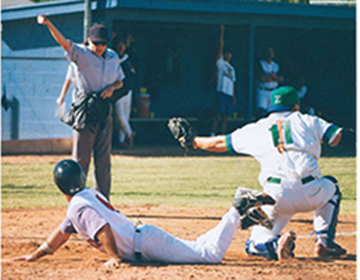
Me Umpiring 3

Basketball, soccer, and ice hockey had relatively simple attire, by comparison: black-and-white striped shirts, black shorts or pants, and a whistle. Of course, one needed hockey skates for hockey, and those little red and yellow cards for soccer, but keeping track of the gear was pretty easy.

Not so for football – the only sport I still officiate – which is a complicated equipment affair that necessitates I tote a wheeled bag to my Friday night high school games. Athletic leggings are covered, in my case, by prescription-strength knee braces, which are concealed by belted black pants displaying a white stripe down each leg. I tuck the lanyard bearing my Fox40 whistle beneath the collar of my striped shirt and slip the notepad on which I’ll document the captains of both teams, each time out, and any nefarious behavior that might require further paperwork in my breast pocket. A blue bean bag for identifying the spot where a fumble was lost or where possession was gained on a punt is pushed into the left side of my belt, while my yellow flag is tucked between the top of my pants and right hip. An elastic down indicator encircles my wrist, which, like the previously mentioned clicker, is one of those seemingly inconsequential bits of gear, until you find yourself in the middle of a game wondering if you’ve lost a down. We also have caps and watches and radios and ear pieces and down clips and black shoes. Added up, my football gear might not seem like much, but the horror of arriving unprepared leaves me and many of my brethren carrying duplicates: two shirts, extra shoes and flags, enough whistles to outfit the whole crew, and multiple hats. Speaking of the latter, my cap is white, because I’m the referee and crew chief. And it is at that moment, when I look in the mirror and adjust that hat, that I truly feel like a football official.
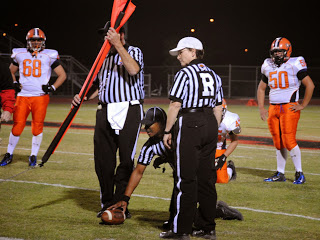
anne-montgomery-referee

While working as a TV sports reporter and anchor my “uniform” was less specific than others I’ve worn, but there was prescribed clothing, nonetheless. In television, there is a specific look required. (If you want proof, click through your local news channels.) And though every station would shuttle me off to a consultant who would look me up and down and then proceed to change my hair, make-up, jewelry, and clothing, the results pretty much looked like every other woman who plied her trade in front of a TV camera.

One of my favorite uniforms is one that keeps me alive. My black, neck-to-ankle scuba skin  protects me from the sun, which as a red-headed freckled person is an ongoing battle. My buoyancy control device keeps my head above water, when need be, while my regulator allows me to breathe when I descend down into the sea. My dive computer helps me discern when I should take those decompression stops, so I won’t get the bends, and my fins help me maneuver through currents that might whisk me out to sea, if I’m not careful. Without my mask, I’d be blind in a watery world. As much as a uniform, my scuba gear is a life-support system.
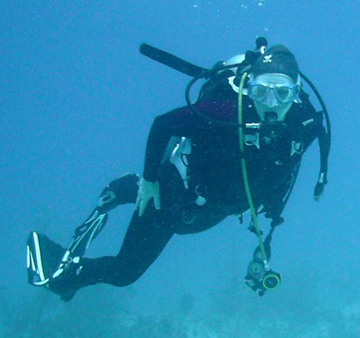
Me diving 2 smaller

All of my uniforms share something in common. When I see ice skaters, or Girl Scouts, or sports officials, or scuba divers, or women on TV, I know we share a common history. Despite our age, or where we reside, or any other details that define our lives, we recognize that we hold similar experiences and, though we may be strangers, we are also comrades.

I hope that, at some point, everyone gets to wear a uniform. Maybe even the child in the spaghetti-strap top. Perhaps then she’ll understand that uniforms are nothing to fear, rather they are links that bonds us to one another.
32337760

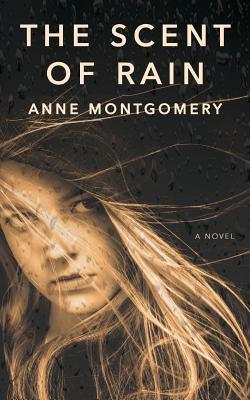
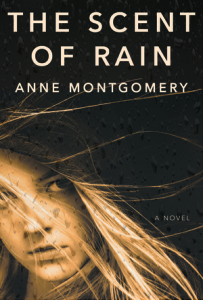
Anne Montgomery’s latest novel, The Scent of Rain, tells the story of two Arizona teenagers whose fates become intertwined. Rose flees into the mountains to escape from her abusive polygamous community where her only future is marriage to a man older than her father. Adan, whose only wish is to be reunited with his mother, is on the run from the cruelties of the foster care system. Are there any adults they can trust? Can they even trust each other?  The Scent of Rain is available at https://www.indiebound.org/book/9780996390149 and wherever books are sold.

Get a jump on your holiday cooking

Perhaps you think we authors are just ink-stained wretches who care only for that elusive perfect turn of phrase. But you’d be wrong, because some of us care alot about food! In our hearts and minds we are dedicated foodies, so a bunch of us got together and created a cookbook that’s free to whomever would like to download the book.  With the holidays rapidly approaching, it’s time to grab your copy of The ABCDs of Cooking with Writers. And now, I will don my toque, as it’s my day to make the chili.

https://www.smashwords.com/books/view/751324

“It could have been taken right out of today’s newspapers.”

My thanks to SusanLovesBooks for reviewing my novel The Scent of Rain.

REVIEW: THE SCENT OF RAIN BY ANNE MONTGOMERY

32337760

Anne Montgomery’s novel, The Scent of Rain, tells the story of two Arizona teenagers whose fates become intertwined. Rose flees into the mountains to escape from her abusive polygamous community where her only future is marriage to a man older than her father. Adan, whose only wish is to be reunited with his mother, is on the run from the cruelties of the foster care system. Are there any adults they can trust? Can they even trust each other?  The Scent of Rain is available at https://www.indiebound.org/book/9780996390149 and wherever books are sold.
 

What are all those fees that keep cropping up on review blogs and should authors pay them?

ten dollar bill

What if you could get a book review for ten bucks? But what if paying for the service made you quesy?

I’ve always said I’d never pay for reviews.

The big payouts to places like Kirkus run about $500, give or take the length of the book, so those are easy to refuse. And since even the idea of forking over a small amount for a critique seems tantamount to literary prostitution, the temptation to click that PayPal link is usually fleeting.

So what’s an author to do about these new seemingly innocuous fees that keep popping up on book reviewers blogs?

“I would be interested in reviewing this book,” said a blogger I recently contacted.

See me smile.

“Please note that I will not do a review without a blog post. If you want your book reviewed, you will need to choose the Blog Post Promotion with Review option. Payment links are at the end of the form.”

The fee was ten dollars.

See me frown.

Another review site, a rather glossy on-line magazine, requested $12 dollars for handling my cover art. Not sure what that means, exactly.

“I would love to review your book,” said another blogger. “I do have a cost per review policy set up. I have it set as a donation so the amount is up to you.”

Hummm? Is a donation a fee, if there’s a cost per review policy?

My head hurts.

I mulled these charges over, and here’s what I figured out. I’m asking a stranger who owes me nothing to read my 386-page novel. A stranger who, by the way, usually has a day job and a family life and may be a writer, as well. I’m asking that they compose pithy – hopefully positive – comments to be posted on Amazon, Goodreads, Twitter, etc., so that I might sell my book and earn a royalty check worth cashing.

In light of this revelation, and since a Hamilton appears to be the current going rate, I considered what I can purchase for ten dollars. Two Egg McMuffins with tax come in just shy of ten bucks. If I were the gambling sort, I could get in a couple hands of blackjack. I found a mini USB fan clock on ebay, which was very cute. And there was even a Batman money clip. But these are not things I want or even need.

As an author in our digital world what I lust for – there, I said it – are reviews. Perhaps you are now wondering how I handled the above requests. Well, damn, I paid the reviewers what they wanted! Did I feel like my hopes were being held hostage by benevolent booknappers? A little. Still, I understand the time and effort needed to review a book. (If you’re not convinced, think about how you’d fit being a reviewer into your life. I’ve pondered the idea and have no clue where I’d find the time.)

So, I will keep querying reviewers and will consider what they want in return. Somehow the fact that they don’t ask for payment for the actual reviews makes the idea a bit more palitable. When the costs go up, as they surely will, I will contemplate the issue again. In the meantime, I’ll make friends with PayPal.


the-scent-of-rain-ps-1

Anne Montgomery’s new novel, The Scent of Rain, tells the story of two Arizona teenagers whose fates become intertwined. Rose flees into the mountains to escape from her abusive polygamous community where her only future is marriage to a man older than her father. Adan, whose only wish is to be reunited with his mother, is on the run from the cruelties of the foster care system. Are there any adults they can trust? Can they even trust each other?  The Scent of Rain is available at https://www.indiebound.org/book/9780996390149 and wherever books are sold.

“This story will have you captivated from the moment you meet Adan and Rose.”

Comfy Reading Book Blog gives The Scent of Rain  5 out of 5 stars.

https://comfyreading.wordpress.com/2017/09/28/the-scent-of-rain/

Anne Montgomery’s new novel, The Scent of Rain, tells the story of two Arizona teenagers whose fates become intertwined. Rose flees into the mountains to escape from her abusive polygamous community where her only future is marriage to a man older than her father. Adan, whose only wish is to be reunited with his mother, is on the run from the cruelties of the foster care system. Are there any adults they can trust? Can they even trust each other?  The Scent of Rain is available at https://www.indiebound.org/book/9780996390149 and wherever books are sold.
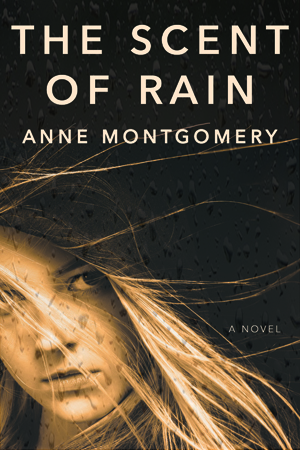


“I couldn’t stop reading and practically swallowed the book whole.”

My thanks to litbites.com for reviewing my YA novel The Scent of Rain.

http://www.litbites.com/2017/09/the-scent-of-rain-by-anne-montgomery/

Anne Montgomery’s new novel, The Scent of Rain, tells the story of two Arizona teenagers whose fates become intertwined. Rose flees into the mountains to escape from her abusive polygamous community where her only future is marriage to a man older than her father. Adan, whose only wish is to be reunited with his mother, is on the run from the cruelties of the foster care system. Are there any adults they can trust? Can they even trust each other?  The Scent of Rain is available at https://www.indiebound.org/book/9780996390149 and wherever books are sold

Can we – or rather should we – save football?

anne-montgomery-referee

Football,  fair or not, is getting a bad rap. Will the sport disappear like Rome’s gladiator games?

I have been a football fan most of my life.

I began officiating high school football in 1979 and still wear stripes and carry a whistle as a referee and crew chief today. As a sports reporter, football season was my favorite time of the year. Despite being one of a handful of women sportscasters in the country in the 1980s, my forward-thinking news director at what was then KTSP-TV in Phoenix, Arizona, anointed me the beat reporter for the NFL’s Cardinals, which meant I got to travel on the team charter, sit in the press box during game time, attend weekday practices, and immerse myself in the world of professional football. Along the way, I covered the college game, as well. Football was glorious.

Now, I wonder if, sometime in the near future, football will go the way of Rome’s gladiator games, a massive sparkling spectacle known only in the pages of history.

It seemed as though the era of steroids and performance enhancing drugs might doom the sport, but fans want nothing more than to watch giant men with bulging muscles assault one another in a legalized fashion. I don’t know if football is actually “cleaner” now than it used to be, and it certainly appears that those in charge of the various levels of the game are vociferously eschewing the chemicalization of the sport, but the average fan seems unconcerned, as long as the home-town team is winning. Note here that I am not throwing stones. I enjoy a bone-crunching hit as much as the next person, but those collisions can come with severe medical issues.

Which brings me to the concussion era. Will fear of brain injuries change the game as we know it? The recent revelation that 110 of 111 deceased former NFL players showed signs of the brain-ravaging disease CTE was chilling. Still, the numbers are often hard to read. Perhaps in thirty years we’ll have a better idea. That said, the NFL’s cavalier attitude when dealing with the suffering of former players and their families created an atmosphere that portrayed those who work between the lines as petulant crybabies, an obscene view that left the league looking cold-blooded and heartless.

Then there are the media-splashed bad-boy behaviors – domestic violence, DUIs, drug and alcohol abuse. Statistics show that college and professional athletes are no more likely to be involved in these types of activities than average folks, still big-name people garner big-time attention. It only takes a handful of negative stories in our 24-hour news cycle to see what we think is a trend.

The game also has a problem with roughly half of its fan base. A recent NFL report claimed 45% of the league’s followers are women. These are the people who primarily shell out the bucks to buy all those team-themed products. Now consider the image of Ray Rice assaulting his then fiancée in an elevator, one of a number of events that portrayed women as football punching bags. And the cheerleader issue that sadly promotes the idea of donning as few clothes as possible and standing at the sidelines, cheering on the boys. Cheerleaders from a number of NFL teams have filed lawsuits claiming they were subjected to demeaning “jiggle tests” and paid little for their work. On a positive note, TV cameras seem to focus less on bouncing sideline breasts, these days. Is this an NFL concession to the power of the pocketbook?

Arguably, the biggest problem football has is time. An average NFL games consumes over three hours. Add the 100-plus commercials per contest and viewers – especially those who are finding ad-less streaming more to their liking – and it’s easy to see why the game is beginning to flounder. Fans, especially young ones, are not buying into the pro experience and without new pigskin enthusiasts the future looks bleak.

These issues are forming a cascade, leading to one that could ultimately end the game. The NFL, the NCAA, and the National Federation of State High School Associations are reeling with the possibility that many parents will no longer allow their children to don shoulder pads and helmets and that fans are starting to lose interest in droves.

Football is on the cusp. The sport could, in our lifetime, disappear. Can we – or rather should we – try to save it?


Anne Montgomery’s new novel, The Scent of Rain, tells the story of two Arizona teenagers whose fates become intertwined. Rose flees into the mountains to escape from her abusive polygamous community where her only future is marriage to a man older than her father. Adan, whose only wish is to be reunited with his mother, is on the run from the cruelties of the foster care system. Are there any adults they can trust? Can they even trust each other?  The Scent of Rain is available at https://www.indiebound.org/book/9780996390149 and wherever books are sold.

Striking back at the FLDS

Finally, the women and girls oppressed by the Fundamentalist Church of Jesus Christ of Latter-Day Saints are getting some payback. An Associated Press article this week trumpeted “Former child bride wins $16M lawsuit against FLDS.”

Elissa Walls was just 14 when now imprisoned cult “prophet” Warren Jeffs forced her to marry her cousin. Judge Keith Kelly said the cult’s behavior “was so extreme that it went beyond all possible bounds of decency and is regarded as atrocious and utterly intolerable in a civilized society.”

Kudos to Walls for bravely and publicly standing up to the horrors of the cult in which she was raised.

http://www.sltrib.com/news/polygamy/2017/09/05/polygamist-warren-jeffs-ordered-to-pay-16-million-to-former-child-bride-who-testified-against-him/

Anne Montgomery’s new novel, The Scent of Rain, tells the story of two Arizona teenagers whose fates become intertwined. Rose flees into the mountains to escape from her abusive polygamous community where her only future is marriage to a man older than her father. Adan, whose only wish is to be reunited with his mother, is on the run from the cruelties of the foster care system. Are there any adults they can trust? Can they even trust each other?  The Scent of Rain is available at https://www.indiebound.org/book/9780996390149 and wherever books are sold

Depending on the kindness of strangers

393px-Brando_-_Leigh_-_1951

In A Streetcar Named Desire Blanch DuBois believed she could rely on the kindness of strangers. Many authors seem to feel the same way.

I’ve written quite a lot recently about the never-ending quest for reviews, the currency which sells books. To get these critiques we authors “depend on the kindness of strangers,” as Blanche DuBois said so pithily as she descended into madness.

When I first started asking for reviews, I would scan bloggers’ websites, check their guidelines, compose my query. And then, I’d see that dreaded line: “I am not accepting submissions at this time.” I would react a bit crankily, at that point. I mean, why have a review blog if you don’t want to do reviews? Geez!

“I’m taking a short break from taking on any more books,” wrote one blogger. “I will still be reviewing, but my list of to-reads has become a little over whelming,”

“I am still digging out of the hole of book review over-commitment, and I continue to over-commit,” said another. “Is there a support group for this problem?”

Eventually, I started to think about reviewers in a new light. Mostly, these are regular people, not professional journalists drawing a paycheck for reading books and sharing their thoughts. These are folks who love literature and generally impart their opinions for free, who – when authors are very lucky – post their reviews on Amazon and Goodreads and Twitter, and lots of other social media platforms. These are moms and dads with day jobs.

“We are back on Earth and reviewing. Unfortunately, we’re so busy, it’s unlikely we’re going to accept a request.”

While rummaging for reviews, I am also sometimes taken aback by a subtle whiff of snark.

“I will no longer reply to emails that don’t follow this policy. If you ignore me here, I’ll ignore you. Yes, that sounds harsh, but I get nearly 70 requests a day. I’m only one person and I don’t have the time to search for missing information or reply to every email that fails (to) include what I need to make a decision.”

Yikes! Maybe not so subtle in this case, but again, consider the reviewer’s point-of-view. They are interested in your book’s premise, but you forgot to add the link they requested, or your contact information was wrong, or you failed to include your cleverly composed synopsis, leaving them without the important facts they need to decide if you’re an author they’d like to work with.

The bottom line is let’s have compassion, people. Let’s think of the reviewer as a friend. A busy friend. We can make their lives easier and they can help us sell books. So, carefully follow the directions bloggers lay out on their submissions and policy pages. Even if, sometimes, those directives are just a wee bit strange.

“I don’t do demon/human/angel love, but bad demons are fine, same for angels. I just don’t like them in romances.”

Indeed.

small-the-scent-of-rain-ps-1

Anne Montgomery’s new novel, The Scent of Rain, tells the story of two Arizona teenagers whose fates become intertwined. Rose flees into the mountains to escape from her abusive polygamous community where her only future is marriage to a man older than her father. Adan, whose only wish is to be reunited with his mother, is on the run from the cruelties of the foster care system. Are there any adults they can trust? Can they even trust each other?  The Scent of Rain is available at https://www.indiebound.org/book/9780996390149 and wherever books are sold