Why publicists are worth the expense

the-scent-of-rain-ps-1

For the first time in my writing career I hired a publicist to help me sell a book. I found the price I paid was well worth the expense and I learned how to fish.

Recently, I did something I had never done before. I engaged the services of a publicist to help with the launch of my new novel, The Scent of Rain.

I have been writing books for over two decades, and, like many authors today, have had to shift quickly and often with the changing tide of publishing. Where once publishing houses shelled out expenses for travel and lodging, and food and books, supporting authors on the interview and signing rounds, today, all but a few big-name authors are required to do publicity themselves and to cover the expenses involved.

Authors are also obligated to have a broad on-line footprint, and, I know from personal experience, that involvement in social media, possessing a website, and blogging regularly are requirements spelled out in our contracts.

As a former reporter, I have researched what motivates readers to buy books, what to include in a perfect query letter, how to hook a reviewer, and myriad other topics “guaranteed” to sell books. And yet, in all honesty, I have given away more books than I have ever sold.

Until now. And the only thing that has changed is the fact that I hired a publicist.  Why didn’t I do it earlier? I suppose the cost. But, as in many budding businesses, one needs to spend money to make money. And what I learned is that, overall, the fee was not that exorbitant. Many companies allow authors to choose from a menu of options, priced accordingly that run over various lengths of time. I picked the three-week option: two weeks prior to my book’s launch and one week after. The cost: $1,800.

For that swipe of my American Express card, I received, more than anything else, a course in how to promote myself and my book.

First, I was interviewed at length by my publicist, Sarah, who wanted to find out all about me, my book, and why I wrote the story. She then created a press release – which we worked on together – and which identified the various angles media people might take in approaching a story about my book. Remember, publicity is not only about a review. Your topic was important enough to make you spend a chunk of your life writing about it, so you must convince media people that it’s vital your story is told.

Next, Sarah placed The Scent of Rain on NetGalley: According to the company definition, NetGalley is a service to promote and publicize forthcoming titles to readers of influence. If you are a reviewer, blogger, journalist, librarian, bookseller, educator, or in the media, you can use NetGalley for FREE to request and read titles before they are published.”

Over three weeks, almost sixty NetGalley reviewers, librarians, and booksellers requested my novel. One month after that, my publisher ordered a second run of The Scent of Rain. So, clearly, people were buying my book.

Sarah and I spoke at the end of each week, talking about who had responded to our queries and why. She would also send me a detailed list of all contacts, and then we would plan for the following week, where we’d try a different angle. By the end of our three-week period, the list had grown exponentially. (Right now, it’s about 15 pages long.) And even when our time was technically up, Sarah stayed with me. In fact, whenever I need some help, I just e-mail her and she gets right back to me with suggestions.

The best thing of all is that Sarah didn’t just give me the proverbial fish, she taught me how to fish. For example, I used to contact bloggers, reviewers, book clubs, and media people just once. Sarah gently explained that you should make contact every three to four weeks. Rework that query. Try a different angle. Share some reviews that have come in. Touch base. Just because you had a “no response” – which is what happens most of the time in this business – doesn’t mean they might not be interested the second or third time around. And, you know, she was right.

It’s important to remember that there’s no hard beginning or end-time for promotions. It’s a marathon, not a sprint. So, I check that long list of contacts most everyday, reviewing the last time I touched base, re-reading the most recent e-mail, figuring the best way to try again.

I have my publicist to thank for my newfound promotional skills and the fact that I’m selling books. And if you think the financial cost for hiring a publicist is too high, consider what you’d pay for a college course in marketing. Because that’s what I feel I got in this deal. Here’s hoping Sarah would give me an A.

Anne Montgomery’s new novel, The Scent of Rain, tells the story of two Arizona teenagers whose fates become intertwined. Rose flees into the mountains to escape from her abusive polygamous community where her only future is marriage to a man older than her father. Adan, whose only wish is to be reunited with his mother, is on the run from the cruelties of the foster care system. Are there any adults they can trust? Can they even trust each other?  The Scent of Rain is available at https://www.including.org/book/9780996390149 and wherever books are sold.

Your fridge: What does it say about you?


images-1

What’s in your fridge? I discovered my “staples” have one thing in common. What that says about me is debatable.

Eighty-two percent of Americans form an opinion about someone after viewing the contents of their refrigerator. I guess that means folks are routinely sneaking a peek in the fridge, which, in and of itself, is a little creepy.

Still, when I read the statistic, I just couldn’t help myself. I bounded – in my mind I bound – off to the kitchen and opened the door to see what the stuff in my refrigerator might have to say about me.

There’s an awful lot jammed on those shelves – some things, quite frankly, I’m not sure I want to look at too closely – so I decided to list the foods that jumped out at me, figuratively speaking, of course.

Fifteen containers of mustard, all used at some point and lining a door rack, stood out. Now I’m not a complete wack job. They are different kinds of mustard: honey, spicy brown, sweet hot pepper, Coney Island hotdog, roasted garlic, and Jack Daniels horseradish, to name a few.

I did a little research and found an article titled “What your favorite condiment reveals about your personality.” (In case you think I made this up, here’s the link: https://www.dressings-sauces.org/what-your-favorite-condiment-reveals-about-your-personality.)

“Mustard usage is strongest among consumers age 35 to 64 and is also favored by those who consider themselves ambitious, self-disciplined and family-oriented,” the article said. “Mustard lovers also rate themselves as more shy than any other condiment-favoring group.”

All of that worked for me, accept the bashful part. Shyness is simply not incorporated into my DNA.

Also in my refrigerator, just above the mustard, were fourteen bottles of hot sauce. (Perhaps I’m a horder. I’ll have to revisit this possibility.) Again, all containers had been previously opened. They included Chipotle Tabasco, West Indian Hot Sauce, Brimstone Caribbean Red, Orange Pulp Habanero, and Big Black Dick’s Hot Cayman Islands Rum Sauce. (It’s a real thing, so stop snickering.)

download-2

Who craves hot sauce?

“If you are a man aged 18-34 living in the south or west, you probably prefer hot sauce to all other condiment sauces,” the above-mentioned article said. “You likely. . . are a competitive risk-taker. . .(and are) more happy, ambitious, spontaneous and risk-loving than other condiment users.”

While I’m a woman and the age bracket is wrong – I’m 62, but I’m pretty sure I look much younger – the rest is spot on.

Elsewhere in the fridge there are two crisper drawers, ostensibly for fruits and vegetables. And one does, in fact, house a large array of colorful healthy foods. However, the other drawer is filled with . . . chocolate: dark and milk, chips and cookies and my favorite toffee and carmel and nut confections. Wee Snickers bars peek from the clear plastic edges of the drawer. Multiple varieties of those chocolate slabs Trader Joe’s elves place by the checkout counter rest, half eaten, in a pile. That drawer is stuffed to the brim with sweet things, as if, perhaps, my unconscious mind is prepping for the zombie apocalypse.

images-2

“A sweet tooth has been shown to be linked to a willingness to help people out, but chocolate lovers are also emotionally vulnerable,” said another online article. “They’re charming, flirtatious and may even have a penchant for drama.”

While the rest of the fridge was filled with the usual stuff – eggs and bacon and milk, myriad cheeses – I love cheese! – yogurt and containers of things that should have been pitched long ago – it was the wine I focused on. There are always a few bottles chilling, as well as others in racks around the house. (Think the aforementioned zombie apocalypse here. One must be prepared.)

So, what does all this say about me? I haven’t a clue. Unfortunately, the statistic did not come with an answer key, which might have proved useful. So, I considered what mustard, hot sauce, chocolate, and wine all have in common. What did I come up with? They’re all pretty much indestructible. Really. Have you ever seen mold on mustard, hot sauce, chocolate, or wine? No! of course not. They have the half-life of plutonium. Proof: I visited the Cayman Islands nine years ago, which is when I acquired my Big Black Dick hot sauce. And it’s still perfectly fine.

What this all says about me remains elusive. Perhaps you’ll have to come over, sneak a peek in the fridge, and tell me what you think.

Anne Montgomery’s new novel, The Scent of Rain, tells the story of two Arizona teenagers whose fates become intertwined. Rose flees into the mountains to escape from her abusive polygamous community where her only future is marriage to a man older than her father. Adan, whose only wish is to be reunited with his mother, is on the run from the cruelties of the foster care system. Are there any adults they can trust? Can they even trust each other?  The Scent of Rain is available at https://www.including.org/book/9780996390149 and wherever books are sold.

the-scent-of-rain-ps-1

Reviews: The literary equivalent of crack

Reviews

Once your book has had a 5-Star Review you’ll need that rush again.  But remember, some reviewers won’t be so benevolent, so be prepared to suffer the book review blues. Then, be strong, and send your baby out into the world  again.

Authors long for reviews. We go to great lengths to find folks willing to pen blurbs about our babies. Because, of course, reviews sell books.

So…we contact newspapers and magazines and TV stations, radio outlets, book bloggers, and those with the keys to the podcasts. Then there are the book clubs and bookstores – the few that remain in brick and mortar form. Sometimes, authors beg friends and family members for reviews, but that seems a bit on the suspect side. I mean, generally, don’t loved ones want to say nice things, if only to be polite and avoid familial strife? I have so far refrained from this particular approach, which does not mean I might not give it a try in the future. I just haven’t…yet.

A well-written query letter, to all the proper specifications, might glean a review about two to three percent of the time. Really. I sent out 60 requests one weekend and got two “No thanks” replies for my efforts. The other fifty-eight beautifully composed queries went unanswered.

Still, on that rare occasion when someone agrees to review your book…oh, the joy! And then the wait. Weeks, maybe months, go by before the results come in. And that first 5-Star Review? You read it over and over, lingering over the verbiage like it’s a letter from a lover:

“I say this is a must read! The book is utterly captivating and mature.”

“The story was tightly plotted and suspenseful.”

“Tragic, disturbing, captivating, but utterly fantastic!”

But as with most love affairs, eventually the words become too familiar, stale, and you long for something different. So the quest begins again. You need that high, and the begging – OK, go ahead and call it marketing, if that makes you feel better – begins anew.

Then, of course, authors must also stomach the not-so-charitable comments. There’s the dreaded DNF: Did Not Finish, meaning your book was so bad the reviewer simply couldn’t get to your well-crafted, quite brilliant ending.

“The writing style wasn’t for me. It was too descriptive for my taste.”

“This work aims high but ultimately falls short.”

“The brief, cliff-hanger chapters might appeal to reluctant readers.”

Ouch! And yet, we keep…on…looking. Hoping that someone will read our words and tell us what they think.

Perhaps there is something inherently wrong with authors that we are willing to put ourselves in a position of such utter vulnerability. I’ve heard budding writers say they fear rejection and I want to laugh. Rejection is part of the job description. One must embrace it: “That which does not kill us makes us stronger,” and all that.

A way to survive the emotional ups and downs of the book review process is to consider the subjectivity of the practice, because these missives are but personal opinions. Don’t believe me? Well, every one of the comments listed above, including the dreaded DNF, came from actual reviews of my most recent novel, The Scent of Rain. Go figure. How can one person adore a book and another find it repugnant? Beats me. But I do know we authors must never refuse to offer our books up on the sacrificial altar of Reviews. Yes, there will be low points, but the highs, I promise you, will blot out those blues.

So stand straight. Be bold. Believe in your prose and send your baby out into the world. Really, there’s no other way.


Anne Montgomery’s new novel, The Scent of Rain, tells the story of two Arizona teenagers whose fates become intertwined. Rose flees into the mountains to escape from her abusive polygamous community where her only future is marriage to a man older than her father. Adan, whose only wish is to be reunited with his mother, is on the run from the cruelties of the foster care system. Are there any adults they can trust? Can they even trust each other?  The Scent of Rain is available at https://www.including.org/book/9780996390149 and wherever books are sold.

the-scent-of-rain-ps-1

Losing the skeptic: A soldier story

Me and Don Baseball

Don Clarkson was my baseball umpiring partner for five years.

I was a reporter for a long time and so, like most of my brethren, I carry a skeptical gene. What this means is we need proof, concrete verification from unimpeachable sources. Prove it or I simply cannot believe.

I’m older now, and though perhaps not wiser, have softened up that gene a bit, so that I can sometimes see unexplained light glowing around its edges. What changed me? A strange encounter one day in a classroom at the school where I teach.

But first, I have to tell you about Don.

When I was nearing 40, I was fired from the TV station where I worked. I’d been a sports reporter and anchor for five stations at both the local and national levels. Surely, I’d get another job soon. As the months passed, then the years, and my hopes for a reporting job dimmed, I started applying for all kinds of positions. Despite a college degree and a resume that included a stint anchoring SportsCenter at ESPN, I couldn’t even get a job bartending. One night, I faced the prospect of an early morning gig standing on an assembly line, courtesy of a temp agency.

I cried.

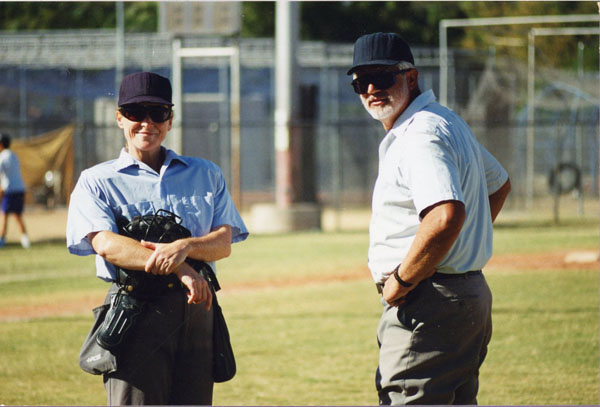
I did have other skills, though it had been years since I’d spent my time officiating year round. Still, I’d called football, baseball, ice hockey, soccer, and basketball games in the past, and faced with the prospect of standing Lucy-like before a conveyor belt, I’d take a whistle anytime.

One sunny afternoon, I walked toward a baseball field where young players were warming up for a Babe Ruth League contest. As a woman official, I took my uniform and equipment very seriously, not wanting to give the fans and coaches anything extra to harangue me about. So, I was shocked by the appearance of the man behind the plate. Was he really wearing red sweatpants? And using an old-fashioned outside chest protector like the umps in Norman Rockwell paintings?

 The man with the snow-white hair saw me. He smiled, raised a hand in greeting, and waved me over. Geez! He wasn’t even wearing a hat. Despite that inauspicious start, Don and I would be umpiring partners for the next five years.

Umpires spend a lot of time in parking lots, before and after games. Often we set up folding chairs and dress into and out of our gear from the beds of pickup trucks or the trunks of our cars. Sometimes, we just relax, have a cold drink, and let the breeze blow away the sweat accumulated from calling a three-hour game dressed in polyester and plastic, exceptionally poor choices for baseball in the Arizona desert. And, always, we talk.

Early in my friendship with Don, I spent a great deal of time feeling sorry for myself. I told him that I feared chance meetings with people I knew from my media days, dreading that awful question: “So what are you doing now?”

In the meantime, I learned that Don was a Vietnam veteran: an Army Special Forces soldier who did two tours in-country. He was a decorated war hero and his profound limp was the result of a bullet that almost killed him. The close-clipped white beard covered scars left from other battle wounds. Then there was the Post Traumatic Stress caused by memories he carried from the war. But it was the mist that rained from American planes that would transform his life, the Agent Orange defoliant that destroyed the jungles and the lives of soldiers the poison fell upon.

Don was married and had eight children. His family was the center of his world. He was devoutly religious and believed that another life waited, one without the pain of his deteriorating body and the nightmares that plagued him. As a non-believer I argued the point, which might seem mean. But Don loved to do verbal battle, trying to convince me that my skepticism was misplaced.

We talked endlessly, often about my failing marriage to an alcoholic, my sadness at the loss of my career, and my inability to pay my bills. Don, meanwhile, almost never complained. He did tell me harrowing tales of his war years, but would always add stories about the wonderful people he’d met and the beauty of Vietnam.

Don died in July of 2010. He was 60. I’d not been to see him often enough since he retired from baseball. The last few occasions he was bedridden, though he never failed to grace me with a huge smile and a warm hand.

During the next few years I would often think about Don and I would sometimes get the feeling that he was somewhere nearby. Though, of course, that was impossible.

Then, one afternoon, I was standing in a classroom. The teacher behind the desk, who I had known for many years, looked at me with a quizzical expression.

“Who do you know that might be wearing an Army uniform?” she asked, her gaze focusing just behind me.

“What?” I turned around. There was no one there.

“Do you know who he is?”

“Who who is?”

“There’s someone here for you. He’s wearing fatigues. I sometimes see things,” she said with a smile and a shrug.

I turned around again. “Don?” I mumbled.

She paused. “Yes, it’s Don,” she finally said. “He’s got his hands on your shoulders. He wants you to know that he’s fine and you shouldn’t worry about him. And he wants you to be happy.”

In that moment, the skeptic in me began to fray. My normal impulse would be to argue and say “prove it,” but I couldn’t, because I believed her.

How do I explain what happened? I can’t. And while the experience didn’t suddenly make me religious, it did cause me to think about whatever happens next in a new way.

I have never sensed Don around me again. Still, I hope he’d be glad to know that I’ve taken his advice. Now, I do my best to find happiness in every day.

5-7 Anne_and_Don_1

Sergeant Don Clarkson was a Green Beret who served in Vietnam with the 9th Infantry ARVN Soldiers from December 1968 to November 1970. Don died in 2010 from complications of Post-Traumatic Stress Disorder and Agent Orange poisoning.


Anne Montgomery’s new novel, The Scent of Rain, tells the story of two Arizona teenagers whose fates become intertwined. Rose flees into the mountains to escape from her abusive polygamous community where her only future is marriage to a man older than her father. Adan, whose only wish is to be reunited with his mother, is on the run from the cruelties of the foster care system. Are there any adults they can trust? Can they even trust each other?  The Scent of Rain is available at https://www.indiebound.org/book/9780996390149 and wherever books are sold.

“Tragic, disturbing, captivating, but utterly fantastic!”

NetGalley reviewer Erica Kelly gives my new novel, The Scent of Rain, a 5-Star Review.

https://s2.netgalley.com/book/110131/review/380483

the-scent-of-rain-ps-1


Anne Montgomery’s new novel, The Scent of Rain, tells the story of two Arizona teenagers whose fates become intertwined. Rose flees into the mountains to escape from her abusive polygamous community where her only future is marriage to a man older than her father. Adan, whose only wish is to be reunited with his mother, is on the run from the cruelties of the foster care system. Are there any adults they can trust? Can they even trust each other?  The Scent of Rain is available at https://www.indiebound.org/book/9780996390149 and wherever books are sold.


Get The Scent of Rain for free

Booktrib has a free signed copy of my new novel The Scent of Rain up for grabs.
https://booktrib.com/giveaways/the-scent-of-rain-2/ … …

the-scent-of-rain-ps-1

Anne Montgomery’s new novel, The Scent of Rain, tells the story of two Arizona teenagers whose fates become intertwined. Rose flees into the mountains to escape from her abusive polygamous community where her only future is marriage to a man older than her father. Adan, whose only wish is to be reunited with his mother, is on the run from the cruelties of the foster care system. Are there any adults they can trust? Can they even trust each other?  The Scent of Rain is available at https://www.indiebound.org/book/9780996390149 and wherever books are sold.

Learning to ask for help

I don’t remember getting hit.

The field was wet. Maybe an inch of water covered the turf from a storm the previous night. I back peddled to let the runner get in front of me and lost my footing, landing squarely on my backside. I inhaled sharply, as the runner barreled toward me, but he switched course a step away and headed upfield. My elation lasted but a brief moment.

I used to work for a television station in Rochester, New York. I was the sports director and anchor for the weekday broadcasts at WROC-TV. One afternoon, my phone rang.

“There’s someone here who would like to speak with you,” the receptionist informed me.

When I got to the front foyer, I was greeted by a woman I didn’t know. She reached out and grasped my hand. “Hi! I’m, Laurie Rappl.”

I introduced myself and escorted her back to my desk, wondering what I could do for this woman in a wheelchair.

Laurie explained that she had been visiting local media outlets, hoping to get coverage for the New York State Games for the Physically Challenged. But none of the reporters seemed interested.

My first thought was everybody does this story. “You mean Special Olympics, right?”

She shook her head. “No, I’m talking about kids with physical challenges. Kids in chairs.” She tapped her wheels. “Kids who are deaf. Blind.”

She was a ball of energy. Before the accident, she was an avid tennis player, a sport she continued to participate in even after the fall that relegated her to a wheelchair. She also continued to ski. Now, I now what you’re thinking. No big deal. Handicapped people participate in all kinds of activities today. But I met Laurie back in 1986, when handicapped athletes were practically nonexistent.

We became instant friends. I emceed the games she the told me about, watching her almost fall out of her chair laughing when I approached the mic and ask, “Can everyone hear me?” without noticing the one hundred or so deaf kids in the front of the room and the two signers who flanked me.

One morning, I joined Laurie on a mountain on what was a crisp winter day in Western New York. We traversed the run, me on my skies, Laurie sitting in her sled, maneuvering her way down the slopes with short poles that allowed her to steer. During the course of the day she told me how she sometimes attached herself to blind skiers, in order to guide them down the mountains.

I would never ski again.

After I fell on the football field that day, and the runner miraculously passed me by, two other players tackled him and all three of them hit me. I don’t remember much, just the pain. Though today I’d be summarily strapped to a board, someone helped me up. A trainer checked me out. I expected scorn from my partners; there were no other women in the officials organization and many of my cohorts didn’t accept me. Not wanting to appear weak, I finished the game, though I was unable to run or bend down and pick up my yellow flag after I’d thrown it. After the game, I struggled to change out of my uniform. A friend, a local police officer who happened to be at the game, told me to go to the hospital. I mumbled that I was fine. But a short time later, I found myself sitting in the Emergency Room parking lot, not totally aware of how I got there.

“You have a fractured vertebrae,” the doctor said.

“A broken back! That’s not possible. I walked in here,” I said, wincing from the pain.

But the next day I was unable to walk. I was ordered to bed for two weeks and would be fitted with a brace that I would wear for several months. Then there would be rehab. An article in the local paper explained my absence from the airwaves. The morning the story came out my phone rang.

“What happened?” Laurie asked, worry in her voice.

I explained about the football game and how I’d been hit. “It’s a T12 compression fracture,” I said.

There was silence. Then Laurie finally answered. “That’s what I have.”

The day I broke my back copy smaller

A friend took this picture right after I was hit by three players while officiating a high school football game. I suffered a fractured vertebrae.

While our broken bones were the same, our injuries differed in one dramatic way. Laurie’s spinal cord had snapped. Mine was unaffected. So, I would heal and walk again.

Despite the fact that we live on opposite sides of the country, Laurie and I still get together when we can. She remains one of the most impressive people I know. Just a few years ago, I went to Minnesota to see her receive her PH’d. She has traveled the world, working to make the lives of those in wheelchairs more bearable. That’s not to say her life is easy, though she rarely let’s anyone see that side of her. When it’s just the two of us, drinking wine, we kvetch about the discomfort we both suffer, because the pain rarely goes away. You just learn to deal with it.

My problem, for many years, was my inability to ever ask for help. I spent a good deal of my life in careers where I felt I could never admit to needing assistance. Newsrooms and ballfields felt like war zones, sometimes. Much like a bleeding fish in the water, showing weakness was clearly not advised

What I struggle with most is lifting heavy objects.

“Everyone wants to help,” Laurie said one day in a parking lot, when I was attempting to hoist her onto the front seat of my pickup. “Excuse me, sir,” she called to a man walking by. He stopped and stared. “My friend has a bad back. Could you help me into the truck?”

I cringed. Then, as Laurie had predicted, the man flashed a big grin, walked over, and got her into the seat.

“Thank you.” She smiled and waved as the man walked away. “See,” Laurie said, staring at me.

I held onto the steering wheel, still feeling a bit piqued that she’d pointed out that I was the one with the bad back.

But, today, I have no trouble asking for help. If someone as tough and successful as Laurie could handle it, so could I. And, as it turns out, she was right. I have yet to meet a person who has turned down my request for assistance. It seems people really do want to help.

Me and Laurie Matching cropped

Sometimes, Laurie and I are silly. As you can see, in this case, we bought matching outfits. I will always be grateful to my friend for teaching me that there’s no embarrassment in having to ask for help.

Anne Montgomery’s new YA novel, The Scent of Rain, tells the story of two Arizona teenagers whose fates become intertwined. Rose flees into the mountains to escape from her abusive polygamous community where her only future is marriage to a man older than her father. Adan, whose only wish is to be reunited with his mother, is on the run from the cruelties of the foster care system. Are there any adults they can trust? Can they even trust each other?  The Scent of Rain is available at http://www.amphoraepublishing.com/product/the-scent-of-rain/ and wherever books are sold.
the-scent-of-rain-ps-1

Reviews are online gold

When an author launches a book, the hope, of course, is that people will want to read it. In our digital world, word spreads via reviews, which are online gold to authors.

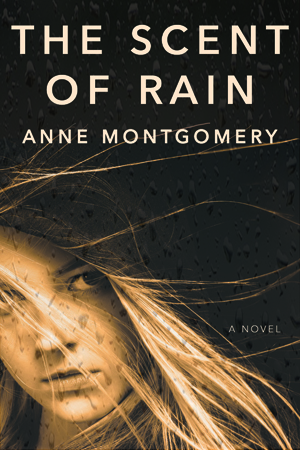
As the comments come in for my new novel The Scent of Rain, the review by Eustacia Tan on her blog Inside the mind of a Bibliophile stood out this week because the reviewer is from Japan. It is especially delightful, at least for me, to think people in other parts of the world might find my books interesting and worthy of reading. It’s all the more lovely when they give the book a 5 Star Review.

My thanks to Eustacia Tan for taking the time to review The Scent of Rain.

http://allsortsofbooks.blogspot.jp/2017/05/the-scent-of-rain-by-anne-montgomery.html

https://www.goodreads.com/review/show/1987548541

the-scent-of-rain-ps-1

Anne Montgomery’s new YA novel, The Scent of Rain, tells the story of two Arizona teenagers whose fates become intertwined. Rose flees into the mountains to escape from her abusive polygamous community where her only future is marriage to a man older than her father. Adan, whose only wish is to be reunited with his mother, is on the run from the cruelties of the foster care system. Are there any adults they can trust? Can they even trust each other?  The Scent of Rain is available at http://www.amphoraepublishing.com/product/the-scent-of-rain/ and wherever books are sold.
How can this be happening?

colrado-city

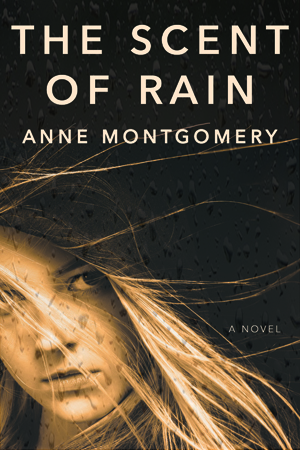
The setting of my recently released novel, The Scent of Rain, is the cult town of Colorado City, Arizona. The story follows 16-year-old Rose as she begins to question the abusive world in which she lives.

People are often astounded when I explain about the situation in Colorado City. They wonder how, in 2017 in the United States of America, there can be a cult enclave where children are routinely physically and sexually abused by design and where old men take girls as young as 12 in forced “marriages.”

First, let’s backtrack a little. The community of Short Creek, which straddles the Arizona-Utah Line, was founded in 1913. The mainstream Mormon church had publicly denounced the practice of polygamy – what was a mainstay belief of the religion – in 1890, as a requirement by the US government for Utah statehood. Those Mormons who insisted on maintaining multiple wives spread throughout Canada, Mexico, and the western parts of the US. They became the Fundamentalist Church of Jesus Christ of Latter-Day Saints, the FLDS, and were subsequently rejected by the mainstream Mormon church.

The people of Short Creek practiced polygamy in relative peace until  1953, when Arizona Governor John Howard Pyle launched an armed raid on the community. But word had leaked and the polygamists were ready. Records show that three explosions signaled the arrival of 200 state troopers. The town’s men stood near an American flag that fluttered in the schoolyard, singing “God Bless America.” The women and children hid in their homes, terrified. The men were arrested, the women forced to move to away, and many of the children were placed in foster care, some never to return to their families.

The whole affair became a media nightmare when pictures of crying children and dejected women were splashed across the pages of the national media. Life magazine wrote a scathing article, decrying the treatment of the people, saying, “It was like hunting rabbits with an elephant gun.”

As the people crept back to their town, which was renamed the dual communities of Colorado City, Arizona and Hildale, Utah, a new secrecy took hold. Rulon Jeffs made himself sole leader of the group in 1986 by eliminating the council of the FLDS church. When he died in 2002, his son, Warren Jeffs, took charge, becoming what the people called “President and Prophet, Seer and Revelator.”

The ascension of Warren Jeffs – the 14th of Rulon’s 60 children – was problematic because, even as a young man, he showed a predilection for perversion. In a video released by the Washington County Office of the Attorney General in Texas, Jeffs admitted to “immoral actions with a sister and a daughter” when he was 20. Two-time cult escapee Flora Jessop told me in an interview that Jeffs designed the prairie-style dresses the women wear, outfits that press their breasts flat and hide female curves, because he was more attracted to children than adults.

“If the world knew what I was doing, they would hang me from the highest tree,” Jeffs wrote in one of his many journal entries.

Today, the “Prophet” sits in a jail cell in the Texas State Penitentiary in Huntsville, serving a term of life plus 20 years for sexually assaulting his 12 and 15-year-old child “brides.” Sadly, he continues to run the cult from prison. According to a report by ABC News,  FLDS children are taught that Jeff’s is the President of the United States and his people are expected to pray for him every waking hour, an effort to free him from prison. Those who disagree with his many edicts are stripped of their possessions. Wives and children are confiscated like property and distributed to men who toe the “Prophet’s” line. Others, especially teenage boys – who young girls are naturally more attracted to than the old men who covet them – are cast out of the community to fend for themselves in a world they know nothing about.

But why do so many of the estimated 10,000 people living in and around this polygamous community believe Jeff’s outlandish lies? The answer is simple. They don’t know any better. Many of them were born in the local birthing clinics and have never been away from the area, which sits on the desolate Arizona Strip. They have no access to TV or the Internet, or books, or newspapers, or films. They only know what they’re told: The world they live in is Eden, the outside world Hell on Earth. And Warren Jeff’s is their god, who has the right to deny them and their loved ones entrance into the Celestial Kingdom.

So, what can we do? This is a question the state of Arizona has been grappling with ever since the ill-fated 1953 raid. And today, the stakes are higher, because the people are, once again, ready. A system of man-made caves drilled into the mountains behind the community is the place the standoff will occur, if they are attacked again. Jessop told me that cult members’ homes are replete with weapons, often hidden in the walls. The people expect the “Beast”- their term for the government – to make an assault and they will fight and die, if need be, for their way of life.

If the pictures from 1953 provoked an outpouring of sympathy, imagine the images such a confrontation might sear into our brains, an event that would make the horrors of Waco and Jonestown seem like average blips in our 24-hour news cycle.

There is no easy answer. Though, it appears nature might eventually solve the issue of Colorado City. Almost the entire population can trace roots back to just two families: the Jessops and the Barlows. Somewhere along the line a recessive gene appeared. The birth defects caused by what is called Fumarase Deficiency are both widespread and horrendous, resulting in both physical and mental handicaps. Despite this scourge, the people refuse to marry anyone outside the cult community. So, eventually, inbreeding will destroy the people.

But at what cost to the innocent?

Anne Montgomery’s new YA novel, The Scent of Rain, tells the story of two Arizona teenagers whose fates become intertwined. Rose flees into the mountains to escape from her abusive polygamous community where her only future is marriage to a man older than her father. Adan, whose only wish is to be reunited with his mother, is on the run from the cruelties of the foster care system. Are there any adults they can trust? Can they even trust each other?  The Scent of Rain is available at http://www.amphoraepublishing.com/product/the-scent-of-rain/ and wherever books are sold.

the-scent-of-rain-ps-1


The magic of Girl Scout Camp

One thing we teachers get to have that most other adults don’t is a real summer vacation. Not the week or so most people take during the warm stretch of the year, but an actual couple of months off. (They don’t pay us much, but we do have perks.)

As the school year winds down, I am often reminded of those summers when I was a kid, a time when I got to be someone else.

I stood before a wrap-around mirror at Lane Bryant, a store that originally supplied clothing for pregnant women, and then moved on to the plus-size juggernaut we know today. I was 12.

“It’s not my fault,” my mother said to the saleswoman, wringing her hands. “I feed her fish and salad with no dressing.”

The woman nodded. “I’m sure you do, still the child needs a size 16 in that dress.”

I turned away from my fashionably attired mother in her spike heels and cat eye glasses, wondering if she realized that, while I was fat, I was not deaf. I could hear the pleading in her voice. “How did I end up with an obese daughter?”

Being an overweight kid in the 1960s was a rarity, as most any class picture from the time will clearly show. Add to my girth the fact that I was a tomboy and cared little about my appearance and rarely brushed my red hair, so my mother had it sheared short. Perhaps she thought I might find the style disturbing and be prompted to care more about my looks. But the only thing my bowl cut with a prominent cowlick in the front did was confuse people in regard to my gender. Sometimes, I was asked if I was a boy or a girl.

By fifth grade, I was a thickly-proportioned five-foot-five. In photographs with other students I was, on occasion, mistaken for the teacher. Other kids teased me, but they never got too close. I think I actually frightened some of them. I did have a few friends, but when I turned 12, the girl who lived two houses down announced one day that she would no longer spend time with me.

“You’re a fat girl,” she said, not looking me in the eye. “Boys don’t like fat girls. If I’m your friend, they won’t like me either.” She turned and walked away. She never spoke to me again.

I sometimes stared at other girls in my class. By comparison most seemed to be petit, delicate little things. One in particular, a blond, blue-eyed child with perfect pitch and straight A’s, always stood out. She wore white lace ankle socks and played the piano. When the parts were cast for the school play one year, she was named the head fairy. My role? Head witch.

Every summer my parents sent me to Girl Scout Camp. The first time I was eight and went off for two weeks. That led to annual month-long excursions I would continue until I was 17.

I quickly learned that at camp no one forced you to brush your hair. What truly mattered had nothing to do with appearance. The most important thing at camp was swimming, for this was the activity that opened the doors to almost everything else. Campers were labeled according to their aquatic skills and assigned a cap color. Red was reserved for those most likely to sink like stones. Yellow caps had some skills, but needed serious monitoring. Green caps could hold their own in the water and blue caps were masters, swimmers the counselors never worried about.

One year, a new cap category was created just for me and one other camper. Casey and I were anointed white caps, after we completed the Red Cross Senior Life Saving course, which meant we had unfettered access to sailing and water skiing, canoeing and even scuba diving. I sometimes walked the dock when the other girls were taking their lessons, striding past the roped-off areas that kept the inexperienced swimmers from straying. I’d head out to the far end of the wooden-planked pier, not the least bit self-conscious about how I looked in my bathing suit. I would stand and stare out over the lake, where no ropes or buoys marred the view. Then I’d dive in, going deep into the dark water, feeling freer than I ever did on land.

The other thing that made me special at Girl Scout Camp was music. I had acquired an old guitar from my aunt and had taught myself a few rudimentary cords. (It’s rather amazing just how many songs you can play with G, Em, C and D7.) I learned quickly that the girl with the guitar was highly prized around the campfire every night. And when we’d sung our last song to the snap and pop of logs dying in the fire, we would head to our brown canvas tents that nestled in the trees, perched on wooden platforms, the sides rolled up. Cocooned in thick cotton sheets and flannel blankets, the pine-scented breeze wafted over us, as lake water kissed the rocks just a few feet away, and I knew a tranquil peace I had never found anywhere else.

The end of camp brought tears all around. Friends soon to be separated and, for me, the return to the world where neither swimming nor my nascent attempts at guitar playing mattered.

Then, one summer, I returned home from camp and my aunt’s jaw dropped upon seeing me.

“Who the hell are you!” she said, looking me up and down. “Damn! She’s got cheekbones.”

It wasn’t that I lost weight. The pounds just somehow rearranged, perhaps because I had less access to the candy bars I used to sneak daily.  Or maybe it was the rigors of that eight-day canoe trip. Or maybe it was magic wrought by the forest and the lake and the music and the fire. Whatever caused my transformation, no one ever called me fat again.

Me, Polly, Fish 400jpg

In this picture, holding the tail end of a papier mache fish and wearing my Girl Scout uniform, I was 12 and sometimes mistaken for the teacher.


Anne Montgomery’s new YA novel, The Scent of Rain, tells the story of two Arizona teenagers whose fates become intertwined. Rose flees into the mountains to escape from her abusive polygamous community where her only future is marriage to a man older than her father. Adan, whose only wish is to be reunited with his mother, is on the run from the cruelties of the foster care system. Are there any adults they can trust? Can they even trust each other?  The Scent of Rain is available at http://www.amphoraepublishing.com/product/the-scent-of-rain/ and wherever books are sold.