On being nicer

Be nice 1

I became a teacher at the tender age of 45. All puffed up from my real-world experiences, and despite Welcome Back, Kotter, Boston Public, and Stand and Deliver, to name just a few depictions of struggles in the classroom, I figured teaching inner-city high school kids would be cake. Sigh…

When my on-camera TV career fizzled – a direct correlation to my nearing 40 – I spent a few years underemployed, until several acquaintances, at about the same time, enthusiastically suggested I become a teacher. Now I had never given teaching any thought. Zero! I laughed off the idea. After all, I was a dyslexic, academically underachieving high school student – who I must add here did pretty damn well in college after my brother bet me I’d flunk out the first semester.

But then my financial situation became more tenuous: you try paying the bills by officiating youth sports and working for seven bucks an hour as a part-time reporter at a small local newspaper. So, I went back to school.

It took me two years to get my teaching certification, and  before I ever stepped foot in a real classroom – I hadn’t even had the chance to do my eight weeks of student teaching – I was hired to teach video production and journalism in a high school communication arts magnet program in Phoenix, Arizona.

I learned quickly that I had replaced a beloved teacher who was popular for throwing pizza parties and allowing the students to do pretty much anything they wanted. Then, I stepped in, spouting responsibility and deadlines and maturity and professionalism.

I realized just how bad things were when one day a diminutive teen – the prettiest and most outspoken child in the room – stood up and declared that the students didn’t need me. That they had learned all they needed to know from their previous teacher. Then, she walked out, in the middle of class. To my horror, every one of my students followed her.

And so I stood at the front of the classroom, staring at all those empty seats, and I started to cry. A few “poor me” moments passed before the door opened. A tiny teacher, the “elder statesman” of the department who always had a faint whiff of nicotine wafting about her, watched me above reading glasses attached to a rainbow-colored beaded chain.

“They just left!” I motioned to the empty seats.

She nodded, walked over, and placed her hand on my shoulder. “It’ll be fine,” she said.

I turned away, embarrassed that she had seen tears slipping down my cheeks.

I continued to bulldoze my way through school days, expounding on life in the “real world” and reminding my students that if they wanted to succeed and make something of themselves they had better get with the program.

It was then that another long-time teacher sat me down after what had been a particularly tough day in the classroom. “Have you considered being . . . nicer?” she asked.

Nicer? What do you mean?”

She leaned back in her chair. “Just . . . nicer. It might help.”

“Nicer. I’d spent my previous life in newsrooms and on ballfields as an official, where “nice” was never part of the equation. You did your job, deflected unkind comments, and never let anyone see you cry.

About five years ago, I once again found myself replacing a popular teacher. Predictably, the students – mostly seniors – rebelled against the changes I made and my style of teaching. Despite the fact that I was a much more experienced teacher now, I struggled. Everyday. By the end of the school year, I was exhausted. Some of my students wouldn’t even speak to me.

During the last week of the school year, we held a department awards ceremony, where we fed the students lunch and handed out plaques, honoring those who stood out. Then the seniors got up and spoke about their time in the program, about leaving their classmates as they headed out into the world, and about the teachers who meant so much to them.

I listened to all the kind words, and watched as the other teachers, eyes glistening, accepted accolades from their students. One after another, the seniors spoke. Some cried. A few nodded in my direction as they retook their seats, but none of them said anything about me.

Then one young man stood up and faced the group. I had been especially demanding of him over the years. He wanted to be a film director. I spent a lot of time critiquing his video productions. Outside of class, we’d work on college and scholarship applications. Sometimes we’d talk about the difficulties he’d had growing up and his time in foster care. I can’t recall exactly what he spoke about initially that day, but then I heard him say my name.

“And, Ms. Montgomery,” he beamed me a smile. “I think of her as mom.” Then he walked over and put his arms around me.

Nice, indeed.

I am now finishing up my 17th year in the classroom. As my students will tell you, I can sometimes be a tough teacher. I’m still demanding, at times. Though now, I find myself saying good morning to students I don’t even know, and I take the time to ask how things are going when a student seems down. It’s not that I no longer preach responsibility and deadlines and maturity and professionalism. It’s just that I’m…well…nicer.

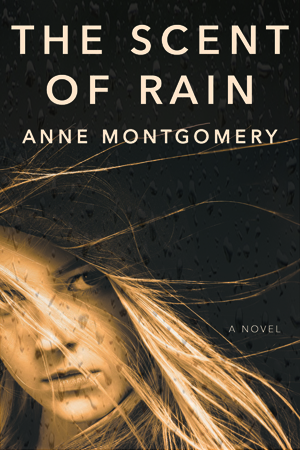
Anne Montgomery’s new YA novel, The Scent of Rain, tells the story of two Arizona teenagers whose fates become intertwined. Rose flees into the mountains to escape from her abusive polygamous community where her only future is marriage to a man older than her father. Adan, whose only wish is to be reunited with his mother, is on the run from the cruelties of the foster care system. Are there any adults they can trust? Can they even trust each other?  The Scent of Rain is available at http://www.amphoraepublishing.com/product/the-scent-of-rain/ and wherever books are sold.
“How old am I supposed to look?”

I like to think – in fact, I believe – that in olden times wrinkles signified wisdom and dignity. Today, not so much. Drug makers, who are looking to wipe our faces clean of those evil little lines, are frothing at the mouth to create a product that smooths our skin, an effort to pump up their profits in what is an almost one-billion dollar a year industry.

I became acutely aware of wrinkles as I approached 40. Unbeknownst to me, I was nearing the end of my on-camera sportscasting career, not because I wasn’t good at my job. After all, I’d worked for five TV stations, so, logically, I opined, I must have been a competent reporter. But then, my final contract was not renewed and not a single TV outlet in the country expressed an interest in me, despite my credentials, which included working at both the local and national levels with a stint anchoring SportsCenter at ESPN.

It took me a while to catch on. Glimpses of older on-camera women I’d worked with – especially those framed unforgivingly in HD – more than hinted that they’d had “work” done. Then I’d look in the mirror. Did I really look all that different than when I first took my place in front of the camera?

My answer finally came in rather shocking fashion, a situation caused by years of sports officiating. I began calling amateur games in 1979. I first became a youth ice hockey official, which lead to me being certified in football, baseball, soccer, and basketball. It was those outside sports and silly rules about perception that doomed me. Until relatively recently, sports officials were not allowed to wear sunglasses. In fact, many still eschew regular glasses, as well, opting for contacts, lest they set themselves up for the, “What are ya, blind, ump?” retorts that are often flung at sports arbiters.

My loss of vision was gradual, but eventually it was clear something had to be done. Driving at night was difficult, the glare of oncoming headlights excruciating. I couldn’t see those line drives heading my way and would lose passes and kicks in the harsh stadium lights. I had cataracts, sadly, thirty years before the age my parents developed them.

The surgery was quick and simple. I remember thinking the inside of my eyeballs looked like Jackson Pollack paintings, all swirling lines and colors. A day or two later, I stood before the mirror. The haze I’d been looking through for so long had lifted, my sight clear for the first time in years. I reared back. When had all those wrinkles appeared?

It took a while, but I eventually adjusted. I had to admit that my face no longer mattered all that much. Neither my high school students, my beau, nor anyone I cared about gave a whit about whether I had lines on my face. In retrospect, it was rather freeing.

But then one day, while walking by one of those upscale salons in a fancy mall, I was stopped by a pretty twenty-something woman with an alluring accent and flawless skin. She stared at me, tilting her head, long hair cascading about her shoulders.

“Come in! Please.” She smiled, motioning toward the ornate open doors.”Let’s take a look at your face.”

As I had a little time to kill, I acquiesced. She put me in a pump-up chair, and produced fancy bottles and jars of creams and elixirs guaranteed to make me look younger. Then she handed me that dreaded little round mirror that magnifies to the extreme. I’d like to say I had never succumbed to this particular sales pitch, but I suddenly recalled all those TV years when I thought nothing of dropping two or three hundred bucks on products like the ones she was showing me.

I gazed into the mirror, and then stared up at her. “How old am I supposed to look?”

She paused, tilted her head. “Younger.”

“How much younger?”

She squinted, seemingly puzzled by the question.

“Really? What age am I supposed to look like?”

She pouted, thinking.  The smile returned as she dipped the end of her manicured pinky into a blue glass jar. “Younger.”

Then I noticed my long-time beau standing in the doorway of the salon, a bemused look on his face, a man who repeatedly, over two decades, had told me that he doesn’t care if I ever wear makeup or fix my hair or don anything but jeans and T-shirts.

Though she practically implored me to buy some of her magic creams, I declined. As I walked out the door, I couldn’t help but ask her one more time. “How old am I supposed to look?” When she couldn’t answer, I smiled and thanked her. Then Ryan wrapped his arm around my shoulder.

“I love you just the way you are,” he said.

Anne Rocking Drawing Twitter

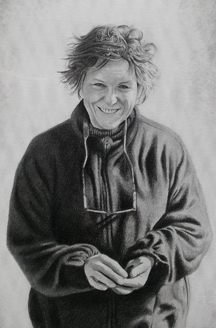
Back when I worked in TV, the condition of my hair and makeup was, sad to say, the most important consideration of my day. Years later, I began dating a lovely man who had an artist draw my portrait. The picture he chose was from a day we’d been out out rock collecting in the Arizona desert. I had found a lovely stone, which I cupped in my hands to show him. No make-up. Hair a wild mess. “You’re the most happy when you’re rocking,” he said. “This is my favorite picture of you.” And now, it’s my favorite too.

Anne Montgomery’s new YA novel, The Scent of Rain, tells the story of two Arizona teenagers whose fates become intertwined. Rose flees into the mountains to escape from her abusive polygamous community where her only future is marriage to a man older than her father. Adan, whose only wish is to be reunited with his mother, is on the run from the cruelties of the foster care system. Are there any adults they can trust? Can they even trust each other?  The Scent of Rain is available at http://www.amphoraepublishing.com/product/the-scent-of-rain/ and wherever books are sold.
The Scent of Rain launch a sellout!

17757513_1933938963506013_3792825284377221615_n

The Scent of Rain launch party at the Poisoned Pen Bookstore in Scottsdale, Arizona, was a standing room only sellout. The event, which I shared with the marvelous mystery writer Cindy Brown, was a wonderful time for me personally, because my three foster sons, Brandon, Ziggy and Troy were all there, in the same place at the same time. The book is dedicated to them. In fact, Adan, one of the main characters in the the story, a young man running from foster care, is based on experiences they’ve shared with me over the years.

The Scent of Rain tells Adan’s story along with that of Rose, who flees the strict tenants of the Fundamentalist Mormon Church, where her only future is marriage to a man older than her father, and where she is doomed to a world where her worth is based solely on how many children she can produce.

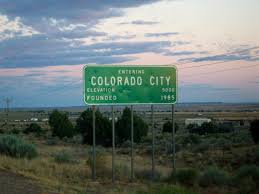
While The Scent of Rain is a work of fiction, Colorado City, Arizona is a real place where children like Rose live right now. And currently, in Arizona, there are over 18,000 children in the foster care system. Children are struggling everyday. Here’s hoping The Scent of Rain can, at least, make us think more about them and, perhaps, offer a helping hand.

17796156_10212234358124534_8764122630278943503_n

I wrote The Scent of Rain for a number of reasons. One was to tell the story of a teenage boy running from foster care. I am the mother of three foster sons to whom the book is dedicated and whose stories inspired one of the main characters. My thanks and love to Ziggy, Troy, and Brandon. I am proud and humbled you call me Mom.


The Scent of Rain Launch Party: Come and join the celebration

For those of you who reside here in the Valley of the Sun, or those of you who don’t mind long trips, come on out and join the celebration. The launch party and book signing for The Scent of Rain begins at 2:00 PM on April 2, 2017 at the Poisoned Pen Bookstore at 4014 N Goldwater Blvd in Scottsdale, Arizona.

That said…I thought I’d share Chapter 2 of my novel that tells the story of two Arizona teenagers whose fates become intertwined. Rose flees into the mountains to escape from her abusive polygamous community where her only future is marriage to a man older than her father. Adan, whose only wish is to be reunited with his mother, is on the run from the cruelties of the foster care system. Are there any adults they can trust? Can they even trust each other?  

If you’d like to read Chapter 1 first, just scroll down to the March 18 post.

hope you enjoy the read.

small-the-scent-of-rain-ps-1

Chapter 2

The sun tormented Adan Reyes.

The road he traveled cut through almost two million acres of northwestern Arizona, a remote and unforgiving area north of the Grand Canyon called the Arizona Strip, a land of giant, tabletop mesas and rough red mountains with broken spines jutting into the sky.

He raised his hand, shielding dark brown eyes, wishing he still had his sunglasses, which he’d sold to a college kid in Flagstaff for five bucks. He’d purchased a small cheeseburger and a bottle of water at McDonald’s— the only food he’d consumed since lunchtime the day before—then stuffed the remaining change in his pocket for emergencies. The absurdity was clear. The money was useless. He hadn’t passed a business, a house, or any sign of civilization since the trucker dropped him off.

Adan had been sure another ride would come along, but only a few vehicles had passed by, and the drivers had stared, then ignored the boy with his thumb out. So, he’d started walking. How long ago? He had no idea. The sun smoldered overhead, sucking at his skin.

What had brought him to this desolate place? Adan shook his head. What an idiot! He’d certainly not planned his escape well. His impulse had been to get away as fast as he could, before it was too late. So, he’d simply stuck out his thumb and gone wherever the drivers who picked him up were headed.

He was baking; his arms below the grimy white T-shirt sleeves burned a reddish-brown. Heat radiated beneath the Diamondbacks baseball cap, a parting gift from his mother. He wrestled with removing the hat to cool off and leaving his head covered so the bill would shade his eyes, giving him some chance to see the shimmering pavement stretching out before him.

Up ahead, a dusty unpaved road cut off to the left and snaked across the rocky ground. He squinted up the trail, hoping for some sign of life, but the track disappeared into the hills. He reached for the water bottle he’d tucked into the mesh netting on his backpack and held the container at eye level. The dark grime beneath his fingernails produced a sudden urge to wash his hands, but only an inch of water remained. He thought of the long showers he used to take back in Phoenix, then looked down at his filthy jeans and the once-dazzling white Jordan’s he’d worked so hard for. He felt a sudden rush of guilt, thinking of his poor mother who gasped when she heard what he paid for the shoes. He took great care with his clothes, and his bi-monthly haircuts, always pestering the barber to make sure the razor cuts edging his short black hair were perfectly straight. His eyes filled with tears, and he began to laugh.

Stop it! This isn’t funny, he told himself. He gripped the plastic bottle, crackling the container, the sound piercing in the surrounding stillness. He’d grown up in the Sonoran Desert, had been cautioned by his high school football and track coaches about the importance of hydration, and the damaging—and sometimes fatal—effects of heat sickness. And here he was, in the middle of nowhere with one slug of water left. What a fool.

Adan scanned the area, searching for evidence of a home or at least some shade. But only endless miles of wire fencing crisscrossing the land, spreading away from the mountains and the freshly oiled blacktop that ribboned up ahead, provided any proof of human habitation.

A sudden hot wind pelted him with debris so he shut his eyes tight. When he opened them again, he saw the dust devil dance down the road, the tiny tornado’s funnel a smoky-swirl rising into the sky. He watched the gray shaft sway and twist, then placed the water bottle back in the mesh pocket and slung his pack on his shoulders. He removed his cap to wipe the sweat from his forehead and continued walking, eyes fixed to the golden yellow line that divided the road.

Sometime later, Adan lay on the rocky berm beside the pavement and reached for the bottle. The hot plastic container was empty. When had he finished the last of his water? He lay his head back and stared at the hazy sky and, for the first time, saw the pale half-moon resting overhead.


Can’t hit the high notes, but I no longer care

images

I like to sing. I’m an Alto 2, which means women at my end of the vocal spectrum don’t get those high-soaring, glass-shattering solos. If singing were a house, we’d be the foundation, deep in the ground, supporting all the fancy rooms upstairs. As an Alto 2, I am also sometimes called “sir” on the phone.

I don’t have a great voice. I learned this when I auditioned for New Jersey’s All-State Chorus when I was in high school and didn’t make the cut. I also got a hint when my singing teacher one day said, “You have a nice little voice.”  At that moment, a bell went off in my head, signaling that my dream of becoming a Broadway musical actress was probably unrealistic.

Still, I did perform in about ten school and community theater musical productions, and I sang in two groups in college. One was an A-cappella ensemble that, in retrospect, was rather awkwardly named the “Swingers.” I also played the guitar with rather rudimentary skill, which made me popular at Girl Scout camp, where singing around the campfire was an evening norm.

Then, following college, I stopped singing. I stopped playing the guitar. Though I lugged that old Yamaha 12-string through eight states and 24 moves, and would ceremoniously place it in a corner of whatever new dwelling I inhabited, I ignored it, save for a cursory dusting now and then.

Fast forward about 35 years. Now a teacher, I joined ranks with three of my brethren: three women with high levels of  performing expertise. One used to sing with big bands and played the piano. One was a member of the aforementioned high-soaring, glass-shattering soprano circle, and the other was a professional actress. Which, of course, made me the the occupier of the lowest rung on our musical totem pole. We would perform around the holidays at nursing homes, singing songs from the 1940s, 50s, 60s, and 70s, everything from the Andrew Sisters to the Mamas and the Papas to Simon and Garfunkel with the usual Christmas fare thrown in.

I enjoyed our practices and performances. I hadn’t realized how much I missed music. In an effort to make myself more valuable to the group, I picked up that old guitar. I struggled, but learned a few songs we could perform. I also served as our MC.

Then, one day, the piano player abruptly stopped during practice. “You’re off key!” she said during one of the rare times I sang solo. I tried again. “No! Here’s the note.” She repeatedly plunked the piano key. The other singers looked away, embarrassed for me.

Shortly thereafter, I got sick with what I thought was a miserable lingering cold. My doctor couldn’t figure out what was wrong and sent me to a specialist. The nose and throat man checked me out, then explained that surgery was required to remove a strange colony of anaerobic creatures that had taken up residence in my sinus. (Yep, it was as gross as it sounds. Hope you’re not eating.)

I remember, prior to the operation, I was asked to sign a batch of forms. One informed me that I might lose my eye. I signed it. Another let me know that I could suffer brain damage. I signed it. The third explained that I might come to with my voice irrevocably altered. I stared at the form, then handed it back to the nurse. “I’m not signing this,” I said, as I envisioned waking up with a voice like Fran Drescher.

The thought of never being able to sing again made me sadder than I thought possible. I know what you’re thinking. Sadder than losing en eye? Sadder than brain damage? Really? All I can say is…yes.

The good news is I neither lost an eye, was deprived of any important bits of brain, nor had my voiced changed. Even better, I could once again hear notes properly. And now, though our little group has disbanded, I sing and play my guitar most days with a wild abandon I didn’t have before the surgery. And though I can hit even fewer high notes than in my youth, I don’t care as much. I’m just happy to sing.

00000001

I performed in about ten musical productions, mostly in my youth. Here, I play Golda in my high school production of Fiddler on the Roof. Even then, I knew I wasn’t the best singer in the group. It took me 40 years and the prospect of losing my voice to come to the conclusion that being the best wasn’t the point. Today, I take joy in just singing.


Anne Montgomery’s new YA novel, The Scent of Rain, tells the story of two Arizona teenagers whose fates become intertwined. Rose flees into the mountains to escape from her abusive polygamous community where her only future is marriage to a man older than her father. Adan, whose only wish is to be reunited with his mother, is on the run from the cruelties of the foster care system. Are there any adults they can trust? Can they even trust each other?  The Scent of Rain will be released on March 28, 2017. The book’s launch will take place at the Poisoned Pen Bookstore at 4014 N Goldwater Blvd #101, Scottsdale, Arizona on April 2, 2017 at 2:00 PM. 


The Scent of Rain: Chapter 1


small-the-scent-of-rain-ps-1

Chapter 1

Rose Madsen couldn’t risk staying out much longer. She still felt the paddle blows—what her mother called “appropriate corrective measures”—from the last time she’d disappeared for too long. But the chill of the spring morning had eased following sun-up, a full two hours after Rose had risen to do her pre-breakfast chores, and now the high desert sky was a cloudless blue. When she got back, she’d have to bathe, dress, and feed Becky, a chore she didn’t mind doing, but right now all she wanted was to wade in the creek and feel the sun on her face. Becky could wait a little while longer.

“Recalcitrant,” her mother often said, referring to her seventh daughter. Rose rolled the word around in her mouth, but the term had too many sharp edges. Other folks in town didn’t use words like recalcitrant. Children were either good or bad. She’d overheard people say Mother’s vocabulary was too prideful, a sin that needed correcting, and struggled with the thought of Mother as a sinner.

Rose dipped a hand into the stream and marveled that just a day earlier it had been dry as a bone, nothing but fine sand and loose rock. But then the snow high in the mountains had melted, delivering a clear, cold flow that Rose knew would quickly disappear.

She dabbed at the milk splotches on the hem of her ankle-length cotton dress. She’d been milking cows for over ten years, but no matter how often she squeezed those velvety teats, she could never avoid splashing her clothes. Rose scrubbed at the almost invisible stains on the sky-blue fabric knowing that Mother would probably spot them no matter how hard she worked. She’d be shut up in that tiny room in the barn, forced to study her dog-eared book of scriptures and go without food because “dirty clothes proved one harbored dirty thoughts.” No matter how often Mother said that, Rose had no idea what it meant.

She removed her Nikes and socks and stepped into the current, bunching her skirt with one hand, lest the garment trail in the water providing proof she’d sneaked away. The water rushed around her legs, numbing them to mid-calf. She shivered. It was exhilarating. She closed her eyes and lifted her face to the sky. If only she could stay here as long as she wanted.

She drew in a deep breath of cool, desert air and started to step back out onto the creek bank when a rock beneath the sparkling surface caught her eye and drew her hand into the flow. The stone was egg-shaped, spotted with the remains of multi-colored pebbles. She remembered learning in science class that stones like this were made up of smaller rocks that had been forced deep into the earth, melted, and fused together, only to reemerge countless years later to be washed and tumbled by the river, edges softened, rounded. She held the stone in her palm and ran her thumb over its smooth surface.

How long had this transformation taken? Mr. Wayland, who had proudly passed his rock samples around the classroom, might have known the answer. But he was gone, and the school was closed. Large goats had eaten away the greenery that once surrounded the building that housed the classrooms. A sign above the doorway still read Colorado City Unified School District #14. Trash littered the grounds that were hemmed in by a chain link fence. The Prophet had decreed that all children should be home schooled. And so they were.

Rose wanted to keep the stone, but that was impossible. The telltale smoothness of the rock would surely shout out that its life had been spent tumbling in the riverbed, one of the many places Rose was never allowed to go. Mother had warned her repeatedly about the terrible flash floods that could barrel down the mountain without warning, sweeping away everything near Short Creek. Rose wriggled her toes in the frigid stream, then sighed and dropped the stone back into the water where it landed with a plunk.

Anne Montgomery’s new YA novel, The Scent of Rain, tells the story of two Arizona teenagers whose fates become intertwined. Rose flees into the mountains to escape from her abusive polygamous community where her only future is marriage to a man older than her father. Adan, whose only wish is to be reunited with his mother, is on the run from the cruelties of the foster care system. Are there any adults they can trust? Can they even trust each other?  The Scent of Rain will be released on March 28, 2017. The book’s launch will take place at the Poisoned Pen Bookstore at 4014 N Goldwater Blvd #101, Scottsdale, Arizona on April 2, 2017 at 2:00 PM. 

Maybe women shop because gathering is in their genes

Shopping

Women enjoy shopping more then men. No surprise there. The question is why. Perhaps we have our ancient female ancestors to thank, or blame, depending on your point of view.

I’ve been a teacher for 17 years and, when meeting new high school students, I often ask them about their interests. Without fail, some kids list shopping as their favorite hobby. These students, so far, have been female.

I try not to roll my eyes and then explain that a hobby is generally something where one might engage in creative or artistic pursuits, collect themed objects, or perhaps play a sport or instrument. Still, the girls smile and insist that shopping is their hobby.

I read recently that the average woman spends approximately 400 hours each year shopping, and can blissfully browse for prospective purchases for two hours before tedium strikes. Conversely, men quickly get bored with those trips to the mall and grocery store, losing interest after just 26 minutes.

I know what you’re thinking. It’s the women who usually spy the empty cupboards and resupply the milk and toilet paper and dog food and all of the other stuff needed to run a household. So, of course, they spend more time at the store. But, even when we discount those “we gotta have it now” moments, women are still in shopping mode much more than men.

I wondered why, so I put on my history teacher cap and thought about our ancient ancestors: those hunter-gatherers who foraged for food and resources until they started to settle down in permanent communities about 12,000 years ago. The hunters, we suspect, were generally men. The gatherers, mostly women. It’s estimated that 80% of our ancestors’ diets consisted of wild fruits and vegetables. While the men were out looking for something to kill and drag home, women and girls were peering intently at foliage and digging in the ground, looking for groceries. And their rummaging probably wasn’t restricted to foodstuffs. No doubt a pretty rock or feather might have found its way into a woman’s basket, perhaps to use for barter later on when food ran out.

What does this have to do with the modern female shopper? Here I have a completely unscientific hypothesis, though one that makes perfect sense to me. Human beings – and all creatures alive today – had to adapt in order to survive. So, perhaps, buried in our DNA is a “shopping” gene, passed on from our ancient female ancestors. Those women, who had to examine fruits and berries and roots and leaves, were forced to take great care and time to make sure they selected items that didn’t poison their families. They also had to stock up enough goods to make it through the harsh times of the year. Thanks to our female ancestors abilities to pick the best available provisions, they were able to survive, reproduce, and pass their genes down to us.

So, don’t feel too badly about enjoying that time at the mall, just leave your beau at home. I, in the meantime, will try to stop rolling my eyes at my students.

Anne Montgomery’s new YA novel, The Scent of Rain, tells the story of two Arizona teenagers whose fates become intertwined. Rose flees into the mountains to escape from her abusive polygamous community where her only future is marriage to a man older than her father. Adan, whose only wish is to be reunited with his mother, is on the run from the cruelties of the foster care system. Are there any adults they can trust? Can they even trust each other?  The Scent of Rain will be released on March 28, 2017. The book’s launch will take place at the Poisoned Pen Bookstore at 4014 N Goldwater Blvd #101, Scottsdale, Arizona on April 2, 2017 at 2:00 PM. 

A shark tale: A trip from fear to empathy

3-13-a-montgomery-blog-2-careful-with-the-fingers

I admit, I was terrified the first time I found myself sharing the sea with sharks. Now I wonder if the majestic creatures will soon be gone. If that is their fate, I will grieve their passing.

As authors, we are called upon to write about emotions. Part of our job description is to get readers to experience what our characters are feeling. Not a simple task. What I’ve learned is that it’s easier to write about emotions if I’ve experienced them. I’m not saying this is absolutely necessary, but when one can look back at a personal moment and say, “Yeah, I want my character to feel that!”, perhaps writing about their response to an intense situation is just a little bit easier.

Let’s take fear, for example. In my upcoming novel The Scent of Rain, my two young protagonists grapple with all kinds of fear. Fear of an uncertain future, fear of punishment, fear of physical harm. We have all faced fear in one form or another. I admit I’m afraid of a few things. I finally quit umpiring baseball after 25 years, because, though I’m loathe to admit it, I’m scared of screaming line drives. I’ve been hit by baseballs way too many times, often accompanied by a fan yelling, “Don’t rub it. It only hurts for a minute!” Which is, of course, the biggest lie in baseball. Those bruises last for weeks. And let’s not talk about the balls that hit boney parts. I’ve been afraid in a few doctors’ offices over the years, waiting for a prognosis. There was that all-consuming fear when one of the boys was out late and didn’t call, making my mind whirl about the frightening scenarios that might have befallen them. And then, there was that moment when I jumped into the ocean, bobbed to the surface, and saw the dive boat being sucked away in a swift current.

I willed myself to be calm, as I watched the boat shrink away. I could see the distant shore of Cayman Brac, a small Caribbean island Christopher Columbus was said to have sailed by and which he called “Las Tortugas,” because of the many turtles he’d sighted in the area. I was a novice diver at the time; still not entirely comfortable with the life-support gear that allowed me to breathe under water. I knew the current would dissipate if I descended, and, as I feared being swept away and lost at sea, I lifted the tube that would allow air to exit my buoyancy control device – called a BCD – and began my descent.

I was just a few feet beneath the surface when I noticed the outline of the creature near the sandy bottom directly below me. A shark. I panicked, kicked hard, and forced my head above the water, struggling because I had let too much air out of my BCD. I intended to remove my mouthpiece to warn the others, but the boat was tiny now. No one would hear me.

I stopped kicking and looked down again at the shadow thirty feet below. Then something approached. I was startled to see another shark directly in front of me. Then a third circling to my right. Eight, maybe more, of the smooth-skinned beasts whirled around me and I thought I might cry.

But then, near the bottom, coming at fast clip, was another diver, showing not the least hint of fear. Later I would learn that nurse sharks are gentle creatures unless harassed, and though they can grow as large as fourteen-feet, they eat primarily fish and shrimp, and can be considered the kittens of the shark world.

Like many Americans, my view of sharks was tainted by the movie Jaws. Until I’d seen the film that put Steven Spielberg on the path to fame and which coined the phrase Summer Blockbuster, I had fearlessly paddled far out into the ocean on those family trips to the Jersey shore, body surfing and swimming without any consideration for what might lurk below.

We think of sharks as indiscriminate killers, but research shows that humans slaughter about 100 million sharks every year – roughly 11,000 every hour. Sharks are responsible for less than ten human deaths annually in what are generally cases of mistaken identity. Surfers, arms and legs dangling off the sides of their boards, look to sharks like floundering seals – a favorite meal. Sharks have been on the Earth over 400 million years. Man now threatens their existence.

One summer, near the coast of Roatan – an island off of Honduras – I listened as the dive master outlined what we were to do. A much more seasoned diver now, I paid close attention to the weathered but handsome Italian who repeatedly explained the plan. He went into the water first, with me close behind. Hand-over-hand I pulled myself down a thick buoy line, where seventy feet below a tall rock wall was fronted by a half moon of white sand. As instructed, I lined up with the other divers, our backs tucked tightly against the rock, hands under our armpits. The Italian knelt out on the edge of the sand and waited.

Soon, shadows appeared in the distance. Then one, two, three, a dozen Caribbean reef sharks swirled their thick gray bodies in a dizzying dance before us, the Italian kneeling in the middle of them as if in prayer.

Then he motioned for us to join him. Remembering to keep my hands held close to my sides – fingers can sometimes be mistaken for small fishy treats – I ventured among them. Above me, below me, on all sides: sharks. Divers and animals swam together close enough to touch. One huge female came near, a thick silver hook poking through her lip with a length of line trailing past her gills.

Finally, we were motioned back to the wall, where once again we held our bodies still. The Italian opened a white bucket and backed away as dead fish floated up. The sharks wrestled one another for the snacks then slowly swam away, disappearing into the distance. He pointed to the buoy line, but before the ascent, a white triangle caught my eye. A shark tooth lay in the sand. A gift.

Back on the boat, I would hear the Italian speak in a worried tone about the nine-foot shark he called Maria. The hook, which had probably become imbedded when she had snatched a meal from a fisherman’s line, was taking too long to disintegrate and fall out. I envisioned the animal, could almost feel the cold steel of the hook on my cheek.

Afterwards, I wondered how the abject fear I’d felt when I first swam among those majestic beasts had, somehow, morphed into empathy. Clearly, it was the vision of the Italian, as he stared out over the water, speaking quietly about Maria as if she were a lover.

Anne Montgomery’s new YA novel, The Scent of Rain, tells the story of two Arizona teenagers whose fates become intertwined. Rose flees into the mountains to escape from her abusive polygamous community where her only future is marriage to a man older than her father. Adan, whose only wish is to be reunited with his mother, is on the run from the cruelties of the foster care system. Are there any adults they can trust? Can they even trust each other?  The Scent of Rain will be released on March 28, 2017. The book’s launch will take place at the Poisoned Pen Bookstore at 4014 N Goldwater Blvd #101, Scottsdale, Arizona on April 2, 2017 at 2:00 PM. 

Can I call you Mom?

mom-and-the-boys

While it is rare to have all three of my boys home at the same time, every once in a while a miracle occurs. I’m proud and humbled they call me Mom.

So I had to go to foster mom school. I mention it because Adan, one of the main characters in my upcoming novel, The Scent of Rain, is a 17-year-old boy on the run from a group foster care facility in Arizona.

Growing up in a middle-class suburb of New Jersey, the only thing I’d heard about parentless children came from the Broadway musical Oliver, where overly cute ragamuffins danced and sang about wanting more food. And while there were certainly sad points in the Dickensian tale, little Oliver did end up happily ever after with his long-lost grandpa.

Today, in the US, over 400,000 children are  wards of the state. On average, 20,000 of them age out of foster care annually with no happy ending in sight; kids who are much more likely than their peers to drop out of high school, be unemployed, or end up homeless.

The inner-city school where I teach is in the heart of Phoenix and has perhaps hundreds of foster children at any given time. Most of our students live in poverty, so our Title I designation provides many of them with free meals for breakfast and lunch. When summer break rolls around, I find myself anxious. I worry about what might happen to them without the structure the school day provides and the meals many of them depend on to survive. On the last day of classes, I always put my phone number on the board. I tell my students that, if they find themselves in a difficult situation with nowhere else to turn, they should call me and I will do what I can to help.

Early one summer I got a call from a student who’d been in my class just one semester: a diminutive, dark-haired child with crooked teeth.We spoke a number of times, chatting about nothing in particular. I sensed there was something specific he wanted me to do. But when I asked if I could help him in some way he always said no. Before hanging up, he often reminded me that he would be in my class again in the fall.

When the school year got underway, his name was on my roster, but he did not appear for class. I called his number. The phone had been disconnected.

Several weeks went by.

Finally, he called. He was in a new high school, near the group foster care facility in which he now lived, the result of a harrowing family story, the particulars of which are not important here.

“I’m hungry,” he said.

“Hungry? Surely they feed you.”

“The refrigerator and cupboards are locked. And the school won’t let me eat there.” His voice was small. “They said the paperwork would take two weeks.”

“Two weeks!” I was horrified.

Later, I complained bitterly to a woman I work with. “How can they do this?” I said stomping around the hallway like an angry mother bear. “How can they let a child go hungry?”

“Then do something about it,” she said.

“Do what?”

“Call the foster care people and tell them you’d like him to live with you.”

I stopped, frozen in place. “Me?”

I’d never had any children, though I’d tried over the years. Sometimes, I’d felt badly about my inability to conceive, especially when faced with baby showers and children’s birthday parties. I still don’t hold babies. However, I was no longer tormented by the fact that I wasn’t a mom and had long ago given up on the idea.

Still, I made the call to the foster care folks. Then, I spoke with the boy on the phone and asked if he’d like to come live with me. After a brief pause, he said yes. I also called a judge I know to expedite the process. Since I was a teacher, my fingerprints and background check were already on file with the state.

Two weeks later the child was placed in my home. Then came foster mom school: ten Saturdays of parenting classes, followed by braces and homework and house rules and laundry – teenage-boy socks were a shocking revelation – and conversations about curfews and girlfriends and part-time jobs and life after high school.

Three years flew by at a manic pace, making me marvel at the incredible stamina parents must maintain while rearing their children. Strangely, at almost the exact moment boy-child number one headed off to college, boy-child number two appeared. Once he’d been safely launched, a third boy arrived.

My only problem with my parenting turn is how to explain it.“Do you have any children?” well-meaning strangers sometimes ask.

I used to answer by saying, “Yes, well, sort of…” and I’d mumble my way through the details.

Then, I remembered that first day in my truck, when I sat silently with a small, frightened boy-child, as we drove together to school. Wanting to fill the empty space between us, I said, “You know, you can’t keep calling me Ms. Montgomery. The kids in the neighborhood call me Annie.”

He didn’t speak for a long time. Then, staring out the windshield at the road before us, he said, “You know, I’ve never had a mom. Can I call you Mom?”

Even though they’re now in their twenties, all three of my boys still call me Mom. And today, when anyone asks if I have any children, I simply say, “Yes, I have three sons.”

 Anne Montgomery’s new YA novel, The Scent of Rain, tells the story of two Arizona teenagers whose fates become intertwined. Rose flees into the mountains to escape from her abusive polygamous community where her only future is marriage to a man older than her father. Adan, whose only wish is to be reunited with his mother, is on the run from the cruelties of the foster care system. Are there any adults they can trust? Can they even trust each other?  The Scent of Rain will be released on March 28, 2017. The book’s launch will take place at the Poisoned Pen Bookstore at 4014 N Goldwater Blvd #101, Scottsdale, Arizona on April 2, 2017 at 2:00 PM.