Fictional characters can teach us to empathize with real people

the-scent-of-rain-ps-1

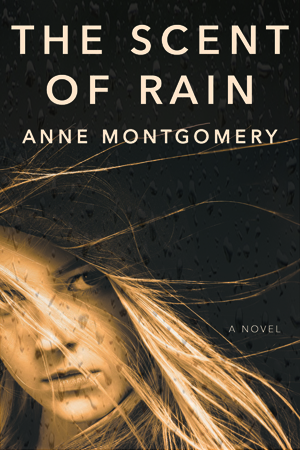
The soon to be released YA novel The Scent of Rain follows two teens running from abuse.  The plight of fictional characters can help readers relate to those who have vastly different lives than their own.

“What do you write about?” people often ask when they discover you’re an author.

I write about real situations that I often take directly from current events. As far as subject matter is concerned, I’ve penned novels dealing with sabotage, murder, post traumatic stress, religion, mental illness, archaeology, and the black market sale of antiquities, all topics I enjoyed researching and writing about.

But my soon-to-be-released Young Adult novel, The Scent of Rain, was different. While the information that led to the creation of the plot and characters came to me in vastly different ways, the subject matter was equally disturbing and difficult to compose.

The story in this case centers around two Arizona teenagers living in their own personal versions of hell. While the children are fictionalized, their stories are real. How do I know? First, I’m a foster mom to three sons and a teacher in a Title I school where hundreds of our students have passed through the troubled doors of the euphemistically named Arizona Department of Child Safety.  Seventeen-year-old Adan is the face of all the children I’ve come to know who have dealt with the abuses one can confront when the state becomes a parent.

Then there is Rose, who is living under the oppressive strictures of the Fundamentalist Mormon community in Colorado, City, Arizona. I knew little about the reclusive FLDS cult other than the occasional news clips or photos showing women and young girls in their long pastel-colored prairie dresses with athletic shoes peeking out incongruously beneath their hems, hair coiled in odd bunches, often clutching babies. I felt compelled to learn more about the group, reading everything I could find concerning the people who reside in the northwest corner of the state where I’ve lived for 27 years.

I invited Flora Jessop to my home, to discover what being raised in Colorado City was like. Jessop escaped twice from the FLDS and has spent her life rescuing girls and women from the cult. I listened as she calmly explained that females are subjected to all kinds of abuse, surprisingly, often at the hands of other women. Forced marriages are the norm. Later I would learn that some child brides were as young as 12. Children are uneducated and cut off from the outside world, with no access to phones, TV, radio, or the Internet.

As a former reporter, I am a seasoned interviewer, but I was not prepared for the stories Jessop told me. I barely remember speaking. I took a raft of notes on a legal pad. My recorder rolled for three hours. But I was never able to bring myself to listen to that recording. I didn’t have to. The stories stayed with me. Rose is the result.

Donna Essner is the acquisitions editor for the Amphorae Publishing Group, which will launch The Scent of Rain on March 28. While other publishers shied away from the story, Essner believes the themes in the book need to be addressed.

“Not only does this story show child abuse—in this particular case, a mother’s misguided sense of religious beliefs, based on what she’s been taught—it’s about forced marriage,” she said. “It’s about how one individual—a charismatic—manipulates, controls, and terrorizes a community of people based on their religious beliefs, to do his will, not God’s. Along with this, the story broaches what often happens to a good kid, taken away from a good parent, and put into the hands of the foster-care system, only to become a victim of abuse within the system meant to protect him. It’s about the heartlessness of law.”

While I did not write The Scent of Rain specifically for young readers, Essner convinced me that, despite the subject matter, publishing the book as a YA novel made perfect sense.

“Books are marketed according to the age of the protagonist and the projected audience,” she said. “Even so, a younger reader may want to read the book. Readers of YA, too, are not always within that projected age range. Many, like me, enjoy reading about our younger generations and what affects their lives.”

When I went to Colorado City, playing the part of an average traveler passing through, purchasing groceries at the Mercantile and filling my tank at the only gas station in town, I felt the overt tension, as my companion and I were scrutinized. We talked at length afterward about the fear we saw in people’s eyes, before they turned away, and the fact that, as we wandered through the town, stopping at the fenced-in former public school, the cemetery, and the palatial walled-off estate of the Prophet, Warren Jeffs – who by all accounts still controls the community from prison – we sensed we were being followed.

Later, I sometimes struggled when distilling what I’d learned into words, and periodically wondered whether anyone would want to read about the lives of the people imprisoned by the FLDS. In the end, I believed it was important to expose the suffering these people, especially the children, endure. Essner agreed.

“In order to understand human behavior and grow spiritually and intellectually, we all, as individuals, a world community, and society as a whole, must study the lives of others—their beliefs, their daily lives and habits, thoughts and actions,” she said. “Sometimes, the only way we are able to do this, is in reading fictional accounts of peoples’ lives and choices, as in The Scent of Rain. For those who may not have ever experienced physical and mental abuse, reading about it through the eyes of a fictional character enables any reader to understand, form an opinion, and hopefully, empathize with the characters. More importantly, in reading about abuse, we, to some degree, live it alongside the characters, and thus learn to recognize how it manifests itself, and most importantly, to take action against it.”

 The Scent of Rain will be released on March 28, 2017. The book’s launch will take place at the Poisoned Pen Bookstore at 4014 N Goldwater Blvd #101, Scottsdale, Arizona on April 2, 2017 at 2:00 PM. 
 

Want to be an author? You’ve gotta have grit!

imgres-1

Would F. Scott Fitzgerald be successful in today’s publishing world?

Being an author is a tough job. OK, maybe not as daunting as the career track those Deadliest Catch folks are onadmittedly, I found myself reaching for the Dramamine more than once watching those crabbing boats being tossed like toys – or Mike Rowe’s gig when he does things like testing shark suits or mucking out sewers on Dirty Jobs.

Still, converting thoughts to printed words in order to tell a coherent story that’s of interest to readers, and then convincing others your efforts are important and well-written enough to publish and promote, well, there are all kinds of adversities mixed up in that endeavor.

I’ve had a number of difficult jobs over the years. I used to be a maid, on my hands and knees cleaning other people’s bathrooms. I was a baseball umpire for 25 years where I was, without question, the most disliked person on the field pretty much every time I stepped on the diamond. As a sportscaster, I was on live television about 2000 times, where, when you make a mistake, there are myriad people who delight in pointing out your errors.

Despite my labors with jobs that didn’t do much toward promoting positive self-esteem, I was definitely not prepared for the rigors of being an author. I’ve written six books: two rest in a drawer, two are published, one will be shortly, and one is a work in progress. Since I began writing 25 years ago, I have been rejected by agents, publishers, editors, and reviewers too many times to count. I’m pretty sure my no-thanks numbers have edged up over the one thousand mark. In fact, I’ve been snubbed so often that I sometimes find myself strangely delighted when I receive a rejection letter that’s, well, kind. A positive comment contained therein might tempt me to tears. (I know I’m not the only one.)

Today, aspiring authors face a different reality than those of the past. The advent of the personal computer and the Internet have paved the way for a huge release of creativity, that, depending on your point of view, is either fabulous or horrifying. On the positive end, anyone can write, self-publish, and post their book on Amazon. It’s estimated that somewhere between 600,000 and one million books are published in the U.S. alone each year, probably half of which are self-published. The other side of the equation is that without the gatekeepers – agents, editors, publishers – finding your gem in that the massive pile of prose is problematic: the proverbial needle in a haystack.

Feeling down yet? All I can say is don’t give into despair. Here’s what I’ve learned from the authors I’ve become acquainted with, my fellow travelers on this detour-filled journey. We are a tough bunch. I have not yet met an author who’s said, “I quit! I can’t take it anymore!” Perhaps that’s why I found a bit of unintended humor at the expense of one of America’s most famous writers: F. Scott Fitzgerald. I recently began watching Z: The Beginning of Everything, a biographical Amazon series based on the life of Zelda Fitzgerald, the writer’s wife and muse. In one of the early scenes, F. Scott opens a letter from a publisher. His book is rejected. And F. Scott, who up until that point was dashing and strong and optimistic, disintegrates into a despondent pile of mush and goes completely off the rails, drunk, depressed, needing Zelda to give him strength. While I know my reaction was not what the show’s writers intended, I couldn’t help it. I felt like laughing. I wanted to yell at F. Scott to pick himself up. Get over it! Move on! Try again!

And then, I wondered whether the famed writer of The Great Gatsby would have survived the complexities of today’s publishing world. And what about Hemingway? Twain? Faulkner? Steinbeck? How might these giants of the industry have navigated the choppy waters we face today?

I think they would have struggled, just like we do.

So, my fellow authors, take heart! Be strong. Be proud. The fact that you’ve even finished writing a book puts you in rarified air. You will survive, if you don’t take rejection personally – Yes, I know it’s hard – and if you have a sense of humor.

 Anne Montgomery is an author. Her new novel, The Scent of Rain, tells the story of two Arizona teenagers whose fates become intertwined. Rose flees into the mountains to escape from her abusive polygamous community where her only future is marriage to a man older than her father. Adan, whose only wish is to be reunited with his mother, is on the run from the cruelties of the foster care system. Are there any adults they can trust? Can they even trust each other? The Scent of Rain will be released on March 28, 2017. 

Young readers are drawn to dark topics which should come as no surprise

the-scent-of-rain-ps-1

Like many YA novels, The Scent of Rain addresses difficult issues. Studies suggest teens are drawn to emotionally charged subjects because their brains are wired that way.

When my agent was shopping The Scent of Rain to publishers, there was concern that the story was being rejected because the book contained difficult subject matter. One editor rather indignantly retorted, “We don’t do books about child abuse.” That the novel is now being marketed to young adult readers has also raised some eyebrows.

Kristina Blank Makansi, an editor and founding partner of the Amphorae Publishing Group, believes that the decision to publish a book that includes controversial subject matter can be difficult.

“For me, it comes down to two things: Is the book well written, and is the book about a topic that is relevant and important in today’s culture,” she said.

Makansi notes that there is another factor to consider when determining if a book is suitable for young readers.

“When you’re dealing with a book for teenagers or children, there is a third consideration,” she said. “And that is whether or not the book is written in an impactful and realistic but not gratuitous way.”

The Scent of Rain tells the story of 16-year-old Rose, stuck in a polygamous society where a woman’s only purpose is to marry and produce children. Rose is walled off from the outside world: no phones, TV, Internet, radio, where she is allowed to learn no more than the cult leader permits. Still, she marvels at the natural world, and senses there is more to life than her elders are sharing. The book deals with numerous difficult issues: foster care, deportation, child abuse, forced marriage, cults.

“As a woman and the mother of two daughters, I personally feel very strongly that sexual abuse, denial of educational opportunities to girls and young women, and the use of religion to oppress children and control communities are critical topics that need to be addressed,” Makansi said.

Best-selling novelist Gayle Forman, in her Time article “Teens Crave Young Adult Books on Really Dark Topics (And That’s OK)” explained that young people are wired for tough topics.

“New brain mapping research suggests that adolescence is a time when teens are capable of engaging deeply with material, on both an intellectual level as well as an emotional one,” she said. “Some research suggests that during adolescence, the parts of the brain that processes emotion are even more online with teens than with adults, (something that will come as absolutely no surprise to any parent of a teenager). So, developmentally, teens are hungry for more provocative grist while emotionally they’re thirsty for the catharsis these books offer.”

As a teacher in a Title I high school, where the vast majority of kids live below the poverty line, I can tell you that many of my students regularly face a multitude of trying issues. Certainly, children in more affluent neighborhoods also face what can be crushing problems. When teens read books where young characters confront challenging issues – drug, alcohol, or sexual abuse, divorce, death of a loved one, violence, illness –  they are presented with characters who must figure out a way to survive and thrive despite the traumas they face, providing a lesson, perhaps, in coping with their own concerns.

Makansi agrees.

“When a talented writer is able to take readers into a character’s world and make them care about the challenges the character faces, minds can be opened, empathy can be cultivated, and, ultimately, society can change for the better.”

The Hunger Games, The Perks of Being a Wallflower, Go Ask Alice, The Lovely Bones, The Book Thief, are just a few of the myriad YA novels that address difficult issues. Forman points out that the fact young people universally love these books should not be the least bit shocking.

“Of course teens are drawn to darker, meatier fare,” she said. “The only surprise about this is that it’s a surprise.”

 Anne Montgomery is an author. Her new novel, The Scent of Rain, tells the story of two Arizona teenagers whose fates become intertwined. Rose flees into the mountains to escape from her abusive polygamous community where her only future is marriage to a man older than her father. Adan, whose only wish is to be reunited with his mother, is on the run from the cruelties of the foster care system. Are there any adults they can trust? Can they even trust each other? The Scent of Rain will be released on March 28, 2017. 

Breaking the rules can be deadly

thumbnail_purple-mountains-majesty

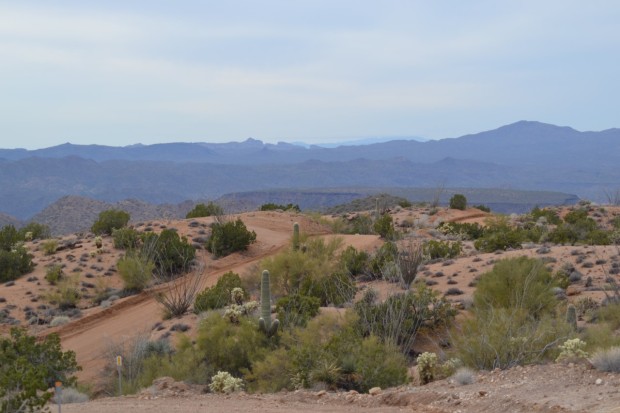
In a moment, the magnificent Sonoran Desert can become merciless, even deadly. I will never venture there again without following the rules.

In my soon to be released YA novel The Scent of Rain, as in all my books, the beautiful but sometimes treacherous southwestern desert plays a part. I’ve lived in Phoenix, Arizona for over 25 years and I’d always believed that, in the event of a Zombie Apocalypse, I could manage to stay alive in the wilderness that butts up against our urban landscape. Years of Girl Scout camp, rock collecting in remote abandoned mines, and scuba diving in wild locales made me confident I could outwit the elements, if I found myself stuck in the middle of nowhere.

The key to survival is planning. Make rules and stick to them. As a sports official for over thirty-five years, I tend to be quite dedicated to rules. Still, one awful day, I committed the worst mistake imaginable. I broke my own rules: a decision that could have been fatal.

I was headed for a day of rock collecting in the Superstition Mountains. As always, I’d left a detailed map of where I planned to be and when to expect me home. Since finding a person in hundreds of square miles of mountainous wilderness is always a daunting task – especially when cellphone access is rarely available – the rule was that I would stay with the vehicle, which would be much easier to spot than a lone individual. My old Ford pickup was stocked with water and food, a sleeping bag, books to read, a tent, a bottle of tequila – to disinfect wounds, of course – and dog food. I traveled that day with Georgie, my aging sheltie collie, and a young spotted cattle-dog mix named Sadie.

Once off the two-lane road, I drove about a mile on a well-maintained dirt trail. But quickly, the ground became rocky and steep. A few twists and turns later, I stopped. The track was too rough. Unfortunately, I was between a rock wall and a small ledge leading into a sandy wash, so I couldn’t turn the truck around. I draped my arm over the passenger seat and started backing down the trail. Almost immediately, my rear tire slipped over the ledge, and the pickup slid into the wash. When I gunned the engine, the back tires sunk into the sand.

I swore loudly and jumped out, landing in a jumble of sharp rocks. My leg slipped into a crevice and I fell, slicing my arm on a jagged boulder. Blood ran down to my elbow in bright red streaks. I swore some more.

I stared back in the direction of the road. I was only about a mile-and-a-half in. It would be a short hike on a cool, cloudy day. I could flag someone down and call home. I strapped two water bottles around my waist, grabbed some energy bars, reapplied my sunscreen, and squashed on my Aussie hat. I put the dogs’ leashes in my pack.

I walked on the sandy wash for a short time, admiring the rocky desert beauty: spindly ocotillos, majestic saguaros, and twisted mesquite trees dotted the landscape. The dogs bounded around me. Then I stopped. Two trails, right next to one another, led away from the wash. I thought for a moment. Which one had brought me here? I took the fork to the left. I can’t remember why.

Later that morning, I stood near the top of a small mountain. The dark, open face of an abandoned mine yawned at me. I’d taken the wrong trail. I turned and gazed out at the valley. With the exception of the massive Ray Copper Mine edging the horizon, I saw only wilderness. Where was the road?

Then, the sun came out, strong and hot. I squinted and saw what looked like a white roof way off to my left. We started down the trail, which forked again. This was a mining road, composed of jagged rocks. After about 30 minutes, Georgie stopped. My collie had cut her paws on the rough trail and sat down, refusing to budge. Both animals stared at me, tongues lolling out of their mouths. I reached again for the water bottles, and was stunned that only about an inch of precious fluid remained.

The heat became stifling. I tried carrying Georgie, but she was too heavy. I looked for shade, knowing that we should wait out the heat and hike at night. But could we all survive on the little bit of water that remained? Death can come quickly in the desert.

Feeling sick to my stomach, I walked away from my girls. I’d leashed them to the meager shade of a scraggly bush, hoping to find help before dark. The coyotes would be out by then. Two tied dogs would have no chance against them.

I wiped tears from my face as I built cairns: trail markers that could lead me back. I’d had heat sickness before and recognized that I was beginning to succumb again to the light-headedness that precedes passing out. I finished the water.

Later, when I put my foot on a flat piece of pavement, I was stunned. The road simply appeared with no warning. Then, out of nowhere on that lonely stretch, a single car pulled up and stopped next to me. A young man, incongruously wearing a white button-down and tie, leaned out the window and asked if I needed help.

“You’re hurt,” he said looking at the dried blood on my arm.”

I cried.

The kind young man dropped me off at the Kearny sheriff’s office, where Mayberry-esq matrons in floral-print blouses fussed over me.  “No, I don’t want a paramedic,” I assured them, red-faced, crying. “I want my dogs!”

Several hours later, Sheriff Joe Martinez drove his cruiser into the desert with me on the seat beside him. We followed the trail of stone markers. I worried about my girls and was afraid to look when he said, “There they are!”

To my relief, we were greeted with wagging tails. Later, Sheriff Martinez, in true western hero fashion, pulled my truck from the sand and waved me off.

Prior to my brush with disaster, I could sometimes be heard mocking ill-prepared visitors who would end up lost in the desert without food, water, sunscreen, or proper clothing: hikers who approached the desert environment like a walk in a pastoral garden.

I don’t do that anymore.

And I never, ever, break the rules.

Anne Montgomery is an author. Her new novel, The Scent of Rain, tells the story of two Arizona teenagers whose fates become intertwined. Rose flees into the mountains to escape from her abusive polygamous community where her only future is marriage to a man older than her father. Adan, whose only wish is to be reunited with his mother, is on the run from the cruelties of the foster care system. Are their any adults they can trust? Can they even trust each other? The Scent of Rain will be released on March 28, 2017. 

http://www.amphoraepublishing.com/product/the-scent-of-rain/ 

https://www.amazon.com/Scent-Rain-Anne-Montgomery/dp/0996390146

Yes, we all want friends, but sometimes you have to hit delete

friends

Take the time to look at those friend requests. If something feels off, click delete.


Friends.

Ever since we were wee tots, the notion that we had friends was intoxicating. Pals, buddies, chums, mates: whatever you call the folks with whom we share an affinity, the mere thought of them evokes feelings of warmth and happiness, ebullience and high spirits. With friends, what could go wrong?

Well, today, a lot. I’m talking here about certain Facebook friends. You know, the ones whose pictures you barely look at, before gleefully clicking on their Please Be My Friend- requests, all in the hope of adding another notch on your friend-list belt, which, of course, proves to everyone in cyberspace just how popular you really are.

But here’s the thing. We need to be careful whom we clutch to our electronic bosom. When I first began the considerable task of building my platform – that heady combination of social media accounts that today, as much as solid writing, determines whether an agent, editor, or publisher will sign an author to a contract – I didn’t pay any special attention to the folks who wished to befriend me.

Then, I started getting odd messages from men.“Saw your picture and had to contact you. What a lovely smile!” one bearded gentleman exclaimed. “How sweet!” was my initial thought. Then another mentioned something about “cuddling” and still another bemoaned his status as a divorced man, saying he was “lonely.”

After a few of these overtures, I started taking my time. I’d actually check out my possible friend’s page and I noticed a few similarities. First, their postings were woefully slim. In many cases just a few photos, which might show them in uniform – admit it ladies, uniforms are sexy – or with small children and/or cuddly little dogs. Some claimed to have attended school in exotic locales like Budapest or impressive places like West Point. Others offered that they could think of no better way to spend an afternoon than shuttling between farmers’ markets, or sipping wine, or watching a romantic sunset. It was a quick glance at the About section that showed all of these online admirers had but a handful of friends – or none at all – and little or no background information that finally had my spidey senses tingling.

So, who are these electronic suitors? Scammers in many cases, who are after your personal information in an attempt to steal your identify. Or people who want to befriend you, then share a sob story to convince you – kindhearted soul that you are – to part with some of your hard-earned cash.

The logical response is to only friend people you know. But for authors, and other people doing business on the Internet, that’s not possible. We are trying to build a clientele. What can we do? Slow down. Take a breath. Then click on your possible new friend’s page. Ask yourself, does something feel off? Once you’ve look at a few of these requests, you’ll catch the pattern. While they might look damn cute in that uniform, go ahead and click delete. You’ll be glad you did.

Anne Montgomery is an author. Her new novel, The Scent of Rain, tells the story of two Arizona teenagers whose fates become intertwined. Rose flees into the mountains to escape from her abusive polygamous community where her only future is marriage to a man older than her father. Adan, whose only wish is to be reunited with his mother, is on the run from the cruelties of the foster care system. Are their any adults they can trust? Can they even trust each other? The Scent of Rain will be released on March 28, 2017. 

http://www.amphoraepublishing.com/product/the-scent-of-rain/ 

https://www.amazon.com/Scent-Rain-Anne-Montgomery/dp/0996390146


A cat, a boy, a bond

There was nothing extraordinary about the cat that stared at me from the pages of my local newspaper. He was black. Gold eyes. His name was Westin. He’d been at the Humane Society way too long. His $20 price tag a clear indication that if he did not find a home soon, well…

I called my son to come look at the picture. I told him about Westin. “Should we go get him?” I asked. His eyes lit up.

Within the hour we bounded through the door at the shelter, waving the newspaper article. “We’re here for Westin.” We grinned at the receptionist. A woman standing nearby frowned. I pointed at the picture again, wondering at her odd reaction.

“The story did not tell you everything,” she said, leading us toward a glassed-in enclosure, a place called the Campus for Compassion, where hard-to-adopt animals are placed for one last push to find them a forever home.

My son and I glimpsed Westin briefly through a large window as the woman ushered us through a doorway, around a corner, and through another door.  We somehow missed the sign that would have tipped us off that Westin was no ordinary kitty. The woman escorted us into the tidy room scattered with cat toys and shelves ascending one wall, where Westin quickly displayed his climbing skills. I sat on a small couch. Westin stared at me, then bounded into my lap.

“You get acquainted. I’ll get Westin’s records.” She left, closing the door behind her. A short time later, a young volunteer appeared, bearing a thick folder.

“Where did he come from?” I asked, as Westin head-butted my hand for the rub.

“He was one of thirty cats found abandoned in a hotel room,” she said. “We named them all after hotels.”

The thought that there were kitties nearby named Radisson, Hilton, Sheraton, and Howard Johnson made me want to laugh. Perhaps she read my mind.

“They’re all gone. They’ve been adopted. Westin is the only one left.”

I stared at the cat, now happily ensconced in my son’s lap. “Why?”

“Westin is sick.”

My son and I simultaneously stared at the cat, who appeared quite healthy and happy.

“When he came to us, he had lost a lot of his hair. We almost put him down. The vets here did a lot of testing and, well, Westin has horrible allergies. He’s on daily medication and will be for the rest of his life. He has to be fed special food that’s about $60 a bag.”

I stared at my son, a first-year college student who’s living at home while he studies to be a chef.

“I’ll leave you two to think about it,” she said, a hint of sadness in her voice. “He’s been here a long time.”

“It’s a lot of money,” I said when my son and I were alone. “And a lot of responsibility.” We already had three cats, two of which came to us as strays and which live on the front porch, just wild enough still that being inside upsets them. We also have an indoor cat that my son raised from a kitten. And a cattle dog.

When the volunteer came back, I asked if anyone else had ever wanted to adopt Westin.

“Oh, yes,” she said. “Until they found out about his problems.”

I turned to my son. “You said we’d split the costs,” I reminded him. He nodded, considering.

The boy with the blue eyes stroked Westin’s head. “He’s just like me, Mom. No one wanted me either.”

I stared at the ground. Troy is my third son. All of my boys spent time in the foster care system, before entering my life when they were teenagers, having been shuttled between group facilities and foster homes too many times to count, clearly understanding that there didn’t seem to be a family that wanted them.

I can’t say it hasn’t been a struggle. Westin suffered a ruptured ear drum and only wants to eat food that he’s allergic to. Still, he gets along fine with the other animals and is under the watchful eye of our vet. We are hoping that, someday, he can go without the daily doses of medication and the special expensive food. In the meantime, Troy takes care of Westin. They seem to have an understanding.

troy-and-westin-2

My son Troy takes care of Westin, a cat found abandoned with 29 others in a hotel room. They seem to have an understanding.

What prompted me to write The Scent of Rain? I couldn’t turn away.

colrado-city

 In March, my new novel The Scent of Rain will be released by the Amphorae Publishing Group. The book tells the story of Rose Madsen, a teenage girl raised in the polygamous community of Colorado City, Arizona, a cult where women are second-class citizens, preyed upon by the men of the community, forced into underage marriage, and required to give birth until they are no longer able.

While the story is fiction, the facts underlying Rose’s plight are real. At the order of the Prophet, Warren Jeffs, a man with upwards of 80 wives, the schools in Colorado City were shut down. With no education and no access to phones, TV, or the Internet, his followers have been brainwashed into believing the outside world is filled with devils and unremitting evil.

While researching information for the book, I traveled to Colorado City. At one point, outsiders were prevented from entering the town by men with rifles, but since the government paid to build the roads, stopping visitors is now illegal. What I found in the place the residents call Short Creek was both astonishing and sad. The women and girls sported strangely swept-up hairstyles and identical ankle-length, high-necked, long-sleeved, pastel-colored prairie dresses. The memory of a child, not much more than four, in her pale blue dress, staring at me from a grocery cart in the small town market broke my heart. I frightened her. My clothes identified me as an outsider, an emissary representing the evil she believed lay beyond the borders of her insular world.

Visiting Colorado City was, frankly, disturbing. But the information I gleaned from interviewing survivor Flora Jessop, who twice escaped the cult and has spent her life rescuing other girls and women from the Fundamentalist Church of Jesus Christ of Latter-Day Saints, impressed upon me the horrors that were going on in my own state. Add to that the stories of Dr. Theodore Tarby who treated many of the FLDS children on the Arizona Strip and who tried to convince the cult members to marry outside their community, in order to avoid the plague of birth defects caused by inbreeding. Unfortunately, they ignored him.

The people of Colorado City and Hildale, towns which abut one another and which straddle the borders of Arizona and Utah, are often in the news. Slowly, their community is changing as the abuses inherent in their belief system are become more understood. As a former reporter, the simple fact that this cult exists in the United States in the 21st Century astounds me. As a teacher in a Title I school and a foster mom, the thought of children being abused by grown-ups who should know better sickens me. It has been hard to turn away.

But there is hope. The U.S. Department of Justice has recommended that the local police force be disbanded for its role in discriminating against non-believers. Cult leaders have been arrested for a complex fraudulent food stamp scheme. And Warren Jeffs sits in a cell in the Texas State Penitentiary in Huntsville, serving a term of life plus 20 years for sexually assaulting his 12 and 15-year-old child brides. In a spot of good news, a new library has opened in Colorado City, with a goal of providing education, information, and entertainment. Some light is beginning to shine through.

And that is the point of The Scent of Rain. Despite the harrowing conditions in which she lives, Rose yearns for future where she is not lost in a faceless sea of women valued only for their ability to bear children. She dreams of an education, fights against those who disparage her ambitions, and finds wonder in the world around her. As a teacher, my delight would be to meet Rose in my classroom.

What’s your genre? Don’t put your “baby” in the wrong box.

french-twist

Romance authors have covers that clearly establish the nature of their prose. For the rest of us it’s not quite so easy.

I have a new novel coming out in March. The moment I mention the impending arrival of my “baby,” prospective readers ask, “What’s the genre?”

“Well, um…it’s hard to say,” I respond, staring at my shoes, wondering why such a simple question has no equally simple answer.

I have a tendency to write stories without giving thought to where they might fit in literary culture.  So far, my titles have been variously listed as soft-thriller/contemporary fiction/mystery, historical fiction/mystery/women’s fiction, and young adult fiction/contemporary fiction. There are also romantic elements sprinkled in all three books, so you can see why labeling my work tends to make my head spin.

Still, identifying a genre for your novel is important.

“We use genre as a way to identify the category of a book. Where it should be sold in a store. Or who its competition will be,” long-time literary agent Steve Laub wrote in his blog article Does Genre Matter? “The best way to describe it is to say that publishers and booksellers sell books out of boxes. The boxes are labeled “Romance” “Thriller” “Mystery” etc. Before we resist that exercise I would claim that we consumers buy books out of those boxes. It is quite possible that the boxes were created by us (the consumers).”

Early novelists had no problem with genre

There is some dispute about which English book should be called the first novel. Some believe Miguel de Cervantes’ Don Quixote of La Mancha, published in 1605, deserves the honor. Others opine that Daniel Defoe’s 1719 Robinson Crusoe should get the nod. Either way, neither author had to think too hard about genre.

“In 1719, when Robinson Crusoe appeared, many people considered “the novel,” in itself, to be a genre,” said Joshua Rothman in his The New Yorker article titled A Better Way to Think About The Genre Debate. “The novel was a new thing—a long, fictitious, drama-filled work of prose—and its competitors were other prose genres: histories, biographies, political tracts, sermons, testimonies about travel to far-off lands. What set the novel apart from those other prose genres was its ostentatious fictitiousness.”

Clearly, modern-day authors can find labeling their work infinitely more complicated than those early novelists.  Look at today’s overwhelming number of possible fiction genres. The Book Industry Study Group’s list of fiction topics –  http://ftp.bisg.org/what-we-do-0-100-bisac-subject-headings-list-fiction.php – includes approximately 140 genres, all of which can be combined in what seems like a never-ending number of possibilities.

I’ll admit, sometimes I’m jealous of my Romance-writer friends, their covers bursting with muscled torsos and over-flowing bodices that leave not a hint of confusion about what type of story resides inside. Still, as difficult as pinning down that perfect genre might be, there’s no way around it, especially if you want to contact agents, or publishers, or editors, or reviewers, because those folks are pretty specific about the types of book they’re interested in. If you want to be considered an amateur in the publishing world, go ahead and send a query about your sci-fi, apocalyptic, young adult romance to someone who has made clear their genre of choice is 19th century English crime fiction. (And you were wondering why you hadn’t heard back.)

Ultimately, authors need to decide

While some authors may be tempted to leave the genre decision to others, remember, you wrote the book. You know the story and the characters better than anyone. Ultimately, you should choose. An article on the blog Rock Your Writing called How To Figure Out Your Book’s Genre – http://www.rockyourwriting.com/2013/06/how-to-figure-out-your-books-genre/ – suggests you consider, “who is the mostly likely to seek out this particular type of book, buy this type of book, and enjoy this type of book.”

While the decision on genre is yours, it’s the reader who we authors need to consider, because, as Laub pointed out, if our “baby” is in the wrong box, maybe those readers won’t find it.

My thanks to romance author Sloane Taylor for allowing me to use her book cover in this blog.

I’ve worn lots of hats

Welcome to my Website and Blog…

Once upon a time, I started a blog. I quickly realized the wee thing required a lot of care and feeding, much like my desert vegetable garden, with which I constantly wage battle and which I often refer to as Moriarty. Like my tomatoes facing the scorching summer sun, my little blog crumbled to dust.

Still, since I am an author, I am expected to blog. Following some research into the art – I am a former reporter, after all, so researching brings me comfort – I am ready to try again.

The first step, I read, is to introduce yourself. And now, I will.

My name is Anne, though most people call me Annie, which seems to suit me better. Red hair. Freckles. Hard to argue with that.

While this site is dedicated to my writing, primarily my role as an author, I have worn many other hats. Over the course of my life, I’ve worked as a maid – nothing like cleaning other people’s toilets to keep one humble – a waitress, a bartender, and an amateur sports official in football, baseball, ice hockey, soccer, and basketball, the last two in which I was especially awful. I’ve also worked as a TV sports reporter and anchor at five stations, at both the local and national levels. Then, one day, when I was approaching forty, I became too old to do my job. Yes, those of us who ply our trade in front of a camera, especially those of us who are women, have a definite shelf life stamped on our foreheads. Mine had expired.

The next few years I spent a great deal of time feeling sorry for me, not wanting to run into anyone I knew from my television days, lest they ask me what I was doing. Unfortunately, no one seemed the least bit interested in hiring an out-of-work female sportscaster – though, for a brief moment, I considered an offer to become a temp on the Revlon assembly line, à la Lucy with her bonbons. Instead, I brushed off my old baseball gear and pulled out my football stripes and whistle, and spent my days and nights officiating youth and adult sports leagues.

My big break came when I begged a dubious editor at a small local newspaper to hire me on as a part-time sportswriter for seven bucks an hour. And a funny thing happened. My stories kept appearing on the front page. Turns out I wasn’t a bad writer. While I’d spent years writing for television, the concept that I could pen print stories seemed rather farfetched, especially since I rarely read books growing up and have always suffered from low-end dyslexia. As my best friend from high school so succinctly said when she discovered I’d written a book, “How the hell did you become an author?”

Today, like many authors, I still wear a number of hats. I am a high school journalism teacher in a Title I school in Phoenix, and am one of those lucky folks who loves to go to work. My students produce the school newspaper and a biannual magazine. I continue to officiate high school football, where I serve as a referee and crew chief for the Arizona Interscholastic Association, and I’m a foster mom to three sons. (Do moms get hats? I think they should.)

This March, my third novel, The Scent of Rain, will be published by the Amphorae Publishing Group. The book tells the story of 16-year old Rose who has been raised in the polygamous community of Colorado, City, Arizona and who dreams of becoming a science teacher. But the cult in which she lives has shut down the school and is only interested in her marrying and producing children. Rose meets a strange boy, Adan, who is also on the run, and together they escape into the mountains. Searchers are quickly on their trail. There are outsiders who want to help, but can Rose and Adan trust these adults, or will they be forced to return to the abuse and cruelty they’ve fled?

Like my other two novels, A Light in the Desert and Nothing But Echoes, The Scent of Rain is inspired by facts and true events, proving that it’s hard for me to take that reporter’s hat off.

Anne Montgomery Referee.jpg

The white hat is one of many I’ve worn over the years.