Taking the cold plunge

I belong to this fancy-schmancy health club where many patrons are attractive and fit. It’s a far cry from the other gyms I’ve roamed in my life. Not very homey. A bit too much preening. Perhaps it’s the overabundance of thong bikinis versus my royal blue Speedo that makes me feel out of place.

If you’re wondering what I’m doing in a club with access to massages, sushi bar, café, salon, and rooftop lounge pool that’s totally useless for lap swimming, note that it’s free. Medicare, concerned that I’m old and out of shape, pays my monthly dues, which is apparently cheaper than footing the bill for a trip to the hospital.

Not my health club. Not me. Still a cold plunge is a cold plunge.

The best part of the club is a prettily tiled, softly lit room with a whirlpool, sauna, steam, and cold plunge, the last of which was something I’d never tried before joining. As you might expect, I was dubious the first time I stared down into the small glittering pool. I was reminded of the two previous occasions I’d been immersed in cold water. One was when I was about 12. I was crossing a frozen stream and fell through the ice. The water was shallow, so I wasn’t in any danger, but damn it was cold. The second time I plunged into frigid water was intentional. I was in St. Petersburg Florida where I’d joined 105 men for a five week course bent on making us better baseball umpires. After a long dusty session of calling balls and strikes, safes and outs, I eyed the pool near the barracks.

“It’s too cold to swim!” One of the instructors pointed out.

I’m a Jersey girl, so the low 70s didn’t seem cold to me. I darted back to my room, donned my one-piece, and ran back to the pool, by which time a bunch of my classmates were waiting for me.

“You’re crazy!” one called out.

Some of the guys laughed. I was tempted to dip a toe into the water to see what I was getting myself into.

“Go ahead. Jump in!”

“She’ll never do it!”

There was no turning back, so I dove in. As soon as I hit the water I felt like I’d been kicked in the chest. The air burst from my lungs. I tried to calm myself, as I didn’t want to surge up gasping. I managed to smile when I surfaced, and even though I could barely feel my limbs I paddled around, acting like it was all rather refreshing. The men seemed a bit disppointed as I walked unsteadily to my room. Not surprisingly, it took a long stay in a hot shower to thaw me out.

With those memories bright in my mind, I stepped into the cold plunge.

Before I go on…note that according to Web.MD, cold plunges can be good for us. Icy baths can improve heart health, help with muscle recovery after exercise, lower stress, boost your immune system, improve your mood, and may help diabetics lower their blood sugar. Of course, cold plunges may not be good for everyone, so check with your doctor before you the dive in.

I walked down the steps quickly and gasped as I sat on the tile seat, the frigid water reaching up to my neck. Then I checked the thermometer, which appeared to be somewhere in the mid-50 degree range. In less than a minute, I bolted out.

And yet, strangely perhaps, I did it again. And again.

I can’t say I love the plunge, which I manage mostly by deep breathing. But I now stay in five minutes. My old bones seem to like it. And there’s a feeling of badassery when I walk out, sometimes to the astonishment of those bikini bods in the room. I kind of like that.

Your Forgotten Sons

Inspired by a true story

Anne Montgomery

Bud Richardville is inducted into the Army as the United States prepares for the invasion of Europe in 1943. A chance comment has Bud assigned to a Graves Registration Company, where his unit is tasked with locating, identifying, and burying the dead. Bud ships out, leaving behind his new wife, Lorraine, a mysterious woman who has stolen his heart but whose secretive nature and shadowy past leave many unanswered questions. When Bud and his men hit the beach at Normandy, they are immediately thrust into the horrors of what working in a graves unit entails. Bud is beaten down by the gruesome demands of his job and losses in his personal life, but then he meets Eva, an optimistic soul who despite the war can see a positive future. Will Eva’s love be enough to save him?

Release Date: June 6, 2024

Universal Buy Link

Amazon

Apple Books

Barnes & Nobel

Google Books

Kobo

Bookstores, libraries, and other booksellers can order copies directly from the Ingram Catalog.

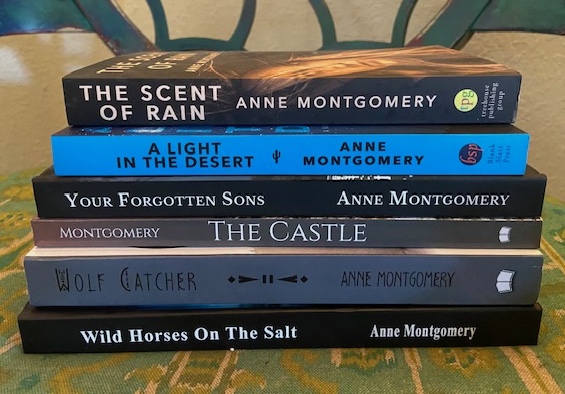
Anne Montgomery’s novels can be found wherever books are sold.

Goodreads

Amazon

When should you publish your book? It’s not an exact science.

Those unacquainted with the publishing world perhaps don’t know the vast number of decisions an author has to make. Note that I’m in the midst of remodeling my kitchen. It’s kind of like that. One has to consider plumbing and electrical, colors and texture, flooring and countertops, cabinets and appliances, and myriad other options on the road to the finished product.

Authors need to think about things like genre, characters, plot, setting, cover art, and marketing and promotional strategies, including blogs and podcasts and personal appearances.

But there’s another big decision to consider. Timing. When should authors release their baby to the public? For those who go the traditional route—meaning a publisher has acquired their book—the decision is often made for them. Since traditional publishers are paying the bills, they get to decide when to put your book on the market. Still, it never hurts to point out a specific date, if you have one in mind. My most recent book, Your Forgotten Sons—a World War II novel inspired by a true story—came out June 6, 2024 in honor of the 80th anniversary of D-Day, because I asked my publisher to hold it several months.

Of course, those who choose to self-publish have more options. So, assuming you have control over the timing of your release, what should you consider? One obvious idea is to launch your book alongside a holiday, as I did with Your Forgotten Sons. Are you a romance author? The weeks leading up to Valentine’s Day would be a simple choice. If horror’s your genre, time the release around Halloween. A memoire about your mom: Mother’s Day. Note that readers aren’t the only ones thinking about these topics as the holidays approach. Bookstores, bloggers, and podcasters are looking to feature holiday-themed books as well.

November and December are also good times to get your book out there. The idea is that people are buying gifts for loved ones and books are easy choices. Still, you might be surprised to know that January and February are considered a good time for self-published books to be launched. Why? People are itching to use all those new e-readers they got as presents, as well as those gift cards. And don’t forget the spring and summer months, when people have vacations on their minds, times when they are much more likely to sit and read at their leisure. Yes, book sales do tend to slump in the summer, but with traditional publishers heavily focused on back-to-school and holiday sales, there is certainly a window for those who self-publish when people are looking for beach reads.

There are certain books—primarily non-fiction based on or related to current events—that should be published quickly, while subject is a hot news topic. Getting these books out in a timely manner is not easy, but shoot for it if you can.

Despite all of the recommendations, this is not an exact science. There is no perfect date to launch your book. In the end, authors should revel in the fact that their book is out in the world. A finished project.

I wish I could say the same about my kitchen.

“What a brilliant book! I couldn’t put this novel down…It is a solid five-star read… Your Forgotten Sons should be a must-read for all lovers of fiction, especially WWII fiction. The tale was educational, provocative, enlightening..” 

Virginia Dill  Book Sirens

Your Forgotten Sons

Inspired by a true story

Anne Montgomery

Bud Richardville is inducted into the Army as the United States prepares for the invasion of Europe in 1943. A chance comment has Bud assigned to a Graves Registration Company, where his unit is tasked with locating, identifying, and burying the dead. Bud ships out, leaving behind his new wife, Lorraine, a mysterious woman who has stolen his heart but whose secretive nature and shadowy past leave many unanswered questions. When Bud and his men hit the beach at Normandy, they are immediately thrust into the horrors of what working in a graves unit entails. Bud is beaten down by the gruesome demands of his job and losses in his personal life, but then he meets Eva, an optimistic soul who despite the war can see a positive future. Will Eva’s love be enough to save him?

Release Date: June 6, 2024

Universal Buy Link

Amazon

Apple Books

Barnes & Nobel

Google Books

Kobo

Bookstores, libraries, and other booksellers can order copies directly from the Ingram Catalog.

Anne Montgomery’s novels can be found wherever books are sold.

Goodreads

Amazon

Defining success: It’s personal

I have been asked a number of times lately how I define success. I now realize my answer to that question has changed significantly over the years.

A few decades back I, like many others, may have considered my bank account first, when presented with the question. Do I have the money to do what I want? But success isn’t quantified that easily. While money can reduce financial anxiety and provides a sense of security, I don’t think wealth alone can make us feel successful. There’s simply more to it than that.

The funny thing is we often don’t grasp that we are successful. The Forbes article “Signs you’re being successful even if you don’t realize you are,” points out different ways to look at success.

For example, are you a person who can comfortably stand up and speak with authority? Studies show just 1% of employees feel confident enough to voice their views to others. This is a form of success.

Do you consider yourself happy? The vast majority of people, 90% in one study, believe that success comes from one’s sense of happiness and joy.

And what about your dreams? According to Forbes, “Successful people give themselves permission to dream as big as they want.  When you create a vision for your life that might seem wildly ambitious, but you take steps every day towards it, know you are successful.” 

And note here that you don’t necessarily have to achieve that dream to be successful. It’s the process of moving towards a goal that makes one a success. As the great Arthur Ashe once said, “Success is a journey, not a destination. The doing is often more important than the outcome.” 

And let’s not forget about failure, a frequent companion to those who are successful. Getting to the top of any mountain requires trial and error. Those who are successful pick themselves up after a disappointment, learn from their mistakes, and start climbing again. Thomas Edison famously admitted that he failed more than one thousand times while trying to invent the lightbulb. On failure in general he was quoted as saying, “I have not failed 10,000 times—I’ve successfully found 10,000 ways it will not work.”

Clearly, success comes in many forms. Some find it in the meaningful work they do. That means a job we look forward to. Not every day, perhaps, but maybe 85% of the time. And when I say job, I don’t mean only in the traditional sense. Of course, tending to one’s family would fall under the job umbrella. As would dedicated volunteer work. Success then might be attained by the contributions we make that impact our family and community.

The more I think about it, the more I realize success is personal. There is no one-size-fits-all. I suppose the ultimate test will come at the end of our lives. Can we look back and say, “Yes! I’m proud of what I did.” I do know that for me the answer will be simple. Success is dying with few regrets and good stories.

I’m working on it.

Your Forgotten Sons

Inspired by a true story

Anne Montgomery

Bud Richardville is inducted into the Army as the United States prepares for the invasion of Europe in 1943. A chance comment has Bud assigned to a Graves Registration Company, where his unit is tasked with locating, identifying, and burying the dead. Bud ships out, leaving behind his new wife, Lorraine, a mysterious woman who has stolen his heart but whose secretive nature and shadowy past leave many unanswered questions. When Bud and his men hit the beach at Normandy, they are immediately thrust into the horrors of what working in a graves unit entails. Bud is beaten down by the gruesome demands of his job and losses in his personal life, but then he meets Eva, an optimistic soul who despite the war can see a positive future. Will Eva’s love be enough to save him?

Release Date: June 6, 2024

Universal Buy Link

Amazon

Apple Books

Barnes & Nobel

Google Books

Kobo

Bookstores, libraries, and other booksellers can order copies directly from the Ingram Catalog.

Anne Montgomery’s novels can be found wherever books are sold.

Goodreads

Amazon

A publishing do-over: The tale of an orphan book

We don’t often get do-overs in life. But I’ve just gotten one and I couldn’t be happier. Now let me back up a little.

This past September I received word that one of my publishers was shutting down. I’d like to say this was the first time I’ve faced such a closure, but it’s not. Since I became an author 30 years ago, I’ve had three publishers call it quits. Which shouldn’t surprise anyone considering the crazy state of the industry.

According to the 2023 Brett-Koehler Publishing article “10 Awful Truths about Book Publishing,” “The book publishing world is in a never-ending state of change. The thin margins in the industry, high complexities of the business, intense competition, severe supply-chain disruptions, churning of new technologies, and rapid growth of other media lead to constant turmoil in bookselling and publishing, including the closure and sale of many publishing companies and publication programs each year.”

What does this mean to an author? Orphan books. When a publisher closes, book rights generally revert to the author. But what happens then? When you consider that approximately three million books are published annually in the U.S. alone—two million of which are self-published—it would seem unlikely that orphan books would make it back into circulation, unless an author wanted to foot the bill.

But I am delighted to say that I am getting a do-over courtesy of Next Chapter Publishing, where two of my novels—Your Forgotten Sons and Wild Horses on the Salt—currently have a home.

The book in question is called Wolf Catcher, a work of historical fiction that takes place in the American Southwest both in modern times and in the 11th century. Of all my books, this one is the most personal. One of the protagonists is a reporter tasked with ferreting out the identity of a man buried outside of Flagstaff, Arizona almost 900 years earlier. A man whose mummified remains looked different from the people who occupied the area at the time, one who was buried with 600 exquisite funerary objects, identifying him as a man of power and prestige.

The story of the man they call The Magician was my assignment when I worked as a reporter for Arizona Highways Magazine. That the reporter’s name in the book is Kate Butler might be a tipoff that she and I traveled the same path in search of the story. With the exception of the time when bullets are flying, everything that happened to Kate also happened to me.

Note that as a girl who grew up in New Jersey with little knowledge of Native Americans, the investigation was a long learning curve. I charged into my research with little understanding of the cultural traditions I might be trampling and, like Kate, changed a lot along the way.

I’m also happy to have a do-over on Wolf Catcher for another reason. In 2021, before the book was scheduled to launch, I contracted Covid, passed out, and suffered a severely broken leg that had to be surgically repaired. I carry a titanium plate and eleven screws as a reminder. Subsequently, there was no book launch and little marketing, as I spent eight months learning to walk again. As you can imagine, few people ever read the book. I’m hoping to change that this time around.

So my thanks to Next Chapter Publishing for taking Wolf Catcher on. I’m not yet sure of the timeline, but I’ll let you know when the mysterious story of The Magician is back.

Your Forgotten Sons

Inspired by a true story

Anne Montgomery

Bud Richardville is inducted into the Army as the United States prepares for the invasion of Europe in 1943. A chance comment has Bud assigned to a Graves Registration Company, where his unit is tasked with locating, identifying, and burying the dead. Bud ships out, leaving behind his new wife, Lorraine, a mysterious woman who has stolen his heart but whose secretive nature and shadowy past leave many unanswered questions. When Bud and his men hit the beach at Normandy, they are immediately thrust into the horrors of what working in a graves unit entails. Bud is beaten down by the gruesome demands of his job and losses in his personal life, but then he meets Eva, an optimistic soul who despite the war can see a positive future. Will Eva’s love be enough to save him?

Release Date: June 6, 2024

Universal Buy Link

Amazon

Apple Books

Barnes & Nobel

Google Books

Kobo

Bookstores, libraries, and other booksellers can order copies directly from the Ingram Catalog.

Anne Montgomery’s novels can be found wherever books are sold.

Goodreads

Amazon

Where’s the bread?

Remember when you’d go out to a restaurant and the first thing a server would put on the table was bread? Of course you do, at least if you’re over 30. In fact, restaurants sometimes went out of their way to prove just how bread-forward they were. I recall, quite fondly, the times when a linen napkin-covered basket filled with several types of bread all artfully arranged around a ramekin of warm butter would appear. Then there’d be the admonishment, “Don’t ruin your dinner.” Which did nothing to deter everyone from lunging for a piece of that delicious goodness.

Today, however, bread is rarely offered in restaurants, unless it’s part of a sandwich. And when I ask for some to go with my dinner, I’ve watched servers, hand over heart, exclaim, “We don’t serve bread!” as if I’d just asked about scoring some cocaine.

So what gives? First, bread costs money and patrons often expect it to be free, especially older folks who remember the good old days when, well, of course the bread was free. Note that I’m not one of them. I’m happy to pay for bread, and am often perplexed when informed that the restaurant does not serve bread just as a burger in a nice fat bun is delivered to the next table.

There is some evidence that serving bread prevents patrons from ordering appetizers, further cutting into a restaurant’s bottom line. I can see that. So, again, just charge me for the bread, don’t deny me those scrumptious carbs alltogether.

I also understand that those nice bread baskets sometimes were wasted, since bread got a bad rap somewhere around the time the gluten-free craze began. It’s amazing, don’t you think, that just 4% of people actually have a medical reason to follow a gluten-free diet, and yet given all the food labels that scream Gluten Free!, you’d think it was a scourge affecting the masses. It’s not. Note that it’s 18-34 year-olds who are most interested in avoiding gluten, so perhaps I should be angry with them when I can’t get a piece a bread.

I guess we can also blame the paleo diet for our inability to munch on a warm buttered baguette or a nice slice of sourdough, since all forms of cereal grains are verboten for people on that regimen, which is rather perplexing since the program is meant to mimic the way our ancient ancestors consumed food. Scientists now believe that our hunter-gatherer forebearers were eating bread 14,000 years ago and that carbohydrates were essential to human evolution, so that it’s stricken from today’s tables seems odd, don’t you think? Note that it’s mostly those in the 25-44 age group who tend to follow the paleo diet. (See where I’m going here?)

Now, I’m not a dope. I understand that copious amounts of bread are not good for us. Everything in moderation and all. Still, I think it’s time we stopped demonizing bread. I, for one, will emulate my ancient ancestors and continue eating bread. With every meal.

And don’t try to stop me!

Your Forgotten Sons

Inspired by a true story

Anne Montgomery

Bud Richardville is inducted into the Army as the United States prepares for the invasion of Europe in 1943. A chance comment has Bud assigned to a Graves Registration Company, where his unit is tasked with locating, identifying, and burying the dead. Bud ships out, leaving behind his new wife, Lorraine, a mysterious woman who has stolen his heart but whose secretive nature and shadowy past leave many unanswered questions. When Bud and his men hit the beach at Normandy, they are immediately thrust into the horrors of what working in a graves unit entails. Bud is beaten down by the gruesome demands of his job and losses in his personal life, but then he meets Eva, an optimistic soul who despite the war can see a positive future. Will Eva’s love be enough to save him?

Release Date: June 6, 2024

Universal Buy Link

Amazon

Apple Books

Barnes & Nobel

Google Books

Kobo

Bookstores, libraries, and other booksellers can order copies directly from the Ingram Catalog.

Anne Montgomery’s novels can be found wherever books are sold.

Goodreads

Amazon

Why are containers so hard to open?

If you’re like me, I bet you struggle with certain types of packaging. Like the impossible-to-open clamshells that protect things like batteries and cords, electronics and light bulbs..

Even the folks at Plastics Ingenuity, a company that creates “thermoforming packages,” agree that their products are not easy to use. “Plastic packaging has one disadvantage on the customer end: difficulty of use. Certain kinds of plastic packaging are very difficult to open. While this is ideal for transportation and shelving, once the product is in the customer’s hands, it could create frustration.”

If you’re like me, you often grab a sharp knife and start stabbing away. In fact, some people get so exasperated they resort to razor blades, box cutters, and ice picks—In case you think I made that up, I did not.—which has led to myriad trips to the emergency room. One study showed that wrestling with clamshell packaging alone leads to 6,000 hospitalizations in the U.S. each year. The problem is so prevalent there’s an actual name for it: wrap rage.

Why do retailers use hard plastic packaging? No, it’s not to slowly drive us mad. It’s because, as previously mentioned, the containers protect products during shipping and facilitate easy shelving. They also help prevent pilfering and allow customers to see the product prior to purchase.

Note that we can’t blame all this fumbling to open packages on plastic. Have you tried tearing open a bag of chips, lately? Then there’s that tiny foil bit that covers the end of a new tube of toothpaste, and that cardboard peel on the top of the peanut butter, and that push-and-twist top on prescription meds. Ugh!

It might make you feel better to know that companies are just trying to protect us, especially in regard to products we consume. It all goes back to 1982, when an assailant laced Tylenol capsules with potassium cyanide and placed them on shelves in a number of stores in the Chicago area. Seven people died and all these years later it remains a cold case crime. As you can imagine, the packaging companies pretty quickly made their containers tamper proof, but I’m thinking maybe they’ve gone just a bit too far. (See those 6,000 ER visits above.)

Is there anything we can do about it? Probably not. I got a little excited when I saw that Amazon has an entire section of products labeled Certified Frustration-Free Packaging. But when I clicked the link, there was nothing at all about frustration-free packaging. So, now I’m…frustrated.

In the meantime, I found a hack to get through those clamshells. It involves a can opener and a sharp knife.

Oh…never mind.

Your Forgotten Sons

Inspired by a true story

Anne Montgomery

Bud Richardville is inducted into the Army as the United States prepares for the invasion of Europe in 1943. A chance comment has Bud assigned to a Graves Registration Company, where his unit is tasked with locating, identifying, and burying the dead. Bud ships out, leaving behind his new wife, Lorraine, a mysterious woman who has stolen his heart but whose secretive nature and shadowy past leave many unanswered questions. When Bud and his men hit the beach at Normandy, they are immediately thrust into the horrors of what working in a graves unit entails. Bud is beaten down by the gruesome demands of his job and losses in his personal life, but then he meets Eva, an optimistic soul who despite the war can see a positive future. Will Eva’s love be enough to save him?

Release Date: June 6, 2024

Universal Buy Link

Amazon

Apple Books

Barnes & Nobel

Google Books

Kobo

Bookstores, libraries, and other booksellers can order copies directly from the Ingram Catalog.

Anne Montgomery’s novels can be found wherever books are sold.
Goodreads

Amazon

Historical fiction authors sometimes find fascinating facts that don’t make the history books

Writing historical fiction can be fascinating and frustrating, an effort that often feels like digging for buried treasure. Sometimes you find what you’re looking for. Other times the facts are elusive. And then there are the moments when intriguing new evidence emerges, details that put your story in a new light.

That was the case in regard to my most recent book, Your Forgotten Sons, a story inspired by Sergeant Joseph “Bud” Richardville, who served in the Graves Registration Service in Europe during World War II, arguable the most difficult assignment in the military. Bud and his men were tasked with the job no soldier wanted: locate, identify, and bury the dead.

But there was another side of Bud’s story. A love story. In fact, quiet family rumors suggested there may have been two women in Bud’s life.

During the course of my research, I learned about Allotment Annies, women who married men just as they were headed off to war. My thanks to Linda Pennell, a fellow historical fiction author, for sharing my story on her website History Imagined

Your Forgotten Sons

Inspired by a true story

Anne Montgomery

Bud Richardville is inducted into the Army as the United States prepares for the invasion of Europe in 1943. A chance comment has Bud assigned to a Graves Registration Company, where his unit is tasked with locating, identifying, and burying the dead. Bud ships out, leaving behind his new wife, Lorraine, a mysterious woman who has stolen his heart but whose secretive nature and shadowy past leave many unanswered questions. When Bud and his men hit the beach at Normandy, they are immediately thrust into the horrors of what working in a graves unit entails. Bud is beaten down by the gruesome demands of his job and losses in his personal life, but then he meets Eva, an optimistic soul who despite the war can see a positive future. Will Eva’s love be enough to save him?

Release Date: June 6, 2024

Universal Buy Link

Amazon

Apple Books

Barnes & Nobel

Google Books

Kobo

Bookstores, libraries, and other booksellers can order copies directly from the Ingram Catalog.

Anne Montgomery’s novels can be found wherever books are sold.

Goodreads

Amazon

Plastic as food?

Sometimes, things worry me. Lately, it’s plastic.

I’m pretty sure you know it’s everywhere, because it’s awfully hard to miss. It’s wrapped around the food we buy and forged into the containers that hold practically every product we purchase. It swirls in enormous piles in our oceans and virtually litters the landscape worldwide; especially the ubiquitous plastic bag that drapes itself like an unappealing Christmas decoration wherever it happens to snag. But there’s also a lot of plastic in our environment that’s almost impossible to see. Plastic is in the food and beverages we ingest. It’s in our computers and cellphones and TVs. It’s even in the things we wear. Did you know that when you wash and dry your clothes—mostly those made with synthetic fibers— tiny pieces of plastic brake off and fly into the air? And there you are, calmly folding your shirts and socks and undies, breathing those wee flakes in.

And now you should probably sit down, because it seems that plastic is also in our brains. Currently, that wonderous organ that is the center of who we are is, by weight, 0.5% plastic, which is 50% higher than the amount found in brain samples taken in 2016. Strangely, plastic bits seem to enjoy living in the penthouse, mostly because it’s easy to get there, since a lot of the plastic we harbor comes though our noses in the air we breathe. When compared to human kidneys and livers, brain samples harbored 7 to 30 times more of the stuff.

I realize that, at this point, you’re probably concerned, but don’t worry, because the FDA recently reported that, “Current scientific evidence does not demonstrate that levels of microplastics or nanoplastics detected in foods pose a risk to human health.”

I feel better now, don’t you?

No, waxworms are not pretty, but they are awfully clever. They actually eat plastic.

In an effort to prevent people from panicking, I will now introduce you to the humble waxworm. And please don’t be repulsed by the little maggoty-looking guys, because they are magical creatures on par with unicorns and fairies.

Why? They eat plastic. Waxworms, so named because they feast on the wax bees use to make their honeycomb, have a couple of enzymes in their saliva that are able to oxidize the polyethylene in the plastic. The discovery came to light when an amateur beekeeper—who also happened to be a brainiac molecular biologist—grabbed some waxworms out of a hive and put them in a plastic bag, which those clever little critters started munching on. Plastic as food! Isn’t that cool?

It’s estimated that 400 million tons of plastic are produced globally every year. And since it can take centuries for some of it to break down, it’s clear we need a solution, lest we end up in a Wall-E World of plastic waste. So, does that mean we will start hauling tons of waxworms to local landfills to chew up plastic. It’s not likely and, let’s face it, it would be rather gross.

What is more probable is that scientists will study the waxworms, as well as other organisms like fungi and bacteria that are also known to digest plastic. Perhaps they can actually create self-degrading plastics by incorporate those enzymes into the plastic-making process.

Imagine that!

Your Forgotten Sons

Inspired by a true story

Anne Montgomery

Bud Richardville is inducted into the Army as the United States prepares for the invasion of Europe in 1943. A chance comment has Bud assigned to a Graves Registration Company, where his unit is tasked with locating, identifying, and burying the dead. Bud ships out, leaving behind his new wife, Lorraine, a mysterious woman who has stolen his heart but whose secretive nature and shadowy past leave many unanswered questions. When Bud and his men hit the beach at Normandy, they are immediately thrust into the horrors of what working in a graves unit entails. Bud is beaten down by the gruesome demands of his job and losses in his personal life, but then he meets Eva, an optimistic soul who despite the war can see a positive future. Will Eva’s love be enough to save him?

Release Date: June 6, 2024

Universal Buy Link

Amazon

Apple Books

Barnes & Nobel

Google Books

Kobo

Bookstores, libraries, and other booksellers can order copies directly from the Ingram Catalog.

Anne Montgomery’s novels can be found wherever books are sold.

Goodreads

Amazon

A curious and most memorable New Year’s Eve

Every year for decades I have wondered whether the coming New Year’s Eve celebration could top the one I experienced in 1975. So far, nothing’s come close. So, in honor of that long ago evening, I will share the story again.


Vianden Castle is one of scores in Luxembourg, but it would be a castle in nearby France that would be the setting for an unforgettable New Year’s Eve.

Forty-nine years ago, I faced a young man I had just met.

“Come with me,” he said.

I had arrived in Luxembourg, that tiny country squeezed by Germany, France and Belgium, just two days earlier, the beginning of a six-month stint abroad at my university’s branch campus. I’d been placed with Kurt and Margareta Schroeder: Swedes, two of the loveliest people I’ ve ever met. Lennart was their son.

“She’s an old friend,” he explained about the woman who owned the castle. “Every New Year’s Eve we go there and celebrate.”

I did not, at that point, sense there was something he wasn’t telling me. Sweet Margareta—who would, each morning, provide me with hand-squeezed orange juice, fresh-baked bread with honey and jam, and a pot of hot, black tea—assured me that the short drive into France would be fun and that her blond, blue-eyed boy with the mass of unruly curls would take good care of me.

“Sure, I’ll go. What should I wear?”

“It’s a drafty, dirty old castle,” Lennart said. “Just wear jeans.”

Later, we drove past open fields and woodlands where trees stood naked and lacy, having long since shed their leaves. Pewter clouds pressed from above. The chill made me glad to be wrapped in a turtleneck, heavy sweater, and ski jacket. My straight-legged Levi’s topped rugged hiking boots. As the countryside raced by, I wondered what a “dirty, old castle” might look like. I’d spent my life in New Jersey, a place pretty much devoid of castles of any kind.

Lennart turned onto a long, narrow lane. “This is part of the estate,” he said. “She inherited two thousand acres from her grandfather.”

When we pulled onto the circular drive, I stared at the massive gray structure that was maybe four-hundred years old. As we mounted a wide white stairway, I considered the odd placement of a sculpture that appeared to be George Washington and his men on their fabled crossing of the Delaware. The piece rested halfway up the staircase. I would soon learn that the statue’s haphazard placement was a remnant of the castle’s World War II occupation by Nazi officers who were caught amidst their attempts to steal artwork. The sculpture was left on the stairs as the soldiers fled an attack by local French citizens and there it remained. A reminder.

“The castle has sixty-four rooms,” Lennart said. “But we only use a few of them. It costs too much to keep the heat on.”

Marie greeted us in French and with two kisses, one on each check for Lennart. She eyed me quizzically. I couldn’t help but notice her modelesque frame squeezed into impossibly tight black jeans. A scarlet, long-sleeved shirt similarly hugged her curves, revealing a hint of cleavage. Raven hair hung loose down her back. High black heels clacked with each step.

A six-foot, white marble sculpture depicting this famous scene of Washington crossing the Delaware incongruously rested halfway up the castle’s front stairs.

My hiking boots suddenly felt heavy. My cuffed Levi’s a bit too rustic.

Marie chattered on with Lennart in French, one of five languages he conversed in fluently. “She doesn’t speak English,” he whispered.

My French was pathetic, but I didn’t need to understand the language to see there was something between them.

Marie led us into a dining room where a long table was set with linens and crystal. A chandelier sparkled above, throwing shadowed light on 16th century oil paintings. Over the course of the evening, eight other Parisians would join us, not one of whom spoke English.

Multiple bottles of wine and champagne were uncorked. When we were all seated, a silver tray appeared from the kitchen bearing a massive fish. I wondered if poisson was the traditional New Year’s Eve repast, as I requested another serving. I noticed I was the only one asking for seconds.

I was surprised when the next platter appeared. And even more so when subsequent others arrived. I knew, without being told, that to decline an offering would be rude. As I needed a pause before the next course circled the table, I was greatly appreciative when we ran out of wine and Lennart explained we would have to trek down to the cellar for more. One dark-haired, animated man—who I was told was a popular French comedian—led us through the castle’s murky halls and stairways. He started singing Gregorian chants, which seemed both fitting and a bit sacrilegious when we arrived at the family chapel, replete with alter and pews and cross. More than a bit tipsy, we joined him, our voices echoing off ancient stone walls.

We retrieved myriad dusty bottles of wine, some over 100 years old. As you might expect, much of the rest of the evening is a bit of a blur. But sometime later, I woke in a bedroom shrouded in shadow. I could hear the even ticking of a grandfather clock and loud stomping. Boots hitting the floor over and over. But my wine-addled brain and warm covers precluded me from investigating.

The next morning, I asked Lennart if I could see the clock. He translated my request. Marie, tilted her head and spoke.

“The clock was removed from that room many years ago,” Lennart explained.

I wondered if the Nazis were to blame, but I didn’t ask.

“And the stomping?” I waited.

“That is the German soldier,” he translated. “He was caught in the courtyard when the Nazis were fleeing. He was killed there. Later, Marie’s grandfather took the man’s skull and placed it in his library. The soldier has been marching around the castle at night ever since.”

I stared at Marie. Her shrug told me a stomping Nazi ghost was no big deal in an old French castle.

On the drive back to Luxembourg, Lennart would confess that he and Marie had dated for years. This was the first New Year’s Eve celebration they weren’t a couple. He knew she was seeing someone and didn’t want to go to the castle alone. He did not disuuade the others when they inquired if we were dating.

Almost five decades have passed since my trip into the French countryside, an evening filled with subterfuge, fabulous food, old wine, a stomping ghost, and an invisble grandfather clock.

I’m pretty sure nothing will ever top that.

Your Forgotten Sons

Inspired by a true story

Anne Montgomery

Bud Richardville is inducted into the Army as the United States prepares for the invasion of Europe in 1943. A chance comment has Bud assigned to a Graves Registration Company, where his unit is tasked with locating, identifying, and burying the dead. Bud ships out, leaving behind his new wife, Lorraine, a mysterious woman who has stolen his heart but whose secretive nature and shadowy past leave many unanswered questions. When Bud and his men hit the beach at Normandy, they are immediately thrust into the horrors of what working in a graves unit entails. Bud is beaten down by the gruesome demands of his job and losses in his personal life, but then he meets Eva, an optimistic soul who despite the war can see a positive future. Will Eva’s love be enough to save him?

Release Date: June 6, 2024

Universal Buy Link

Amazon

Apple Books

Barnes & Nobel

Google Books

Kobo

Bookstores, libraries, and other booksellers can order copies directly from the Ingram Catalog.

Anne Montgomery’s novels can be found wherever books are sold.

Goodreads

Amazon

Waiting for Bigfoot: A Christmas Story

I have just returned from a trip to the Pacific Northwest, which considering that I’ve lived in Phoenix, Arizona for the last three decades was quite a different experience. It was cold and wet. And this was not the kind rain we get in Phoenix. No! This was freezing cold rain, the kind that trickles down the back of your neck and makes you shiver. And gosh, it was constantly dark. It felt like dinnertime all day long.

We’d been staying with Ryan’s stepmom who’d been living alone since his dad died unexpectedly on Christmas day last year. After a nice, week-long visit, we headed south in his father’s car, a vehicle we purchased since it had been sitting unused in the garage since Stanley died.

Despite the dark skies and threat of rain, we marked some rock-collecting sites to visit along the 1,400 mile journey home. I’m a rocker and no amount of inclement weather will stop me from going on a good rock hunt. And Ryan agrees. Okay, that last part was a lie. Ry, good sport that he is, humors me in regard to my obsession with rocks. So he just sighed a little when I directed him toward Quartzville Creek, Oregon, a place I could collected agates and jasper and petrified wood. “It’s only raining a little.” I smiled.

With pretty rocks dancing in my head, I wasn’t paying a whole lot of attention to the topography or the dark, low-hanging clouds when I pointed Ry toward the Cascade Mountains. We were about 20 miles into a high, thick forest when fat snowflakes started smacking into the windshield.

“I saw a sign that said this leads to the 5,” Ry said. “So let’s just stay on it.”

The road began to zig and zag and Ry clutched the wheel like a Formula One driver. Then, a few miles later, he shouted, “Shit! I think we have a flat tire!” He stared at the warning light on the dashboard.

“How’s that possible? We bought brand new tires less than 48-hours ago.” I didn’t wait for his reply. “Don’t worry! I have AAA!” I said in the cheeriest voice I could muster. Then I pulled out my phone and discovered…egads…no bars.

Ry pulled off the road. “I’m going to check the tires.” Then he jumped out and left the door wide open so the wind and snow whipped into the car.

I waited.

Then I waited some more.

But Ry had disappeared.

If you’ve never been in that part of the world, note that those murky forests can be rather forbidding. Trees are densely packed, some covered with thick green moss, skeletal branches reaching out as if ready to grab an unsuspecting passerby. For some reason, I pictured Brad and Janet on that stormy night they found themselves on Dr. Frank-N-Furter’s doorstep. And we know how that ended.

Then, I remembered Bigfoot, beacuse we were stalled right smack in the middle of his stomping grounds. Might the big guy appear, reach into the open door, and carry me off to his bachelor pad? Before I could ponder that scenario, Ry reappeared.

While I was looking for rocks, I’m pretty sure Ry was thinking how happy he was to be on that cold rainy Oregon beach with me.

“Where’d you go?” I said, sounding a bit desperate.

“The tires are fine. There was a guy parked down the road. He said to turn around and go back.”

So, we did.

It was two days after we’d survived our ordeal in the mountains that we stood in a parking lot unpacking the car. We were weary from a day of collecting on Oregon’s rugged beaches and looking forward to a warm bed and some dinner. That’s when a man hurried by. I only saw him for an instant. Well-built in a dark T-shirt and jeans. Something about him was familiar, but he quickly vanished into the night.

I forgot about the man until the next morning. Ry and I were having breakfast when I looked up and there he was at the Holiday Inn Express buffet getting a cup of coffee.

“Good morning, Santa!” I called, marveling at the way the guy with the hot bod had transformed into the Jolly Old Elf. Clearly, he must have been traveling incognito the previous night.

“Ho Ho Ho!” Santa looked at me and smiled. “Merry Christmas!”

Ryan turned around. “Hey, Santa! I’ve been a very naughty boy. How can I get back on the Good List?”

And there it was. The twinkle in his eye. It really was Santa! He clutched his drink, which I was now pretty sure was actually hot cocoa with whipped cream and a candy cane.

“Be nice to people,” he said. Then Santa winked and walked away. “Ho, ho, ho!” he called as he slipped past the front desk and out the door.

I looked at Ry for a moment. Didn’t he rescue me from the snowy Cascades and Bigfoot? Didn’t he take me to five cold rainy Oregon beaches so I could hunt for rocks. That’s pretty nice, don’t you think?

Here’s hoping that gets him a little closer to Santa’s Good List.

Your Forgotten Sons

Inspired by a true story

Anne Montgomery

Bud Richardville is inducted into the Army as the United States prepares for the invasion of Europe in 1943. A chance comment has Bud assigned to a Graves Registration Company, where his unit is tasked with locating, identifying, and burying the dead. Bud ships out, leaving behind his new wife, Lorraine, a mysterious woman who has stolen his heart but whose secretive nature and shadowy past leave many unanswered questions. When Bud and his men hit the beach at Normandy, they are immediately thrust into the horrors of what working in a graves unit entails. Bud is beaten down by the gruesome demands of his job and losses in his personal life, but then he meets Eva, an optimistic soul who despite the war can see a positive future. Will Eva’s love be enough to save him?

Release Date: June 6, 2024

Universal Buy Link

Amazon

Apple Books

Barnes & Nobel

Google Books

Kobo

Bookstores, libraries, and other booksellers can order copies directly from the Ingram Catalog.

Anne Montgomery’s novels can be found wherever books are sold.

Goodreads

Amazon