70: A different type of milestone

Why the flower? A wilted orchid seemed to have long since given up. Then, one day, rather magically, this flower appeared. I took it as a sign. No matter how old we are, something beautiful can happen.

Milestone birthdays are just that. Moments in our lives that appear to be harbingers of change. Think 18 when we become legal adults, despite how dopey most of us are when we’re still in our teens. Or 21 when we can legally belly up to a bar and say, “Yes, I’d like a sweet, minty, Mojito, please.” Turning 30 has us questioning whether we’re fully engaged in life—on the road to a successful and fulfilling career and considering whether we’re finally ready to start a family. Turning 40 sometimes smacks us in the face with a midlife crisis where we ponder our failures and wonder if we’re accomplished enough to head to that high school reunion. Thankfully, things seem to calm down when 50 rolls around. We know who we are and are less likely to worry about what others may think of us. Sixty skips by on the way to magical 65, when we get to retire from the daily grind. Which brings me to 70.

Seventy, for a reason I can’t quite pinpoint, is different. I mention this because I became a septuagenarian earlier this year, and I’m still trying to figure out what to do with that fact.

Dr. John Messerly in his article How Does Life Feel Different At 70,  was spot on when he wrote, “While I don’t feel old… there is still something about turning 70 that freaks me out. I feel like I’m about 40 on the inside, but that’s not what my birth certificate shows. It is just hard to believe that you were a kid or teenager and then, seemingly in an instant, are a senior citizen.”

Exactly!

“Life just looks different,” Messerly went on to explain. “You become increasingly aware of your mortality…You know that much of your life is not on the horizon but behind you. Much of the journey is over. This thought fills you with pride in what you’ve achieved and sadness for what can never be.”

When I look back at my life, I recall a roller-coaster of ups and downs with heart-stopping turns that required me to pause, consider, and change direction. Despite the failures, I’m rather amazed that I completed all I set out to. And still I sometimes feel there’s more I should be doing.

I recall speaking to a former boss when he sat in his office one day in shock. He’d been fired and was clearly distraught. In an effort to soothe him I said, “Work is what we do. It’s not who we are.” He brightened a bit. So, when that “What do I do now?” question hovers, I remember that sentiment.

When I googled the question about living at 70, I got the usual suggestions: eat well, exercise, maintain a healthy sleep routine, get annual medical checkups, and socialize. So staying upright, strong, and well adjusted appear to be the main goals in my seventh decade.

I’d like to say that at 70 I am content with my life and happy to sit and smell the proverbial roses. But that would be a lie. I always feel there is something more to accomplish. And maybe that is ultimately the point.
Wolf Catcher

Anne Montgomery

Historical Fiction

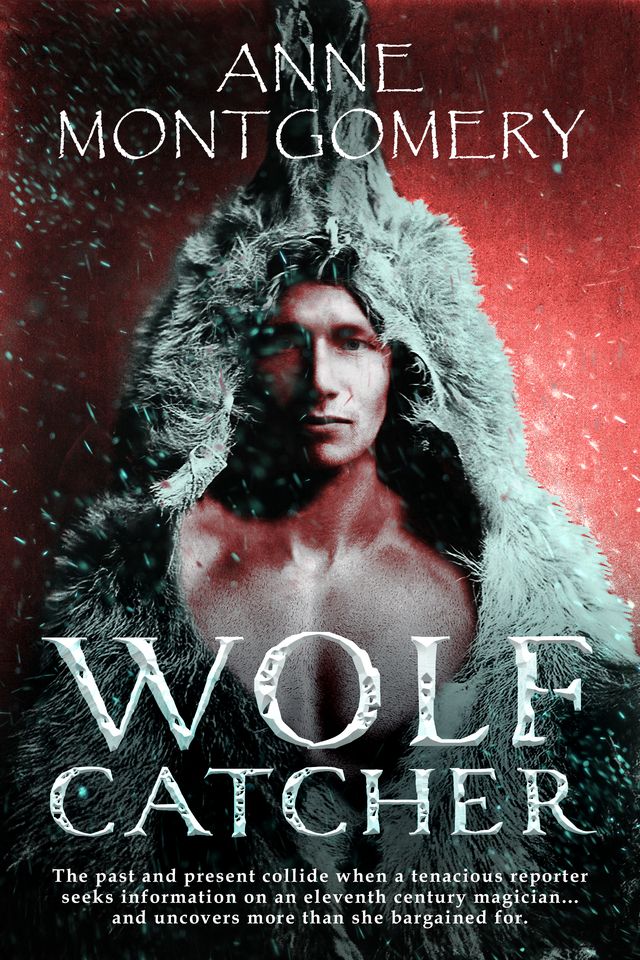
In 1939, archeologists uncovered a tomb at the Northern Arizona site called Ridge Ruin. The man, bedecked in fine turquoise jewelry and intricate bead work, was surrounded by wooden swords with handles carved into animal hooves and human hands. The Hopi workers stepped back from the grave, knowing what the Moochiwimi sticks meant. This man, buried nine hundred years earlier, was a magician.

Former television journalist Kate Butler hangs on to her investigative reporting career by writing freelance magazine articles. Her research on The Magician shows he bore some European facial characteristics and physical qualities that made him different from the people who buried him. Her quest to discover The Magician’s origin carries her back to a time when the high desert world was shattered by the birth of a volcano and into the present-day dangers of archeological looting where black market sales of antiquities can lead to murder.

Universal Book Link

Amazon

Apple Books

Barnes and Noble

Google Books

Rakuten Kobo

Bookstores, libraries, and other booksellers can order copies directly from the Ingram Catalog.

Anne Montgomery’s novels can be found wherever books are sold.

Goodreads

Amazon

On being 70

Yesterday, I turned 70. And I couldn’t be more surprised. I was reminded of the time my 95-year-old mother said, “I never thought it would go so fast!” Which sent a chill down my spine.

I have never been one of those women who wanted to hide my age. And I still don’t, but for some reason 70 has me pensive. Up until now, I didn’t feel like a senior citizen, even considering the day my sweetie pie signed me up for AARP. “Here’s your card!” Ryan smiled and handed me that bright red-and-white confirmtion that I’m old.

I wondered what my 7th decade might have in store, and it turns out that AARP had the answers. The article “What to expect in your 70s and beyond,” was enlightening. There were things I already knew, of course, like one’s skin gets drier and wrinkles appear. Note that I have made my peace with wrinkles, as they are a sign, I think, of one’s life experiences. Apparently one-in-three women will get osteoporosis, though if we get some regular exercise we might be able to keep that particular scourge at bay. Our eyesight will become less acute. Our hearing will diminish and we are encouraged to get over our pride and acquire hearing aids. Our sense of smell will fade, so we are urged to try ethnic cuisines like Indian and Thai foods with their yummy spices and flavors.

I know what you’re thinking, being in one’s 70s sounds a bit dreary, but it’s not all doom and gloom. It seems that people in this age range kick butt in one particular category. According to AARP, “The 70s tend to be some of the happiest years of your life. One explanation for the trend: years of experience. ‘As you get older, you know that bad times are going to pass,’ says Laura Carstensen, Ph.D., director of the Stanford Center on Longevity. ‘You also know that good times will pass, which makes those good times even more precious.’”

Many of us are concerned about losing our mental acuity, and while it’s true that some of our brain circuitry starts to burn out as we age, the good news is other parts of our brain can pick up the slack, especially when we keep our gray matter stimulated. Social interaction, reading, doing puzzles, dancing, learning a new language, and taking music lessons can all keep our brains healthy. And don’t forget regular exercise, which can help our brain and body age more gracefully.

Here’s what I didn’t see coming: It seems that once we’re in our 70s our ears and noses get bigger. I’ll let AARP explain. “Non-articular cartilage, the type that gives ears and noses their shape, continues to grow with age, making these appendages larger. But look on the bright side: Such cartilage growth may have evolved to enable people to track and funnel sounds and smells as they age” Doesn’t that sound like nature is looking out for us older folks? I think so.

Maybe happy aging is all about mindset. I remember when I was home for the summer after my freshman year in college. My mother had arranged for me to be the caretaker for an elderly man, Mr. Frank Towey, who’d been a lawyer and a congressman who represented New Jersey in the U.S. House of Representatives. He was in his late 70s, going blind, and would sometimes, rather annoyingly, strike his cane on the floor to get my attention. As he was demanding and persnickety, we didn’t hit it off, at first. He constantly referred to me as Dizzy—Diz for short. In retaliation, I called him Commander. Very quickly however, we became friends. One of my fondest memories is chauffeuring him around in his 1955 black Cadillac convertible which boasted red leather interior. He would don a canary-yellow blazer and straw fedora and say, “Take me for a drive, Diz!” Then he’d grin.

I mention the Commander because one day he looked at me and said, “Do you know what the strangest thing about aging is?”

I stared into his watery-blue eyes. “No.”

“It’s that your body ages, but your mind still thinks you’re 30.”

I didn’t understand what he meant back then. Now I do. And maybe that’s the key. Even though our bodies might be growing older, our brains don’t have to.

Here’s the thing. If we’re lucky, we’re going to age. And we can live our lives in ways that make the aging process a whole lot more comfortable. And that’s exactly what we should shoot for. So exercise. Try new things. Give your brain a daily workout. Eat healthy food, but sometimes have a piece of cake. And perhaps, most importantly, stay in touch with friends and loved ones. Get out there and be social, because that, above all things, will make us happy as we age.

Your Forgotten Sons

Inspired by a true story

Anne Montgomery

Bud Richardville is inducted into the Army as the United States prepares for the invasion of Europe in 1943. A chance comment has Bud assigned to a Graves Registration Company, where his unit is tasked with locating, identifying, and burying the dead. Bud ships out, leaving behind his new wife, Lorraine, a mysterious woman who has stolen his heart but whose secretive nature and shadowy past leave many unanswered questions. When Bud and his men hit the beach at Normandy, they are immediately thrust into the horrors of what working in a graves unit entails. Bud is beaten down by the gruesome demands of his job and losses in his personal life, but then he meets Eva, an optimistic soul who despite the war can see a positive future. Will Eva’s love be enough to save him?

Release Date: June 6, 2024

Universal Buy Link

Amazon

Apple Books

Barnes & Nobel

Google Books

Kobo

Bookstores, libraries, and other booksellers can order copies directly from the Ingram Catalog.

Anne Montgomery’s novels can be found wherever books are sold.

Goodreads

Amazon