Over the last two years, I’ve tried something different: Podcasts! I’m a bit too lazy to create my own, so I’ve offered myself to those lovely folks who take the time and effort to put podcasts together and it’s been great fun. I like talking about things: books and sportscasting and officiating, teaching and current events, rocks and cats. (Don’t judge.) And I’ve met so many cool people along the way.
Those who know me understand that I never met a microphone I didn’t like, so I’m ready for more. Now, pull up a seat, click on the link, and have a listen.
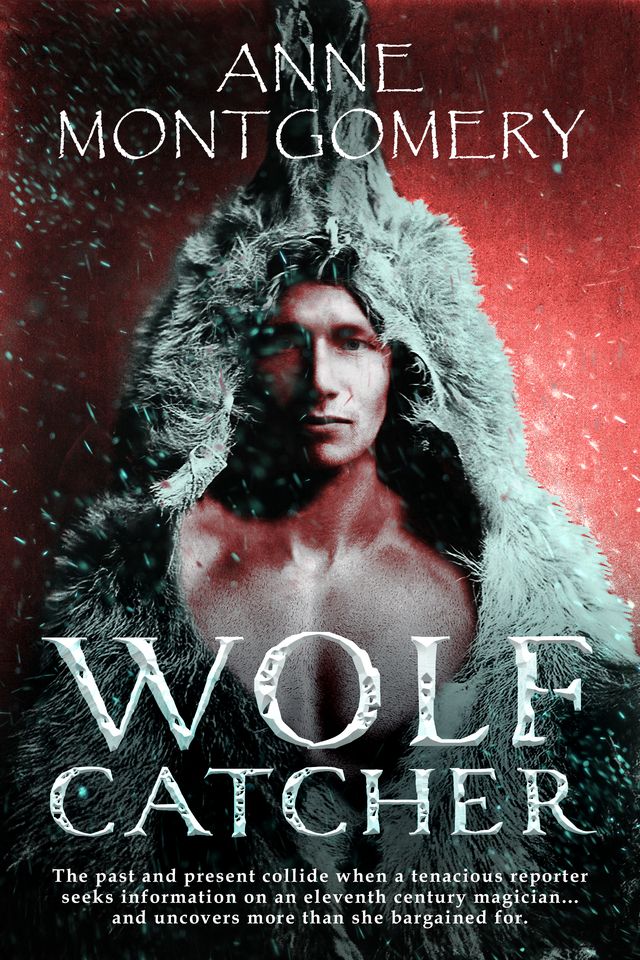
In 1939, archeologists uncovered a tomb at the Northern Arizona site called Ridge Ruin. The man, bedecked in fine turquoise jewelry and intricate bead work, was surrounded by wooden swords with handles carved into animal hooves and human hands. The Hopi workers stepped back from the grave, knowing what the Moochiwimi sticks meant. This man, buried nine hundred years earlier, was a magician.
Former television journalist Kate Butler hangs on to her investigative reporting career by writing freelance magazine articles. Her research on The Magician shows he bore some European facial characteristics and physical qualities that made him different from the people who buried him. Her quest to discover The Magician’s origin carries her back to a time when the high desert world was shattered by the birth of a volcano and into the present-day dangers of archeological looting where black market sales of antiquities can lead to murder.
I was at a book event a while back, and as often happens when you get a bunch of authors together, the same question was asked repeatedly: So what’s your book about?
Seems simple enough. But as I listened to a few of my peers rattle on and on about their books, I wanted to gently point out that the fewer words they use in what is called an “elevator pitch” the better. An elevator pitch, is a brief description of one’s current writing project, one that might pass between the author and the president of a huge publishing house on the occasion that they find themselves in an elevator for 30 seconds or so. Obviously, this pitch is short. Very short.
Writers know that it is much easier to fill five pages than a 30-word paragraph. The latter is extremely difficult as every word must count. Though the above elevator scenario is unlikely to happen, the ability to define your work in a few sentences is important to you and any agents, editors, publicists, or media people who might be interested in your book. So the elevator pitch is a tool that every author needs to have ready.
The pitch should be maybe 20-40 words. It should identify the main idea and what the protagonists are seeking. For example. The Other Boleyn Girl byPhilippa Gregory: “Two sisters, Anne and Mary, are driven to advance their family’s power by courting the affections of the King of England and a ruthless rivalry develops between them.”
Here are a couple more, like the one above courtesy of Reedsy.
To All the Boys I’ve Loved Before by Jenny Han: “When her secret love letters somehow get mailed to each of her five crushes, Lara Jean finds her quiet high school existence turned upside down.”
The Da Vinci Code by Dan Brown: “A murder inside the Louvre, and clues in Da Vinci paintings, lead to the discovery of a religious mystery protected by a secret society for two thousand years, which could shake the foundations of Christianity.”
The point of course is to make your book unique and compelling and to get that CEO—or whomever your trying to pitch—to say, “Tell me more!”
Developing an elevator pitch that makes someone’s eyes light up and request additional information is the goal. Your handful of words needs to be striking and memorable. So, be clear: Who is your protagonist? What do they yearn for? How do they plan to get what they want? What is standing in their way? Make sure not to include spoilers. Memorize your pitch and be prepared to deliver it in a conversational way. Smile and sound confident
It is ironic that of the tens of thousands of words authors put into their books, the few in an elevator pitch are perhaps the most important.
Your Forgotten Sons
Inspired by a true story
Anne Montgomery
Bud Richardville is inducted into the Army as the United States prepares for the invasion of Europe in 1943. A chance comment has Bud assigned to a Graves Registration Company, where his unit is tasked with locating, identifying, and burying the dead. Bud ships out, leaving behind his new wife, Lorraine, a mysterious woman who has stolen his heart but whose secretive nature and shadowy past leave many unanswered questions. When Bud and his men hit the beach at Normandy, they are immediately thrust into the horrors of what working in a graves unit entails. Bud is beaten down by the gruesome demands of his job and losses in his personal life, but then he meets Eva, an optimistic soul who despite the war can see a positive future. Will Eva’s love be enough to save him?
Writers write. That is abundantly clear. But is that enough in today’s whirlwind of book marketing? It is not!
Authors especially are sometimes categorized as introverts. Some of the all-time greats— Edgar Allan Poe, George R.R. Martin, J.K. Rowling, C.S. Lewis, and Agatha Christie are among the many that have admitted to being shy. Which makes me wonder how they would fair in today’s marketplace if they were just starting out. My initial thought is they would fail—despite their brilliant prose—because today authors must speak if they want to get the word out.
Here’s where I’ll point out that authors aren’t the only ones afraid of public speaking. It turns out that getting up in front of a crowd tops the list of American phobias. Over 25% of those polled say they would rather face drowning, bugs and snakes, heights, and claustrophobia among other perceived scary situations than get sweaty palms at a podium.
So, what’s an author to do?
Get better at public speaking! Get better the way we improve at anything. Practice! Practice! Practice!
Note here that in another life I spent a great deal of time in front of a microphone when I was a TV sportscaster. And over a 20-year period in the classroom I taught communications skills. So let me pause for a moment to put on my teacher’s cap…Okay. Good!
Admittedly, I’m a bit of a ringer since I spent a lot of years holding a microphone when I was a sportscaster, still I believe anyone can master public speaking skills.
Now, the first thing to remember is that you have a whole lot to say. You would not write books if you weren’t bursting with ideas, which means there’s plenty of material to mine for interesting things to talk about. So banish the terror of standing speechless before a mic.
With that in mind, you bravely agree to speak to a local book club, so the first thing to do is ask about expectations and the venue. Where and when will you be speaking? How long will you be speaking? Is there specific information the host would like you to touch on? Will you be taking questions? Will you be at a podium? (For those feeling skittish, a podium can be helpful in hiding shaky knees and gives one a spot to place notes, as well as something to hold on to. While a podium might not always be available, it never hurts to ask.)
And now it’s time to decide what you want to say.
“Oh, gosh!” you’re probably thinking. “How do I begin?”
Glad you asked! Simply, in a few sentences, introduce yourself. While the host will no doubt give you a brief introduction, have your own prepared. And make sure to say how happy you are to have been invited, even if it’s a complete lie because your gut is churning and all you want to do is run away. Calm your nerves by remembering the folks at the book club are not mean high school kids who are waiting for you to fail so they can laugh at you. They want you to be great. So tamp down the terror and smile!
As for the talking points, take into account what the host suggested. Did she ask you to discuss your new book? Marketing tips? Why a weekly blog is important? The everchanging world of publishing? Take that assignment seriously. Do some research, but you don’t have to be an expert. Just share your personal experiences.
If the host didn’t specify a particular subject, talk about what inspired you to write your book, describe the main characters, briefly outline the plot without giving away any spoilers, describe the setting and explain why it’s important to the story, and talk about the road to publication.
It’s important that your talk is conversationl in style and that you make eye-contact with those in the audience.
Once you’ve got all the ingredients assmbled, practice your speech in the mirror. And if you’re concerned that you might lose your train of thought, feel free to keep some notes, but never type out your speech and try to memorize it. Go for the conversational approach and remember to make frequent eye contact with the members of your audience. It’s also nice if you can inject some humor at your own expense. Don’t shy away from the times when things went horribly wrong. I’m betting your audience will be able to relate to your disappointments more than your successes.
Later, after you’ve collapsed in your car, taken a few calming breaths, and checked your watch to see if it’s even remotely close to cocktail time, think about your performance. Note what went well, what went wrong, and how you can improve the next time, because there must be a next time. Remember earlier when I said “Practice! Practice! Practice!”? Well, I meant it.
Because public speaking opportunities are not all that common for most of us, I have a secret weapon in regard to practicing. It’s called podcasts. Because I’m way too lazy to do my own, I offer myself as a guest on other people’s programs. I subscribe to a service for $15 a month. (I use podcastguests.com, but there are probably others.) Twice a week, I get a list of podcasters looking for guests. Here’s where I’ll recommend that you don’t limit yourselves to literary podcasts, instead be willing to talk about anything you feel comfortable speaking about, because almost always the podcaster will get down to your books and a link to your website, which even happened when I was a guest on a program about caring for stray cat populations. There are podcasts on thousands of subjects, so don’t be shy. And be happy to be appear on any podcast. I’ve been interviewed by a 14-year old and had a blast. I’ve been on podcasts that have aired hundreds of shows and others that have only done ten. Every one is an opportunity.
And here’s the thing. If you don’t like how you did on a podcast, you don’t have to share it. Like the book talk, ask yourself, “What could I have done better?” Then make adjustments and put yourself out there again.
I promise you’ll catch on. And then don’t be surprised if, eventually, you find yourself loving that microphone.
Bud Richardville is inducted into the Army as the United States prepares for the invasion of Europe in 1943. A chance comment has Bud assigned to a Graves Registration Company, where his unit is tasked with locating, identifying, and burying the dead. Bud ships out, leaving behind his new wife, Lorraine, a mysterious woman who has stolen his heart but whose secretive nature and shadowy past leave many unanswered questions. When Bud and his men hit the beach at Normandy, they are immediately thrust into the horrors of what working in a graves unit entails. Bud is beaten down by the gruesome demands of his job and losses in his personal life, but then he meets Eva, an optimistic soul who despite the war can see a positive future. Will Eva’s love be enough to save him?