A lesson learned: The dead and their funerary objects need to be respected

When I was asked by Arizona Highways Magazine to write an article about the man they call The Magician, I didn’t understand that I might be trampling on Native American religious beliefs. (Illustration by Brad Holland)

I’m not a religious person, so I have, in the past, missed signs that had spiritual implications. For example, when I was researching my novel Wolf Catcher—which was just rereleased by Next Chapter Publishing—I didn’t understand how offensive some of my requests were.

I was hired to write a magazine article about the man they call The Magician. His fabulous, nine-hundred-year-old tomb had been uncovered by archaeologists in 1939, beneath a pueblo on a lonely hillside about ten miles from Flagstaff, Arizona. Back in those days, exhuming indigenous burial grounds was an acceptable practice, which now seems absurd. Logically speaking, there’s not much difference between rifling through the belongings of ancient mummies and digging up one’s modern-day grandmother. Imagine collecting jewelry from grandma’s body and selling her precious possessions on eBay.  

As a kid, I sometimes visited the Museum of Natural History in New York, where burial offerings from around the world were often on exhibit. However, while trying to determine who The Magician might have been, I discovered just how offensive it is to put human remains and funerary objects on display. My first hint was a letter my editor at the magazine received when I ignorantly requested a DNA test on The Magician. My reasoning seemed sound. The Magician was described by those who found him as being physically different from the people who buried him in several ways. He was particularly tall for his time and did not resemble the Native Americans who populated the region. He was said to have some Caucasian facial features, so my first thought was how did a man who may have had some European ancestry make it to what would become the American Southwest almost one-thousand years ago.

My request for scientific analysis was met with a hard no from the Hopi tribal authorities. The Native American Graves Protection and Repatriation Act of 1990 stipulates that all remains and funerary objects must be treated with respect and dignity and that the destruction of any portion of a body—even something as seemingly insignificant as a tooth for a DNA sample—is unacceptable and illegal.

At that point, I was so focused on getting my story done, I didn’t understand why my request for scientific testing was such a big deal. Then, when I arrived to interview an archaeologist I’d worked with previously, I was shocked when he didn’t appear. It would be another archaeologist who would gently explain the problem. These scientists are bound by their relationships with Native American tribes. If they want to dig on tribal or even public land, they must get permission. If they don’t follow the rules, they will be shut out, which would hurt their reputations and limit their ability to work. My investigation posed a threat to the man’s career, a risk he wasn’t willing to take.

While researching the story, I picked up a number of pottery shards. My logic was simple. I was on public land, so clearly I had committed no crime. But again, I was wrong. Those beautiful pieces of ancient fired clay, many so bright and vibrant they looked as if they’d been painted yesterday, should never have been taken from their resting places, because once you’ve removed an artifact from its setting, you’ve destroyed its sense of time and place—it’s historical significance—something you can never get back.

After finishing Wolf Catcher, I found myself staring at those thousand-year-old bits of pottery and couldn’t pretend I hadn’t done something wrong. I spoke about my feelings with a friend who was a nondenominational pastor. She quickly responded that I should put the pieces back where I found them.

She and I traveled to Ridge Ruin where I gently returned the shards to the hillside. We stood on the rocky ground under which the pueblo that housed The Magician’s body lay hidden, having long ago been backfilled to protect it from looters. I stared at the spot where the man had been buried with such reverence all those years ago. My friend asked me to apologize for my mistake, which I did.

As I said earlier, I’m not a religious person, and yet, as we left that windswept hillside that held the remains of Ridge Ruin in its belly, I felt better. And I promised myself I would not make the same mistakes again.

If you’d like to learn more about my quest to understand who The Magician might have been and what his world was like, read my novel Wolf Catcher.

Wolf Catcher

Anne Montgomery

Historical Fiction

Next Chapter Publishing

Released August 4, 2025

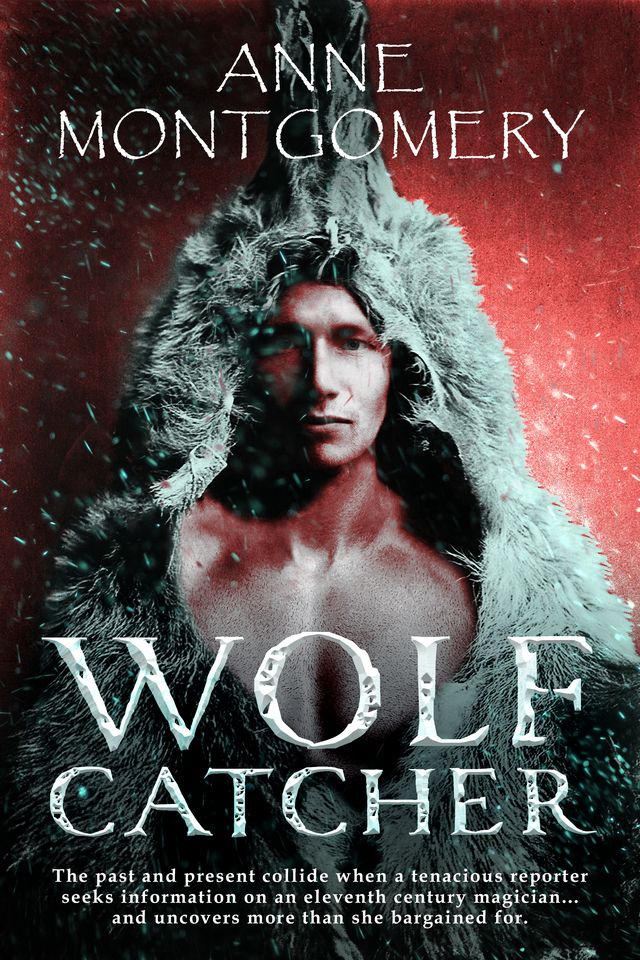
The past and present collide when a tenacious reporter seeks information on an eleventh century magician…and uncovers more than she bargained for.

In 1939, archaeologists uncovered a 900-year-old tomb at the Northern Arizona site called Ridge Ruin. The man, bedecked in fine turquoise jewelry and intricate bead work, was surrounded by hundreds of extraordinary funerary objects, including wooden swords with handles carved into animal hooves and human hands. The Hopi workers stepped back from the grave, knowing what the Moochiwimi sticks meant. This man was a magician.

Sixty-five years later, investigative reporter Kate Butler discovers evidence that The Magician looked notably different from those who buried him. Her quest to discover The Magician’s origin carries her back to a time when the high desert world was shattered by the birth of a volcano and into the present-day dangers of archaeological looting where black market sales of antiquities can lead to murder.

Amazon

Apple Books

Barnes and Noble

Google Books

Rakuten Kobo

Bookstores, libraries, and other booksellers can order copies directly from the Ingram Catalog.

Praise for Wolf Catcher

“Blending archaeology and Native American mythology, “Wolf Catcher” by novelist Anne Montgomery is an original, exceptionally well written, and compelling work of historical fiction…” – Midwest Book Review

“The author’s ability to interweave the past and the present was masterful. The characters were complex and interesting, especially with the underlying theme of rethinking the history of worldly human migration … A real page turner and I am wondering when the movie is going to be made!” – Alicia Williams Goodreads

“The story is very well-paced, reaching a page-turning, action-packed climax to the end. This story has all the elements of a great suspense drama centered around a historical mystery.” – Heidi Slowinski Author

“I was deeply and thoroughly embroiled in this imaginative novel… (that) melds seamlessly much of fact with fiction. Totally recommended! “ – V. Williams Vine Voice

“What a journey! What a story! A truly epic tale that grabs you by a throat and moves your soul. Highly recommend for the readers of all age groups.” – Marina Sardarova Author

“Boy, didn’t this one grip me quickly and keep me glued to the pages! Loved the cliff-hanging chapter endings. Well researched, well-plotted and paced…Trust me, you’ll love it. Totally recommended and out now!” – Rosepoint Publishing

“Once again the author has created a beautiful story with a powerful message. She took a piece of history and brought it to life. I just can’t say enough good things about Wolf Catcher.” – Megan Salcido Wildwood Reads

Anne Montgomery’s novels can be found wherever books are sold.

Goodreads

Amazon

How a sports reporter ended up writing about history

The fabulous, Palaeolithic cave paintings in Lascaux, France inspired my love of ancient history when I was a child.

This is my 500th blog! Which is shocking. I could never have imagined back in 2017 that eight years later I’d still be at it. Since I like telling stories and enjoy the process, I guess you’re stuck with me.

I know exactly when my interest in ancient history was sparked. I recall a TV program that showcased fabulous 17,000-year-old cave paintings of animals in Lascaux, France, drawings that inspired me to grab a hammer and chisel and head out into my Northern New Jersey garage. I was maybe 12, and can you blame me for wanting to see what ancient people might have left inside the walls of my home? With visions of paintings and arrow points and pottery dancing in my head, I hammered away at that wall. That is until my mother arrived, pointy-toed high heels clacking on the driveway. She gazed at me through black, cat eye glasses. It wasn’t until that moment that I sensed I might be doing something wrong. I dropped my tools and ran. The rest of the weekend I had to stand and watch my father as he repaired the damaged wall, muttering under his breath the whole time.

The Mesoamerican ballgame might have looked like a cross between basketball and ice hockey.

I have been fascinated by what happened long ago for almost 60 years. How human lives have changed in myriad ways, but are the same in many others. Still, history was far from my regular world where I spent much of my time involved with sports as both a journalist and an amateur official.

Still, it was my involvment in sports that gave me my first opportunity to write about history. I was hired by Arizona Highways Magazine to research a story on Mesoamerican ballcourts. It turns out there are over 200 ballcourts in Arizona alone, a testament to the popularity of the contest, which looked a bit like basketball with participants padded rather similarly to modern-day ice hockey players.

It was while researching that story that I accidentally discovered the man they call The Magician. I remember the day I arrived at the lonely, high-desert site about ten miles from Flagstaff. Cold raindrops fell on scattered junipers, their piney scent mixed with that of dampened earth. The ground was a rocky mixture of small chunks of red basalt and black cinder left from the eruption of the Sunset Crater Volcano almost 900-hundred years earlier. Beautiful pottery fragments with intricate black-and-white designs littered the hillside. I was interviewing an archeologist from the Museum of Northern Arizona about the ballcourts when he pointed up the slope. “That’s where they found The Magician,” he said.

It was while reseraching a story on ancient Mesoamerican ballcourts–this one at the Wupatki National Monument–that I learned about the man they call The Magician.

Later, I looked into the discovery. The fantastic grave was uncovered in 1939 and filled with over 600 exquisite funerary objects: arrow points and pots, mineral specimens and shells from the far-off Pacific Ocean. Fine turquoise jewelry, intricate beaded items, paint pigments, baskets, and mosaics. Then, there were the wooden swords with handles carved into animal hooves and human hands, objects that identified the man as a sword swallower and a magician.

My novel Wolf Catcher tells two stories. One follows Kate Butler, a former TV reporter who’s no longer pretty enough to be in front of a camera. She’s turned to print reporting, but can’t get anyone to talk about the The Magician. Still, Kate, who has given up any dreams of a personal life to concentrate on her work, is determined to finish the job. Kate’s story mirrors my own, with the exception of the time when bullets are flying.

Kaya lives at the Village on the Ridge in the late 11th century, shortly after the waking of the Volcano God, whose eruption changed the lives of the people in the high desert. Some, like those on the Ridge, were blessed, while others were left to wander the landscape homeless and hungry. Kaya is a healer who, like Kate, has given up a personal life for her vocation. She is tasked with tending an odd-looking injured man who the People call Wolf Catcher. The massive white wolf that appears with him is both fascinating and frightening. Some believe the arrival of the two is a harbinger.

Wolf Catcher tells the modern-day story of a reporter’s quest to determine whether the descendants of ancient Euroasian people somehow arrived in the New World thousands of years earlier than previously believed and discusses the problems associated with archeological looting and the black market sales of antiquities. It also delves into personal choices and relationships, proving human beings have not changed all that much over the centuries.

Wolf Catcher

Anne Montgomery

Historical Fiction

Next Chapter Publishing

Released August 4, 2025

The past and present collide when a tenacious reporter seeks information on an eleventh century magician…and uncovers more than she bargained for.

In 1939, archaeologists uncovered a 900-year-old tomb at the Northern Arizona site called Ridge Ruin. The man, bedecked in fine turquoise jewelry and intricate bead work, was surrounded by hundreds of extraordinary funerary objects, including wooden swords with handles carved into animal hooves and human hands. The Hopi workers stepped back from the grave, knowing what the Moochiwimi sticks meant. This man was a magician.

Sixty-five years later, investigative reporter Kate Butler discovers evidence that The Magician looked notably different from those who buried him. Her quest to discover The Magician’s origin carries her back to a time when the high desert world was shattered by the birth of a volcano and into the present-day dangers of archaeological looting where black market sales of antiquities can lead to murder.

Universal Book Link

Amazon

Apple Books

Barnes and Noble

Google Books

Rakuten Kobo

Praise for Wolf Catcher

“Blending archaeology and Native American mythology, “Wolf Catcher” by novelist Anne Montgomery is an original, exceptionally well written, and compelling work of historical fiction…” – Midwest Book Review

“The author’s ability to interweave the past and the present was masterful. The characters were complex and interesting, especially with the underlying theme of rethinking the history of worldly human migration. A real page turner and I am wondering when the movie is going to be made!” – Alicia Williams Goodreads

“The story is very well-paced, reaching a page-turning, action-packed climax to the end. This story has all the elements of a great suspense drama centered around a historical mystery.” – Heidi Slowinski Author

“I was deeply and thoroughly embroiled in this imaginative novel… (that) melds seamlessly much of fact with fiction. Totally recommended! “ – V. Williams Vine Voice

“What a journey! What a story! A truly epic tale that grabs you by a throat and moves your soul. Highly recommend for the readers of all age groups.” – Marina Sardarova Author

“Boy, didn’t this one grip me quickly and keep me glued to the pages! Loved the cliff-hanging chapter endings. Well researched, well-plotted and paced…Trust me, you’ll love it. Totally recommended and out now!” – Rosepoint Publishing

“Once again the author has created a beautiful story with a powerful message. She took a piece of history and brought it to life. I just can’t say enough good things about Wolf Catcher.” – Megan Salcido Wildwood Reads

Bookstores, libraries, and other booksellers can order copies directly from the Ingram Catalog.

Anne Montgomery’s novels can be found wherever books are sold.

Goodreads

Amazon

A reason to celebrate! Wolf Catcher, my most personal book, is now available

Here’s the new cover for my historical fiction novel Wolf Catcher. It’s rather edgy and cool, and a handful of you might recognize the title, because this book came out years ago. However, my life didn’t go exactly as planned back then, so few people ever read the story.

Here’s what happened.

Launch day for an author is huge. Like a wedding, or a milestone anniversary, or celebrating a 100th birthday. Authors plan for these events by locating venues, sending out invitations, courting the media, and soliciting reviews. Then we agonize over the details and hope everything goes as planned.

So imagine when a week before the scheduled launch of my suspense novel The Castle I awoke with Covid. I could barely move. I even hallucinated. The one delusion I still remember is, perhaps, understandable since I’m a writer. I was searching for the answer to a question I don’t recall and was being attacked by words and phrases, none of which gave me what I was looking for. The faster I batted those words away, the quicker they came at me. I felt like a tennis player at Wimbledon. It was like being imprisoned in a vicious writer’s video game.

But that wasn’t the worst part. I got out of bed, walked into the bathroom, and promptly passed out. When I woke up, I tried to stand, but my left leg wouldn’t work. I looked down, saw my foot twisted in the wrong direction, and slowly crawled back to bed. It would be eight months before I could walk properly again. I carry a titanium plate and eleven screws in my leg as a reminder.

So, remember that launch for The Castle? It never happened. As you can imagine, few ever read the book. And, in a sad twist, another novel, Wolf Catcher, came out during the same period and suffered the same fate. There’s a window of opportunity for promoting books, moments that slipped by. Then, the books went out of print when the publisher closed.

But now I’ve been given a another chance. I can’t thank Next Chapter Publishing enough for taking on both Wolf Catcher and The Castle. Do overs are not that common in the publishing industry, so I will be forever grateful for the opportunity.

Of all my books, Wolf Catcher—which was released August 7, 2025—is the most personal. One of the protagonists is a reporter tasked with ferreting out the identity of a man buried outside of Flagstaff, Arizona almost 900 years earlier. A man whose mummified remains looked different from the people who occupied the area at the time, one who was buried with 600 exquisite funerary objects, identifying him as a person of power and prestige.

The story of the man they call The Magician was my assignment when I worked as a journalist for Arizona Highways Magazine. That the reporter’s name in the book is Kate Butler might be a tipoff that she and I traveled the same path in search of the story. With the exception of the time when bullets are flying, just about everything that happened to Kate also happened to me.

Note that as a girl who grew up in New Jersey with little knowledge of Native Americans, the investigation was a long learning curve. I charged into my research with little understanding of the cultural traditions I might be trampling and, like Kate, changed a lot along the way.

So, if you weren’t one of the few who had a chance to read Wolf Catcher you can now.

The past and present collide when a tenacious reporter seeks information on an eleventh century magician…and uncovers more than she bargained for.

In 1939, archaeologists uncovered a 900-year-old tomb at the Northern Arizona site called Ridge Ruin. The man, bedecked in fine turquoise jewelry and intricate bead work, was surrounded by hundreds of extraordinary funerary objects, including wooden swords with handles carved into animal hooves and human hands. The Hopi workers stepped back from the grave, knowing what the Moochiwimi sticks meant. This man was a magician.

Sixty-five years later, investigative reporter Kate Butler discovers evidence that The Magician looked notably different from those who buried him. Her quest to discover The Magician’s origin carries her back to a time when the high desert world was shattered by the birth of a volcano and into the present-day dangers of archaeological looting where black market sales of antiquities can lead to murder.

Note: Ebooks are available on all sites. Paperbacks and hardcovers will be out shortly.

Universal Book Link

Amazon

Apple Books

Barnes and Noble

Google Books

Rakuten Kobo

Bookstores, libraries, and other booksellers can order copies directly from the Ingram Catalog.

Praise for Wolf Catcher

“Blending archaeology and Native American mythology, “Wolf Catcher” by novelist Anne Montgomery is an original, exceptionally well written, and compelling work of historical fiction…” – Midwest Book Review

“The author’s ability to interweave the past and the present was masterful. The characters were complex and interesting, especially with the underlying theme of rethinking the history of worldly human migration … A real page turner and I am wondering when the movie is going to be made!” – Alicia Williams Goodreads

“The story is very well-paced, reaching a page-turning, action-packed climax to the end. This story has all the elements of a great suspense drama centered around a historical mystery.” – Heidi Slowinski Author

“I was deeply and thoroughly embroiled in this imaginative novel… (that) melds seamlessly much of fact with fiction. Totally recommended! “ – V. Williams Vine Voice

“What a journey! What a story! A truly epic tale that grabs you by a throat and moves your soul. Highly recommend for the readers of all age groups.” – Marina Sardarova Author

“Boy, didn’t this one grip me quickly and keep me glued to the pages! Loved the cliff-hanging chapter endings. Well researched, well-plotted and paced…Trust me, you’ll love it. Totally recommended and out now!” – Rosepoint Publishing

“Once again the author has created a beautiful story with a powerful message. She took a piece of history and brought it to life. I just can’t say enough good things about Wolf Catcher.” – Megan Salcido Wildwood Reads

Anne Montgomery’s novels can be found wherever books are sold.

Goodreads

Amazon

Historical fiction authors sometimes find fascinating facts that don’t make the history books

Writing historical fiction can be fascinating and frustrating, an effort that often feels like digging for buried treasure. Sometimes you find what you’re looking for. Other times the facts are elusive. And then there are the moments when intriguing new evidence emerges, details that put your story in a new light.

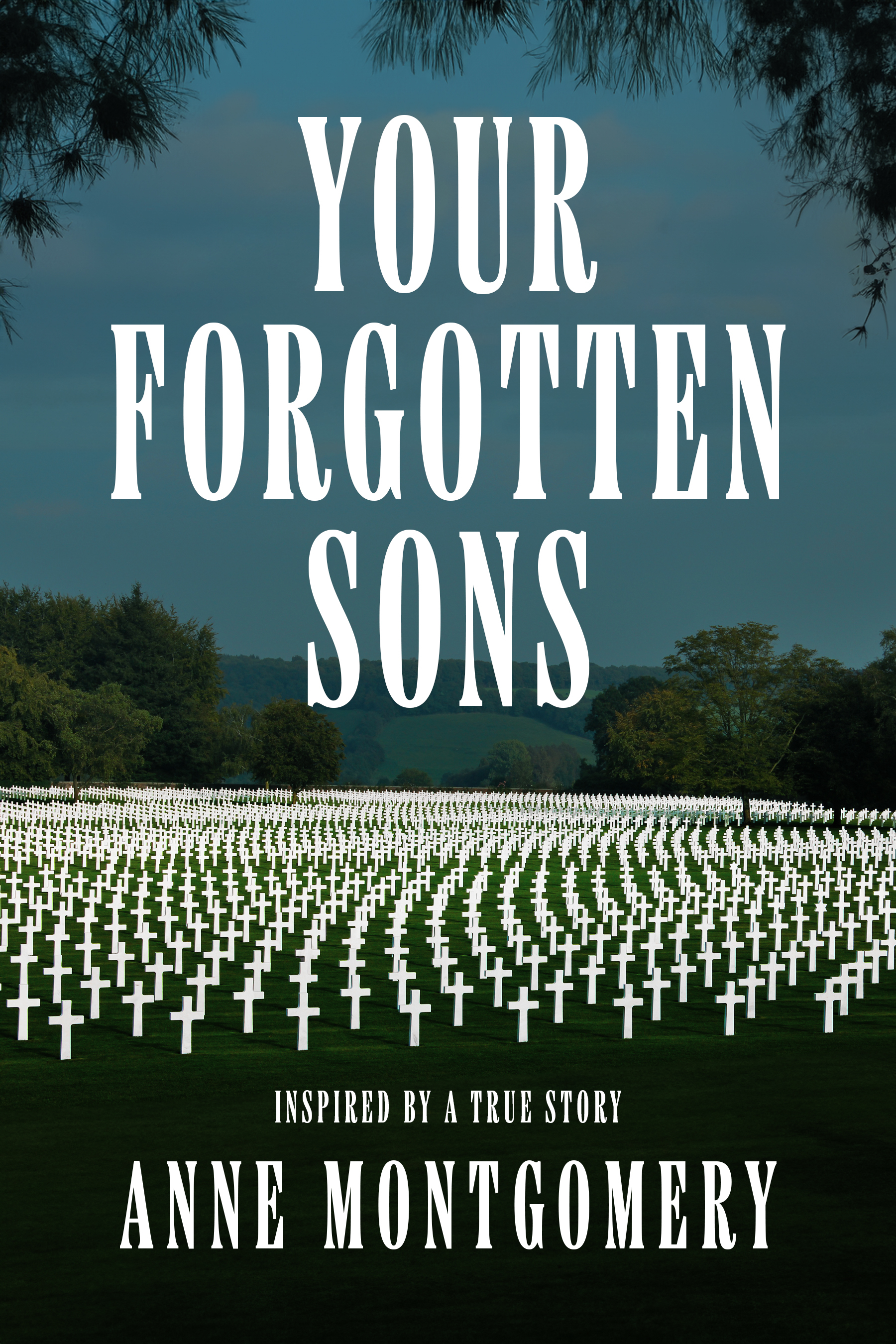
That was the case in regard to my most recent book, Your Forgotten Sons, a story inspired by Sergeant Joseph “Bud” Richardville, who served in the Graves Registration Service in Europe during World War II, arguable the most difficult assignment in the military. Bud and his men were tasked with the job no soldier wanted: locate, identify, and bury the dead.

But there was another side of Bud’s story. A love story. In fact, quiet family rumors suggested there may have been two women in Bud’s life.

During the course of my research, I learned about Allotment Annies, women who married men just as they were headed off to war. My thanks to Linda Pennell, a fellow historical fiction author, for sharing my story on her website History Imagined

Your Forgotten Sons

Inspired by a true story

Anne Montgomery

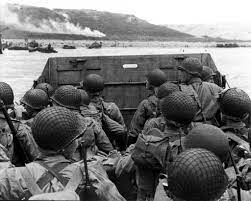
Bud Richardville is inducted into the Army as the United States prepares for the invasion of Europe in 1943. A chance comment has Bud assigned to a Graves Registration Company, where his unit is tasked with locating, identifying, and burying the dead. Bud ships out, leaving behind his new wife, Lorraine, a mysterious woman who has stolen his heart but whose secretive nature and shadowy past leave many unanswered questions. When Bud and his men hit the beach at Normandy, they are immediately thrust into the horrors of what working in a graves unit entails. Bud is beaten down by the gruesome demands of his job and losses in his personal life, but then he meets Eva, an optimistic soul who despite the war can see a positive future. Will Eva’s love be enough to save him?

Release Date: June 6, 2024

Universal Buy Link

Amazon

Apple Books

Barnes & Nobel

Google Books

Kobo

Bookstores, libraries, and other booksellers can order copies directly from the Ingram Catalog.

Anne Montgomery’s novels can be found wherever books are sold.

Goodreads

Amazon

Your Forgotten Sons—Growing up in poverty: An excerpt

My World War II historical fiction novel Your Forgotten Sons is set for release June 6, 2024 in honor of the 80th anniversary of the storming the beaches of Normandy: D-Day. The book was inspired by the true story of a man assigned to the Graves Registration Service.

Joseph “Bud” Richardville was like millions of other young men who grew up in poverty in the shadow of the Great Depression. His family lived in a tiny house next to railroad tracks in Vincennes, Indiana, where his father ruled with a hard hand over his wife and children.

Bud was a poor student who often skipped school and got into trouble. Still he was charming and kind and most found it hard not to like him, with the exception of his father who believed Bud would never be anything but but an embarrassment to the family.

Find below an excerpt from Your Forgotten Sons.

Vincennes, Indiana

1930

Spring in Vincennes had remained cold. Bitterly so. Mickey, wrapped tight in a ragged gray sweater and a pair of cuffed jeans, shivered uncontrollably even when inside the house. Mickey was Bud’s favorite. Her sharp eyes and sometimes irreverence toward adults made the two of them alike, though they were separated by eight years.

Bud crept out of the house an hour before dawn, his breath crystallizing in a huff of white. His coat—a short, cracked, brown-leather jacket that had come by way of the charity ladies at church—wasn’t enough to quell the dry cold that crept onto and under his skin despite the jeans and threadbare sweater. He grabbed the metal bucket that rested beside the uneven front porch and bolted toward the trees.

Ten minutes later, Bud looked down the track and waited. Finally, he felt the rumbling. He’d picked the perfect spot. The train would slow inside town limits, and the small hill would give him the perfect trajectory. The golden light, shining like a small sparkling sun, bounced along the track. Bud crouched in the bushes, not wanting the engineer to see him.

The engine moved past, the tick, tick, tick of the wheels a strangely soothing sound for a massive mechanical vehicle. Bud counted three cars. It was the fourth that was his destination. At the same moment the third car rattled by, Bud launched himself into space. The metal pail banged against the side of the car and, distracted in his effort to keep a grip on the bucket, threw him off balance. His foot slipped on the top edge of the car, and Bud tumbled, though he managed to maintain his hold on the pail, while the other hand clung precariously to the rail atop the car.

“Shit!” Bud mumbled as he grappled his way into the boxcar. When he’d finally lifted himself over the edge, he fell with a thud into the dirty cargo. He took several deep breaths that dissipated in white clouds in the frigid dawn air. Then he stood awkwardly, the uneven freight and the swaying railcar making his footing unstable.

The town was just around the bend. Bud quickly went to work making small piles of coal and lining them up against the side of the boxcar. A few lights glowed ahead, inside the houses on the edge of Vincennes.

He was finished just in time. The first home appeared out of the gloaming. Bud crouched, ready. He scooped the first pile and filled the pail with hard lumps of shiny bituminous coal. Just as the train car approached the dwelling, Bud dumped the coal over the side. Then, he dug into the next pile and flung the contents again. Over and over, he scattered the lumps of stone, knowing his neighbors were in dire need of the heat-producing rock, which many of them couldn’t afford to purchase.

Sweat formed between his broad shoulders and ran in rivulets down his chest. Bud—overly warm now from the exertion—wanted to remove the frayed leather jacket, but the next house approached so quickly, he couldn’t afford to take the time. He worked his way down the inside of the car, dumping coal by every house the train passed. Then his home came into view. Bud dug the edge of the bucket into the loose coal, hauled up the stone, and poured it over the side. He felt like Santa Claus and whooped as the train pulled away from town.

Bud knelt in the coal, the rocks sticking into his knees. He peered into the waning darkness and waited for the best spot to depart the train, which was now leaving Vincennes and picking up speed. After crossing a small trestle, the train rumbled toward the soft grassy area near the river where Bud often went when he skipped school and where he sometimes took girls who’d let him kiss them. He’d have to jump, but he’d done it before and wasn’t worried. Still, the realization of his actions and the knowledge that he would pay for his theft made him wince. He was covered with coal dust. There was no way to hide his crime. Bud tossed the bucket over the side and leapt. He tumbled away from the moving train and rolled in the grass, then stood, brushed off his clothes as best he could, and retrieved the now-empty bucket that had spun down the riverbank.

Later that day, Bud stood with his face pressed against the old oak, the branches of which were so large they’d dropped to the earth and then curved back toward the sky. It took three grown men hand to hand to encircle the massive tree that had stood for close to two hundred years. Bud, striped to the waist, had both arms around the rough trunk.

“What is the matter with you, boy?” His father brought the switch down on his son’s back, slicing through skin, raising an instant welt. “The Bible says thievin’ is wrong.” He whipped his son again. And again.

But Bud never made a sound. It was Mickey who cried on the porch, the bucket of coal by her side, while Momma dabbed her eyes with a hanky.

That evening, Bud’s back smarted. He was unable to sit or lie down comfortably, still he didn’t miss the irony of the fact that the purloined coal now blazed in the black, pot-bellied stove, next to which his father sat, a cigarette dangling from his thin, colorless lips.

Mickey idly played with several hunks of coal. Then, she emitted a gasp. “Look, Bud!” she scrambled from her place on the floor, holding two large pieces of rock.

Bud, sitting rigidly in a high-back wooden chair, smiled at his little sister. “What have you got there, Mick?”

“It’s a flower.” She turned up the two halves of the broken piece of coal, showing a perfect fossil imprinted on both sides.

“I think that’s a fern.” He rubbed her tawny head. “Like the ones that grow out in the woods. Remember those?”

Mickey nodded and hugged the stones to her chest. “They’re beautiful!”

Her father rose from his seat by the stove. “Give me those, girl!”

But Mickey held the fossils tightly in her grip.

Then, her father reached for the pieces of coal, wrenched them from the child’s hands, and hurled them into the fire.

Your Forgotten Sons

Inspired by a true story

Anne Montgomery

Bud Richardville is inducted into the Army as the United States prepares for the invasion of Europe in 1943. A chance comment has Bud assigned to a Graves Registration Company, where his unit is tasked with locating, identifying, and burying the dead. Bud ships out, leaving behind his new wife Lorraine, a mysterious woman who has stolen his heart but whose secretive nature and shadowy past leave many unanswered questions. When Bud and his men hit the beach at Normandy, they are immediately thrust into the horrors of what working in a graves unit entails. Bud is beaten down by the gruesome demands of his job and losses in his personal life, but then he meets Eva, an optimistic soul who despite the war can see a positive future. Will Eva’s love be enough to save him?

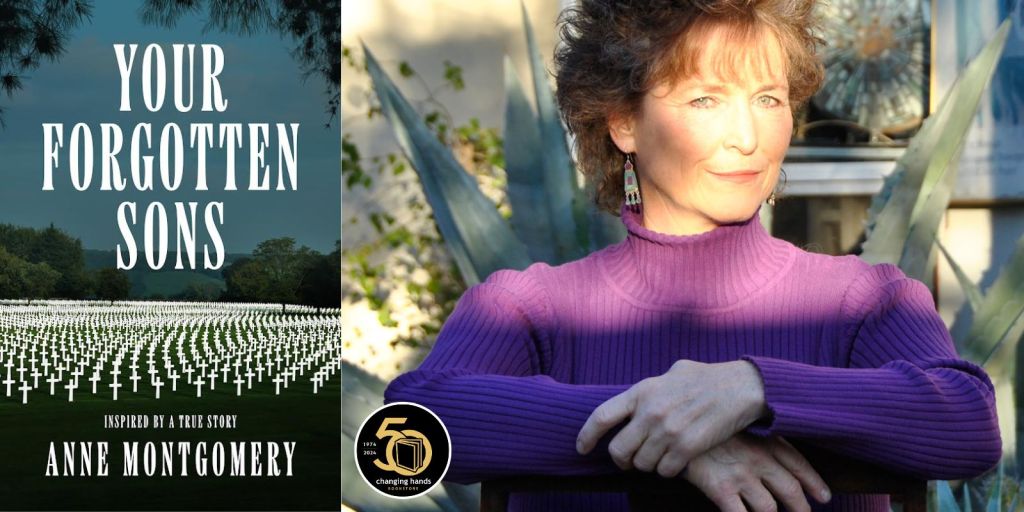
Join us at Changing Hands Bookstore in Phoenix on June 6, 2024, for the lanuch of Your Forgotten Sons. Find out more about the event here.

Pre-Order your copy today

Amazon

Apple Books

Barnes & Nobel

Google Books

Kobo

Review a copy early by going to NetGalley. Sign in here.

Anne Montgomery’s novels can be found wherever books are sold.

Goodreads

Amazon

Your Forgotten Sons—a story of love and loss: An excerpt

Bud Richardville married Lorraine, a woman he barely knew, right before heading off to war. But there were rumors of another woman who stole his heart.

There were quiet whispers of another woman in Sergeant Bud Richardville’s life. Someone he met while serving in the Graves Registration Sevice in Europe during World War II.

But Bud was married and Catholic.

My World War II historical fiction novel Your Forgotten Sons is set for release June 6, 2024 in honor of the 80th anniversary D-Day. While Bud’s story details the ordeals he and his men confronted as they gathered the dead, it also presents the moral delema he faced by loving two women.

Find below an excerpt of Bud’s story.

Luxembourg City

1945

Since it was midmorning, Bud opted for coffee and a croissant with a slice of white cheese and some jam. That the coffee was real was astonishing. The nutty, smoky aroma was almost overwhelming. And the pastry was warm and buttery, and Bud couldn’t remember the last time he’d eaten anything so delicious. He wanted another one, so he raised an arm to attract the waiter, but stopped when he sensed someone watching him. She stood on the other side of the ornate, cast-iron railing that enclosed the patio of the café. Again, she stared at Bud with those unblinking blue eyes.

“Hello.” Bud stood and smiled, dropping his napkin on the ground. Her bright red hair was uncovered and fell in short curls around her face. Freckles spread across her nose and cheeks. “We met at Malmédy.” Immediately, Bud wanted the words back, the horror of that place still fresh in his memory.

“I do not think we actually met.” Her English was laced with a British accent.

They stared at one another for a long time, until Bud, feeling awkward, broke the silence. “Can I offer you a cup of coffee?”

“Eva! How nice to see you!” The waiter smiled at the woman.

“Bonjour, Victor!” She smiled as well, and the change in her expression was startling.

Bud pulled out a chair at the table where he’d been sitting. Eva paused, seemingly unsure.

“Yes, yes! Have some coffee, Eva. It’s been such a long time. I had no idea you were back.” The man’s brow furrowed. “I hope everything is all right.”

She took a deep breath. “At least I am home now.”

Bud watched as she turned and walked away, and his heart unexpectedly sank until she stepped into the doorway that led to the interior of the patio. Then Eva walked to the table and sat.

Bud didn’t know what to say, and several moments ticked away. Victor broke the silence when he returned with a fresh pot of coffee, a cup and saucer, and two warm croissants balanced on a tray. He placed everything on the table and gave Bud a fresh napkin. Then he turned to Eva. “You are too thin, my dear. Eat!”

She nodded, a sad expression on her face. After Victor filled her cup and topped off Bud’s, the proprietor walked away, leaving the two strangers alone.

Bud watched Eva take a bite of the croissant. Her eyes closed briefly as she chewed.

“Exactly the way I remember it.” She placed her palm on her heart, and Bud noticed she was missing several fingernails and the index finger on her right hand, a ragged pink scar marking where the finger had once been. She saw Bud staring but kept her hand in place for a moment longer, as if wanting him to look at the damage, then she reached for the coffee cup.

“So…you live here?” Bud focused on his second croissant and slathered some jam on the pastry.

“I was born here. I am a Luxembourger.”

The appellation sounded funny to Bud, but he didn’t mention it. “Are you friends with the owner?” It was all he could think of to ask.

She raised her eyebrows, which were golden-red like her hair. “Victor?”

Bud nodded toward the window where the man was polishing glasses inside the café.

“Victor and my father were best friends. I used to come here when I was a child. When the café was slow, they’d play chess.” Her English was flawless. “And they’d give me breadcrumbs so I could feed the pigeons.” She gazed into the street. “Not so many birds now. The people had to eat them. Both my parents are also gone.” She smiled, but the expression was sad, so Bud remained quiet, unusually tongue-tied.

“Were you in medicine before the war?” Bud finally asked.

Eva pierced him with those icy blue eyes that were hard to read. “No. Were you?”

Bud laughed. “No, I worked in a paper mill. Why do you ask?”

She gave the smallest of shrugs. “You were working with the bodies.”

“I’m part of a graves registration company. I’m not really sure how I ended up there. Most of the men I work with have no medical training, though Doc is a veterinarian.”

Eva nodded. Then she stared toward the sidewalk, where a young couple walked past arm-in-arm. They smiled and spoke animatedly in French. She blinked several times as if remembering something.

“More coffee?” Victor stood nearby, and Bud could see a bright red stain on the man’s white apron, one that reminded Bud of blood but appeared to be strawberry jam.

“Thank you, yes?” Eva held out her cup.

“I’m so glad you’ve returned, Eva. You know, I worried.”

Eva reached out and grasped the man’s hand. “I know you  did, Victor.”

He glanced at her damaged hand and proffered a sad smile.

Eva just nodded.

Bud wanted to ask what had happened to her, where her father and mother were, and what her life was like before the war, among a hundred other questions, but just the fact that he was dining with a woman who was not his wife seemed wrong. Then he felt silly. After all, it was only a pastry and a cup of coffee. What harm was there in that? And still, he felt unsettled, guilty.


Your Forgotten Sons

Inspired by a true story

Anne Montgomery

Release Date: June 6, 2024

Bud Richardville is inducted into the Army as the United States prepares for the invasion of Europe in 1943. A chance comment has Bud assigned to the Graves Registration Service where his unit is tasked with locating, identifying, and burying the dead. Bud ships out, leaving behind his new wife, Lorraine, a mysterious woman who has stolen his heart but whose secretive nature and shadowy past leave many unanswered questions. When Bud and his men hit the beach at Normandy, they are immediately thrust into the horrors of what working in a graves unit entails. Bud is beaten down by the gruesome demands of his job and losses in his personal life, but then he meets Eva, an optimistic soul who despite the war can see a positive future. Will Eva’s love be enough to save him?

Join us at Changing Hands Bookstore in Phoenix on June 6, 2024, for the lanuch of Your Forgotten Sons. Find out more about the event here.

Pre-Order your copy today

Amazon

Apple Books

Barnes & Nobel

Google Books

Kobo

Review a copy early by going to NetGalley. Sign in here.

Find Anne Montgomery’s novels wherever you buy books.

Goodreads

Amazon

Changing Hands Bookstore in Phoenix to host Your Forgotten Sons launch

I am delighted to announce that the launch for my new historical fiction novel Your Forgotten Sons will be held June 6, 2024—The 80th anniversary of D-Day—at Changing Hands Bookstore in Phoenix. And I couldn’t be more thrilled because TV icon Mary Jo West will be on hand to be the MC. Please come and join us at 300 West Camelback Road at 6:30 PM. Find out more about the event here.

Can’t wait to see you!

Your Forgotten Sons

Inspired by a true story

Anne Montgomery

Bud Richardville is inducted into the Army as the United States prepares for the invasion of Europe in 1943. A chance comment has Bud assigned to the Graves Registration Service where his unit is tasked with locating, identifying, and burying the dead. Bud ships out, leaving behind his new wife, Lorraine, a mysterious woman who has stolen his heart but whose secretive nature and shadowy past leave many unanswered questions. When Bud and his men hit the beach at Normandy, they are immediately thrust into the horrors of what working in a graves unit entails. Bud is beaten down by the gruesome demands of his job and losses in his personal life, but then he meets Eva, an optimistic soul who despite the war can see a positive future. Will Eva’s love be enough to save him?

Praise for Your Forgotten Sons

“Although a defty crafted work of original fiction, “Your Forgotten Sons” by Anne Montgomery is inspired by a true story. An original and inherently interesting read from start to finish, “Your Forgotten Sons” will prove to be an immediate and enduringly appreciated pick.”  Midwest Book Review

“This was a quick, riveting read that really challenged me to think differently about our servicemen and women, especially those who take on the jobs that don’t get heroically depicted in the media or news…I really highly recommend this book to anyone that is looking for a different take on American history. I left it with a newfound appreciation for the unsung heroes.” Bekah C NetGalley 

“This is the truth. It’s gritty and painful and bittersweet – and true.  When you think you’ve read every perspective of WWII, along comes Bud to break your heart.” Bridgett Siter Former Military Reporter

“Anne Montgomery writes a strong story and I was hooked from the first page. It had a great concept and I enjoyed that this was inspired by a true story…It was written perfectly and I was invested in the story. Anne Montgomery has a great writing style and left me wanting to read more.” –  Kathryn McLeer NetGalley 

Pre-Order your copy today

Amazon

Apple Books

Barnes & Noble

Google Books

Kobo

Review a copy early by going to NetGalley. Sign in here.

Why Your Forgotten Sons is necessarily gruesome

Approximately 73,000 Allied troops died during the Battle of Normandy. Did you ever wonder where all the bodies went?

There’s no way to sugarcoat it. My new historical fiction novel Your Forgotten Sons, which will be released on June 6, 2024 in honor of the 80th anniversary of D-Day, is necessarily gruesome. For those who have seen the first 24 minutes of Saving Private Ryan, or Apocalypse Now, or the more recent 1917, the violence of war is hard to ignore.

But can there be too much carnage in our artistic representations of battle? That probably depends on who you ask. I sense many young people, raised on bloodbath video games like Resident Evil, Mortal Combat, and Grand Theft Auto, might not find the graphic vestiges of war a big deal. Yet today’s average TV viewer—sheltered from the actual violent aftermath of crimes and war and natural disasters by anchors who warn them that “the following video might be disturbing” only to see anything remotely upsetting blurred out on the screen—perhaps might disagree.

The problem for me was trying to mitigate the horrors those in the Graves Registration Service experienced in World War II without discounting the morale-destroying realities of the consequences of battle. The job of the GRS was simple but ghastly: retrieve, identify, and bury the dead. Think about that for a minute.

For Sergeant Bud Richardville and his men who served in the GRS during the invasion of Normandy, the incredible brutality of the Battle of the Bulge, and beyond, their jobs were no doubt horrifying. It’s interesting, I think, that the efforts of these soldiers who labored to literally piece fallen soldiers back together to discern who they were in life and then lay them to rest in the elegant cemeteries they built, have been dismissed from history. Don’t believe me? When was the last time you even caught a glimpse of anyone in a movie caring for the dead. I’m guessing almost never, as war movies are about shooting and exploding bombs, fast-moving tanks and fighter planes, but rarely about the carnage left behind.

Not surprisingly, those who’ve served in the GRS have the highest rates of post-traumatic stress disorder in the military, psychological pressure that follows them the rest of their lives. And yet, they have rarely gotten praise for the grueling duties they performed. I read one startlingly sad description of a convoy of GRS soldiers who drove down a road in France where they encountered a unit of American soldiers. When those troops realized it was GRS men bearing the dead in their trucks, the soldiers turned their backs and looked away.

Initially, my goal in writing Your Forgotten Sons was to tell the story of Bud Richardville and his service to our country. But in the end, I wanted to shine a light on all the unsung heroes who toiled in the Graves Registration Service, who, despite the horrors of the tasks they were assigned, did their jobs with grace and honor.

Your Forgotten Sons

Inspired by a true story

Anne Montgomery

Bud Richardville is inducted into the Army as the United States prepares for the invasion of Europe in 1943. A chance comment has Bud assigned to a Graves Registration Company, where his unit is tasked with locating, identifying, and burying the dead. Bud ships out, leaving behind his new wife, Lorraine, a mysterious woman who has stolen his heart but whose secretive nature and shadowy past leave many unanswered questions. When Bud and his men hit the beach at Normandy, they are immediately thrust into the horrors of what working in a graves unit entails. Bud is beaten down by the gruesome demands of his job and losses in his personal life, but then he meets Eva, an optimistic soul who despite the war can see a positive future. Will Eva’s love be enough to save him?

Release Date: June 6, 2024

Pre-Order your copy today

Amazon

Apple Books

Barnes & Nobel

Google Books

Kobo

Review a copy early by going to NetGalley. Sign in here.

Anne Montgomery’s novels can be found wherever books are sold.

Goodreads

Amazon