70: A different type of milestone

Why the flower? A wilted orchid seemed to have long since given up. Then, one day, rather magically, this flower appeared. I took it as a sign. No matter how old we are, something beautiful can happen.

Milestone birthdays are just that. Moments in our lives that appear to be harbingers of change. Think 18 when we become legal adults, despite how dopey most of us are when we’re still in our teens. Or 21 when we can legally belly up to a bar and say, “Yes, I’d like a sweet, minty, Mojito, please.” Turning 30 has us questioning whether we’re fully engaged in life—on the road to a successful and fulfilling career and considering whether we’re finally ready to start a family. Turning 40 sometimes smacks us in the face with a midlife crisis where we ponder our failures and wonder if we’re accomplished enough to head to that high school reunion. Thankfully, things seem to calm down when 50 rolls around. We know who we are and are less likely to worry about what others may think of us. Sixty skips by on the way to magical 65, when we get to retire from the daily grind. Which brings me to 70.

Seventy, for a reason I can’t quite pinpoint, is different. I mention this because I became a septuagenarian earlier this year, and I’m still trying to figure out what to do with that fact.

Dr. John Messerly in his article How Does Life Feel Different At 70,  was spot on when he wrote, “While I don’t feel old… there is still something about turning 70 that freaks me out. I feel like I’m about 40 on the inside, but that’s not what my birth certificate shows. It is just hard to believe that you were a kid or teenager and then, seemingly in an instant, are a senior citizen.”

Exactly!

“Life just looks different,” Messerly went on to explain. “You become increasingly aware of your mortality…You know that much of your life is not on the horizon but behind you. Much of the journey is over. This thought fills you with pride in what you’ve achieved and sadness for what can never be.”

When I look back at my life, I recall a roller-coaster of ups and downs with heart-stopping turns that required me to pause, consider, and change direction. Despite the failures, I’m rather amazed that I completed all I set out to. And still I sometimes feel there’s more I should be doing.

I recall speaking to a former boss when he sat in his office one day in shock. He’d been fired and was clearly distraught. In an effort to soothe him I said, “Work is what we do. It’s not who we are.” He brightened a bit. So, when that “What do I do now?” question hovers, I remember that sentiment.

When I googled the question about living at 70, I got the usual suggestions: eat well, exercise, maintain a healthy sleep routine, get annual medical checkups, and socialize. So staying upright, strong, and well adjusted appear to be the main goals in my seventh decade.

I’d like to say that at 70 I am content with my life and happy to sit and smell the proverbial roses. But that would be a lie. I always feel there is something more to accomplish. And maybe that is ultimately the point.
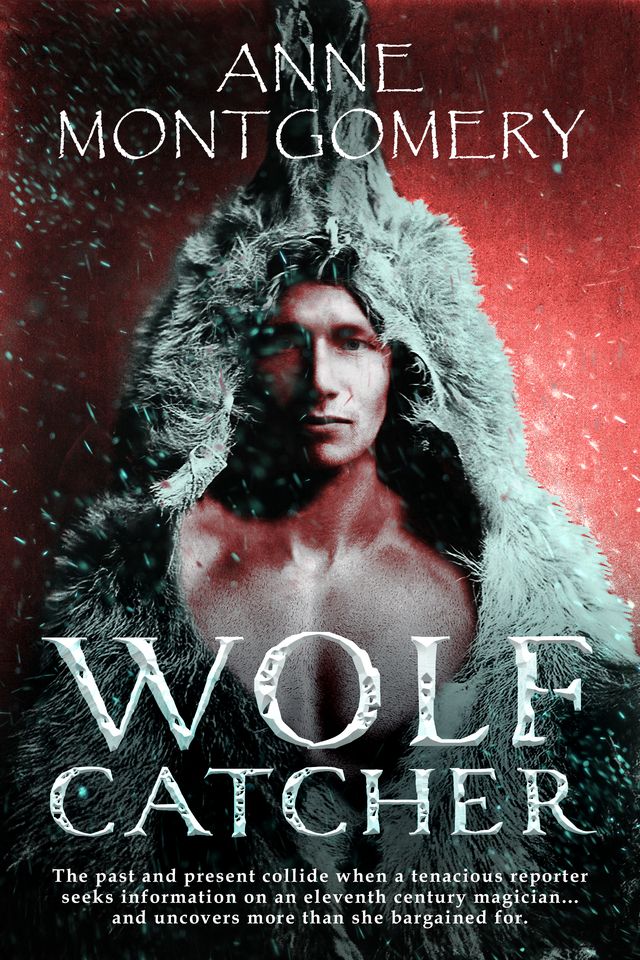
Wolf Catcher

Anne Montgomery

Historical Fiction

In 1939, archeologists uncovered a tomb at the Northern Arizona site called Ridge Ruin. The man, bedecked in fine turquoise jewelry and intricate bead work, was surrounded by wooden swords with handles carved into animal hooves and human hands. The Hopi workers stepped back from the grave, knowing what the Moochiwimi sticks meant. This man, buried nine hundred years earlier, was a magician.

Former television journalist Kate Butler hangs on to her investigative reporting career by writing freelance magazine articles. Her research on The Magician shows he bore some European facial characteristics and physical qualities that made him different from the people who buried him. Her quest to discover The Magician’s origin carries her back to a time when the high desert world was shattered by the birth of a volcano and into the present-day dangers of archeological looting where black market sales of antiquities can lead to murder.

Universal Book Link

Amazon

Apple Books

Barnes and Noble

Google Books

Rakuten Kobo

Bookstores, libraries, and other booksellers can order copies directly from the Ingram Catalog.

Anne Montgomery’s novels can be found wherever books are sold.

Goodreads

Amazon

A walk and a song: For your health

Spinal fusion surgery affected my singing voice, but I’m walking to make it better.

I like to sing. Always have. But I haven’t done much of it lately.

Here’s why. About a year ago, I underwent cervical spine fusion. A surgeon implanted two titanium clips in my spine through the front of my neck. Sounds fun, doesn’t it? My metal bits look sort of like those clasps you’d use to hold a bunch of papers together, or in my case to make sure that chips bag stays tightly sealed. 

As I love a good story, I remember prior to the surgery I said to the doc, “Could you give me a scar that looks like I was in a biker-girl barfight?”

He squinted, then shook his head. “No!”

So, today, geez, I have nothing cool to show for the operation. In case you’re wondering, my wonky spine is the result of 60 years of sports. Remember when they told us sports were good for us? They lied! And if I could figure out exactly who “they” were I might hunt them down. But I digress.

Despite the pleasing effects on my spine—no more bone-crushing pain that wipes the colors from my world—I was left with an impaired singing voice. And while I have always been an Alto II who rarely hit what most would call modest high notes, my voice is even lower now.

Recently, I decided to rectify the situation, so I signed up for voice lessons. Though I was rather startled when my teacher launched me into singing gospel tunes, Richie is helping me get my voice back.

During a break in my singing, Richie said, “Do you run or walk?”

“I walk,” I said.

“You should sing when you’re walking.”

I smiled. “I already do that.”

Here’s where I’ll admit that every morning I walk a rolling route on my little Caribbean Island of St. Croix, where I get to look at green hills, blue skies, and marshmallow-colored clouds. And the turnaround spot is picture prefect: a sprawling field carved into a hillside of tropical forest where, if I’m very lucky, horses and deer might be found placidly grazing together while a white cattle egret flutters around them. So, long before Richie suggested I sing while walking—an effort to improve my breathing—I was already serenading anyone within earshot.

I’ve since learned that singing is good for us. Apparently the smart folks who know such things say it can reduce stress, strengthen our immune systems, and, as Richie pointed out, improve our lung function. And here’s something really cool. Music in general—either singing, playing, or listening to it—affects us the same way chocolate and sex do. Our brains produce endorphins, chemicals that give us feelings of euphoria and well-being. Imagine that!

So, I will continue my morning stroll, singing whenever I feel the urge, even though I might periodically verge on channeling Barry White.

Your Forgotten Sons

Inspired by a true story

Anne Montgomery

Bud Richardville is inducted into the Army as the United States prepares for the invasion of Europe in 1943. A chance comment has Bud assigned to a Graves Registration Company, where his unit is tasked with locating, identifying, and burying the dead. Bud ships out, leaving behind his new wife, Lorraine, a mysterious woman who has stolen his heart but whose secretive nature and shadowy past leave many unanswered questions. When Bud and his men hit the beach at Normandy, they are immediately thrust into the horrors of what working in a graves unit entails. Bud is beaten down by the gruesome demands of his job and losses in his personal life, but then he meets Eva, an optimistic soul who despite the war can see a positive future. Will Eva’s love be enough to save him?

Universal Buy Link

Amazon

Apple Books

Barnes & Nobel

Google Books

Kobo

Bookstores, libraries, and other booksellers can order copies directly from the Ingram Catalog.

Anne Montgomery’s novels can be found wherever books are sold.

Goodreads

Amazon

The beauty of the guilt-free nap

Kitties don’t mind napping, so why do we?

So there I was watching the financial news when my eyelids began to droop. I know. Shocking! You’d think all those colorful flashing numbers, fancy graphs, and scintillating  talking heads would have kept me riveted to the screen.

Then I had a rather naughty thought. “I think I might take a nap,” I said to my sweetie pie. Instantly embarrassed, I amended my comment. “Or I’ll read the paper,” I said with little conviction.

“There’s a third option.” Ryan eyed me. “Do both.”

Since I’m not much for multi-tasking and despite my guilt, I closed the blinds in the bedroom, grabbed a quilt, and passed out.

Before I retired from my full-time job, taking a nap rarely seemed acceptable. Even when I had the time, it just didn’t seem right to curl up in the middle of the day. Still, had I consulted WebMd, I might have reconsidered, because it seems naps are good for us.

Jennifer Soong’s article “The Secret (and Surprising) Power of Naps” pretty much says it all. “Need to recharge? Don’t lean on caffeine—a power nap will boost your memory, cognitive skills, creativity, and energy level.”

For years, the 20-minute power lap was praised for upping our alertness levels and improving our motor learning skills like typing or playing an instrument. But don’t worry if you’re like me and those naps tend to stretch on.

“Research shows longer naps help boost memory and enhance creativity,” Soong said. “Slow-wave sleep—usually 30 to 60 minutes of napping—is good for decision-making skills, such as memorizing vocabulary or recalling directions. Getting rapid movement or REM sleep, usually 60 to 90 minutes of napping, plays a key role in making new connections in the brain and solving creative problems.”

While those lengthier naps sound enticing, experts suggest 30-minute siestas so we don’t wake up groggy. One should also keep a regular nap schedule and recline during the prime napping hours of 1 PM and 3PM, which doesn’t seem horribly practical. Still, a fixed nap time does sound nice and the idea of saying, “I’m sorry. I am unavailable because it’s nap time,”  just seems fun, doesn’t it? Note that a darkened room is a good idea for an afternoon snooze, as is a blanket, since our body temperature drops when we nap.

I woke up an hour and a half later and didn’t feel the least bit groggy. Though the whole thing felt rather sinful. But when you consider that naps can boost memory, ease stress and make you cheerier, well, what’s the harm?

So, fellow nappers, grab your blankies and join me. Let’s get some daytime shuteye whenever we’re in the mood. No guilt required.

Your Forgotten Sons

Inspired by a true story

Anne Montgomery

Bud Richardville is inducted into the Army as the United States prepares for the invasion of Europe in 1943. A chance comment has Bud assigned to a Graves Registration Company, where his unit is tasked with locating, identifying, and burying the dead. Bud ships out, leaving behind his new wife, Lorraine, a mysterious woman who has stolen his heart but whose secretive nature and shadowy past leave many unanswered questions. When Bud and his men hit the beach at Normandy, they are immediately thrust into the horrors of what working in a graves unit entails. Bud is beaten down by the gruesome demands of his job and losses in his personal life, but then he meets Eva, an optimistic soul who despite the war can see a positive future. Will Eva’s love be enough to save him?

Amazon

Apple Books

Barnes & Nobel

Google Books

Kobo

Bookstores, libraries, and other booksellers can order copies directly from the Ingram Catalog.

Anne Montgomery’s novels can be found wherever books are sold.

Goodreads

Amazon

Defining success: It’s personal

I have been asked a number of times lately how I define success. I now realize my answer to that question has changed significantly over the years.

A few decades back I, like many others, may have considered my bank account first, when presented with the question. Do I have the money to do what I want? But success isn’t quantified that easily. While money can reduce financial anxiety and provides a sense of security, I don’t think wealth alone can make us feel successful. There’s simply more to it than that.

The funny thing is we often don’t grasp that we are successful. The Forbes article “Signs you’re being successful even if you don’t realize you are,” points out different ways to look at success.

For example, are you a person who can comfortably stand up and speak with authority? Studies show just 1% of employees feel confident enough to voice their views to others. This is a form of success.

Do you consider yourself happy? The vast majority of people, 90% in one study, believe that success comes from one’s sense of happiness and joy.

And what about your dreams? According to Forbes, “Successful people give themselves permission to dream as big as they want.  When you create a vision for your life that might seem wildly ambitious, but you take steps every day towards it, know you are successful.” 

And note here that you don’t necessarily have to achieve that dream to be successful. It’s the process of moving towards a goal that makes one a success. As the great Arthur Ashe once said, “Success is a journey, not a destination. The doing is often more important than the outcome.” 

And let’s not forget about failure, a frequent companion to those who are successful. Getting to the top of any mountain requires trial and error. Those who are successful pick themselves up after a disappointment, learn from their mistakes, and start climbing again. Thomas Edison famously admitted that he failed more than one thousand times while trying to invent the lightbulb. On failure in general he was quoted as saying, “I have not failed 10,000 times—I’ve successfully found 10,000 ways it will not work.”

Clearly, success comes in many forms. Some find it in the meaningful work they do. That means a job we look forward to. Not every day, perhaps, but maybe 85% of the time. And when I say job, I don’t mean only in the traditional sense. Of course, tending to one’s family would fall under the job umbrella. As would dedicated volunteer work. Success then might be attained by the contributions we make that impact our family and community.

The more I think about it, the more I realize success is personal. There is no one-size-fits-all. I suppose the ultimate test will come at the end of our lives. Can we look back and say, “Yes! I’m proud of what I did.” I do know that for me the answer will be simple. Success is dying with few regrets and good stories.

I’m working on it.

Your Forgotten Sons

Inspired by a true story

Anne Montgomery

Bud Richardville is inducted into the Army as the United States prepares for the invasion of Europe in 1943. A chance comment has Bud assigned to a Graves Registration Company, where his unit is tasked with locating, identifying, and burying the dead. Bud ships out, leaving behind his new wife, Lorraine, a mysterious woman who has stolen his heart but whose secretive nature and shadowy past leave many unanswered questions. When Bud and his men hit the beach at Normandy, they are immediately thrust into the horrors of what working in a graves unit entails. Bud is beaten down by the gruesome demands of his job and losses in his personal life, but then he meets Eva, an optimistic soul who despite the war can see a positive future. Will Eva’s love be enough to save him?

Release Date: June 6, 2024

Universal Buy Link

Amazon

Apple Books

Barnes & Nobel

Google Books

Kobo

Bookstores, libraries, and other booksellers can order copies directly from the Ingram Catalog.

Anne Montgomery’s novels can be found wherever books are sold.

Goodreads

Amazon