TV football coverage could be better: Here’s how!

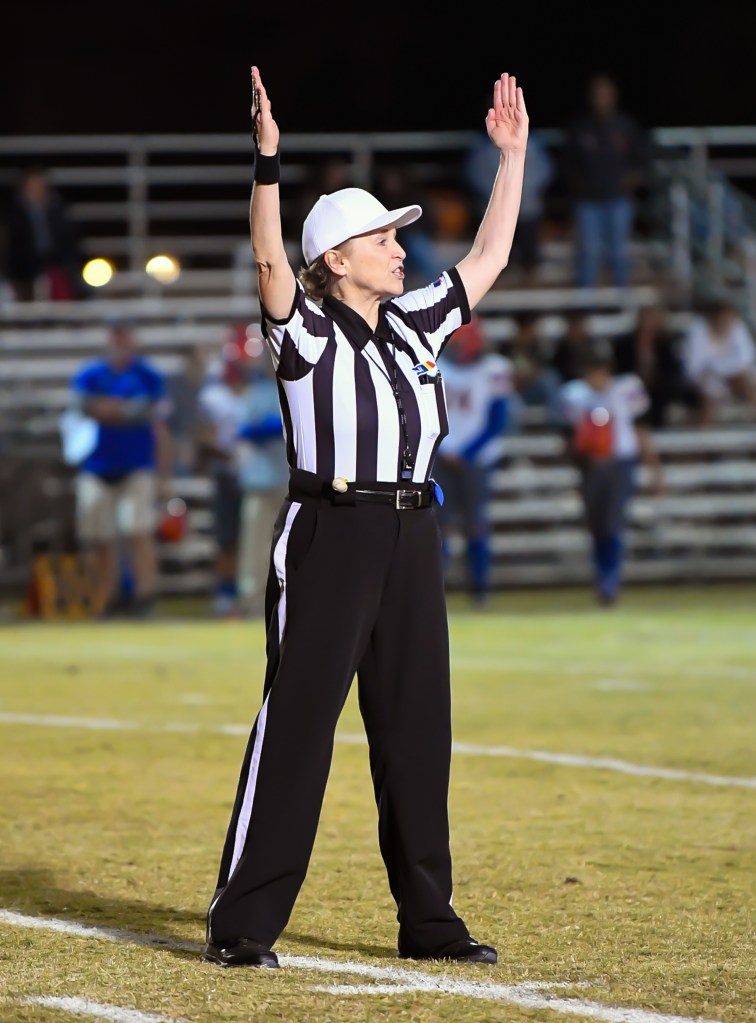
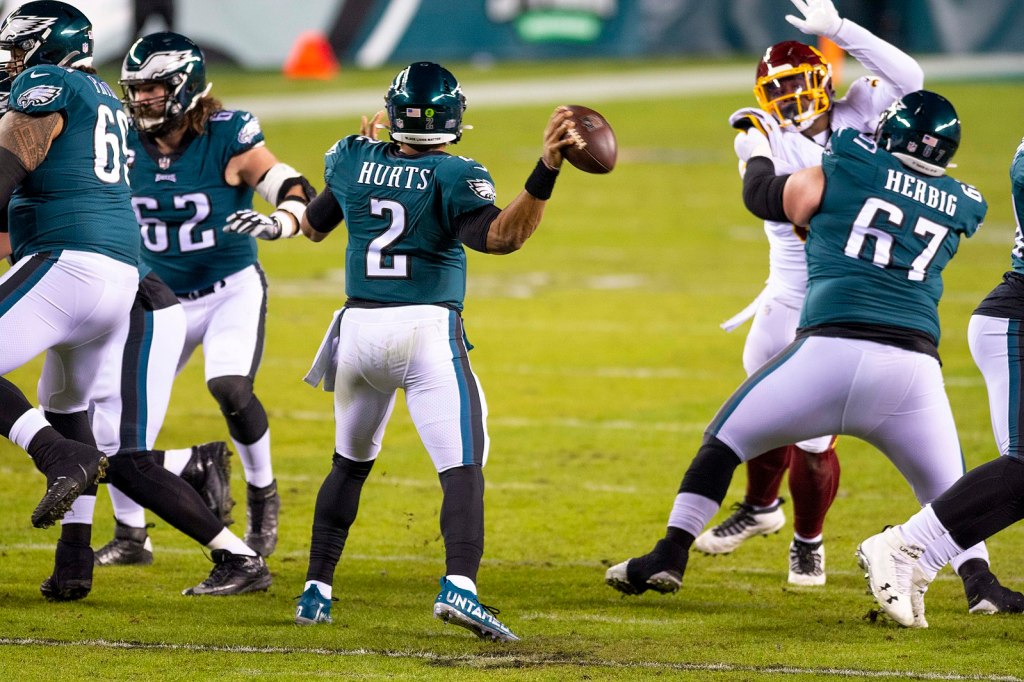
While I love watching football the broadcasts need some updating. (Photo Courtesy All-Pro Reels Photography)

I love football, but I think broadcasts could be improved on various fronts.

First, I realize those in charge are in a collective tizzy to shorten games. It seems younger folks don’t have the attention spans needed to stick around for anything longer than the average Instagram reel, so keeping them engaged is a monumental issue. In case you’re wondering, studies show that Gen Zers and Millennials can stay focused eight  and 12 seconds respectively, while Baby Boomers can pay attention for between 25 and 30 minutes. (Talk among yourselves.)

Since we older folks are dying off,  the NFL has been scrambling to make rule changes regarding timing and game pace, all to keep broadcasts under the golden three-hour mark. (Not sure why that’s the sweet spot, but there you have it.) Clearly, dumping some of the commercials might help, but I’m guessing that’s the last thing the league wants to do.

With all this in mind, the NFL decided that those pesky officials were not capable of speedily determining whether the ball had reached the line to gain. So, the guys on the sidelines holding the chains were told, “No more!” I know what you’re thinking. “But, Anne, AI is so much more accurate in regard to measurements.”

As a former amateur football referee, I’ve stared at the space between the ball and stick on myriad occasions. Note here: Not rocket science. It’s simply that the machine does it more quickly.  So now those sweet moments of anticipation preceding the ref’s announcement are gone, a bit of football pageantry eliminated. All in the interest of shaving a little time off the clock.

A better option is eliminating the two-minute warning, a rule that is archaic and completely unnecessary with all those clocks pasted onto our stadiums and screens. I’ll let my AI friend handle it here:  “The two-minute warning is a legacy rule that remains because it provides a scheduled commercial break…” There is also something about it building game-end drama and a shift to endgame rules, none of which I’m buying. So, if only advertisers would miss it, why not dump the two-minute warning and save some time?

Another change I’d like to see involves reporters on the sidelines, which of course is the most useless “sportscasting” job there is. The only reason the position exists is so the networks can point and say, “Look how diverse our crew is!” That’s because it’s mostly women manning those mics. I say give those girls a shot in the booth or as commentators on those pre-halftime-and-post-game shows. Here’s where you’ll remind me that there are women on those programs and you’d be right. But why are they generally the ones asking the questions and not those giving the answers? Do the networks doubt women can provide pithy, clever comments about football? And don’t say it’s because they never played football. There are plenty of male sports reporters who never played either. That said, the only real reason to have announcers on the sidelines involves player injuries. So I say scrap the reporters, grab a few nurses, mic them up, and let medical professionals do the updates.

Don’t get me wrong. I love watching football, but the broadcasts can be better. Here’s hoping someone is listening. I’ll let you know whan I have some more good ideas.

Wolf Catcher

Anne Montgomery

Historical Fiction

In 1939, archeologists uncovered a tomb at the Northern Arizona site called Ridge Ruin. The man, bedecked in fine turquoise jewelry and intricate bead work, was surrounded by wooden swords with handles carved into animal hooves and human hands. The Hopi workers stepped back from the grave, knowing what the Moochiwimi sticks meant. This man, buried nine hundred years earlier, was a magician.

Former television journalist Kate Butler hangs on to her investigative reporting career by writing freelance magazine articles. Her research on The Magician shows he bore some European facial characteristics and physical qualities that made him different from the people who buried him. Her quest to discover The Magician’s origin carries her back to a time when the high desert world was shattered by the birth of a volcano and into the present-day dangers of archeological looting where black market sales of antiquities can lead to murder.

Universal Book Link

Amazon

Apple Books

Barnes and Noble

Google Books

Rakuten Kobo

Bookstores, libraries, and other booksellers can order copies directly from the Ingram Catalog.

Anne Montgomery’s novels can be found wherever books are sold.

Goodreads

Amazon

A note to young female athletes: Sportsmanship matters!

I love that more girls are playing sports, I’m just worried they might be picking up some bad habits.

Recently, I was on the treadmill at the health club when I looked up and saw the Little League Softball Regionals airing live on ESPN.

How cool is that?

And, yet, I was dismayed. Don’t get me wrong. The sudden rise in interest for girls and women’s sports is fantastic and took a long time coming. That the 2024 NCAA women’s basketball championship game had more eyes on it than the men’s final was a stunning change. WNBA attendance and viewership is at an all-time high. More girls are playing sports than ever before, and the idea of girls as fierce competitors has, for the first time, become socially acceptable.

And this is all good. When girls play a sport—especially a team sport—they learn important life skills, like punctuality, teamwork, and how to follow rules. Sports promote physical fitness, self-esteem, and reduce stress. Did you know that 94% of women holding C-suite positions played sports?

And yet, as I watched those preteens play softball, I couldn’t help being a bit disheartened, because it seemed that every time a girl made a good play, she punctuated the act with a dancing display, complete with finger pointing, twirling, and stomping.

And that’s when I remembered the quote that has been attributed to Green Bay Packers coach Vince Lombardi. “When you get to the endzone, act like you’ve been there before.”

I know what you’re thinking. “Gosh, Anne! Can’t the girls have a little fun?”

Sure, but the time for celebrating is when the game is over. I have no qualms with players jumping into each other’s arms and pumping fists into the air after they’ve won. But one young pitcher “performed” after every strikeout. A nice double into the gap had another girl on second base jumping up and down and pointing at herself. And so it went.

When did it become okay for young athletes to belittle the opposing team? Because, don’t kid yourself, that’s what’s happening here. The girls doing all the dancing were shutting out their opponents and went on to win 7-0. I’m guessing the losing team felt bad enough without having their noses rubbed in it.

Before I go on, note that I spent 40 years officiating amateur sports, mostly football and baseball, so my experience has been primarily with male athletes. The propensity to glorify oneself during a game has become more common, no doubt a trickle-down effect from watching pro players prance around after making a good play. I suppose if you’ve made it to the point where you’re getting paid to put on your gear, you can do what you want, but most athletes will only participate in youth sports and all this self-aggrandizement is missing the point.

I am reminded of football great Larry Fitzgerald, the Cardinals wide receiver and the sure-to-be Hall of Famer who, after making the most spectacular catches, would seek out the nearest official and just hand them the ball. No dancing. No high fives. No previously choreographed displays. He just let his talent do the talking.

That is what sports should be about.

So maybe a little less patting yourselves on the back, ladies. Let your skills speak for you. Take pride in your performance, but let the game be the spectacle. Your awkward displays do nothing but make you look like poor sports.

Your Forgotten Sons

Inspired by a true story

Anne Montgomery

Bud Richardville is inducted into the Army as the United States prepares for the invasion of Europe in 1943. A chance comment has Bud assigned to a Graves Registration Company, where his unit is tasked with locating, identifying, and burying the dead. Bud ships out, leaving behind his new wife, Lorraine, a mysterious woman who has stolen his heart but whose secretive nature and shadowy past leave many unanswered questions. When Bud and his men hit the beach at Normandy, they are immediately thrust into the horrors of what working in a graves unit entails. Bud is beaten down by the gruesome demands of his job and losses in his personal life, but then he meets Eva, an optimistic soul who despite the war can see a positive future. Will Eva’s love be enough to save him?

Amazon

Apple Books

Barnes & Nobel

Google Books

Kobo

Bookstores, libraries, and other booksellers can order copies directly from the Ingram Catalog.

Anne Montgomery’s novels can be found wherever books are sold.

Goodreads

Amazon

The youth sports landscape is crumbling

We have forgotten the point of youth sports, and if we don’t alter our behvior someday there may be no youth sports at all.

Recently, I found out that a long-time sports reporter friend is, for now, hanging up his microphone.

“Lately the landscape has had its share of toxicity, with overzealous parents and poor leadership coupled with unsavory social media standards, which has now led to me taking some time away from broadcasting! My decision,” he said in a Facebook post.

This man spent 45 years covering sports, especially high school sports.

While I am saddened that he’s stepping down, I understand his frustration. Amateur sports, especially youth sports, has become a mess in the last decade or so. Why? There are a number of reasons.

First, I’ll blame parents who have ridiculous expectations. The number of adults who believe their child will earn a DI scholarship and go onto the pros borders on the bizarre. Less than two-percent of high school athletes will play at NCAA Division I schools, and just one percent receive full-ride scholarships, funds that are awarded for just one year, so if a kid breaks a leg or struggles in the classroom, bye-bye sports dreams.

And then what? Parents who put their kids on the year-long, one-sport merry-go-round, spending what could amount to college tuition on personal coaches, deny their children the chance to branch out and grow. Maybe play an instrument, or perform in a play, or even participate in a different sport, things they should be doing throughout high school. This single-mindedness will doom their children when they can no longer participate in the single thing that occupied their lives. Every athlete has to stop playing at some point. Something that tends to happen when we’re young. As I often mentioned to my students who insisted they would one day be professional athletes, “What happens after that? The average professional career lasts between three and six years. What will you do then?”

Before I go on, note that I spent 40 years officiating amateur sports. I called ice hockey, soccer, and basketball games, but spent the vast majority of my time on football and baseball fields. I realize today how lucky I was that much of my career came before the advent of social media, which has made calling games a nightmare. It used to be that when I made a mistake—Yes, all officials do, just like players and coaches.—the hysteria and verbal assaults were pretty much over when I left the field. Today, however, fans splash video and photos of calls they dislike all over the Internet, often implying the official made the errant call intentionally to benefit a team. Trust me. No official wants to make a bad call. We just do. Sometimes we’re tired from working our day jobs, or we’re hungry, or we just blink. Those of us in the amateur ranks only get one look at a play. There aren’t replay officials or nine-camera angles to check. And yet, we are required to be perfect, which is simply impossible.

Recent studies show that approximately 45% of officials say they have feared for their safety because of the behavior of administrators, players, and fans. One in three officials have received threats or felt unsafe at a game, something I understand since I have, on occassion, required a police escort to my car. So, is it any wonder that roughly 50% of new officials quit within their first two years? Myriad games are being cancelled at youth levels because of a dearth of officials. And this trend will get worse.

Here’s what needs to happen, though I won’t hold my breath. We need to remember the real purpose of kids sports. Children learning teamwork and punctuality, how to follow rules, goal-setting, social skills, and resilience. And, perhaps, most importantly, leadership skills. All of which will make them better human beings.

Maybe, if we adults adjust our expectations the miasma surrounding youth sports will clear. And then my friend will once again pick up his microphone and go back to the thing he loves.

Your Forgotten Sons

Inspired by a true story

Anne Montgomery

Bud Richardville is inducted into the Army as the United States prepares for the invasion of Europe in 1943. A chance comment has Bud assigned to a Graves Registration Company, where his unit is tasked with locating, identifying, and burying the dead. Bud ships out, leaving behind his new wife, Lorraine, a mysterious woman who has stolen his heart but whose secretive nature and shadowy past leave many unanswered questions. When Bud and his men hit the beach at Normandy, they are immediately thrust into the horrors of what working in a graves unit entails. Bud is beaten down by the gruesome demands of his job and losses in his personal life, but then he meets Eva, an optimistic soul who despite the war can see a positive future. Will Eva’s love be enough to save him?

Release Date: June 6, 2024

Pre-Order your copy today

Amazon

Apple Books

Barnes & Nobel

Google Books

Kobo

Review a copy early by going to NetGalley. Sign in here.

Bookstores, libraries, and other booksellers can order copies directly from the Ingram Catalog.

Anne Montgomery’s novels can be found wherever books are sold.

Goodreads

Amazon

Football: Too much of a good thing?

I can’t believe I’m about to say this, but I must. I, Anne Montgomery, am getting sick of football.

I spent almost 40 years as an amateur football official, so I never imagined I could get tired of the game.

I know what you’re thinking. Clearly, I must have hit my head since football was a big part of my world for such a long time. I routinely covered football as a sports reporter, and was even the beat reporter for the Arizona Cardinals when I worked in television in Phoenix. That means I covered their games and practices, and was expected to know everything that was happening with the team on a daily basis. On top of that, I officiated amateur football for about 40 years, 24 of which I spent as a high school referee and crew chief.

So what gives?

I am old enough to remember the kinder, gentler days of football, when one could expect games on a simple timetable that even a child could comprehend. High school football reined mostly on Friday nights, Saturday was college ball, and the NFL took charge on Sundays. Of course, pro ball changed a bit in 1970 when the first Monday Night Football game aired, but that didn’t seem too overwhelming at the time.

Today, however, there is almost no escaping football. The NFL bled into Thursdays in 2006, which in my opinion is barbaric. How is it even remotely fair to make teams play just four days after suiting up for a Sunday game? Feel free to laugh when the league says the health and well-being of its players are of utmost importance.

In olden times, there were two time slots for pro games, quaintly referred to as the early game and the late game. Now, we sometimes have an early-early game—a 9:30 AM EST matchup courtesy of NFL Europe—as well as a Sunday night contest.

And college football has expanded as well. Now, instead of ruling just on Saturdays, you can catch games on Tuesday, Wednesday, Thursday, and Friday. But don’t worry, the NCAA cares deeply about the student-athletes who represent State U. I’m sure all those kids are making it to their classes.

As a sports reporter, I covered football for years, but now my love for the game seems to be waning.

Perhaps you are now scratching your head and wondering why football has literally taken over every night of the week. And I bet you know the answer. (See what I did there?) Though no one is saying so, the idea that we are all free to gamble on the game has made more football equate to more money. Tons of it.

According to the American Gaming Association, it’s estimated that approximately $35 billion will be wagered on the NFL with legal sports books this year, 30% more than last season. The NCAA, meanwhile, is rather opaque in regard to how much legalized gambling on football brings into its confers annually, but I’d wager the sum is easily in the billions.

Note that 48% of sports gamblers are 18-to-34-year-olds, and according to the NCAA’s own 2023 study, 67% of 18-to-22-year-olds had engaged in sports betting in the previous year. But the ruling body in the college sports world says not to worry.  Last March the organization announced that, “The NCAA’s longstanding efforts regarding sports wagering, which aim to protect the well-being of student-athletes and the integrity of competition, continue to evolve alongside the (gambling) industry’s rapid growth.”

Well, now I feel better. Don’t you?

Humans love things that are rare. Which football used to be say in comparison to the pretty endless Major League Baseball season. The NFL had just 16 regular season games, before a 17th matchup was added in 2021. Still, the relatively short football season was something to look forward to. The anticipation—for you younger readers who are used to instant gratification, look it up—was delicious as we waited for that opening kickoff.

So, why am I getting tired of football? It’s like anything else we can do anytime we want. It becomes a case of too much of a good thing. After a while, the shine wears off. Simply put, football has lost its sparkle. But I haven’t given up on the game yet. I’m holding on. Here’s hoping my passion returns.

Your Forgotten Sons

Inspired by a true story

Anne Montgomery

Bud Richardville is inducted into the Army as the United States prepares for the invasion of Europe in 1943. A chance comment has Bud assigned to a Graves Registration Company, where his unit is tasked with locating, identifying, and burying the dead. Bud ships out, leaving behind his new wife, Lorraine, a mysterious woman who has stolen his heart but whose secretive nature and shadowy past leave many unanswered questions. When Bud and his men hit the beach at Normandy, they are immediately thrust into the horrors of what working in a graves unit entails. Bud is beaten down by the gruesome demands of his job and losses in his personal life, but then he meets Eva, an optimistic soul who despite the war can see a positive future. Will Eva’s love be enough to save him?

Release Date: June 6, 2024

Universal Buy Link

Amazon

Apple Books

Barnes & Nobel

Google Books

Kobo

Bookstores, libraries, and other booksellers can order copies directly from the Ingram Catalog.

Anne Montgomery’s novels can be found wherever books are sold.

Goodreads

Amazon

.

Life after sports: Athletes need to have a plan

Like a lot of sports fans, I’ve been thinking about Miami Dolphins quarterback Tua Tagovailoa who suffered his third NFL concussion in a recent game against the Buffalo Bills. Understandably, the question now is whether the 26-year-old should continue donning a helmet.

Dec 27, 2021; New Orleans, Louisiana, USA; Miami Dolphins quarterback Tua Tagovailoa (1) calls for the ball from center Michael Deiter (63) against New Orleans Saints during the first half at Caesars Superdome. Mandatory Credit: Stephen Lew-USA TODAY Sports

In recent years, the medical community has shined a light on the devastating effects concussions can have on a person’s quality of life. The links between Chronic Traumatic Encephalopathy (CTE), Amyotrophic Lateral Sclerosis (ALS), Alzheimer’s, and dementia are frightening clear. Note that in the case of CTE, the degenerative brain disease has been confirmed through autopsies in 345 out of 376 former NFL players.

Logic would dictate that Tua—who has guaranteed compensation to the tune of $167 million dollars, though exactly how much he would retain is not yet clear—should retire, especially considering that he has a wife and two young children. And yet, Tua says he wants to play again.

Dr. Myron Rolle, an American neurosurgeon and Rhodes Scholar who is currently doing a Pediatric Neurosurgery Fellowship at John’s Hopkins, shared the following on Instagram. “I would hate to see him fall down this pathway of wanting to play this sport, wanting to be tough for your teammates, wanting to be on the field, wanting to not disappoint people…I hope we can get to him…to speak life into him and protect him from himself. For him, it’s time to step away. It’s time to rest and recover and to put away any ideas of retuning to play.”

Note that Rolle understands Tua’s world more than you might expect. The former safety played football at Florida State, then spent three seasons in the NFL with the Tennessee Titans and the Pittsburg Steelers, before he retired and turned to medicine. I heard him speak in a CNN interview recently where he admitted that he also had a difficult time hanging up his cleats, even though he had another career waiting for him.

It was that last part that caught my attention. That Rolle had a plan for the years after football. Which made me wonder how many young athletes have the foresight to see beyond the game to a time when their skills and bodies decline and they are no longer competitive, but when they have many more years to live.

Dr. Myron Rolle, a former NFL player turned neurosurgeon, understands Tua Tagovailoa’s desire to stay in the game, but is hoping the quarterback will retire.

As a former high school teacher, I can’t count the number of times teenage boys insisted that their only goal was to play professional football, basketball, or baseball. I would then gently point out that those few who make it to the pros rarely play more than four years. “What do you want to do after that?” I’d say. Blank stares were all I got in return.

I looked into Rolle’s background to see what made him different. I smiled when I read that on top of participating in high school football, basketball, and track, he sang in a school theater production, played saxophone in the band, and was the sports editor for the student newspaper.

Why is this important? It shows that Rolle had interests outside of playing sports, something I always recommended to my students. Participating in extracurricular activities can help young people move toward careers they might enjoy, an especially important idea for young athletes, since the vast majority of them will never play a team sport after high school.

Now consider college athletes who often spend up to 40 hours a week practicing, working out, playing, and traveling. When that commitment ends—as it will for 98% of them—what happens next? Are schools encouraging them to branch out and consider life after sports?

I will now share two personal examples, both of which took place when I was teaching sports reporting at Arizona State’s Walter Cronkite School of Journalism. I’d expected to see some football players in my class, or at least some walking around the department, but I did not. My boss eventually told me that the coach forbade his players from taking any of our courses for fear they would fail a class and lose their eligibility. Similarly, one of my students explained that her lacrosse coach recommended she forgo my class for the same reason, but she wanted to be a sports reporter, so she took it anyway. I doubt ASU is any different from most universities that seem to value the athlete more than the student.

One wonders if the NFL, which teaches rookies about player agents, finances, education, drugs and steroids, alcohol and HIV prevention, might also prepare them for life after football. Somehow, I doubt it. But wouldn’t it be nice if they did?

So perhaps it’s left up to high school teachers—and lets not forget parents—to encourage young athletes to diversify their interests, so that when the end of their sports lives eventually comes, they will be prepared to meet a fulfilling future.

Your Forgotten Sons

Inspired by a true story

Anne Montgomery

Bud Richardville is inducted into the Army as the United States prepares for the invasion of Europe in 1943. A chance comment has Bud assigned to a Graves Registration Company, where his unit is tasked with locating, identifying, and burying the dead. Bud ships out, leaving behind his new wife, Lorraine, a mysterious woman who has stolen his heart but whose secretive nature and shadowy past leave many unanswered questions. When Bud and his men hit the beach at Normandy, they are immediately thrust into the horrors of what working in a graves unit entails. Bud is beaten down by the gruesome demands of his job and losses in his personal life, but then he meets Eva, an optimistic soul who despite the war can see a positive future. Will Eva’s love be enough to save him?

Release Date: June 6, 2024

Universal Buy Link

Amazon

Apple Books

Barnes & Nobel

Google Books

Kobo

Bookstores, libraries, and other booksellers can order copies directly from the Ingram Catalog.

Anne Montgomery’s novels can be found wherever books are sold.

Goodreads

Amazon

.

Time for girls softball to go!

In 2014, Mo’Ne Davis of the Philadelphia Taney Dragons became the first girl to post a win in the Little League World Series. Still, she would eventually have to settle for softball.

The Paris Summer Olympic games are almost upon us, and what you won’t see might surprise you. There will be no baseball or softball teams taking the field.

For baseball, the primary issue involves scheduling. Almost 28% of players in the big leagues are from other countries. The league would struggle should all of them, as well as those slated for the U.S. team, skip over to Paris in the middle of the season.

As for softball, well…the game just isn’t that popular worldwide.

So here’s where I make my plea. Isn’t it time, finally, to do away with girls interscholastic softball? Girls should be playing baseball. The outdated idea that women can’t handle the game is ridiculous.

It’s not like women playing baseball is a new idea. If you’ve seen the iconic movie A League of Their Own, you know the story. In the 1940s, when the men shipped off to World War II leaving the professional game in shambles, 600 women stepped up to try out for the All-American Girls Professional Baseball League, 280 of which made the final cut. While the players were forced to wear short skirts and encouraged to play up their femininity, it was their skills as players that drew fans to ballparks. But when the men came home, the women were destined to be housewives and mothers, their well-oiled mitts and favorite bats stashed in an attic, leaving nothing but memories.

During World War II, 280 women played pro-baseball with the All-American Girls Professional Baseball League, but when the men came back the women went home.

Somewhere along the line, it was decided that women were too “girly” and weak to play on a full-scale baseball diamond, so softball seemed the perfect fix. A softball field is considerably smaller than its baseball counterpart, with bases just 60 feet apart as opposed to 90. Girls play with an oversized bat and a significantly larger ball.

Now please don’t get all puffed up and point out that softball is not easy to play—I’m looking at you 40+ league players. And I’m in no way denigrating the skills of the girls and women who excell at softball. It’s just that I’ve seen both games from what you might call the best seat in the house. While I primarily umpired amateur baseball for 25 years—from youth to high school to adult leagues—I was occasionally asked to take the plate in softball games, where I quickly learned that softball is not baseball.

And never will be.

As to women being too weak to handle baseball, well, that just makes me laugh. I learned a few decades back that there are plenty of women tough enough to hurl themselves headlong into bases and fly flat out to catch a line drive.  I met some of those players in the Women’s National Adult Baseball Association,  a short-lived pro league in which I served as an umpire.

I spent 25 years calling balls and strikes in amateur baseball. Trust me. It’s nothing like softball.

Today, there are no girls high school teams. The reason, we’re told, is that there aren’t enough girls who want to play the game. Those few who do must try out for boys teams, an inequitable solution all around.

What’s the answer? Maybe, if we encourage girls to play baseball in Little League, like we do with boys, more would become interested early on. And here I mean all-girls teams, where there would be no unfair comparisons to boys. They’d learn those specific and difficult skills the game requires—hitting, catching, throwing, pitching—while they’re still young, and will be better prepared to succeed on the diamond than if they tried to learn the game in high school.

All they need is a little encouragement. And if girls come out to play baseball in force, what excuse will those in charge have to deny them the opportunity?

YOUR FORGOTTEN SONS

INSPIRED BY A TRUE STORY

ANNE MONTGOMERY

Bud Richardville is inducted into the Army as the United States prepares for the invasion of Europe in 1943. A chance comment has Bud assigned to a Graves Registration Company, where his unit is tasked with locating, identifying, and burying the dead. Bud ships out, leaving behind his new wife, Lorraine, a mysterious woman who has stolen his heart but whose secretive nature and shadowy past leave many unanswered questions. When Bud and his men hit the beach at Normandy, they are immediately thrust into the horrors of what working in a graves unit entails. Bud is beaten down by the gruesome demands of his job and losses in his personal life, but then he meets Eva, an optimistic soul who despite the war can see a positive future. Will Eva’s love be enough to save him?

Pre-Order your copy today

Amazon

Apple Books

Barnes & Nobel

Google Books

Kobo

Review a copy early by going to NetGalley. Sign in here.

Bookstores, libraries, and other booksellers can order copies directly from the Ingram Catalog.

Anne Montgomery’s novels can be found wherever books are sold.

Goodreads

Amazon

Remember when they told us sports were good for us? They lied!

I bet your think sport officials are generally safe from harm, but think again. Sometimes players run right over us.

I spent most of my life involved with sports. I started ice skating at five and skiing at eight. I don’t remember learning to swim, but I spent 35 years in lap pools. I was an amateur sports official for four decades, a time during which I called football, baseball, ice hockey, soccer, and basketball games. I’ve ridden horses and hiked the backcountry. I’ve lifted weights and practiced yoga. I’m a scuba diver.

I mention my forays in the sports world, because I feel I’ve been led astray. Remember when they told us sports were good for us? Well, I’m pretty sure they lied.

How do I know? Rotator cuff surgery: twice. A decade of shots filled with gelatinous goo that was routinely inserted into my knees. A compression fracture in my spine. A broken leg. Two fractured arms. Horrendous bruises that had people staring. One woman actually approached me and pointed at my banged-up leg.

“I was hit by a line drive in a baseball game,” I explained.

I’d rather be run over by football players than be hit by a baseball. They hurt!

“You don’t have to lie, honey.” She shook her head. “We’ll get the bastard!”

“No, really. It was a baseball. See the seams?”

The point is, those of us who climbed on the sports wagon believed we would be healthy and happy for all that effort. But even something as seemingly benign as swimming can leave proverbial scars. All that repetitive motion eventually has painful results.

And still, doctors say exercise and sports are good for us. The Web.MD article “Exercise: What’s In It For You?” says, all that sweat and effort can improve our mood, give us more energy, make us more productive, improve our quality of sleep, give us strong bones and muscles, lower our risk of cancer, give us healthy hearts, help control our weight, lead to longer lives, and ease arthritis pain.

At this point, scuba diving is the only sport that hasn’t hurt me much. Then again, I stopped carrying my tanks years ago.

I have to say here that the last one made me laugh, since my aching joints are a direct result of, you guessed it, sports and exercise.

Sometimes, when I’m having a particular sore day, I think back to the times I pushed myself too hard or failed to get out of the way. Back then my choices seemed reasonable. But today all of my painful parts put those decisions in a different light.

There’s nothing much I can do about my damaged joints and muscles and that collection of X-rays, MRIs, and scars, but I did finally admit to myself that given the opportunity and a time-travel capsule, I’d probably do it all again.

Not sure what that says about me, but there you have it.

Coming soon!

Your Forgotten Sons

Inspired by a true story

Anne Montgomery

Bud Richardville is inducted into the Army as the United States prepares for the invasion of Europe in 1943. A chance comment has Bud assigned to a Graves Registration Company, where his unit is tasked with locating, identifying, and burying the dead. Bud ships out, leaving behind his new wife, Lorraine, a mysterious woman who has stolen his heart but whose secretive nature and shadowy past leave many unanswered questions. When Bud and his men hit the beach at Normandy, they are immediately thrust into the horrors of what working in a graves unit entails. Bud is beaten down by the gruesome demands of his job and losses in his personal life, but then he meets Eva, an optimistic soul who despite the war can see a positive future. Will Eva’s love be enough to save him?

Release Date: June 6, 2024

Pre-Order your copy today

Amazon

Apple Books

Barnes & Noble

Google Books

Kobo

Anne Montgomery’s novels can be found wherever books are sold.

Goodreads

Amazon