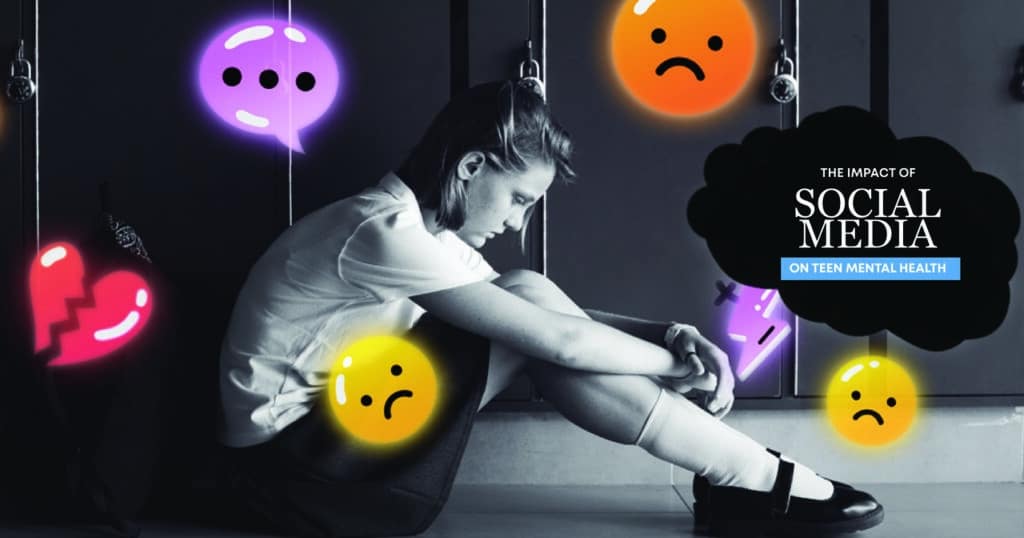
Social media firms are under the gun. The companies owning YouTube, TikTok, Instagram, Facebook, and Snapchat are being accused of intentionally creating social media products that are addictive to children and are being blamed for contributing to the current youth mental health crisis.
A 2025 study in the Journal of the American Medical Association studied 4,000 children over the years and noted that kids who spent a great deal of time on social media and playing video games were at a greater risk of suicide, two to three times higher than those who spent less time interacting with online social networks.
Then there are chatbots, another component of the social media landscape. News of children killing themselves after falling in love with AI characters is horrifying. Tech giants are scrambling to correct the issue, but the fixes aren’t easy, especially with some young people happier with AI companions than human ones. A 2025 Common Sense Media Survey determined that 31% of teens ages 13-17 feel their conversations with AI friends are equally or more satisfying than conversations with human friends. Overall, 72% of teens admit to using AI companions.
Like any other addiction, those who try to quit social screen time can suffer withdrawal symptoms due to the loss of the dopamine-inducing quality of the habit, which is much like the effects of gambling and recreational drug use.
The good news is that some companies are making changes, creating parental controls and featuring stricter settings that limit adult content and night-time notifications. Tougher age verification systems are also being put in place. But is it fair to put the blame for children’s social-media addiction squarely on Big Tech?
It’s understandable that parents are angry, but maybe they should also be looking in the mirror. When parents hand a fidgety toddler a screen instead of picking them up, the indoctrination begins. When young children see mom and dad glued to their phones at dinner, they follow suit. When every teen carries a smartphone—often in their hand because the pocket or bag is too far away—that need for social media connection has been fully implanted.
As a former teacher of 20 years, I know that social-media addiction is the number one issue facing our schools. It is simply impossible for a teacher to compete with the allure of the smartphone. Approximately 25 states now restrict phone usage, some of which cover the entirety of the K-12 school day.
While not all children succumb to problems associated with social media addiction—lower self-esteem, depression, anxiety, and loneliness—those who do often site a similar reason for disappearing into the cyber world: avoidance from real-world problems, which can be an incredibly strong lure.
So, ultimately, it is parents who need to set the tone on what appropriate and safe social-media usage looks like. The restrictions must begin at home. Boundaries and no-phone zones need to be identified and young people should to be taught the value of self-regulation. And parents should police themselves. Put down your phone. Talk to your kids. Listen to what they say. Guide them toward more productive activities where human social-interaction is required. Because if you don’t lead the way no amount of Big Tech solutions will make a dent in the problem.

THE CASTLE
ANNE MONTGOMERY
Suspense/Thriller
Ancient ruins. Haunted memories. A ruthless predator. Can Maggie survive the ghosts of her past – and the monster hiding in plain sight?
When she returns to her job as a National Park Ranger at “The Castle”—a centuried-old Native American pueblo carved into an Arizona cliff—Maggie hopes the comfort of familiar ground will help her heal. Battling trauma and the grief of unimaginable loss, Maggie’s days are carefully measured, her life held together by the thinnest of threads.
But strange things are happening at the park. A mysterious child appears and vanishes without a trace. And a predator watches her every move, planning his attack.
With the help of friends, fellow survivors, and the land itself, Maggie begins to reclaim her strength. But the danger is closer than she knows, and soon Maggie will have to face a deadly threat… and her deepest fears.
Bookstores, libraries, and other booksellers can order copies directly from the Ingram Catalog.
Praise for The Castle
“A deftly written and riveting read from cover to cover, “The Castle” effectively showcases author Anne Montgomery’s genuine mastery of the Romantic Suspense genre.” – Midwest Book Review
“A slow burn thriller, mixed in with a touch of mystical realism…A true five-star experience!” – Sara Steven Chick Lit Central
“A beautifully considered, sumptuous novel from a skilled storyteller.” – SaraRose Auburn Writing & Reviews
“This is a novel about good rage, about channeling the injustices of the world around us and fighting to do some good with both words and deeds. Lucky for readers, it was penned by a maestra like Anne Montgomery, so that we got a tense, powerful novel in the bargain too.” – Jennifer deBie-Rosie Amber Book Reviews
“Ms. Montgomery manipulates uncomfortable subjects and dark suspense into a gripping tale with hints of romance and humor carefully guiding readers on an informative journey of survival and self-discovery.“ Tonya Mathenia InD’tale Magazine
“Soul-stirring. A brilliant book…Truly a masterpiece.” – Anu Menon Thought is Free Book Blog
“I was gripped from start to end.” – Katherine Hayward Pérez Just Katherine Blog
“Ms. Montgomery has an almost magical talent to draw the reader into the worlds she creates through her words. Her characters are interesting, vulnerable and strong. While describing the locations in which her books are set, she weaves history with vivid images, immersing the reader in a hard-to-put-down story full of history, beauty and mystery.” – Margaret Millmore Author
 Author Anne Montgomery
It’s funny that people look for blame elsewhere, Anne. Whether it’s social media for their kids behavior or McDonald’s making people overweight and plagued with health issues. Really? Like you said, parents need to step up and be parents. It starts with being responsible for your own back yard. Great post, my friend! Cheers!
LikeLike
I can’t argue, Sharon. Parents need to stop being “best friends” with their kids and grow backbones.
LikeLiked by 1 person