Wild Horses on the Salt: An Excerpt

51TMG11M-rL

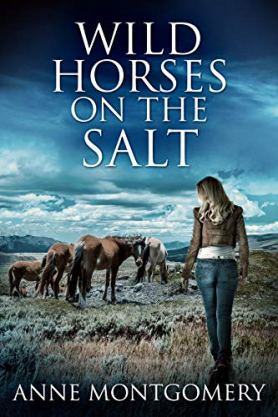
My new novel, Wild Horses on the Salt, is scheduled for release on June 14, 2020. With that in mind, I thought I’d share an excerpt. 

1

An unfamiliar place.

Becca blinked at the mid-morning sun that streamed through the room. She closed her eyes and opened them again. White painted walls. Thick, unfinished beams crossed the ceiling. Where was she?

She longed for a drink of water and was surprised to see a bottle on the square-topped table beside the bed. She sat up, grimaced at the pain in her side, and hugged the blue-and-white patterned blanket to her chest, noting the string of horse figures that galloped along the edge. She reached for the bottle, popped the top, and gulped.

Then she remembered her aunt making the frantic phone call and paying for the plane ticket. The woman’s tears as she placed a few folded bills in Becca’s hand. The red-eye flight: four and a half hours in the darkened cabin and the rumbling white noise that purred her into a series of uncomfortable dreams. The bleary arrival at Sky Harbor Airport in Phoenix, where a tall man wearing a tan cowboy hat held a piece of cardboard bearing her name in black marker.

She’d been surprised by the chill in the air as she was ushered to the front seat of a pickup. Wasn’t this the desert? The place the TV weather folks always talked about when the temperature hovered near 110 degrees? She shivered, and the man turned up the heat.

Later, under a star-splashed sky, she mounted several steps. The man motioned for her to follow, so she trailed him across a pathway composed of smooth river rock embedded in cement. When they arrived at a small cabin, he removed his hat and held the door open. He smiled, nodded, and disappeared.

Becca studied the now bright room, which boasted an intricately designed Native American rug hugging the hardwood floor. A three-drawer pine dresser topped with a mirror rested between two large windows framed with white curtains. A radiator kicked on. Rebecca eased under the warm covers and quickly fell back to sleep.


A knock on the door.

“There’s still some lunch left. If you’re hungry, you’d better hurry.”

Becca curled into a ball beneath the soft cotton sheets and the horse-adorned bedspread. She didn’t want to move, but then her stomach growled. How long had it been since she’d eaten?

She stretched, and her assorted injuries made her wince. She crawled from beneath the bedding, holding her side, surprised to see that she had fallen asleep in her clothes. Becca eyed the small garment bag that rested unopened on a chair in the corner. She needed to brush her teeth. She eased herself slowly off the bed. The bruises on her hip and shoulder were still fresh and achy. Becca didn’t glance in the mirror as she crossed the room. She’d had a black eye before. Understood the rainbow transformation that would render the area purple, green, then a sickly yellow-brown before the wound would finally disappear from her skin, but not from her soul.

Becca ran her fingers through her hair, then opened the door.

“Hello, Becca.” Gabriella Strand was tall with streaks of gray in her dark hair that was cut short and looped behind her ears. She wore teardrop-shaped turquoise earrings set in silver, a black sweatshirt that boasted a herd of galloping horses, black jeans, and a pair of worn black cowboy boots.

If the woman standing before her was surprised by her appearance, she didn’t show it. Becca turned her bruised eye away. “Ms. Strand.”

Gabriella laughed. “Oh, honey, no one has called me Ms. Strand in a very long time. It’s Gaby. Didn’t your aunt tell you?”

“Yes. I’m sorry. She did…Gaby.”

“No need to be sorry. Now, let’s get you something to eat.”

Later, Becca stared at the empty plate before her. She’d devoured the ham, egg, and cheese scramble, four pieces of thick smoked bacon, a stack of fluffy pancakes smothered in real maple syrup, and a large pot of hot black tea.

Gaby sat and wrapped her large hands around a mug of strong coffee. The older woman gazed at Becca with dark eyes, her face etched with fine lines that indicated a lifetime spent outdoors in the Arizona sun.

Becca didn’t know what to say to this woman who she knew only through stories told by her Aunt Ruthie. The two women had been college roommates, both history majors at Northern Arizona University. After graduation, a continent had come between them, with Ruthie moving back to New Jersey and Gaby remaining in her home state. But the two women never lost contact, had often visited over the years. When it became clear that Becca needed to leave, her aunt had insisted she would be safe with Gaby.

“You don’t have to say anything.” Gaby smiled. “I left some towels in your room. You can shower or take a bath, if you’d like. Then, rest. We’ll talk later.”

All Becca could do was nod.

51TMG11M-rL

A woman flees an abusive husband

and finds hope in the wilds of the Arizona desert.

Published by Liaison – A Next Chapter Imprint

Rebecca Quinn escapes her controlling husband and, with nowhere else to go, hops the red-eye to Arizona. There, Gaby Strand – her aunt’s college roommate – gives her shelter at the Salt River Inn, a 1930’s guesthouse located in the wildly beautiful Tonto National Forest.

Becca struggles with post-traumatic stress, but is enthralled by the splendor and fragility of the Sonoran Desert. The once aspiring artist meets Noah Tanner, a cattle rancher and beekeeper, Oscar Billingsley, a retired psychiatrist and avid birder, and a blacksmith named Walt. Thanks to her new friends and a small band of wild horses, Becca adjusts to life in the desert and rekindles her love of art.

Then, Becca’s husband tracks her down, forcing her to summon all her strength. But can she finally stop running away?

Kindle Pre-orders available at:

https://www.amazon.com/dp/B085ZX1WCZ?tag=creati0a5-20

Paperback Pre-orders will be available soon.

“Ms. Montgomery weaves an intricate parallel tale, portraying the struggles of one woman, and that of a lost wild stallion—both fighting to rise above the cruelty of an unkind world. Her unique writing style, incredible knowledge of her subject matter, combined with her ability to create vivid scenes of the East Valley, and particularly the Tonto National Forest and Salt River area in Arizona, takes the reader on a fascinating (and educational) journey.” —Author Margaret Millmore


An ode to teaching

download

This week, I left my classroom for the last time. I turned the key and walked away after 20 years of teaching in the same Title I high school in Phoenix, Arizona.

I did not join the teaching ranks because I thought I might enjoy standing in front of a bunch of kids hours on end. I’d been forced out of my career as a sportscaster, a victim of ageism, no longer pretty enough to be in front of a camera. I did a great deal of feeling sorry for myself as I stumbled around, trying to find a job that I loved as much as I loved being a reporter.

Because of my history as an amateur sports official, which had me dealing with young people on a regular basis, a number of friends and acquaintances suggested I go into teaching. Did I jump right in? Not at all. I just couldn’t see myself running a classroom.

Finally, with no other options, I went back to college, my bachelor’s degree in communications not enough to get me through the education door. I spent two years earning a teaching certificate. I entered my first classroom saddled with college debt and ready to teach my students journalism and video production techniques. At least, I thought I was ready.

Montgomery TV .75

When I was a reporter, nice never entered into the equation.

What I never expected was just how hard teaching is. My 15 years of reporting in both television and print had turned me into a driven sort, anxious to get whatever I needed to accomplish done quickly and thoroughly, since one never knew when a story would pop up and all of my well-thought-out plans would be shredded, leaving me with just a few minutes to make adjustments before that red camera light went on.

Looking back, I can see why my students hated me. I demanded they produce their completed work on time without exception. I was blinded to the fact that I was dealing with children not professional adults. Most of my students lived in poverty and were saddled with living conditions that made homework far from the top of their to-do list. They found me abrasive and rigid. At one point, an entire class revolted and walked out, leaving me alone. I’ll admit here that I cried in front of that empty classroom.

Eventually – I’m a stubborn sort – I came to realize it was my attitude that had to change. I will be forever grateful to my fellow teacher Ann Miles for sitting me down one day. She stared across her desk. “You know, you could be … nicer.”

“Nicer! What’s nice got to do with it?” I shot back.

Last Game Touchdown

As a sports official, I never expected people to be nice, so changing my attitude was difficult.

To her ever-lasting credit, my not-so-nice words didn’t ruffle her a bit. When I left that day, I thought about what she’d said and mentally defended myself. No one cared if I was nice in the newsroom! Are people always nice to me when I officiate games? Of course not! When coaches and fans scream at me, I don’t walk off the field. I just do my job.

But gradually I came to understand that Ann was right.

Now, I’d like to tell you that being nice is all one needs to be a good teacher, but that is far from the truth. Students are individuals with their own hopes and dreams and problems – personal, academic, and social. As a teacher, I had to determine the best way to reach each student, and frankly sometimes not so nice did work. Think freshmen boys, here. They seem to respect tough more than nice.

What I’m trying to say is teachers need lots of personality traits in their tool belts, attitudes they can quickly access when needed. A teacher needs to be thoughtful, firm, flexible, accessible, compassionate, trustworthy and, yes, nice. And though I worked on nice all the time, I was not entirely successful.

I paused in my classroom and reflected on the children I met there over the years.  I realized that some of my students loved me and others hated me. There didn’t seem to be too many in the middle. I mention this because maybe I never got the formula completely right.

As I pulled my classroom door closed, I hoped my students, especially those who didn’t particularly like me, might someday understand that I tried.

I guess that’s all I can ask.

51TMG11M-rL

A WOMAN FLEES AN ABUSIVE HUSBAND

AND FINDS HOPE IN THE WILDS OF THE ARIZONA DESERT.

Rebecca Quinn escapes her controlling husband and, with nowhere else to go, hops the red-eye to Arizona. There, Gaby Strand – her aunt’s college roommate – gives her shelter at the Salt River Inn, a 1930’s guesthouse located in the wildly beautiful Tonto National Forest.

Becca struggles with post-traumatic stress, but is enthralled by the splendor and fragility of the Sonoran Desert. The once aspiring artist meets Noah Tanner, a cattle rancher and beekeeper, Oscar Billingsley, a retired psychiatrist and avid birder, and a blacksmith named Walt. Thanks to her new friends and a small band of wild horses, Becca adjusts to life in the desert and rekindles her love of art.

Then, Becca’s husband tracks her down, forcing her to summon all her strength. But can she finally stop running away?

Kindle Pre-orders available at:

https://www.amazon.com/dp/B085ZX1WCZ?tag=creati0a5-20

Paperback Pre-orders will be available soon.


Southwestern wildfires fueled by invasive species

th

Arizona wildfires, fuled by invasive species, are becoming more problematic every year.

A wildfire plays a prominent role in my new novel Wild Horses on the Salt, which will be released on June 14, 2020. For those of us who dwell in the desert, brush fires have become all too common, and though fires in the Southwest are a normal phenomenon, today they are stronger and hotter and more long lived than in the past.

What happened? People. The desert Southwest used to be sparsely populated, the result of searing summers and scattered water resources. Then, the draw of copper, silver, and gold enticed fortune hunters to the area. Large-scale population growth did not occur until the end of World War II when returning soldiers began looking for affordable housing. Then, an incredible invention changed the face of the desert: home air conditioning. From that time forward, the warmer climates of the Southwest began to draw people who were tired of the long, dark winters in other portions of the country.

th-2

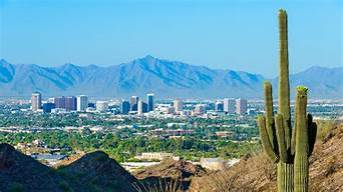
Phoenix, Arizona is the 6th largest city in the U.S. and it contiues to grow, sprawling into the surrounding desert.

Today, the Phoenix metro area is home to about 4.5 million people. The city is the 6th largest in the U.S. And here is where invasive species and their effects on wildfires come in. Some people, unaccustomed to the strange desert plants they encounter here, bring their favorite foliage with them, reminders of the homes they’d left behind.

Desert blooming 1

Beautiful desert wildflowers and grasses become food for widfires when the die and dry out.

While there is certainly no malice intended by those who revel in bright green lawns and non-native plants, their choices are irreparably altering the desert environment. Seeds are devoured by birds and transported to open areas where they are deposited. Seasonal heavy rains allow the plants to grow and spread, filling the empty spaces between desert trees, shrubs, and cactuses. In the past, a wildfire might eat up a relatively small area because the barren ground between these plants prevented the fire from spreading. Today, non-native grasses and shrubs give flames a clear pathway, resulting in massive infernos that consume huge swaths of land and burn for weeks at a time.

Add to that the fact that people keep moving into previously wild lands that were once allowed to burn, but which now require fire suppression to save lives, homes, and businesses. The problem is deserts and forests need fires to clear out brush and promote growth. For too long we have tried to extinguish all fires, which has led to much larger and more destructive blazes.

With the addition of climate change exacerbating a decades-long drought in the Southwest, the wildfire situation is already dire. The solution will surely be complicated and expensive.

51TMG11M-rL

A WOMAN FLEES AN ABUSIVE HUSBAND

AND FINDS HOPE IN THE WILDS OF THE ARIZONA DESERT.

Rebecca Quinn escapes her controlling husband and, with nowhere else to go, hops the red-eye to Arizona. There, Gaby Strand – her aunt’s college roommate – gives her shelter at the Salt River Inn, a 1930’s guesthouse located in the wildly beautiful Tonto National Forest.

Becca struggles with post-traumatic stress, but is enthralled by the splendor and fragility of the Sonoran Desert. The once aspiring artist meets Noah Tanner, a cattle rancher and beekeeper, Oscar Billingsley, a retired psychiatrist and avid birder, and a blacksmith named Walt. Thanks to her new friends and a small band of wild horses, Becca adjusts to life in the desert and rekindles her love of art.

Then, Becca’s husband tracks her down, forcing her to summon all her strength. But can she finally stop running away?

Kindle Pre-orders available at:

https://www.amazon.com/dp/B085ZX1WCZ?tag=creati0a5-20

Paperback Pre-orders will be available soon.


Birds: a world without them would be empty

When I was in 1st grade, my teacher, Miss. Pippert, gathered me and my classmates together and walked us through the woods near our elementary school. The destination was my house.

OIP

A pair of Eastern blubirds nested in my back yard when I was a child.

A short time later, we sat quiely in the grass. The object of our fascination a pair of nesting bluebirds that had taken up residence in a tree in my backyard. We watched the bluebirds flutter about, tending their nest, blue plumage startling against the bright green leaves of spring.

What drew us there? Even then the sighting of Eastern bluebirds was declining due to loss of habitat and nesting sites. The newly-built, suburban community in which we lived – one of probably hundreds in Northern New Jersey at the time – had taken the place of the wild land the birds favored.

I didn’t understand this as a child, but I do remember my mother bitterly denoncing the family cat when he killed the bluebird father. We mourned the creature’s loss. After that, the mother bird left, never to return.

Today, birds of all kinds face possible extinction. Recent studies show that North America has lost three billion birds, dropping from ten billion in 1970 to seven billion birds today. Bird populations in the US and Canada have declined 29% in the last 50 years.

It wasn’t until I began researching my new novel, Wild Horses on the Salt, that the plight of birds again came to my attention. I learned the horses that roam free along Arizona’s Salt River are damaging the ecosystem on which both resident and migratory birds rely. Horses eat the cottonwood and willow saplings, decimating nesting sites birds need to survive.

OIP-4

Woman in the late 19th and early 20th centuries preferred their fashions with feathers, a practice that put many bird species in peril.

The good news is that since 1918 the United States has enforced the Migratory Bird Act which makes it illegal to kill or injure any of the 1,000 bird species that are listed under the law. The rule was put in place when it became obvious that the millions of feathers being collected to adorn women’s fashions would ultimately eliminate many avian species.

The MBA also makes it unlawful to “pursue, hunt, take, capture, kill, possess, sell, purchase, barter, import, export, or transport any migratory bird, or any part, nest, or egg or any such bird, unless authorized under a permit issued by the Secretary of the Interior.”

Despite the MBA, however, bird species continue to decline. According to the USA Today article, “3 billion birds lost since 1970 in N. America,” “The cause is primarily habitat loss, as birds are losing the places they need to live, find food, rest and raise their young. Other threats include free-roaming cats, collisions with glass, toxic pesticides and insect decline.”

OIP-5

Despite the Migratory Bird Act, bird populations continue to decline.

While I have always liked watching birds, I have taken them for granted. I didn’t realize how much they add to our existence until I traveled to China, where, with the exception of a pair of ducks in a city pond, I noticed not a single bird. I mentioned this to a friend, an avid birder, and he wasn’t the least bit surprised. He explained that humans have lived in China for many thousands of years. Over that time, bird populations were plundered for food. Countries in Europe and Africa face the same issue. The Americas, however, have only been heavily populated for the last couple of hundred years, so our bird populations have not yet been decimated.

But they still could be, if we’re not careful.

Since that trip to China, I find myself paying closer attention to the birds that visit my neighborhood and the ones I see out on the Salt River and in the wild desert beyond.

Our world would be so empty without them.

51TMG11M-rL

A WOMAN FLEES AN ABUSIVE HUSBAND

AND FINDS HOPE IN THE WILDS OF THE ARIZONA DESERT.

Rebecca Quinn escapes her controlling husband and, with nowhere else to go, hops the red-eye to Arizona. There, Gaby Strand – her aunt’s college roommate – gives her shelter at the Salt River Inn, a 1930’s guesthouse located in the wildly beautiful Tonto National Forest.

Becca struggles with post-traumatic stress, but is enthralled by the splendor and fragility of the Sonoran Desert. The once aspiring artist meets Noah Tanner, a cattle rancher and beekeeper, Oscar Billingsley, a retired psychiatrist and avid birder, and a blacksmith named Walt. Thanks to her new friends and a small band of wild horses, Becca adjusts to life in the desert and rekindles her love of art.

Then, Becca’s husband tracks her down, forcing her to summon all her strength. But can she finally stop running away?

Kindle Pre-orders available at:

https://www.amazon.com/dp/B085ZX1WCZ?tag=creati0a5-20

Paperback Pre-orders will be available soon.


I love horses, but…

Horses run in river

Wild horses are beautful but terribly destructive.

Horses are breathtaking creatures, especially when running wild. Watching them move over open landscape is magical. However, that does not mean the existence of roaming horses in our modern world is not problematic.

I had the chance to study wild horses while researching my upcoming novel Wild Horses on the Salt, which is set for release on June 14, 2020.

The issues surrounding these animals are many. First, there are those who don’t believe what we call wild horses are wild at all. Some environmentalists call them an invasive species, because horses died out in the Americas 12,000 years ago during the last ice age and were not returned to the Western Hemisphere until Columbus landed in the Virgin Islands in 1493.

Others, especially in regard to the Salt River Horses here in Arizona, believe the creatures are feral animals. Tim Kenney of the Red Mountain Cattle Company which sits along the Salt River explained how at least some of these horses ended up roaming free.

“There was an alfalfa crisis. The cost was $14 a bale. That was $10,000 a truck load,” Kenny said. “Horses were too expensive to keep, so people turned them lose.”

Salt River Horses I didn't take this one. copy

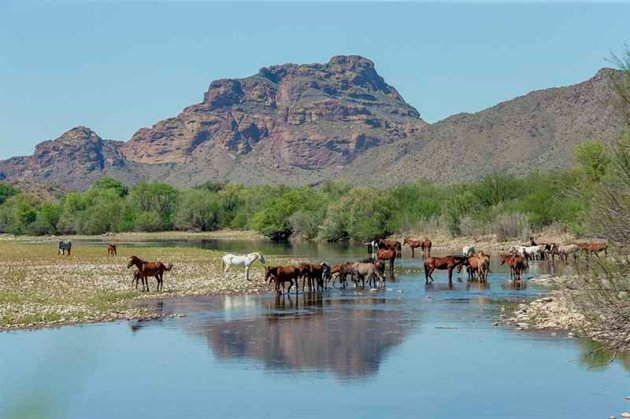
Wild horses eat away at riverside vegetation, destoying habitat needed by birds and other desert creatures.

And those animals bred. The question is if a horse is born in the wild is it actually wild? Merriam-Webster defines a wild horse as “an undomesticated horse or a feral domestic horse,” but many scientists disagree. Science Daily says, “The true wild horse is not merely a feral horse like the Mustang; a true wild horse is one that was never successfully domesticated.”

Truly wild or not, the horses cause problems, especially as the modern world encroaches on their habitat. Despite the myriad Horse Crossing signs along the roads skirting the Salt River, car accidents that injure both animals and humans are sadly common. The horses, naturally drawn to the river, degrade the streambed, eating cottonwood and willow saplings, preventing the regrowth of the massive trees, the spreading branches of which once cooled the water and protected fish hatchlings and other aquatic life from the hot desert sun. The horses eat other desert plants, as well, destroying nesting sites of both resident and migrating birds and allowing the growth of invasive species like the massive and almost indestructible giant reed that chokes the riverside.

Ted Williams, an avid hunter and fisherman and long-time contributor to Audubon magazine, was quoted as saying that the environmental destruction caused by wild horses is devastating and is leading to the demise of many other creatures.

OIP

Invasive giant reed takes over the riverside, providing neither nesting sites for birds nor shade to shield aquatic life from the scorching desert sun.

“Because horses are the only ungulates in North America with solid hooves and meshing teeth, they are particularly destructive of native vegetation,” he said. “A feral horse is a far greater threat to native ecosystems than a cow. When grass between shrubs is gone cows move on; horses stomp the shrubs into the dirt to get the last blade. What’s more, when cattle deplete forage they’re moved to new allotments, and they’re taken off the range in winter. But horses pound vegetation all year. And because horses live on range incapable of consistently sustaining them they sometimes starve and, in the process, cause the starvation of such sensitive desert creatures as sage grouse, bighorn sheep, Gila monsters, pronghorns, and desert tortoises.”

As the Phoenix metropolitan footprint expands, the horses are forced into smaller corridors, where there isn’t enough food. As Williams explained, frequently, they starve. Then, well-meaning but perhaps misguided people feed them. The Arizona Game and Fish Department warns that providing food for wild animals can be dangerous and detrimental, still horse groups ignore the warning.

The situation has become politicized with the cattle ranchers, environmentalists, and bird fanciers facing off against horse lovers. I discovered just how politicized when I stopped along the road to watch as bales of hay were being tossed to a group of waiting horses.

A large man stared at me as I approached. “Are you with us or against us!” he said.

“I’m not taking sides,” I answered, surprised at the question. Though I stayed and watched the volunteers feed the horses, no one spoke to me, unhappy, I suppose, that I did not appear to be an avid supporter.

Don’t get me wrong. I want the horses to be well and free. But, right now, no one knows how to accomplish that goal. Nor do we have a handle on the ultimate cost required to save these beautiful creatures, both in dollars and environmental degradation.


51TMG11M-rL

A woman flees an abusive husband

and finds hope in the wilds of the Arizona desert.

Rebecca Quinn escapes her controlling husband and, with nowhere else to go, hops the red-eye to Arizona. There, Gaby Strand – her aunt’s college roommate – gives her shelter at the Salt River Inn, a 1930’s guesthouse located in the wildly beautiful Tonto National Forest.

Becca struggles with post-traumatic stress, but is enthralled by the splendor and fragility of the Sonoran Desert. The once aspiring artist meets Noah Tanner, a cattle rancher and beekeeper, Oscar Billingsley, a retired psychiatrist and avid birder, and a blacksmith named Walt. Thanks to her new friends and a small band of wild horses, Becca adjusts to life in the desert and rekindles her love of art.

Then, Becca’s husband tracks her down, forcing her to summon all her strength. But can she finally stop running away?

Kindle Pre-orders available at:

https://www.amazon.com/dp/B085ZX1WCZ?tag=creati0a5-20

Paperback Pre-orders will be available soon.


My favorite character: The stunning Sonoran Desert

I am an outdoors girl. I grew up roaming the woods and streams of Northern New Jersey. I hear some of you scoff, convinced, perhaps, that my home state is nothing but cars and concrete, but you couldn’t be more wrong. I grew up with forests to wander, mountains to ski on, and the ocean at the Jersey Shore.

I mention this because when I moved to Phoenix, Arizona in 1988, I simply wasn’t prepared for the wilderness I would find here. My novels are all based in this strange state, where one can sit poolside in the sun, then drive two hours north for a day on the ski slopes. Arizona has forests and mountains, and while there is, sadly, no shoreline from which to stare at the sea, there is the Sonoran Desert.

Desert blooming 1

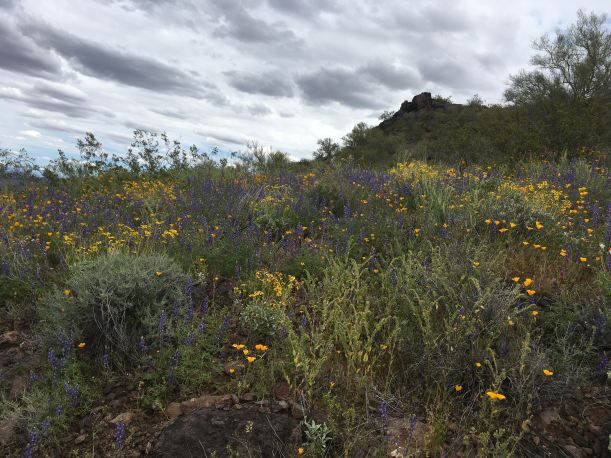
Bi-yearly rainfall makes the Sonoran Desert more lush than other deserts.

It’s funny that when you search for deserts on the Internet what you often see is sand: vast quantities of the stuff. But the Sonoran Desert is completely different from its sister deserts worldwide. The area – approximately 100,000 square miles, spreading across southern Arizona and parts of California and Sonora, Mexico – is home to a vast array of plants and creatures.

Sonoran Desert near Salt River

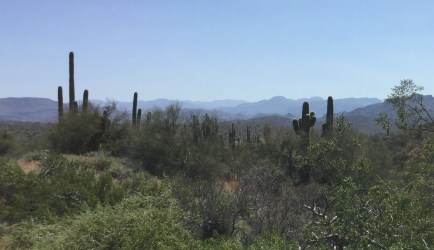
Towering saguaro cactuses live nowhere else on earth.

The Sonoran Desert is more lush than other deserts because of bi-yearly rainfall, which occurs in both the summer and winter. Many of the plants and animals one encounters is this strange land are found nowhere else on earth.

The symbol of this exclusivity, of course, is the massive saguaro cactus, a giant that can sprout 40 feet into the air and live over 150 years, and is just one of the 2000 plants that have been identified in the area. Birds of all kinds thrive here – approximately 350 species have been identified in the Sonoran Desert – along with 60 species of mammals and 100 kinds of reptiles.

These creatures have adapted to extreme conditions. Daytime temperatures can soar above 120 degrees and fall to well below freezing at night. Pronghorns, roadrunners, big horned sheep, Gila monsters, coyotes, the now rare and elusive jaguar, the desert tortoise, and the amazing kangaroo rat that can spend its entire life without once drinking water are just a few of the creatures that call the Sonoran Desert home.

arizona-jaguar-versus-copper-mine-L-VIv2c7

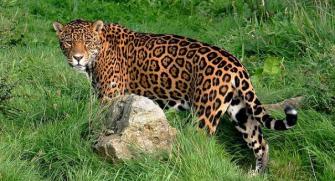
Jaguars once roamed the Arizona wilds. Today sightings of the elusive cat are rare.

Almost immediately upon my arrival in Arizona, I began exploring this rugged land. (I am a rock collector and never miss an opportunity to stick my nose in the dirt.) I have stood in awe of the fragile beauty here, which is perhaps why the Sonran Desert has always been one of the main characters in my novels. As readers know, the setting is the soul of a story.

I count myself fortunate that a job oportunity transplanted me to this land three decades ago. Though the desert and I haven’t always gotten along – yes, I’ve been stranded a few times over the years – still, I always managed to find my way home.

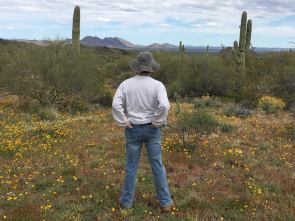
Me in the desert

I am often awed by the diverse and fragile beauty of the Sonoran Desert.

I’ve learned that while the desert is beautiful, it can quickly turn treacherous, not unlike some human characters we’ve become acquainted with through books.

I write about the Sonoran Desert because it affords my characters the opportunity to grow and change while they interact with the world around them. And … I want my readers to get to know her better, so they too can appreciate the wonder of this place.

51TMG11M-rL

A woman flees an abusive husband

and finds hope in the wilds of the Arizona desert.

Rebecca Quinn escapes her controlling husband and, with nowhere else to go, hops the red-eye to Arizona. There, Gaby Strand – her aunt’s college roommate – gives her shelter at the Salt River Inn, a 1930’s guesthouse located in the wildly beautiful Tonto National Forest.

Becca struggles with post-traumatic stress, but is enthralled by the splendor and fragility of the Sonoran Desert. The once aspiring artist meets Noah Tanner, a cattle rancher and beekeeper, Oscar Billingsley, a retired psychiatrist and avid birder, and a blacksmith named Walt. Thanks to her new friends and a small band of wild horses, Becca adjusts to life in the desert and rekindles her love of art.

Then, Becca’s husband tracks her down, forcing her to summon all her strength. But can she finally stop running away?

Kindle Pre-orders available at:

https://www.amazon.com/dp/B085ZX1WCZ?tag=creati0a5-20

Paperback Pre-orders will be available soon.

Continue reading

Toss the alarm clock and move to island time

18ac161173d66bbd72b8c34c3a009f0c

Even without us, time moves on, thanks to the Earth’s rotation and its trip around the sun.

Time is a human construct. Of course, I’m not saying without us time wouldn’t exist. The Earth would still keep rotating, giving the planet a 24-hour day, and she would still revolve around the Sun to the tune of about 365 days each year, dragging our seasons through their paces in the process.

The time I’m talking about is the notion of time: being on time, having enough time, shaping the future using time. And … how we perceive time.

“Who cares if we’re on time?” my high school students often asked when I remark that they are tardy to class.

At that point, I ascend my soapbox. “You can never be late!” I expound. “When I was in high school, I was in a lot of plays. What if I wasn’t in my spot when the curtain rose? When I was in television working as a sportscaster, what if I wasn’t on the set when the cameras turned on? Athletes, if am scheduled to officiate your game and I show up late, how would you feel? When you are late to work, others have to do your job. Eventually, those people will not think very highly of you.”

A few kids nod their heads, but many do not.

It might surprise you to know that my nightmares, almost universely, have nothing to do with brain-eating zombies or something scary under the bed. No, mine are about being late, for a class, a game, a meeting, or a flight. All agonizing situations where I can’t get where I need to be on time.

7364816464_1968d39c1a_z

Sundials were the first tools used to measure time.

Humans began measuring time, we think, about 3,000 years ago. People used sundials, back then. The first mechanical clocks appeared in the 14th century, the same time pocket watches came into fashion. Wrist watches evolved in 1868 following the creation by Swiss watchmaker Patek Phillippe of a mostly decorative piece of jewelry designed for Countess Koscowicz of Hungary. (For those younger types, note that a wristwatch is as the name implies: a timepiece to be worn on the wrist, a device that has gone out of style with the advent of the cellphone and the handy wee clock within.)

Let me admit here that I have, for most of my life, had a very solid belief in the structure of time. Now, with our current state of quarantine due to Covid-19, my view of time seems to have flipped on its head, because there are no classes for me to get to. No meetings. No commute. No dinner dates. No games. No swim at the health club. No appointments.

OIP

Is there a worse sound than a blarring alarm clock when we’re asleep?

Big confession. I slept until 8 AM this morning, a far cry from my usual waking time of 5:30 AM, the moment once heralded by the wail of my alarm clock. (We can blame the horror of that contrivance on the Seth Thomas Clock Company which was granted a patent for the detestable bedside device in 1876.)

I have always hated my alarm clock. Before I became a teacher, I worked nights as a restaurant server, a reporter, and a sports official, and rarely utilized the mechanical monster to wake. I always swore that, once I retired from teaching, I would destroy the offensive timepiece with a smashing blow from a big hammer.

But it seems I might not have to. Now, the beast with the glowing digital face sits benignly by my bed. With no place to go, its services are not needed. I rise whenever it suits me, which makes me feel a bit naughty, though not quite as naughty as those afternoon naps, but I digress.

Here’s the thing. Time is all about perception. If you don’t believe me, consider the difference between 30 minutes of a root canal and 30 minutes of a massage. Same 30 minutes either way, but one certainly seems a lot longer than the other.

OIP-3

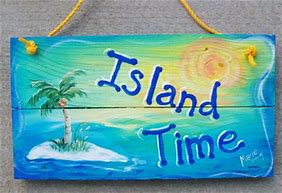
I’ll have to practice some more, but I think living on island time might work out just fine.

Today, since I have little to do, I sense my timely standards slipping away. I tell myself that, since I’m retiring from teaching in May and have already hung up my football whistle, that perhaps loosening my bonds with time is OK.

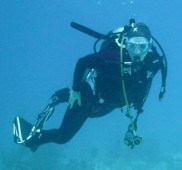
And that makes me think of the islands I’ve visited on my scuba-diving adventures over the years. Time is a different animal in places where palm trees flutter above white sand beaches and the colors of the sea blend from turquoise to blue to sliver, if you sit, relax, and watch. They call it “island time,” inferring that you can never be late, that things will come together when they do, and there is no need to worry about it.

Actually, I like that idea. Still … I need some more time to practice.

I’ll let you know how it goes.


51TMG11M-rL

A woman flees an abusive husband

and finds hope in the wilds of the Arizona desert.

Rebecca Quinn escapes her controlling husband and, with nowhere else to go, hops the red-eye to Arizona. There, Gaby Strand – her aunt’s college roommate – gives her shelter at the Salt River Inn, a 1930’s guesthouse located in the wildly beautiful Tonto National Forest.

Becca struggles with post-traumatic stress, but is enthralled by the splendor and fragility of the Sonoran Desert. The once aspiring artist meets Noah Tanner, a cattle rancher and beekeeper, Oscar Billingsley, a retired psychiatrist and avid birder, and a blacksmith named Walt. Thanks to her new friends and a small band of wild horses, Becca adjusts to life in the desert and rekindles her love of art.

Then, Becca’s husband tracks her down, forcing her to summon all her strength. But can she finally stop running away?

Kindle Pre-orders available at:

https://www.amazon.com/dp/B085ZX1WCZ?tag=creati0a5-20

Paperback Pre-orders will be available soon.


Domestic violence: stand up and say no more

OIP-1According to the National Intimate Partner and Sexual Violence Survey, “nearly 1 in 4 adult women and approximately 1 in 7 men in the U.S. report having experienced severe physical violence from an intimate partner in their lifetime.”

The often-silent scourge of domestic violence invades all walks of life and, though the poor are disproportionately affected, no one is immune.

The protagonist in my new novel, Wild Horses on the Salt, is a young woman fleeing an abusive husband. The life of Rebecca Quinn seems idyllic from the outside. She is a smart attorney with a handsome, successful spouse. She comes from wealth and privilege. And yet, Becca is repeatedly brutalized by her husband.

Often, when talking about domestic violence, people say, “Just leave! Get away!” And with someone like Becca, who is both financially well-off and has a successful career – both of which would afford an escape route – there is an underlying assumption that perhaps the victim is to blame. But leaving an abusive relationship is not that easy.

Scared FaceThere are numerous life situations that can lead to becoming a victim of domestic violence. The Centers for Disease Control and Prevention sites the following factors: “stress, anxiety, and antisocial personality traits … belief in strict gender roles; and other behavioral risk factors such as prior perpetration and victimization … such as peer violence, a history of substance abuse, a history of delinquency, and hostile communication styles.”

The CDC also points out that children who witness domestic violence at home are much more likely to seek out companions who behave that way. “(C)hildhood history factors such as exposure to violence between parents, experiencing poor parenting, and experiencing child abuse and neglect, including sexual violence,” all can lead to the cycle of violence being passed between generations.

Becca is one such victim. She has spent her life watching her mother be abused by her father. As is often the case in real life, she is informed by her battered mother that this behavior is to be kept private to protect the family’s reputation. Abuse is something one must endure in silence.

I have spent the last two decades as a teacher in a Title I high school, a designation denoting that most of my students live in poverty, with many being victims of abuse and neglect.

“My boyfriend beats me,” one child shared.

“You can’t permit that,” I responded.

She shrugged her shoulders. “But he loves me.”

I wanted to say I didn’t understand, but I did. Twice in my life, I suffered abuse at the hands of a partner. Like Becca, I had a college education and came from relative affluence. And yet, I stayed for long periods of time in these relationships, the reality of which I sometimes shared with my students.

“You, Ms. Montgomery?” They would scoff at the notion that I could have been a victim of abuse.

“Yes, it can happen to anyone,” I explained. “The question is why do we allow it?”

In my case, insecurity played a part. I was obese as a child and was sometimes bullied, even by family members. “It’s not my fault,” my mother would say to strangers she felt were staring at me. “I feed her fish and salad with no dressing!”

Though I wanted to respond, “I’m fat, not deaf,” I never did.

The fact that I grew out of my obesity and would be successful in high school and college did not eliminate the anxiety I felt about my body. I was also a low-level dyslexic. One day, my mother spat out, “You have the lowest IQ of all my children!” The fact that I struggled with reading and math lead to my brother making me a wager. “You’ll never make it through freshman year in college,” he said. “You’re too stupid.”

OIP-5My siblings and I were beaten with belts, kitchen utensils, and shoes, and periodically witnessed harrowing verbal confrontations between our parents. One fight involving a butcher knife terrified me to such an extent that I ran away from home.
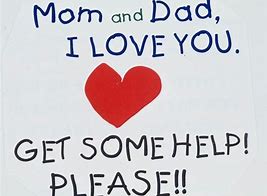
I’m not saying that everyone who struggles as a child will become a victim of domestic violence, I am suggesting that our life experiences can nudge us one way or the other.

When I was 24, my parents traveled to Washington DC and took me out to lunch, an intervention that, in retrospect, I should have seen coming.

“We don’t know what to say when friends ask us what you’re doing,” my mother said.

“Tell them I’m a sports official on my way to becoming a sports reporter.”

“You’re a waitress!” My mother pursed her lips in disgust. “That is not what we sent you to college for!”

“I have a plan. I will learn the sports by officiating, so I can be a competent sports journalist,” I said. “My bosses at the restaurant understand and schedule around my games. I know somewhere there is a news director who will give me a chance.”

“Don’t be ridiculous!” My mother crossed her arms. “Your father and I are willing to send you back to college. You could be a teacher.”

“I don’t want to be a teacher. I want to be a sportscaster.”

My parents left that day and I would not see or speak to them for several years. Around that time, I became involved with a wealthy man, and when he began putting me down, telling me I was “nothing but a waitress”, it should not be surprising that I believed him. He didn’t want me to work and gradually cut me off from others. His verbal abuse soon bloomed into physical violence and threats: “I’d rather see you dead than with another man!” and “Look at the trees,” he’d point through the kitchen window at the backyard. “I could bury your body out there and no one would ever find you.”

I had no money and nowhere to go. My friends thought he was wonderful and would have been stunned by the reality of the existence I was too embarrassed to share. On the few occasions I tried to leave, he terrified me into staying, one time with a gun perched menacingly on his lap. At one point, I admitted to myself that the last thing I would see was him barricading the doorway.

So, what changed? I was able to get a job as a sportscaster, which afforded me a paycheck and a place of my own. Astonishingly, the end came simply. He’d traveled to my home for a visit.

“I’m afraid of you. I don’t know how not to be.” I covered my face with my hands and waited. I was stunned when he left without a word. I never saw him again.

A few years later, I found myself in another long-term relationship and was again a victim of abuse. This time, I was the breadwinner, a SportsCenter anchor at ESPN. But when that job ended and my income dried up, I became a “useless f-ing loser”. It would be years before I extracted myself from that relationship.

OIP-4Here’s what I now know. I will never again allow anyone to put me down or lay their hands on me in anger. It’s not easy to stand up and say no more, but we must. The only way that can happen is education. We need to stop this cyclical horror at the root, which means adults must stop showing their children that abuse is OK.

“When was the first time you ever hit someone?” a student asked me recently.

“Never,” I said.

Several children laughed.

“No one should ever strike another person unless it’s in defense of yourself or another,” I explained.

Eyes around the classroom questioned me, children who probably witnessed domestic violence on a regular basis.

I can’t help but worry about them.


51TMG11M-rL

A woman flees an abusive husband

and finds hope in the wilds of the Arizona desert.

Rebecca Quinn escapes her controlling husband and, with nowhere else to go, hops the red-eye to Arizona. There, Gaby Strand – her aunt’s college roommate – gives her shelter at the Salt River Inn, a 1930’s guesthouse located in the wildly beautiful Tonto National Forest.

Becca struggles with post-traumatic stress, but is enthralled by the splendor and fragility of the Sonoran Desert. The once aspiring artist meets Noah Tanner, a cattle rancher and beekeeper, Oscar Billingsley, a retired psychiatrist and avid birder, and a blacksmith named Walt. Thanks to her new friends and a small band of wild horses, Becca adjusts to life in the desert and rekindles her love of art.

Then, Becca’s husband tracks her down, forcing her to summon all her strength. But can she finally stop running away?

Kindle Pre-orders available at:

https://www.amazon.com/dp/B085ZX1WCZ?tag=creati0a5-20

Paperback Pre-orders will be available soon.


The debate about wild horses

nQslGJZ

Wild horses roam the area around Arizona’s Salt River where their existence is controversial.

Recently, I announced the upcoming release of my new novel Wild Horses on the Salt. Their are a number of facets to this story, including the ongoing plight of America’s wild horses.

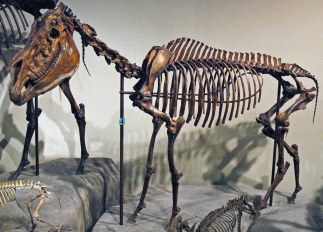
Ancient horses once roamed the Americas beside wooly mammoths, saber-tooth tigers, dire wolves, and other large mammals. Then, at the end of the Pleistocene 12,000 years ago, the climate had cooled and Equus caballus disappeared, the result of mass extinctions.

32380095791_7c0825b841_b

Had horses not migrated along the Bering Strait land bridge 12,000 years ago, we would only know them as fossils today.

And yet, today, the horse survives. It was the land bridge between North America and Asia that spared the horse from being nothing but a fossil, a creature cast only in stone.

Horses crossed into Asia, where ancient man domesticated the elegant beast 5,500 years ago on the grasslands of what would become Ukraine.

It was not until 1493, when Christopher Columbus arrived in what is today the Virgin Islands, that horses again touched ground in the Americas. The progeny of these animals brought by European explorers escaped, bred, and ranged across the continent.

Though millions of wild horses once roamed free in the United States, today approximately 82,000 remain. Because their ancestors were brought here by explorers, there are some who believe these animals are an invasive species, a creature that should be culled to safeguard native fauna, fragile grasslands, and riparian habitats. Others believe the wild horse should be defended, protected, and allowed to roam free.

The debate is ongoing.


51TMG11M-rL

A woman flees an abusive husband

and finds hope in the wilds of the Arizona desert.

Rebecca Quinn escapes her controlling husband and, with nowhere else to go, hops the red-eye to Arizona. There, Gaby Strand – her aunt’s college roommate – gives her shelter at the Salt River Inn, a 1930’s guesthouse located in the wildly beautiful Tonto National Forest.

Becca struggles with post-traumatic stress, but is enthralled by the splendor and fragility of the Sonoran Desert. The once aspiring artist meets Noah Tanner, a cattle rancher and beekeeper, Oscar Billingsley, a retired psychiatrist and avid birder, and a blacksmith named Walt. Thanks to her new friends and a small band of wild horses, Becca adjusts to life in the desert and rekindles her love of art.

Then, Becca’s husband tracks her down, forcing her to summon all her strength. But can she finally stop running away?

Kindle Pre-orders available at:

https://www.amazon.com/dp/B085ZX1WCZ?tag=creati0a5-20

Paperback Pre-orders will be available soon.

Milestones

OIP

Happy Birthday to me!

Today is my birthday.

I’m 65.

This is a milestone year which is defined as “an action or event marking a significant change or stage in development.”

That got me thinking about other such times in my life, like 18. That was a big one, signaling, as it did, fleeing the nest, heading off to college, where I would be on my own. At least, I thought that was the case. Considering my parents footed that financial bill, my belief in my own independence was perhaps mistaken. Still, it was a newfound freedom.

Twenty-one was memorable, if only that I could imbibe without a fake ID.

At 24, I refereed my first game: a youth ice hockey contest, where tiny players leaned on sawed-off sticks, jerseys dipping below their knees, helmets tilting rakishly. That game led to a 40-year officiating career, where I called amateur football, baseball, ice hockey, soccer, and basketball games, all initially in an attempt to prepare for a life in sports reporting.

Typewriter

Look closely, children. This is an artifact from another time. It’s called a typewriter.

At 28, I finally got that coveted first sportscasting job, a profession that thrust me into the wacky world of the newsroom, where – and you’ll know I’m old here – reporters smoked incessantly and banged away on heavy, black typewriters, the clackity-clack of keys keeping a manic beat as we chased the news.

I married at 33.

Montgomery TV .75

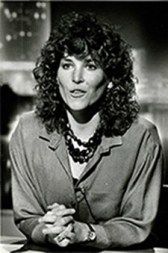
After working for five TV stations, my sportscasting career came to an end.

At 41, my sportscasting career ended, a casualty of my age. You see, in sports, 18-to-34- year-old males are the target audience. The thinking went – and pretty much still does – that after that age one is not pretty enough to sit in front of a camera. I mourned my lost career as a death and will admit here that it took a while for me to regroup and move on.

When I was 44, I applied for a sports-writing job with a small local newspaper, and though the editor was dubious about my abilities, he gave me a chance. It was during that seven-dollar-an-hour, minimum-wage job that I discovered I was pretty good at writing. I know because my editor kept saying “You’re on the front page again!”

I was 45 when I entered a classroom, a newly-minted teacher in a Title I high school in Phoenix, where I was tasked with teaching journalism, communications skills, and reading to children living in poverty, students who dealt with all the problems that status serves up. I thought the job would be easy. I was humbled in a week.

That same year, I divorced.

Four years later, I self-published my first book, the beginning of my life as an author. Since then I’ve written four more novels, an adventure that, so far, includes an agent and five different publishers.

Me diving 2 smaller

I’ve been diving regularly for 15 years.

When I was 50, I celebrated with a trip to Australia where I hunted for minerals with Aussie miners, slept under a night sky in the outback, and jumped into the sea above the Great Barrier Reef. Since then, scuba diving has taken me around the globe, an ongoing adventure of such beauty I can hardly find the words to describe it. Swimming with sea beasts large and small has become my passion.

Me and the boys at the book signing

Thanks to the foster care system, I became a mother at 55. And though my boys are now all in their twenties they still call me Mom.

At 55, a phone call made me a mom. A former student landed in foster care, a frightening journey that ended with me. Today, I have three sons, all of whom spent time in the system, and despite being in their twenties they still call me Mom. I hope they always will.

That same year, I finally picked up that guitar I’d been toting around for 35 years, so music – which had been one of my greatest loves – was back in my life, hopefully never to abandon me again.

Last Game Touchdown

I’ll admit, I cried after refereeing my last football game.

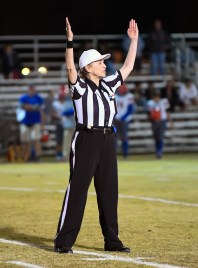
Now, ten years later, everything is changing again. I called my last football game in November. I hung up my white hat and whistle, because a lifetime of injuries now prevents me from successfully dodging players rushing my way. And, at the end of this school year, I will leave my classroom for the final time. Twenty years of teaching over.

Looking back, I realize I have been so very fortunate. I wouldn’t change a thing, though I wish I had better teeth and that I had taken those piano lessons more seriously.

I am excited about the future and what comes next. My sweetie pie and I have plans that include a nightly light show over the Caribbean and a peaceful St. Croix hillside with fruit trees and a garden, as well as a few cats and dogs. I know I will write more books – simply because I love to – and I will swim with sea creatures whenever I can. I will hunt for rocks, learn to play my new piano, spend time with the boys, and be prepared for any adventures that come my way.

Today is my birthday.

I’m 65.

51TMG11M-rL

A woman flees an abusive husband

and finds hope in the wilds of the Arizona desert.

Rebecca Quinn escapes her controlling husband and, with nowhere else to go, hops the red-eye to Arizona. There, Gaby Strand – her aunt’s college roommate – gives her shelter at the Salt River Inn, a 1930’s guesthouse located in the wildly beautiful Tonto National Forest.

Becca struggles with post-traumatic stress, but is enthralled by the splendor and fragility of the Sonoran Desert. The once aspiring artist meets Noah Tanner, a cattle rancher and beekeeper, Oscar Billingsley, a retired psychiatrist and avid birder, and a blacksmith named Walt. Thanks to her new friends and a small band of wild horses, Becca adjusts to life in the desert and rekindles her love of art.

Then, Becca’s husband tracks her down, forcing her to summon all her strength. But can she finally stop running away?

Kindle Pre-orders available at:

https://www.amazon.com/dp/B085ZX1WCZ?tag=creati0a5-20

Paperback Pre-orders will be available soon.