My dream of being an ice skater evaporated and I couldn’t be happier

images-2

People always seem to key in on the same piece of information on my resume. The notation mentioning that I earned a bronze-medal in ice dancing from the United Stated Figure Skating Association always seems to impress, even though I go out of my way to explain the lowliness of that specific award.

My parents first took me to South Mountain Arena in West Orange, New Jersey when I was five and I quickly developed a dream of becoming an Olympic skater.

Later, as an overweight adolescent, the aspiration remained, and even though I had never seen any pudgy athletes waiting for a medal to be placed around their necks, I could still picture the event quite clearly in my mind.

However, I realized my world was nothing like that of the kids who were real competitors. Though my parents would schlep me to a rink several times each week, they refused to let me take the sport too seriously. In retrospect, they did me a favor, but it would be years before I understood their logic.

images-1

I always admired elegant skaters when I was growing up and dreamed of being like them.

I loved the graceful, elegant figure skaters, and especially admired the pairs and dance couples who flew to reverberating orchestral music in perfect unison, on good days. Though, I was also on hand to see them collapse in screaming heaps on the hard ice, blaming one another for the error that had deposited them on their butts, teaching pros and parents encouraging them to calm down and get on with it, since each and every one of them harbored the hope – almost as wildly absurd as winning the Powerball Lottery – that they would one day find themselves staring down from an Olympic podium, gold medals shinning as the crowd sang the national anthem.

Because I was a not at the rink on a daily basis, most of these children rarely spoke to me. The pecking order was strictly set. Anybody who was not part of this elite group of Olympic hopefuls was often snubbed, though not because the serious skaters weren’t interested in mingling with those of us who were mere hobbyists. I didn’t understand until later the often-wistful looks I caught from some of these kids when they’d pass those of us who were skating just for fun.

One special skater was Tommy, who my girlfriends and I would watch surreptitiously, transfixed by his skills on the ice and the abundance of sensuality he oozed. I was equally amazed by the way he fit into both skating worlds. On one hand, Tommy was an ice dancer who skated with his sisters when they needed a partner. But he wore no sparkling, billowy-sleeved costume. During practice sessions, Tommy often appeared in black jeans and a white T-shirt, sometimes with a pack of Marlboros rolled up in his sleeve. Then, he would swap out that attire for hockey gear.  He’d take the ice as a defender, popping and checking opponents into the boards, tough and illusive, his figure-skating skills making him almost impossible to catch or knock down.

One day at the start of a dance session, I was standing by the boards when the announcement came over the intercom that the opening dance would be a Dutch Waltz. As skaters were lining up at either end of the ice to begin the simple pattern of cross-overs and swing rolls, Tommy streaked by and grabbed my hand. As there was always a dearth of male skaters – most of the girls had to perform the patterns alone – I was delighted at the prospect of having a partner.

Tommy stood slightly behind me and to the left, placing his right hand solidly on my waist. I placed my right hand on top of his. Then he held his left hand out for me to take, as courteously as a medieval knight. When I grasped his hand in mine, he pulled me tightly to him, close enough that I could smell the warm scent of nicotine on his breath. In proper Kilian dance position there would have been a demure space between us, but Tommy held me as close to his body as our skates would allow.

The introduction to Johann Strauss’ Blue Danube Waltz with its deliberate 3/4 time echoed from the loudspeakers. All the skaters straightened up, preparing to launch themselves into the dance. Tommy and I pushed off. We turned and whirled and for the first time I paid no attention to my feet. Though the Dutch Waltz was the simplest of all the dances, I felt like I was flying.

I would get to know some of the other skaters, because Tommy introduced me to them. And I sensed that while I admired their world, they admired mine. I had something that none of them had: freedom. Skating was all they were allowed to do. They didn’t attend summer camp or participate in Scouts. They didn’t go to football games or act in plays or spend idle times just walking in the woods with the dog.  Some of them didn’t even go to school: their educations handled by private tutors who worked around their skating and ballet lessons and hours of ice time. They had no holidays. Some would tell me they practiced 365 days a year. For them skating was a prison, where they were constantly observed by parents and coaches.

I sensed a kinship with a girl who, one day, while under her mother’s watchful eye, still managed to slip some coins into a vending machine. She pushed a button behind her back, gathered up a Snickers bar that had dropped into the tray, unwrapped it, and shoved the entire snack into her mouth without her mother noticing.

Perhaps it’s hard to blame what today we would call helicopter parents for their vigilance. The financial investment in creating a world-class skater is astronomical, equivalent to an Ivy League education. Still, I wonder how many of those kids chose that life. Or, if given the chance, would have preferred something else.

As I got older, I finally appreciated not being part of that world. I would have missed out on so many things had I been forced to focus on skating alone. Perhaps I should thank my parents for giving me the opportunity to branch out.

Still, I have never quit admiring the beauty and grace of ice skating.

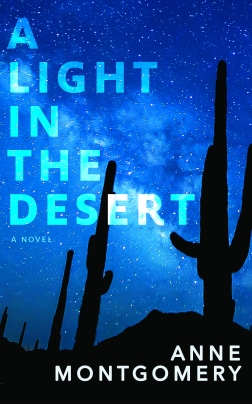
A Light in the Desert-cov (6)

Mystery/Suspense

Blank Slate Press/Amphorae Publishing Group

286 Pages

Price: $16.95 Paperback, $9.99 eBook

http://www.midpointtrade.com/book_detail.php?book_id=261955

As a Vietnam veteran and former Special Forces sniper descends into the throes of mental illness, he latches onto a lonely pregnant teenager and a group of Pentecostal zealots – the Children of Light – who have been waiting over thirty years in the Arizona desert for Armageddon. When the Amtrak Sunset Limited, a passenger train en route to Los Angeles, is derailed in their midst in a deadly act of sabotage, their lives are thrown into turmoil. As the search for the saboteurs heats up, the authorities uncover more questions than answers. And then the girl vanishes. As the sniper struggles to maintain his sanity, a child is about to be born in the wilderness.


A peek inside my inner-city classroom

download

My students deal with myriad issues outside the classroom, but that doesn’t mean they don’t want to learn.

I have taught in an inner-city high school in Phoenix for almost two decades, where children struggle differently than I did growing up in a middle-class suburb. Here’s a peek into my classroom from when I was a reading specialist.

“You can’t talk about God!” Rachel called from across the room. “You’re not allowed!” The 15-year-old smugly crossed her arms over her chest.

“Of course I can talk about the gods, Rachel.” My use of plural deities threw her off and for a moment she was speechless.

“There’s that church-and-state thing,” she shot back.

“What do you mean gods?” Berto, shy and quiet, got to his seat after arriving late. Again.

Earlier in my teaching career, I would have publicly chastised Berto for his tardiness, pointing out that he’d never, ever hold a job if he couldn’t be on time. But since discovering that the boy’s mother had recently died, that his 28-year-old father was in prison, and that he was pretty much homeless, I just didn’t have the heart.

I looked out over the faces in my freshmen reading class: a mixed group of mostly Hispanic and Black students, none of whom read at grade level. A few had such poor reading skills the tests couldn’t even register their abilities. At 15, some were considered pre-school readers. Others were close to the ninth-grade level, but the majority of my students’ reading abilities fell between third and sixth grade. A few of the children were Special Ed with behavioral issues and learning disabilities like dyslexia. One girl had been born a conjoined twin to a crack addict. Her eyes wandered and were set too far apart. Another girl was a cutter who contemplated suicide. A tall, muscular boy who had just been paroled from prison told me he had done “dirty things,” but did not elaborate. And then there were my African students: a thin, gangly Ethiopian boy with a constant smile who spoke four languages, but not a word of English. I’m not sure what language the tiny, frightened Nigerian girl spoke.  I later learned the West African nation boasts 510 living languages, but I could find no one who understood a word the child said.

Still, my job at South Mountain High School, the most inner-city school in Phoenix, Arizona, was to teach them all to read at grade level.

“There is only one God! Jesus, our Lord and Savior,” Rachel shouted, quite pleased with herself.

“I thought we weren’t allowed to talk about that!” Carlos squinted at Rachel.

She turned to him slowly and glared.

“We can certainly speak of the gods or God, if you like,” I said, butting in to avoid a confrontation. Carlos and Rachel were always arguing.

I checked the clock. I’d give the stragglers five more minutes. I hated starting a lesson with half the class yet to arrive. So, we’d begun with a story from the newspaper, an effort to stall for the latecomers and to boost the little bit of knowledge my students had about the world beyond the blighted blocks in which they lived.

This day, the class discussed Ancient Rome. As I recall, some fabulous new artifacts had recently been discovered in the city. I don’t remember how Jesus came up, but in a school that’s almost 75% Hispanic – a group that’s overwhelmingly Catholic – and 24% Black with an abundance of Southern Baptists, the fact that Jesus enters into discussions is not necessarily surprising.

I mentioned that we don’t really know what Jesus looked like, pointing out that the blond, blue-eyed version favored by Europeans is completely unlikely.

“Ms. Montgomery, of course we know what Jesus looked like!” Little Sophia, with the angel’s face and waist-length, blue-black hair, stared up at me,

Several heads nodded in agreement.

“No, Sophia. We can only guess. We have no idea what Jesus looked like.”

“But there are pictures!”

I paused and took a breath. “Photographs?”

She nodded her head.

“There were no cameras two thousand years ago, Sophia.”

The girl stared from her seat in the middle of the room. “But, Ms. Montgomery,” she said as if speaking to a confused child. “If there were no photographs, how did that guy paint the picture of the supper?”

“You can’t talk about that!” Rachel shook her head.

“Think about history,” I said.

“I hate history!” Rachel crossed her arms again.

“It’s so boring,” two students said almost simultaneously.

“Still, do you think it’s possible to teach history without ever mentioning religion? And if we mention religion, mustn’t we also speak of God?”

Rachel bit her lower lip.

“Remember learning about why the Pilgrims first came to the New World?”

“Freedom of religion,” Berto called out from his seat by the row of computers near the wall.

“Raise your hand, Berto.”

“Yes, ma’am.”

“You have all learned about the Pilgrims and how they came to the Americas so they could worship freely, yes?” But a quick glance around the room told me that some of them had no idea what I was talking about. “The point is, we must study religion if we are to understand our world. Religion has shaped our past and will shape your future. After 9/11, many of you might have discussed what it means to be a Muslim in your classrooms.” There were a few nods. “The thing a teacher cannot do, however, and this is where the separation of church and state comes in, is to try to convince you to convert to a particular religion. That is what is not allowed.”

“Oh, I get it.” Rachel nodded.

A number of other students seemed to understand, as well.  Though, from Big Travis, in the back corner of the room, there was no response. Exhausted from football practice and protecting his mother from an estranged, violent father, he snored quietly as his head sagged on his massive chest.

A Light in the Desert-cov (6)

Mystery/Suspense

Blank Slate Press/Amphorae Publishing Group

286 Pages

Price: $16.95 Paperback, $9.99 eBook

http://www.midpointtrade.com/book_detail.php?book_id=261955

As a Vietnam veteran and former Special Forces sniper descends into the throes of mental illness, he latches onto a lonely pregnant teenager and a group of Pentecostal zealots – the Children of Light – who have been waiting over thirty years in the Arizona desert for Armageddon. When the Amtrak Sunset Limited, a passenger train en route to Los Angeles, is derailed in their midst in a deadly act of sabotage, their lives are thrown into turmoil. As the search for the saboteurs heats up, the authorities uncover more questions than answers. And then the girl vanishes. As the sniper struggles to maintain his sanity, a child is about to be born in the wilderness.



I could eat a horse … but I didn’t

I was raised in a time when children were pretty much ordered to eat everything on their plates. “There are starving children in Africa!” my mother would intone whenever we looked askance at some of her dubious-looking culinary creations.

Being of Irish and German extraction, my mother never met a dish she didn’t feel the need to cook the color and taste out of. I know this because I spent the first six decades of my life hating brussel sprouts, not realizing that the gray mush she shoved onto my plate was nothing like those lovely wee cabbages sautéed by my sweetie pie – browned crisply in butter and sprinkled with a dusting of . . . toffee. (I see you looking skeptical. Try it.)

My mother also insisted that one never turn down an offering of food. Ever. This was a moral imperative. Perhaps this was because she grew up during the Depression when food was scarce, or maybe it was because she took umbrage whenever anyone just nibbled around the edges of her meals. But, whatever the reason, this rule set me on a path of accepting whatever fare was placed before me. Which has worked out pretty well most of my life, though there have been some interesting gastronomic adventures along the way.

images-1

Traveling has always provided the opportunity for a wide array of noteworthy edibles. I learned this when I was offered Vegemite in Australia. Had a paid attention to the grinning Aussies huddled about as I bit into their beloved spread made from spent brewer’s yeast, I might have had an inkling of what was to come. While they compared the substance to peanut butter, it was more like aged, brown sardine paste that had been left too long in the sun. Let’s just say once was enough.

The next day, I attended a barbecue where the main dish was kangaroo burgers. Crocodile sausage came later. Both were OK, though biting into Skippy seemed inherently wrong.

In China, I was offered something called a one-thousand-year-old-egg. The name alone is off-putting. But the visual is even worse. I considered showing a picture here, but on the off chance someone might be enjoying breakfast, I reconsidered. Suffice it to say it’s a gooey black egg preserved in a mixture of clay, ash, salt, and quicklime. Did I eat it? Yes! I know the rules. Was I glad there was a large glass of wine on hand? Indubitably.

images-2

Once, on lovely evening in Fiji, I was seated on the ground with others in a circle when I was handed a coconut shell high-tided with kava. High-tide, in this case, means the shell was full to the brim. (Low-tide is a shell half full.) Kava, for the uninitiated, is a root that gets pulverized into what looks like dirt. And that is exactly what it tastes like. The village chief grinds the kava, mixes it with water, and distributes it to those who wish to imbibe. There’s a clapping ritual, after which one is expected to down the beverage in one gulp. Of course, since my mother trained me well, I complied, not knowing that the kava would just keep coming around. After five hits off the shell, my lips and tongue were quite numb so speech was a bit problematic, though I no longer noticed the beverage tasted like dirt. I will say I had one of the best night’s sleep ever, and not a hint of a hangover.

grits

Sometimes, there were misconceptions about certain foods. My first TV sports reporting gig was in Columbus, Georgia. I had just moved there from Washington D.C., and, as you might expect, that change of scene was particularly jarring. Some of my new work friends took me out to dinner and I found myself looking up at a middle-aged waitress.

“You want grits with that, honey?” She stared at me.

I paused, unsure.

“Grits?” She thumped a pen on a pad of paper.

“Um . . . I’ve never had grits,” I replied. “Could you just bring me one so I could taste it?”

Several beats of silence were followed by what I recall as hysterical laughter from those at the table.

And here is where I have to admit that twice in my life, I sort of broke the food rule. One time, I was hanging around with my friend Jill, whose lovely mom was the antithesis of mine in every way, especially in regard to cooking. She would even make her kids something special, if they didn’t like what was being served. By comparison, my mom would stand by the table clutching a metal pancake turner, ordering us to eat what was on our plates or starve.

images-4

Whenever possible, I would invite myself to Jill’s house for dinner. So, I asked what was on that evening’s menu.

“Tongue,” she said.

“Tongue?” I thought she was kidding.

She got up from her seat at the kitchen table, opened the fridge, and pointed inside. “Tongue.”

Eh gads! There was a giant tongue resting on a plate, the meat covered with little bumps I thought might be taste buds. I took a breath. Suddenly, whatever my mom had planned didn’t seem so bad. I ate at home that night.

images

The only other time I avoided an offering of food was when I was a student in Luxembourg during my junior year in college. I was driving by a picturesque field where pretty, plump ponies were grazing.

“Oh! Look!” I said, pointing at the animals.

Lennart, whose parents had taken me in for the semester, said, “Those are the ones we eat.”

Later, I was invited to attend a reception where we students would be welcomed as honorary guests. We were to be served the national meal of Luxembourg — cheval and pommes frittes — which I learned, to my horror, was horse with fried potatoes. My brain was assaulted by visions of Black Beauty and My Friend Flicka and National Velvet.

To everyone’s surprise but my own, I developed a case of the flu the evening of the affair and had to miss that dinner. Under the circumstances, I think even my mother would have understood.

A Light in the Desert-cov (6)

Mystery/Suspense

Blank Slate Press/Amphorae Publishing Group

286 Pages

Price: $16.95 Paperback, $9.99 eBook

http://www.midpointtrade.com/book_detail.php?book_id=261955

As a Vietnam veteran and former Special Forces sniper descends into the throes of mental illness, he latches onto a lonely pregnant teenager and a group of Pentecostal zealots – the Children of Light – who have been waiting over thirty years in the Arizona desert for Armageddon. When the Amtrak Sunset Limited, a passenger train en route to Los Angeles, is derailed in their midst in a deadly act of sabotage, their lives are thrown into turmoil. As the search for the saboteurs heats up, the authorities uncover more questions than answers. And then the girl vanishes. As the sniper struggles to maintain his sanity, a child is about to be born in the wilderness.
What should sports be teaching our kids?


I’ve spent most of my life in the sports world. I ice skated, skied, and swam as a kid. I was a sports reporter for about 15 years. For the past four decades, I’ve officiated amateur sports: mostly football and baseball, but I’ve called basketball, ice hockey, and soccer games, as well.

So, I feel qualified to take a good hard look at the American sports scene. And what I see isn’t pretty, which is upsetting for someone who’s always believed that participation in sports makes us better people, endowing us with skills needed to be successful in both our personal and professional lives.

51+Sh9EgCyL._SX366_BO1,204,203,200_

I read a book recently that crystalized some of the issues affecting sports in the U.S.  In Norwich, a story detailing a tiny Vermont town that has produced an inordinate number of well-adjusted Olympic athletes, New York Times reporter Karen Crouse writes, “(T)he parents of Norwich learned through trial and error the best methods of nourishing happy athletes: by valuing participation and sportsmanship, and stressing fun, community, and self-improvement.”

Anyone who has attended a youth-level sports competition over the last two decades must surely know that idyllic communities like Norwich are about as common as unicorns. The “winning is everything” adage is on display in the behavior of parents, coaches, and fans even when children are in elementary school, a time when sports competition should focus on teamwork, building friendships, and learning to win and lose gracefully.

What has changed? Dollar signs. Parents see pro athletes in an 11-year-old Pop Warner football player or a Little League pitcher. The inevitable leap to specialization and year-round club teams all in the hope they will spawn the next major leaguer is both sad and disturbing.

I have spent the last 19 years teaching in an inner-city high school in Phoenix. Way too many of my students say they want to be professional athletes. I explain they should have a Plan B, since statistics clearly show most will never play organized sports after high school, and that, even if they receive that rare college-sports scholarship, the chance of ever getting a professional tryout is like winning the Powerball lottery.

Why do my students want to be pro athletes? They imagine that multimillion-dollar lifestyle. These kids – like the previously mentioned helicopter parents – seem to care only about the fame and financial riches to be gained. When I point out that pro careers are difficult, generally very short, and that the vast majority of athletes are not banking millions and living in mansions, they scoff.

According to Crouse, children in Norwich are not raised to believe that the raison d’être of sports participation is material gain. “(T)he social tapestry of Norwich represents a triumph of nurture over the natural order of the modern world, which has given us a wealth and acquisition model that favors autonomy over relationships and independence over community.”

The point in encouraging children to participate in sports has never been about money and fame. It’s about teaching them to be happy, well-adjusted adults. Competing in sports teaches discipline, respect for authority, persistence, teamwork, dedication, self-esteem, and, perhaps most importantly, how to cope with failure.

However, forcing a child into a single sport, in order to chase dreams of college scholarships and a pro career, ignores the possibility that they might excel in different areas if given the opportunity, and often produces injuries, burnout, and depression. This strategy differs greatly from that of the parents of Norwich who, “When in doubt, erred on the side of giving their children freedom. They were determined not to be like the parents who control their children’s choices for reasons having to do with their own egos or anxieties.”

Young people need to have the opportunity to try new things, which is the first step in determining what they might like to do in the future. While I encourage my students to compete in sports, I would be remiss if I stopped there. I want them to take art and music and drama and woodworking and culinary arts and any other subject that stirs their imagination. These experiences will help guide their decisions for the future, when they must consider what they like, what they’re good at, and what someone will pay them to do.

I am sometimes reminded of a moment I witnessed while refereeing a high school football game. At halftime, the marching band took the field. And there, in the horn section, was a football player — sans helmet and shoulder pads — playing the trumpet. I wanted to applaud him for branching out, and congratulate his coach for granting the player the opportunity to pursue music.

I wish I could say sights like this are common, but sadly they’re not. I only mention it because I think the people of Norwich would have been proud.

unnamed

March 2, 2109

Small Towns Big on Sports

Karen Crouse   Norwich

John Branch   The Last Cowboys

University of Arizona Bookstore

1:00-2:00 PM

On March 2, 2019, in Tucson, Arizona, I will have the honor of moderating a discussion between Karen Crouse and John Branch, both New York Times reporters, who have written books about special communities that have organically produced incredibly successful athletes. Crouse’s book, Norwich, details a tiny Vermont town that has supported and nourished young athletes, and produced a stunning number of Olympic competitors over the years.  In The Last Cowboys, Branch writes about a ranching family living in the wilds of Southern Utah that has dominated the rodeo scene for several generations. As the modern world encroaches, both of these communities face change. Come and join us for the discussion and Q&A session. Crouse and Branch will sign copies of their books following the event.


A Light in the Desert is “gritty and well scripted”

I am delighted to share that the February 2019 issue the book review magazine “Small Press Bookwatch” features a review of  my novel A Light in the Desert.

Small Press Bookwatch is a subsidiary of the Midwest Book Review, an organization that was founded in 1976 and is “committed to promoting literacy, library usage, and small press publishing.”

My thanks to the Midwest Book Review for taking the time to read and review A Light in the Desert.

“A gritty, well scripted novel with elements of Post-Traumatic Stress, sheer survival, and issues associated with child abuse, Anne Montgomery’s ‘A Light in the Desert’ is an intrinsically gripping read from beginning to end by an author with a genuine flair for originality and compelling narrative driven storytelling. While unreservedly recommended for community library Contemporary General Fiction collections, it should be noted for personal reading lists that ‘A Light in the Desert’ is also available in a digital book format.”

Midwest Book Review  February 2019

A Light in the Desert-cov (6)

Mystery/Suspense

Blank Slate Press/Amphorae Publishing Group

286 Pages

Price: $16.95 Paperback, $9.99 eBook

http://www.midpointtrade.com/book_detail.php?book_id=261955

As a Vietnam veteran and former Special Forces sniper descends into the throes of mental illness, he latches onto a lonely pregnant teenager and a group of Pentecostal zealots – the Children of Light – who have been waiting over thirty years in the Arizona desert for Armageddon. When the Amtrak Sunset Limited, a passenger train en route to Los Angeles, is derailed in their midst in a deadly act of sabotage, their lives are thrown into turmoil. As the search for the saboteurs heats up, the authorities uncover more questions than answers. And then the girl vanishes. As the sniper struggles to maintain his sanity, a child is about to be born in the wilderness.


Celebrating imagination

I was not a horribly bright kid. A low level of dyslexia scrambled my brain just enough to make me hate reading, struggle in math, and earn disapproving looks from my highly-educated parents.

However, what I lacked in classroom smarts, I made up for with imagination. Today, parents are called on to celebrate that creative spark, but I don’t think my mom or dad got that particular message.

How I wish they’d listened to Albert Einstein. “Imagination is more important than knowledge. For knowledge is limited, whereas imagination embraces the entire world, stimulating progress, giving birth to evolution.”

I know for a fact that lots of kids had imagination when I was growing up. After all, we had no cellphones or video games. Nor did we adhere to rigorous schedules filled with sports and hobbies and playdates, all under the watchful eyes of parents who might swoop in should there be the slightest hint we might get our feelings hurt.

Mostly we played. Outdoors. We made up games and managed to keep ourselves occupied for hours without fancy toys. A ball. A bat. And, everyone’s favorite, a big cardboard box. Remember the day mom and dad unwrapped the new refrigerator and tossed that giant carton in the backyard? We’d play with that box until it drooped from the strain of having to double as a neighborhood fort.

One time, however, my imagination got me into a bit of a pickle. If memory serves, my problem began with a TV show about a discovery in France. The Lascaux Caves were found in 1940 when a teenager was walking his dog and the animal fell down a hole. The boy returned later with three friends to explore the depression, only to find fabulous paintings of creatures – stags and horses, bison and birds – as well as humans and abstract symbols. Two-thousand figures adorned the cave walls, artwork estimated to be up to 20,000-years-old.

I was captivated. My 12-year-old brain whirled with questions about the ancient people who created the art. I then realized we had paintings on our walls at home, as well. Ipso facto, I determined that prehistoric people had probably lived in my house.

Stop laughing. The whole idea seemed quite plausible. But I needed proof. So, I went out to our suburban New Jersey garage and stared intently at those whitish walls. My dad’s fly-fishing waders – which resembled the bottom half of a booted, rubber corpse – hung on a piece of pegboard and lent just the right degree of gravity.

While it’s true there was no artwork decorating those walls, there was an interesting hollow sound when I thumped my hand in certain spots. It was then that I considered the possibility that ancient artifacts might be buried inside the walls.

I located my dad’s hammer and a screwdriver and, without the slightest hesitation, I began my excavation. It was quite thrilling digging into the wall, looking into the dark space inside, my expectations high as I considered the treasures I might find.

It wasn’t until I heard a car pull into the driveway that I thought I might have erred. I watched my mother step out of our wood-paneled station wagon and stare from behind black, cat-eye glasses.

Did I try to explain? No! I dropped those tools and ran.

It’s funny, I don’t recall my punishment for ruining the garage wall, but I do remember my dad spending the weekend immersed in metal mesh and spackle, mumbling under his breath.

Back then, my nascent attempts at archaeology were considered just plain dumb. But today, I’m pretty sure they’d declare me gifted and put me in a class with other remarkable children.

I think Einstein would have been proud.

Einstein

A Light in the Desert-cov (6)

Mystery/Suspense

Blank Slate Press/Amphorae Publishing Group

286 Pages

Price: $16.95 Paperback, $9.99 eBook

http://www.midpointtrade.com/book_detail.php?book_id=261955

As a Vietnam veteran and former Special Forces sniper descends into the throes of mental illness, he latches onto a lonely pregnant teenager and a group of Pentecostal zealots – the Children of Light – who have been waiting over thirty years in the Arizona desert for Armageddon. When the Amtrak Sunset Limited, a passenger train en route to Los Angeles, is derailed in their midst in a deadly act of sabotage, their lives are thrown into turmoil. As the search for the saboteurs heats up, the authorities uncover more questions than answers. And then the girl vanishes. As the sniper struggles to maintain his sanity, a child is about to be born in the wilderness.

https://www.changinghands.com/event/november2018/anne-montgomery-light-desert

What are you afraid of?

The first lesson my freshman students are task with is one that horrifies them. Public speaking, which usually ranks right up there with death and pain and failure as something people fear most.

Even though I explain that, like anything else, they will improve with practice, many just shake their heads, finding the thought of speaking before a group terrifying.

“You will get better and be more at ease, if you just keep trying,” I explain.

A hand goes up. “Hey, Ms. M, what are you afraid of?”

I have promised my students that they can ask me anything and that I will always tell them the truth, no matter how awkward the answer. I stare at my shoes for a moment and then face them.

“Line drives.”

download

I umpired baseball for about 25 years: mostly youth and adult leagues and high school games. I also worked a few college scrimmages and a New York Mets inter-squad Spring Training match while attending umpire school. I even had the opportunity to work a televised exhibition game between the San Francisco Giants and the AAA Phoenix Firebirds, where I called balls and strikes and accepted a line-up card from skipper Dusty Baker.

And yet, despite all that time on the diamond, I still fear line drives.

When I mentioned this to an old friend, he seemed a bit disappointed in me. He’d been a pitcher in high school, his wild hair and mustache scaring opponents perhaps more than his fastball. I sensed I’d slipped a notch on the tough-girl scale.

Why am I afraid of line drives? The easy answer is … they hurt. A lot. But it’s more than that, because I’ve been hit by foul balls probably hundreds of times, yet they are much less menacing.

Umpires are usually whacked by foul balls and the occasional pitch when working the plate, a time during which one is mostly encased in protective gear. These hits generally cause no lasting damage, though I did periodically long for a chest protector made with a woman in mind. Balls that ricochet off exposed body parts – arms and thighs for example – can leave one severely bruised. Occasionally, boney parts get thumped – an elbow or collar bone – which for a while feels reminiscent of a root canal. And yet, I did not actively fear these hits.

Me Umpiring 2 300

A line drive is different for two reasons. One is that, unlike my pitcher friend, I had no glove with which to defend myself. Even if I did, an umpire in the field is not permitted to touch a live ball. The other issue is that we can see a line drive coming. I know what you’re thinking. Just get out of the way. But that isn’t always as easy as it sounds.

A case in point: I was working a men’s league game one evening on a field that was already poorly lit when a dust storm came in. I had the bases with runners at first and second, so I was positioned in the infield between second and third. As the pitcher came set, I leaned forward and placed my hands on my thighs. He delivered the pitch and the batter smacked a rocket right at me. Did I lose it in the red haze? I don’t know. But the ball thunked off the inside of my right thigh. I was surprised when two players rushed over to assist me, since there is not often much sympathy for us folks in blue. I waved them away, both hurt and embarrassed, and limped through the rest of the game. I wore that bruise for weeks, and watched it morph through a kaleidoscope of colors: black and purple, green and sickly yellow.

Though I suffered only a few line-drive smacks over the years, those hits permanently etch my brain. Other than the bruises themselves, it was the reactions they sometimes elicited from strangers that I remember most.

Once, a woman watched me limping around off the field. “Oh, honey,” she said, placing her hand on my shoulder. “Let’s get the bastard.”

“Oh, no! You see, I’m an umpire. I got hit with a baseball. A line drive.”

“You don’t have to lie.”

“I’m not! I can show you the seams.”

But she just shook her head and walked away.

Sometimes, I miss umpiring baseball. My gear remains, having survived myriad household attempts at downsizing. Yet, if I’m being honest, I have to admit I still fear line drives.

All I can say is … you pick your monsters, I’ll pick mine.

What are you afraid of?

A Light in the Desert-cov (6)

Mystery/Suspense

Blank Slate Press/Amphorae Publishing Group

286 Pages

Price: $16.95 Paperback, $9.99 eBook

http://www.midpointtrade.com/book_detail.php?book_id=261955

As a Vietnam veteran and former Special Forces sniper descends into the throes of mental illness, he latches onto a lonely pregnant teenager and a group of Pentecostal zealots – the Children of Light – who have been waiting over thirty years in the Arizona desert for Armageddon. When the Amtrak Sunset Limited, a passenger train en route to Los Angeles, is derailed in their midst in a deadly act of sabotage, their lives are thrown into turmoil. As the search for the saboteurs heats up, the authorities uncover more questions than answers. And then the girl vanishes. As the sniper struggles to maintain his sanity, a child is about to be born in the wilderness.

https://www.changinghands.com/event/november2018/anne-montgomery-light-desert


Falling out of love … with stuff

download

Is our obsession for ever-bigger houses connected to our constant need for more possessions?

Recently, I was waiting to get a haircut when I reached toward a glossy stack of magazines. Some were pretty-people publications chock full of what I assumed were famous younger folks. Had anyone nearby inquired, I would have had to admit that I didn’t recognize any of them and had no idea from their pouty expressions just what they might be famous for.

I thumbed my way through the periodicals and discovered that the vast majority were not about pretty people but pretty houses. I used to love home and garden-type magazines. I even had a few of them delivered over the years. Excitement stirred when looking at the gorgeous residences with their incredible landscaping often situated in exotic locales.

fancy home

Lovely yes, but could one not find happiness with less?

I did not purchase a home until I was 50, having spent a few decades bouncing around the country chasing job opportunities. So, gazing at those spectacular edifices fueled a fantasy.

But somewhere along the way, something happened to that dream. A case in point: When the magazine I was holding opened to a long shot of a featured domicile, I laughed. True, it was fabulous. But at 15,000 square feet it more resembled a resort than a home. A dozen shiny pages showcased the indoor pool, vaulted wine cellar, eight bedrooms, eight-and-a-half baths, perfect plantings, and spectacular wrap-around views. The writer described the abode breathlessly – stunning, superb, magnificent, striking, exquisite. Tasteful seemed a bit of an afterthought.

It wasn’t that I disagreed with all those superlatives, it’s just that they had me thinking about who would need such abundance. The fact that the owners spent only six months each year at the home had me wondering what their other residence might be like. Perhaps this was their summer “cottage.”

I glanced at the art-like photographs, rooms filled with perfectly-positioned treasures, every pillow in place, and not a lamp cord in sight. I flashed on my brown couch where, no doubt, a large cattle dog now splayed, shedding black and white fur, scrunching worn pillows beneath her. I looked closely at the furniture and floors in those pictures. No pets. No kids. Not possible.

You are correct in thinking that people have a right to spend their earnings any way they see fit. I will not argue with that. But how have we come to believe that these massive houses are desirable? Statistics show that the average home in the U.S. has nearly tripled in size over the last 50 years, yet the average family has shrunk considerably.

Perhaps we need the space because, according to a story in the Los Angeles Times, there are 300,000 items in the average American home. So, clearly, we love our stuff and need a big place to keep it. And yet, when on a whim, I typed downsizing into my search engine, over 91 million results popped up. Maybe we don’t want so many things after all.

I have written before about the fact that humans perhaps survived early extinction because of their ability to hunt and gather objects of value, whether for consumption or trade. And that, today, we might all carry a gene bequeathed to us from those ancient forbearers, one that compels us to find and hold on to items that might get us through lean times. But I don’t think that completely explains our unending desire for stuff.

closet clutter

My closet calls for help.

I admit, it’s hard to get off this particular train. But I know I’m not alone. That’s why Marie Kondo’s The Life-Changing Magic of Tidying Up is all the rage. Maybe I’ll get her book.

But first I’ll tackle the closet.

A Light in the Desert-cov (6)

Mystery/Suspense

Amphorae Publishing Group

286 Pages

Price: $16.95 Paperback, $9.99 eBook

http://www.midpointtrade.com/book_detail.php?book_id=261955

As a Vietnam veteran and former Special Forces sniper descends into the throes of mental illness, he latches onto a lonely pregnant teenager and a group of Pentecostal zealots – the Children of Light – who have been waiting over thirty years in the Arizona desert for Armageddon. When the Amtrak Sunset Limited, a passenger train en route to Los Angeles, is derailed in their midst in a deadly act of sabotage, their lives are thrown into turmoil. As the search for the saboteurs heats up, the authorities uncover more questions than answers. And then the girl vanishes. As the sniper struggles to maintain his sanity, a child is about to be born in the wilderness.

Sign here

sign here 2

I recently had surgery.

In fact, I’m recovering at this very moment from a procedure to remove a few girl bits, parts I was initially assured were no longer of use to me, but which I still miss. I mean … we’d been together a long time.

I’ve had a number of operations over the years, and this latest one had me thinking about what is surely the strangest of the pre-operative protocols. It generally goes like this: An overly-cheerful medical professional appears and supplies the patient with myriad papers and a writing utensil.

“These are your consent forms. Let’s go over them.”

At that point, the patient is informed of each and every horrendous thing that might happen during surgery and asked to sign a waiver saying they understand what could occur and that, well, no worries: caveat emptor.

A while back I had some weird anaerobic creatures growing in my sinus cavity – rather icky and dangerous – and so I faced said cheerful medical professional who proffered three forms.

“This one says you might suffer brain damage.”

I signed.

“This one says you might lose your left eye.”

I signed.

“This one says your voice might change.”

“What?”

“Your voice might change.”

“How?”

She shook her head. “I don’t know.”

I like my voice. When I was a TV sports reporter my pipes paid my bills. I also enjoy singing. So I gripped that pen and considered the possibilities. Fran Dresher stuck in my head. “I can’t agree to that.”

Of course, after much consternation, I did sign.  And, when I woke up following the roto-rooting of my head, discovering no discernible vocal changes, I celebrated dodging that particular bullet.

Prior to my recent operation, I faced a few more perilous possibilities.

“You might need a blood transfusion,” the surgeon who would soon be probing my interior explained. “Just initial here.” She smiled sweetly.

I complied. As I did when she mentioned internal-organ damage, infection, and an overabundance of scar tissue. Then she pointed at the last box.

“When you sign here, it means you understand that, since we’re removing your ovaries, you might experience hot flashes.”

I squinted. “No! I went through menopause years ago.”

Yes, but we don’t know if your ovaries are still providing you with hormones.” She shrugged. “You might get hot flashes.”

I paused and considered that I hadn’t suffered greatly during menopause, had remained my normal cheery self throughout. Then I recalled a family dinner when my siblings and I were twenty-somethings. Out of nowhere my mother said, “I had no problems at all during menopause.”

Now my family was always rather lacking in any outward displays of humor, so Mom’s pronouncement was met with only stunned silence. However, I sensed that, internally, we were all laughing so hard food was coming out of our noses.

As I held that pen poised over the form, I reexamined my memories of my own life change. I considered contacting my sweetie pie to ask him his thoughts on that time.

But the surgeon was waiting.

I guess we’ll just have to see how it goes.

A Light in the Desert-cov (6)

Mystery/Suspense

Amphorae Publishing Group

286 Pages

Price: $16.95 Paperback, $9.99 eBook

http://www.midpointtrade.com/book_detail.php?book_id=261955

As a Vietnam veteran and former Special Forces sniper descends into the throes of mental illness, he latches onto a lonely pregnant teenager and a group of Pentecostal zealots – the Children of Light – who have been waiting over thirty years in the Arizona desert for Armageddon. When the Amtrak Sunset Limited, a passenger train en route to Los Angeles, is derailed in their midst in a deadly act of sabotage, their lives are thrown into turmoil. As the search for the saboteurs heats up, the authorities uncover more questions than answers. And then the girl vanishes. As the sniper struggles to maintain his sanity, a child is about to be born in the wilderness.

Looking for a job when I had one all along

download-1

Anyone who has ever been unhappily unemployed – even for a short time – can testify to the damaging array of emotions that come with that particular package. So much of who we are is wrapped up in what we do.

After I aged out of TV reporting, I often found myself leery of running into acquaintances: the thought of addressing my lack of a fulltime job enough to make me queasy.

When the Great Recession hit in 2008, a financial meltdown that saw the nation’s unemployment rate rocket to 10%, there were so many unemployed people that support groups were formed. The unemployed could meet and chat and prop one another up amidst their hunt for a paycheck. Being on an extended job search became so common that, I’d like to think, the stigma of unemployment vanished to a certain extent.

When I was without work, there was no one with whom to share my pain. Still married at the time, my now ex was frustrated that I no longer brought home a big paycheck.  I spent my days alone while the world went on without me. I was left wallowing in my own self-pity, which, as anyone who has ever lingered in that neighborhood can tell you, can become an awfully lonely outpost.

One afternoon, I returned home from yet another “thanks, but no thanks” interview, this time with a sports bar manager who had not too subtly appraised my buxomness quotient, multiplied it by my age, and deemed me unworthy, despite my skills with a shaker, my ability to pour a perfect shot every time, and in-depth knowledge of sports that would have kept even sober patrons entertained.

Shortly after that, I found a phone message from a temp agency. They’d gotten me a gig working on the assembly line at a Revlon plant in South Phoenix. I was to report early the next morning.

Now, I had always thought I was a tough girl. But I must be honest here. As I pictured myself Lucy-like – product slipping by on a conveyer belt too fast to handle – I cried. And, unlike that famous red head, I wouldn’t be able to eat my way out of the problem.

Full-time employment would evade me for several years, a time during which the only thing that sustained me was a skill that I had always considered just a means to an end. The fact that officiating amateur sports – an avocation I practiced in order to get my foot in the door in the sports-reporting business – would put food on my table was something I had never considered. And yet, it was the one place that felt normal, that I still had some semblance of control. The one place I felt like me.

Me and Don Baseball

The only place I felt comfortable those years I was without a fulltime job was on the field, especially with my longtime baseball umpiring partner Don Clarkson.

There was a rhythm to my world on the field that, no matter what was happening outside those lines, remained constant. Perhaps it was the need for punctuality, the ritual of donning the uniform, or the customary procedures in regard to game management. Maybe it was the camaraderie: players, coaches, fans, and fellow officials all involved in an endeavor that mattered to them. Or maybe it was that feeling after the game – whether the contest went smoothly or not – that I had done my best and learned from my mistakes.

Funny, it sounds like a job.

I wish I’d thought so at the time.

A Light in the Desert-cov (6)

Mystery/Suspense

Amphorae Publishing Group

286 Pages

Price: $16.95 Paperback, $9.99 eBook

http://www.midpointtrade.com/book_detail.php?book_id=261955

As a Vietnam veteran and former Special Forces sniper descends into the throes of mental illness, he latches onto a lonely pregnant teenager and a group of Pentecostal zealots – the Children of Light – who have been waiting over thirty years in the Arizona desert for Armageddon. When the Amtrak Sunset Limited, a passenger train en route to Los Angeles, is derailed in their midst in a deadly act of sabotage, their lives are thrown into turmoil. As the search for the saboteurs heats up, the authorities uncover more questions than answers. And then the girl vanishes. As the sniper struggles to maintain his sanity, a child is about to be born in the wilderness.