My dark pet past

Annd and a Lizard

I did enjoy my lizard friends, still, in retrospect, they were lucky they managed to escape.

I have, over the course of my life, been the caretaker of myriad cats and dogs and birds and fish. I know I’ve been a good pet mom to my animal friends, tending to their needs and holding the four-legged ones tight when, old and infirm, we made that last trek to the vet.

While I have done well by my animal friends, who almost universally came from streets and shelters, I do have a dark past involving some beasts, the memories of which continue to haunt me.

When I was maybe five, I found a tiny, featherless bird, who, despite what appeared to be a broken neck, chirped piteously. I held the fledgling up to my mother, who blinked dispassionately behind black cat-eye glasses.

“Maybe he’s thirsty,” I said.

“I’ll get some water.”

“No, he’s a baby. He needs milk.”

“Birds don’t drink milk.”

“Milk!” I insisted.

So my mother gave the baby bird milk … and it died.

When I was older, I discovered a crow fluttering in the grass in my back yard. I placed the bird on the patio table and decided he might be hungry. I considered what might be tasty to a crow and determined that corn was the answer. Finding none in the refrigerator, I checked the freezer and was delighted to see a package of Green Giant Frozen Nibblets. I rushed to the patio and sure enough, my crow gobbled up that icy treat. A few minutes later, he toppled over … dead.

Then there were the fishes. Shortly after my mother allowed me to plant a rock garden behind the house, my dad and I formed a tiny concrete pond, not much more than a foot wide. I joyfully filled that small depression with water, but quickly sensed something was missing. So, I grabbed an empty Skippy Peanut Butter jar, called my collie dog Betsy, and headed to the brook to do some fishing. Later, I dumped those tiny fish into my pond, quite sure they would be happy with their new living arrangements. The next morning, eager to visit my fishy friends, I rushed to my pond to discover it … empty! I did some pondering on the mystery and determined that the fish had disappeared with the water though some minuscule crack and were now traversing an underwater stream that would lead them back to the brook.

Really.

In a similar fashion, I gathered unfortunate salamanders from under rocks in the woods and plopped them into the terrarium, which I made myself. I gathered soft, green moss, which I was sure the lizards would appreciate, and uprooted other woodland flora to decorate their home. I artfully placed bits of wood and rocks in the tank, along with a jar lid filled with water, so they might get a drink or go for a swim, should they feel the urge. What I never once considered was food. I think I believed my salamanders – some black, some red sporting a dark stripe – would discover reptile sustenance in the dirt somewhere. In any case, the fact that someone, I’m guessing my older brother, “accidentally” dislodged the glass tank top, proved to be a boon for those beasts, because they escaped, heading, no doubt, for the lizard version of McDonalds, never to be seen again.

The good news is that, once I got a bit older, I learned how to better care for the creatures that counted on me for their survival. We kids were required to feed and provide water for our dog and cat every night before dinner. One evening, when we had collectively forgotten to nourish our furry friends, my father admonished us.

“They can’t feed themselves!” he said, clearly disappointed by our neglect. “It’s your job to take care of them. They count on you.”

I stared at my dog, a look she returned with unabashed adoration, and felt ashamed.  From that day forward, my pets have eaten before me. And I have made it my goal to treat all animal friends with kindness and compassion, with perhaps one well-intentioned exception.

The giant goldfish belonged to my two young nieces.

“What’ll we do?” My sister-in-law said, wrinkling her nose at the chubby, orange creature that swam in wobbly circles.

“We will…um…I don’t know.”

She stared at me. “The girls can’t see him like this.”

I considered the alternatives. Finally, I spread my hands wide. “Put it in a plastic bag and freeze it?”

I won’t say any more about that, except that it seemed kinder and less messy than the hammer option or any of the other routes we contemplated. Surely, you can see that my intention was one of benevolence.

I hope.


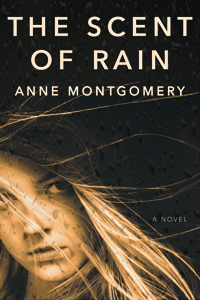
Anne Montgomery’s latest novel, The Scent of Rain, tells the story of two Arizona teenagers whose fates become intertwined. Rose flees into the mountains to escape from her abusive polygamous community where her only future is marriage to a man older than her father. Adan, whose only wish is to be reunited with his mother, is on the run from the cruelties of the foster care system. Are there any adults they can trust? Can they even trust each other?  The Scent of Rain is available at https://www.indiebound.org/book/9780996390149 and wherever books are sold.


The Book Cove Interview

My thanks to the folks at The Book Cove for interviewing me about writing and for allowing me to discuss my novel The Scent of Rain.

http://bookcovereviews.blogspot.com/2018/05/author-interview-anne-montgomery.html

the-scent-of-rain-cover-200x300-copy

Anne Montgomery’s latest novel, The Scent of Rain, tells the story of two Arizona teenagers whose fates become intertwined. Rose flees into the mountains to escape from her abusive polygamous community where her only future is marriage to a man older than her father. Adan, whose only wish is to be reunited with his mother, is on the run from the cruelties of the foster care system. Are there any adults they can trust? Can they even trust each other?  The Scent of Rain is available at https://www.indiebound.org/book/9780996390149 and wherever books are sold.

Dancing with Magic

download-1

Michael Jordan (left) and Magic Johnson, two of the biggest stars in NBA history, were known for their outrageous talents on the court and their infectious smiles.

I was a sports reporter for a good chunk of my life. Whenever I share that part of my past, the same question pops up.

“What about the locker room?” people ask breathlessly. “Did you ever go in?”

Well, of course I did. It’s not like I had a choice in the matter. I was a reporter on deadline. If I didn’t head into that messy inner sanctum, I would have returned to the newsroom empty handed. With no interviews, I have no story. With no story, I have no job.

Still, when I wormed my way into the sports world, way back in the early 1980s, the thought of a woman entering the locker room had barely registered on the general consciousness, even though Robin Herman, a 23-year-old reporter for the New York Times, and radio reporter Marcel St. Cyr both gained access following the NHL All-Star game in Montreal in 1975, a moment widely believed to be the first time women reporters shared the same rights as their male counterparts.

When I arrived in Phoenix, Arizona in 1988, a newly minted weekday sports reporter and weekend anchor at what was then KTSP-TV, the question of my entering the locker room became a story in and of itself.

Gene Stallings, the head coach of the NFL’s Cardinals, appeared stunned the first time he saw me in the locker room. Another reporter asked his thoughts on the occasion and Stallings was quoted as saying, “Well, I have four daughters.” His discomfiture was obvious.

I, however, tried to hide mine. I tended toward the back of the horde of reporters who would press up against those locker-room doors, intent on asking insightful questions before the players dashed away, most wanting nothing to do with scribes who might pillory them for their performances.

Once inside, I discovered reactions to my presence varied considerably. The Cardinals locker room had some players who seemed rather appalled that I might see them undressed.

“Just a minute, Anne!” quarterback Neil Lomax would call out. “Let us put our pants on.”

So, I would stand in the middle of that post-game chaos, and do my best not to stare, while waiting for the men who cared to cover up.

There were others who found no discomfort in being exposed. I remember needing an interview with a player who already had a gaggle of reporters surrounding him. I instructed my videographer, a tall man, to shoot up over the group. Then, microphone in hand, I edged my way through the mob and kneeled. When I looked up, I faced a naked man perched on the edge of a metal folding chair who quite comfortably conversed, despite his state of undress.

Suffice it to say, he was rather spectacular, by all accounts. Later, I would succumb to bouts of laughter, recalling the awed expressions displayed by my peers, no doubt brought on by a substantial amount of envy.

I faced a new challenge when the NBA season got underway. While NFL players are often exceedingly large people, basketball players are, almost uniformly, very tall. When interviewing them outside the locker room, I would often arrange myself on stairs, so as not to disappear from the video frame. But inside the locker room, I had no such option. Positioning oneself to interview naked basketball players took some delicacy.

One evening, when the Phoenix Suns were hosting the LA Lakers, I stood outside the locker room, this time at the front of the pack. I felt a rush of insecurity I would never have admitted to at the time. I had no wish to enter that noisy, sweaty realm filled with giant men, some not so happy with their on-court performances. Behind me, reporters on deadline fidgeted like cattle ready to explode from a corral. Then, the door burst open. Lakers star Magic Johnson grinned at us, that beatific smile that would become his trademark. Music blared from the locker room and Magic locked his eyes on mine. Suddenly, I was whirling in his arms, dancing before that throng of male reporters.

Our dance ended quickly. Magic nodded, the grin never ebbing, and walked through the crowd. For a moment, I was afraid to look, conscious that such behavior would be deemed unprofessional. I expected derision, since some of my peers were unaccepting of my presence in their club.

Someone laughed. I turned and was shocked to see a number of those hardened reporters grinning, genial expressions that dispelled an awkward moment. For the first time, I considered that they too might be uncomfortable entering the locker room.

We surged toward the doors, a bit more relaxed. And all it took was a short dance and big smile from a big man. And for that, Magic, I will always be grateful.

the scent of rain cover 200X300 copy

Anne Montgomery’s latest novel, The Scent of Rain, tells the story of two Arizona teenagers whose fates become intertwined. Rose flees into the mountains to escape from her abusive polygamous community where her only future is marriage to a man older than her father. Adan, whose only wish is to be reunited with his mother, is on the run from the cruelties of the foster care system. Are there any adults they can trust? Can they even trust each other?  The Scent of Rain is available at https://www.indiebound.org/book/9780996390149 and wherever books are sold.

It’s a plant! It’s a couch! It’s a home for stray cats!

Porch couch with cats 2

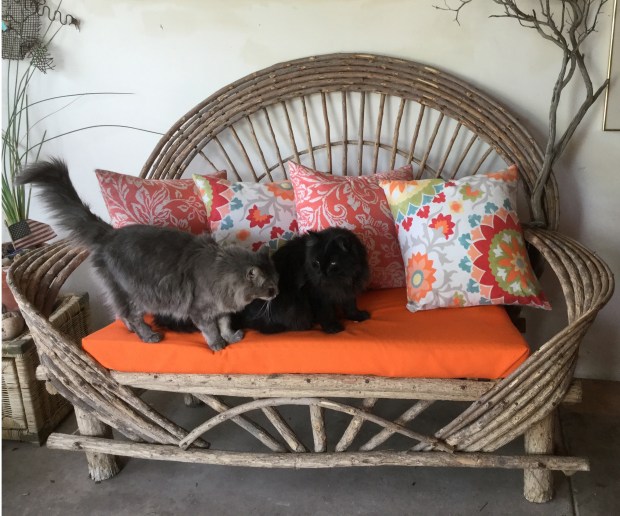
We were lucky to get my couch across the border, but now we have to wrestle the cats for a place to sit.

Concern about our nation’s borders is much in the news. What and who should be allowed to cross those frontiers is the subject of much debate and, sometimes, confusion.

A while back, I found myself in a rather awkward situation at our southern boundary, when a Border Patrol Agent peered at my truck and motioned for me and my sweetie pie to pull into the inspection area.

Up to that point, we had spent a lovely day wandering around Nogales. There was some shopping and, if memory serves, a margarita or two. (Yes, it was the middle the day, far from cocktail hour, but, as I wasn’t driving, perhaps you will forgive me that wee indiscretion.)

When we were on our way back to the border checkpoint, I asked Ryan to stop. On the side of the road, a man had assembled an array of filigreed furniture created from artfully bent tree limbs and I wanted to take a look.

I ran my hand across the curved back of a willow loveseat, marveling at the artistry. “You think it will fit in the back of the truck?” I eyed my black Ford Ranger.

Before long, my new couch had been secured in the bed, bungeed and tied. I was already thinking of brightly-colored pillows and exactly where I’d place the piece on my front porch, when the Border Patrol Agent signaled us to a holding area where we were instructed to wait.

I checked the cab, wondering if we had accidentally missed a piece of fruit or some other taboo product that was ineligible for transport into the U.S. Finding nothing, I shrugged.

Ten minutes passed before the man reappeared. “You can’t take plants across the border,” he said, staring at a clipboard.

“We don’t have any plants, do we?” Ryan looked at me.

I shook my head.

“You do. In the back of the truck.”

Ryan checked the rearview mirror. “That’s a couch,” he said politely.

“No, that’s a plant.”

Ryan stepped out of the truck and followed the man to my loveseat.

“See here?” the agent said, indicating a row of bright green leaves sprouting from a curved limb. Then he pointed at several more. “It’s a plant. And you can’t take plants across the border.”

I leaned out the window. “But it’s a couch!” I implored.

The agent walked to the cab and began writing on his clipboard. I glanced at the side mirror and noted movement by the back of the truck. A short time later, Ryan opened the driver-side door and got in.

“Plants are prohibited,” the man insisted, staring at us with a tired expression.

“But we don’t have any plants.” Ryan grinned.

The agent sighed and focused on my couch. He squinted in the afternoon sun. Then, surprisingly, he raised one hand and waved us off.

“What did you do?” I asked when we were safely past the checkpoint.

“I turned a plant into a couch.”

“Magic?”

“No. I just pulled all the green leaves off. Now it’s just a couch.”

I smiled. “You are the smartest sweetie pie ever.”

“I know.”

While our border adventure put a dent in my mid-afternoon margarita buzz, I did get to keep what I would later learn was a bent twig couch. Its home is my front porch, where it invites visitors to settle on colorful pillows, as long as they don’t mind lounging between two once-stray cats who have claimed it for their own.

the-scent-of-rain-cover-200x300-copy

Anne Montgomery’s latest novel, The Scent of Rain, tells the story of two Arizona teenagers whose fates become intertwined. Rose flees into the mountains to escape from her abusive polygamous community where her only future is marriage to a man older than her father. Adan, whose only wish is to be reunited with his mother, is on the run from the cruelties of the foster care system. Are there any adults they can trust? Can they even trust each other?  The Scent of Rain is available at https://www.indiebound.org/book/9780996390149 and wherever books are sold.


Eyebrow envy

download-4

Film siren Elizabeth Taylor had the art of the eyebrow down pat.

When I was a teen, I had rather thick eyebrows. While beauties like Elizabeth Taylor rocked alluring broad brows, the trend was starting to fade by the 70’s, so I would suffer some brow cruelty, initially afflicted upon me by a well-coiffed woman wielding a pair of weaponized tweezers.

When I was 17, I was awarded a scholarship to the John Robert Powers Modeling School, an unwanted prize my mother hoped would make me more feminine. Note that she truly wanted a girly-girl, one who would take delight in being swathed in dresses and heels. Clearly, since I favored jeans and sweatshirts and tended to clomp around like a Clydesdale on those rare occasions I was forced into pumps, I wasn’t fulfilling that dream.

The only thing I remember about my stint at modeling school was that I hated it. All these years later, I have virtually no recollection of what I did while attending those classes, the memories a black hole save for one miserable moment.

A poised, splendidly-attired woman strode to the front of the room, gliding on pointed heels, chin up, eyes wide. “Today’s lesson will be on the importance of properly maintaining one’s eyebrows,” she said prettily.

I recall being bored, longing to be outside somewhere, as she held up those silver tweezers. Then, she pointed one manicured hand my way and waved me to the front of the room. She smiled, an expression that, in hindsight, bore a sadistic hint. After ushering me to a chair, she disparaged my brows, explaining that such wanton neglect was unacceptable.

I froze as she brought the tweezers close to my right eye, and winced as she plucked. Throughout her lesson, she continued to yank at my offending brow as if to place emphasis on her syrupy words.

Looking back, I can’t reckon why I allowed her to persist. I also can’t figure why she picked me. It’s not like I had something Fridaesque sprawled across my forehead or a set of brows like Mr. Spock.

download

While it was perfectly acceptable for an alien from Vulcan to sport such expressive brows,  for a 17-year-old girl in the ’70s, not so much.

When she finished, she motioned to my sore, red brow, assured the students that the tinge would soon fade, then placed the tweezers in my hand and instructed me to pluck the other brow myself. While I was relieved the assault had stopped, the thought of using the tool on myself made me queasy. Because memories mercifully fade, I don’t recall how I ultimately handled those mismatched brows.

 Years later, while working at WROC-TV in Rochester, New York, my beleaguered brows took another hit. Since the newscast was in progress, I was the only one in the newsroom when the phone rang. The woman caller wanted to know if I would get a message to that woman sportscaster. Without revealing my identity, I assured her I would.

“Tell her that I hate her eyebrows,” she said.

What propelled a viewer to take the time to make such a call, I cannot say. What I recall was hustling to the make-up mirror and staring at my eyebrows for a very long time.

Montgomery TV .75

A viewer in Rocehster found fault with my eyebrows and called the station to complain.

I have learned that, as we age, our eyebrows naturally thin. Strangely, I am a bit wistful at what I’ve lost, especially considering that the tide has again turned. I read that fashion folks say we are currently in the decade of the eyebrow. YouTube has half-a-million tutorials on how to perfect your brows, and there are brow tattooing and transplants and tinting and threading, for those who suffer eyebrow envy.

I wonder if such procedures are painful, and then think of the woman with the tweezers and the brow beating she inflicted. I don’t think I’ve forgiven her, yet. Can you blame me?


the-scent-of-rain-cover-200x300-copy

Anne Montgomery’s latest novel, The Scent of Rain, tells the story of two Arizona teenagers whose fates become intertwined. Rose flees into the mountains to escape from her abusive polygamous community where her only future is marriage to a man older than her father. Adan, whose only wish is to be reunited with his mother, is on the run from the cruelties of the foster care system. Are there any adults they can trust? Can they even trust each other?  The Scent of Rain is available at https://www.indiebound.org/book/9780996390149 and wherever books are sold.


The damage done to the children of the FLDS will take generations to heal

colrado-city

The children of Colorado City, Arizona and the neighboring town of Hildale, Utah will long suffer the degradations of the “prophet” Warren Jeffs.

“We were told the world wanted to kill us, that people wanted to destroy us and our moral values,” Raymond Jeffs told San Angelo Standard-Times reporter Krista Johnson.

Ray Jeffs is one of the sons of Warren Jeffs, the imprisoned pedophile “prophet” of the Fundamentalist Church of Jesus Christ of Latter-Day Saints.

“I genuinely believed I would be destroyed because my dad told me that constantly,” Roy Jeffs, Ray’s brother said.

Roy continued to believe in his father until three of his sisters confessed that the man had abused them. After hearing his sibligs stories, Roy realized that he, too, had been sexually assaulted by his father.

Johnson’s comprehensive reporting on the FLDS cult provides in vivid and horrifying detail the control the elder Jeffs concerted over his people, damage that will take many years to rectify.

https://www.12news.com/article/news/nation-now/this-son-of-prophet-warren-jeffs-has-54-brothers-and-sisters-yet-the-former-flds-church-member-felt-alone/465-b6a7faa3-e9cd-453a-9e67-d3a8095efe0a

the scent of rain cover 200X300 copy

Anne Montgomery’s latest novel, The Scent of Rain, tells the story of two Arizona teenagers whose fates become intertwined. Rose flees into the mountains to escape from her abusive polygamous community where her only future is marriage to a man older than her father. Adan, whose only wish is to be reunited with his mother, is on the run from the cruelties of the foster care system. Are there any adults they can trust? Can they even trust each other?  The Scent of Rain is available at https://www.indiebound.org/book/9780996390149 and wherever books are sold.

A different viewpoint

Me Umpiring

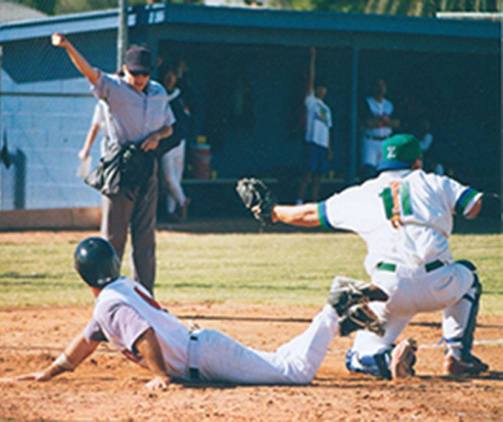
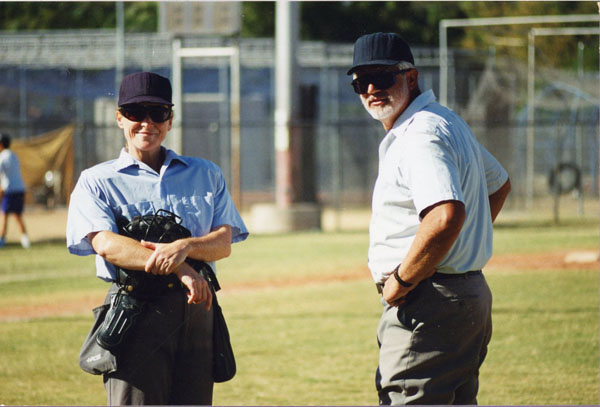
Twenty years into my officiating career, my superiors finally relented and allowed me and my peers to wear sunglasses in the field, but, by then, my eyes were already damaged.

“Your blood pressure is a little high,” the nurse said.

I smiled. “Could it be that you’re about to stick sharp objects in my eyeball while I’m awake?”

My flippant answer belied the fact that I was certainly nervous, since the surgeon would soon be probing the inner recesses of my eye which a scalpel, a tiny ultrasound wand, and an itty-bitty vacuum cleaner. That I had waited patiently for my insurance company to cover the surgery for years did not make me feel any better as they wheeled me into the operating room.

My vision had been deteriorating for a decade. I can now hear those coaches who have complained about my officiating screaming in unison: “We always knew she was blind!” Admittedly, while I could certainly see all those behemoths holding on the line and the players who felt it necessary to dump a defenseless quarterback on his butt for no reason, I did sometimes lose sight of the ball in the hazy glow of the stadium lights. Don’t ask about baseballs. I tried to always work the plate, because, in the field, those flying projectiles would periodically fade and, more times than I’d like to recall, I ended up with a bruise, replete with seams. Off the field, nighttime driving became difficult: headlights in the dark were punctuated by colorful sparks shooting in all directions.

According to the National Eye Institute, a cataract is a clouding of the lens in the eye that affects vision. By age eighty, more than half of all Americans either have a cataract or have had cataract surgery. While my parents did not undergo the operation until they were in their eighties, my turn came at the tender age of 59.

What caused me to begin losing my vision at a relatively young age? Officiating. It was once believed that sports officials should never wear sunglasses, an effort to cut down on the above mentioned, “Geez, ump, you blind?” quips.

Today, especially here in the Arizona desert, the idea seems ridiculous. Then again, you may recall coaches used to think it was a good idea to deny players water during practice. Thankfully, philosophies have changed. Sports officials now often wear sunglasses, but those years without eye protection took their toll.

While cataracts can result from certain health issues like diabetes and from tobacco and alcohol use – I’m hoping Chardonnay doesn’t count here – prolonged exposure to sunlight is definitely a cause. I probably spent the first twenty years of my officiating career squinting in the sun. And, since my eyes are a light blue, I was the poster child for cataracts.

As it turned out, the surgery was a breeze: quick and painless. As a bonus, while the surgeon was mucking about in my eye, I was treated to a color show reminiscent of an Impressionist painting. The drops used to dilate your pupil are heavy-duty and last twenty-four hours, so driving is out. After that, there’s only a little scratchiness and a regime of drops for about two weeks.

There are a few shocks when your vision adjusts. There’s a depth to objects that had been missing, the loss of which was so gradual I didn’t know it was gone until I stood before my rock box. I’m a mineral collector. Hundreds of specimens I’ve gathered since I was a child rest in a pine and glass case in my living room. Each night before going to bed, I look at the rocks. My friends know to be wary when asking about the specimens, since – given the right amount of wine – I am apt to tell you long stories about where and when I got them, whether you want to know or not. The night after my surgery, I approached the box to take my nightly look and turn off the lights. Colors leaped out, richer than I’d seen in years. Crystal facets glittered. It was like meeting old friends after a long separation.

However, my new peepers have also prominently displayed a few things I’d, quite frankly, rather not have seen. My house is not quite the paragon of cleanliness I’d always imagined.  Dust bunnies and not-so-immaculate tile floors accuse me of shirking my domestic responsibilities. But the biggest surprise came when I looked in the mirror. When did all those wrinkles appear? Like an aging on-camera news anchor shot through a gauzy filter, I’d been seeing myself through a similarly cloudy lens for years.

And here I thought I’d been aging so gracefully.


the scent of rain cover 200X300 copy

Anne Montgomery’s latest novel, The Scent of Rain, tells the story of two Arizona teenagers whose fates become intertwined. Rose flees into the mountains to escape from her abusive polygamous community where her only future is marriage to a man older than her father. Adan, whose only wish is to be reunited with his mother, is on the run from the cruelties of the foster care system. Are there any adults they can trust? Can they even trust each other?  The Scent of Rain is available at https://www.indiebound.org/book/9780996390149 and wherever books are sold.

“The characters in ‘The Scent of Rain’ added to an already amazing storyline.”


the scent of rain cover 200X300 copy

Karen Klein, a staff reviewer at YABOOKSCENTRAL, gives The Scent of Rain 5 stars across the board. http://www.yabookscentral.com/yaindie/22508-the-scent-of-rain

Anne Montgomery’s novel, The Scent of Rain, tells the story of two Arizona teenagers whose fates become intertwined. Rose flees into the mountains to escape from her abusive polygamous community where her only future is marriage to a man older than her father. Adan, whose only wish is to be reunited with his mother, is on the run from the cruelties of the foster care system. Are there any adults they can trust? Can they even trust each other?  The Scent of Rain is available at https://www.indiebound.org/book/9780996390149 and wherever books are sold.

Umpire School: A Twisted Love Story

Umpire School 1981

I attended Bill Kinnemon’s Umpire School in 1981. Major League Umpire John McSherry – who would die while working home plate in Cincinnati on opening day in 1996 – sits in the front row, third from the left. His partner in crime, minor leaguer John Higgins, sits behind him to the right. I’m in the picture, too. See if you can find me.

I entered a tiny office in St. Petersburg, Florida, signed the legal forms, and was escorted to a single-story cottage across the road that fronted the facility. Unlike all but a handful of the 105 students registered for Bill Kinnemon’s Umpire School Class of 1981, I would have my own room, since putting me in the dorm with the guys was obviously out of the question.

I plumped the thin pillow, leaned back on the cot, and scanned the schedule that would direct my life for the next five weeks. Baseball rules classes, on-field clinics, and scrimmages in which students would participate as both umpires and players. My stomach twisted at the thought of anyone seeing me in the field. I’d never played baseball or softball. I could already hear the “she throws like a girl” jeering and wondered if there was any way I could actually avoid having to throw a baseball.

The next morning, we campers lined up in rows. “He’s out!” I called, straightening to my full height, bringing my left arm horizontally across my chest and my right up and bent at the elbow. Both hands were clenched in tight fists. Out calls emanating from scores of wannabe umpires echoed across the dusty field.

“Jee…sus Christ! That was pathetic!” senior instructor Joe Brinkman screamed, grabbing the bill of his cap and slapping it on his leg. “Sound like you mean it!”

Furtively eyeing one-another, we bent over in unison again, hands splayed just above our knees, staring at an imaginary base, pretending the runner and throw were arriving almost simultaneously.

“He’s out!” I joined the others, glad I didn’t have a high voice. I might have been able to blend in, had it not been for the long, auburn ponytail. Cutting my hair short might have been prudent.

Major League Umpire John McSherry, 375 pounds, walked unsteadily through the lines of aspiring umpires, saying nothing, looking decidedly uncomfortable: the result of some especially painful dental work and a night of bubbly self-medication.

“He’s out! He’s out! He’s out!” We screamed over and over, working on our posture and intonation. McSherry wiped a hand across his face: the February Florida heat causing spots of perspiration on his red cheeks. As I bent down in preparation for another out call, he passed by, without even a glance.

It was not until later that night, when my name was announced during dinner, that McSherry sat up and stared. “Anne? Anne? There’s a girl here? You’re kidding,” he said, turning to the Minor League instructor who stood by his side. John Higgins pointed me out. McSherry looked over and waved his hand in the air as if the whole idea was simply too ridiculous to consider.

The days were grueling: long and hot, on the field and in the classroom. I worked hard to be just one of the boys.

One of the tenants of umpire school was that all campers should have an equal opportunity to be treated badly. The logic being that umpires will, by nature, be victims of disdain when working games, and if you can’t handle the abuse in school, you will never survive on the field.

My big moment came one afternoon. Campers were sometimes picked to perform certain special tasks, and, now, it was my turn.

“Butler!” McSherry called out, making sure my fellow fledgling umpires heard. “Bring the balls up to field two for this afternoon’s drills.”

“Yes, sir!” I said, chin up in my best imitation of an Army recruit.

I’d watched him berate campers, throwing his hat, and tramping around the dusty diamond like a bull with hemorrhoids. He’d go nose to nose with these grown men and they would shrivel. In fact, 12 campers would simply grab their gear and quit, walking away rather than endure the punishment.

Fifteen minutes prior to the afternoon drill session, I stood at the door of the equipment shed. Higgins, who everyone called Higgs and who seemed to be McSherry’s Sancho Panza, smiled as he leaned up against the wall, arms folded across his chest.

“I’m here to get the balls for field two,” I said. Higgs was cute with bright blue eyes.

“Don’t worry about it.” He smiled. “They’re already up on the field.”

“Really? But John insisted that I bring them up.”

“Nope. You’re good.”

I was one of the first people at the field, so I waited and watched as the group assembled, the last few stragglers running full speed up the dirt road, because being late was never, ever acceptable.

“OK, we’ll be doing first base drills,” McSherry said. “It’s about listening to the ball hit the glove and seeing the foot on the bag. Listen and look. That’s what you’re going to do. Got it?”

“Yes, sir!” the group called out as one.

Then McSherry paused rather dramatically. “Who’s got the balls?” Silence.
“Who’s got the balls?” he yelled louder. “Who was supposed to … Butler! Where are the balls?”

“I … I went to get them and Higgs …”

“Where are the fucking balls?”

I stared at Higgs. He avoided my gaze. “I don’t know,” he said. “I saw them in the shed.”

McSherry squinted at me. “Get ‘em, Butler! And while you’re gone, your friends here will run laps around the field.”

My eyes grew wide.

“Start now, gentlemen! Run! Run!

I bolted across the field and down the hill faster than I’d ever moved in my life. But I did not get away quickly enough to avoid hearing the curses that were being hurled my way.

When umpire school finally came to an end after five long weeks, it was, strangely, hard to leave. It was as if we all suffered from Stockholm Syndrome, where we had learned to love our captors and wished to emulate them.

Like most of the other campers, I flirted with those professional baseball dreams, even though a job would have meant life in the low minors, shuffling from tiny town to tiny town, little pay, low budget motels, and the built-in cruelties umpires endure daily.

When it came to picking the campers who would be recommended for that life, most of the school staff members decided it would not be a good idea to send a woman up the line. It was 1981, after all. It’s interesting, and came as a bit of a surprise, that I had a friend in John McSherry. I would find out years later that he was the only one who rated me in the top 15. But with most of the other staffers positioning me much lower on the list, my eventual ranking was 32. The top 30 candidates were certified for duty in Minor League instructional camps. I was told that McSherry thought I had good officiating instincts.

Did I deserve a job? Probably not. About ten days into camp, I injured a hamstring, which limited my mobility. And, in all honesty, I have always been a horrible runner, which just about anyone who’s ever officiated with me can attest. Apparently, one day my awkward stride caused McSherry to growl. “Jesus Christ, Higgs! She runs worse than I do!”

How do I know this? Five years after I attended umpire school, I ran into John Higgins. Then, I married him and John McSherry was there with us to celebrate.

the scent of rain cover 200X300 copy

Anne Butler Montgomery’s novel, The Scent of Rain, tells the story of two Arizona teenagers whose fates become intertwined. Rose flees into the mountains to escape from her abusive polygamous community where her only future is marriage to a man older than her father. Adan, whose only wish is to be reunited with his mother, is on the run from the cruelties of the foster care system. Are there any adults they can trust? Can they even trust each other?  The Scent of Rain is available at https://www.indiebound.org/book/9780996390149 and wherever books are sold.


A question of time

download-3

The recent passing of theoretical physicist Stephen Hawking, who famously wrote A Brief History of Time, had me thinking about, well … time.

My students often complain when, upon being late to class, I am undeterred from marking them tardy.

“But I’m only a few minutes late,” they plead.

Which is all I need to hoist myself onto my soapbox. “When I was in television, I had to be in my seat when the red camera light blinked on. I couldn’t be one second late. And when I referee a football game, what if I’m late while the players, coaches, and fans are all waiting for kickoff? What if my students arrive at my classroom and I’m not there to let them in?

My young charges roll their eyes.

“You have to be on time,” I say. “If you’re the worker who’s always punctual, no one wants to fire you. It shows you care about being professional and not imposing on your co-workers.”

Here is where I admit that my nightmares consist mainly of me unsuccessfully trying to get somewhere on time. Whether it be a TV set, a classroom, a ballgame, or an airport, the scenario is always the same. I am late, horrified at the prospect, and no matter how hard I try, I just can’t get where I need to be on time.

Just a few days ago, I was revisited by the terrors of being tardy. My student reporters were in a contest with a deadline. We were six minutes out. I found myself repeatedly checking the second hand on the classroom clock … tick, tick, tick … as we tried to rectify the software glitch that was holding up delivery of our final product. I flashed back to those days when I had to run onto the news set, heart racing, and slide into my chair while pasting on a smile.

My students made their deadline, and the flashback gave me pause.

I will retire from teaching in two years, and I’d like to think those deadline dreams will diminish. But, it seems, I might have another time-related problem.

“I worry about you when you retire,” my long-time beau has said more than once.

“Why, my sweetie pie?”

“I’m afraid you will not have enough to do.”

I consider his concern.

“You don’t know how to relax,” he says. “You always have to be busy.”

“I will have plenty to do in retirement,” I say. “No worries.”

But he doesn’t look convinced.

While I do plan, upon retirement, to hammer to death the obnoxious alarm clock that has pestered me for decades, I’m not really sure just how I’ll respond to a world with far fewer deadlines.

As Hawking famously said, “Only time (whatever that may be) will tell.”


the scent of rain cover 200X300 copy

Anne Montgomery’s novel, The Scent of Rain, tells the story of two Arizona teenagers whose fates become intertwined. Rose flees into the mountains to escape from her abusive polygamous community where her only future is marriage to a man older than her father. Adan, whose only wish is to be reunited with his mother, is on the run from the cruelties of the foster care system. Are there any adults they can trust? Can they even trust each other?  The Scent of Rain is available at https://www.indiebound.org/book/9780996390149 and wherever books are sold.