Good news for sports officials…for a change

I spent 25 years umpiring amateur baseball, and it wasn’t always easy to smile.

I am an avid consumer of the news. As a former reporter in both television and print, I just can’t help myself. As you might expect, lately this predilection has me looking for antidepressants. It’s almost impossible to open the paper or surf the Internet without getting upset with all the craziness.

But then, two recent stories had me almost giddy with joy. Both articles had to do with sports officiating, a subject dear to me, something I’ve mentioned on many occasions. You see, I spent 40 years of my life calling games, mostly football and baseball, but also ice hockey, soccer, and basketball. Officiating was such a big part of my world, that now, three years after I hung up my white hat and whistle, my gear still hangs in my closet. The same with my baseball uniform, even though I haven’t donned those shin guards or chest protector in about ten years. Somehow, I just can’t part with them.

Despite no longer being an arbiter, I pay attention to news concerning my officiating brethren. Many people understand that this avocation comes with certain conditions. First, nobody likes us. Ever! They might pretend, especially after a call goes their way, but as soon as they think we’ve erred, their real feelings spill onto the field. That a thick skin is required in officiating is obvious. And if one seeks adulation and attaboys then they need to pick a different job, because rarely does anyone slap an ump on the back and say, “Great game, Blue!”

Major League Baseball’s Pat Hoberg has the best record as a ball-and-strike umpire so far this year.

I mention this because of a recent headline that had me falling out of my chair: “Why you’ve never heard of MLB’s most accurate ump.” The USA Today article discussed 35-year-old Pat Hoberg, the highest rated home-plate umpire in Major League Baseball. According to Umpire Scorecards, Hoberg has a 96.4% accuracy rate on balls and strikes. Imagine that! While many fans work hard to denigrate the “men in blue”, Umpire Scorecards is showing just how good some of them are. In fact, four other Major League Umpires ranked right up there with Hoberg, so maybe it’s time we said something like, you know, “Attaboy, guys!

France’s Stéphanie Frappart is one of three women assigned to referee in this years World Cup.

I know praising an umpire feels awkward on the tongue, but even a small compliment might go a long way toward alleviating the problems caused by the hordes of officials now leaving the game. So, maybe give it a try.

The second story concerned soccer. FIFA announced the names of 36 referees that will be working this year’s World Cup, that begins November 21 in Qatar. For the first time ever, three woman have been picked to call games. Stunning, I know. Even though women have been playing soccer probably as long as men, the idea that a woman could officiate a big game—as surely all World Cup contests are—didn’t strike the FIFA bosses until, well, now.

So let’s hear it for the men and women who make it possible for you to enjoy the games you love. Because, remember, without the ref it’s only recess.

The past and present collide when a tenacious reporter seeks information on an eleventh century magician…and uncovers more than she bargained for.

WOLF CATCHER

Anne Montgomery

Historical Fiction/Suspense

TouchPoint Press

February 2, 2022

In 1939, archeologists uncovered a tomb at the Northern Arizona site called Ridge Ruin. The man, bedecked in fine turquoise jewelry and intricate bead work, was surrounded by wooden swords with handles carved into animal hooves and human hands. The Hopi workers stepped back from the grave, knowing what the Moochiwimi sticks meant. This man, buried nine hundred years earlier, was a magician.

Former television journalist Kate Butler hangs on to her investigative reporting career by writing freelance magazine articles. Her research on The Magician shows he bore some European facial characteristics and physical qualities that made him different from the people who buried him. Her quest to discover The Magician’s origin carries her back to a time when the high desert world was shattered by the birth of a volcano and into the present-day dangers of archeological looting where black market sales of antiquities can lead to murder.

REVIEW COPIES OF WOLF CATCHER AVAILABLE UPON REQUEST

Review/interview requests: media@touchpointpress.com

Available where you buy books.

No internet! What’s a girl to do?

No internet? Yikes! How will I survive?

Recently, my internet’s been finicky. It went on and off several times each day. I considered that, since it’s summertime, perhaps lots of people were home sucking up those internet resources.

But then the internet went out completely. After a few hours, I called my provider. I always get a tickle out of the recorded message telling me that, if I’m having problems, I should to go online and check the company’s website.

“But I have no internet!” I want to scream at the robotic voice that keeps steering me away from contact with a real human.

After being disconnected for no apparent reason—maybe I said something to offend the AI operator—I tried again.

“Our wait times are currently very long,” the voice explained.

I didn’t hang up.

“Just a reminder, you can go to our website…”

I wanted to throw the phone, but held my ground. After a about ten seconds of silence, the voice said, “You’re still there.”

I jumped! It sounded like an accusation.

“Let me get someone to assist you.”

I let out a breath. After a conversation with a real person, I learned that, indeed, the service was down all over my neighborhood. They hoped all would be well at about 6:00 PM that evening.

But twenty-four hours later, I still no access to the Web. After standing around with my hands in my pockets wondering what to do, I tried to remember what life was like before we all became addicted to e-mail and social media and instant messaging. And I considered the number of times each day I would run to check if I’d missed something vital.

Ah…good old snail mail. Remember how exciting it was to get something with your name on it?

You know…like some huge publisher wants my newest book.

Or Netflix is interested in producing an eight-part series on my fabulous life.

Or some impressive university wants to bestow upon me an honorary doctorate for my literary brilliance.

Then, I had to admit that generally I find nothing horribly important in my daily correspondences. And yet, I can’t help myself. I remember a similar feeling each day when I was a kid anticipating the mail, the kind with paper and ink and stamps. (For you youngsters, Google it.) But back then we understood the mailman only arrived once a day, a vast difference from our current 24-hour model, that has many of us desperately seeking…I don’t know…some kind of validation, maybe.

I checked the mail on my phone—not so easy since I have four accounts—and confirmed just how unimportant I am. I tried to deal with my social media accounts, but dislike working on the tiny screen, so I put the phone down.

It was in the evening that the horrible reality hit. No streaming! There we were in Season 6 of Peaky Blinders with no access. We were forced to try TV from the antennae, compelled to sit through endless commercials. I wanted to weep.

Okay! I feel better now.

Yep, I’m a spoiled brat.

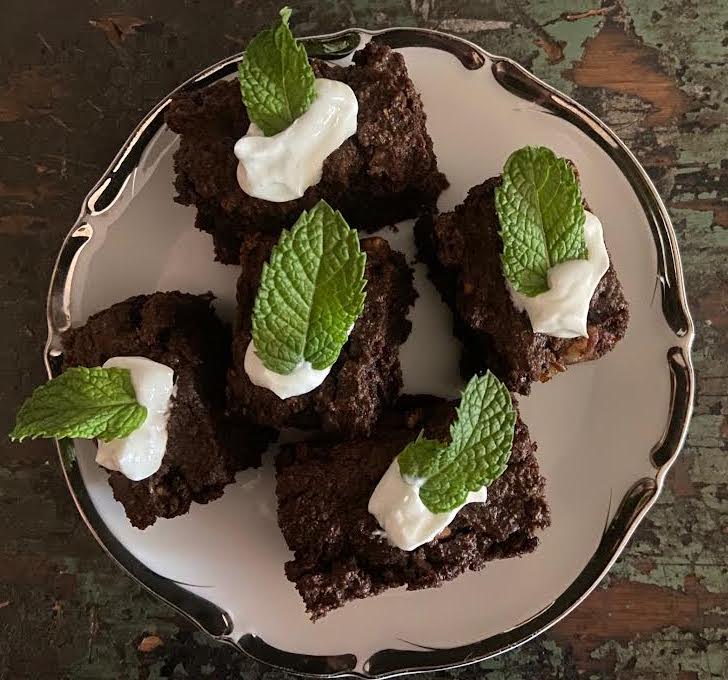
Later, I considered what I might do instead of “working” on line. I closed my eyes and considered the things I do for joy: bake brownies, read a book, call a friend, play my guitar, plan a nice meal, see what’s still eatable in the garden, go for a swim.

When I opened my eyes, I was embarrassed, because I realized what I needed to do: Be grateful for what I do have.

Still, right now, the brownies are winning. So, pardon me while I go mix up a batch.

This image has an empty alt attribute; its file name is wolf-catcher-cover-with-gray-frame.jpg

The past and present collide when a tenacious reporter seeks information on an eleventh century magician…and uncovers more than she bargained for.

WOLF CATCHER

Anne Montgomery

Historical Fiction/Suspense

TouchPoint Press

February 2, 2022

In 1939, archeologists uncovered a tomb at the Northern Arizona site called Ridge Ruin. The man, bedecked in fine turquoise jewelry and intricate bead work, was surrounded by wooden swords with handles carved into animal hooves and human hands. The Hopi workers stepped back from the grave, knowing what the Moochiwimi sticks meant. This man, buried nine hundred years earlier, was a magician.

Former television journalist Kate Butler hangs on to her investigative reporting career by writing freelance magazine articles. Her research on The Magician shows he bore some European facial characteristics and physical qualities that made him different from the people who buried him. Her quest to discover The Magician’s origin carries her back to a time when the high desert world was shattered by the birth of a volcano and into the present-day dangers of archeological looting where black market sales of antiquities can lead to murder.

REVIEW COPIES OF WOLF CATCHER AVAILABLE UPON REQUEST

Review/interview requests: media@touchpointpress.com

Available where you buy books

Me and Mrs. Hamilton deux

Eliza Hamilton was a fascinating person and I hope, wherever she is, she didn’t mind my portrayal of her.

Several months ago, my soon-to-be 97-year-old mom announced she was writing a short play to be presented at the independent living facility in which she lives outside of Denver, part of a series of programs in honor of July 4th. My mother—an author of several books of historical fiction— had planned a talk on My Dear Hamilton, a novel based on the life of Eliza Schuyler, who would become the wife of Founding Father Alexander Hamilton.

But then she thought, “Wouldn’t it be nice if Eliza could drop by?”

At that point, Mary Anne called and informed me that I was to play Mrs. Hamilton in her old age. Note here that my mother doesn’t actually asked. It’s more of a royal decree. (If you knew her, you’d understand.)

So, I spent every day rehearsing my lines and helping her modify the script. She worked on a costume and a set, which involved family heirlooms. She made posters and sent out invitations. She even catered a post-performance meal, where she promised me a cold glass of wine…if I did a good job.

After a lot of practice, my soon-to-be 97-year-old mom held up her end. Afterward, as you might expect, she needed a nap.

I flew from Phoenix to Denver and spent a few days living at my mother’s facility, an eye opening-experience that gave me a solid look at what it means to be elderly. Dining with people, some of whom were approaching 100 years old, will do that to you.

Now, you might think me mean, but my mother had never been in a play, so I admit I worked her hard.

“Slow down, Mom! You’re saying your lines too fast!”

“Look up at the audience!”

“Cross the word out, if you can’t pronounce it right!”

“We need to do it again, Mom!”

“But I’m tired!”

“Remember, this was your idea.”

“Okay.”

Both my mom and I were glad that we got through the performance without any major glitches and without killing each other.

When we weren’t practicing, I’d find her in the hallways of the facility. “My daughter keeps telling me what to do!” she complained to anyone who wandered by. Then came the knowing nods from the old folks, sympathizing with my mother’s plight.

The day of the performance, we were greeted by a packed house, which I was later told was far from the norm. Not surprising, perhaps, since my mother spent most of her working life in public relations and marketing.

Now, I can’t say it went off perfectly. But, when it was over, the inmates…um….residents seemed delighted with the show.

“Who knew you had any talent?” my mother blurted out at our post-performance party.

That, in my mother’s world, is a huge compliment.

So…I just smiled.

This image has an empty alt attribute; its file name is wolf-catcher-cover-with-gray-frame.jpg

The past and present collide when a tenacious reporter seeks information on an eleventh century magician…and uncovers more than she bargained for.

WOLF CATCHER

Anne Montgomery

Historical Fiction/Suspense

TouchPoint Press

February 2, 2022

In 1939, archeologists uncovered a tomb at the Northern Arizona site called Ridge Ruin. The man, bedecked in fine turquoise jewelry and intricate bead work, was surrounded by wooden swords with handles carved into animal hooves and human hands. The Hopi workers stepped back from the grave, knowing what the Moochiwimi sticks meant. This man, buried nine hundred years earlier, was a magician.

Former television journalist Kate Butler hangs on to her investigative reporting career by writing freelance magazine articles. Her research on The Magician shows he bore some European facial characteristics and physical qualities that made him different from the people who buried him. Her quest to discover The Magician’s origin carries her back to a time when the high desert world was shattered by the birth of a volcano and into the present-day dangers of archeological looting where black market sales of antiquities can lead to murder.

REVIEW COPIES OF WOLF CATCHER AVAILABLE UPON REQUEST

Review/interview requests: media@touchpointpress.com

Available where you buy books

4 Stars for Wild Horses on the Salt

“This is a moving story about abuse, recovery and the healing power of nature, and it is a love story to the deserts, forests, rivers and wildlife of Arizona.”

Steph Warren

Bookshine and Readbows Blog

Read the rest of Steph’s review on Goodreads:

https://www.goodreads.com/review/show?id=4191356231

WILD HORSES ON THE SALT

Contemporary Fiction

  Publisher: Liaison: A Next Chapter Imprint

   Kindle, Paperback, Large Print, and Audio Editions

Get your copy here or wherever you buy books.

Rebecca Quinn escapes her controlling husband and, with nowhere else to go, hops the red-eye to Arizona. There, Gaby Strand – her aunt’s college roommate – gives her shelter at the Salt River Inn, a 1930’s guesthouse located in the wildly beautiful Tonto National Forest. Becca struggles with post-traumatic stress, but is enthralled by the splendor and fragility of the Sonoran Desert. The once aspiring artist meets Noah Tanner, a cattle rancher and beekeeper, Oscar Billingsley, a retired psychiatrist and avid birder, and a blacksmith named Walt. Thanks to her new friends and a small band of wild horses, Becca adjusts to life in the desert and rekindles her love of art. Then, Becca’s husband tracks her down, forcing her to summon all her strength. But can she finally stop running away? 

REVIEWS FOR WILD HORSES ON THE SALT

Midwest Book Review

“Wild Horses On The Salt showcases author Anne Montgomery’s genuine flair for originality and the kind of narrative driven and dramatic storytelling that is the hallmark of an award-worthy novel.”

Margaret Millmore

Author

“Ms. Montgomery weaves an intricate parallel tale, portraying the struggles of one woman, and that of a lost wild stallion—both fighting to rise above the cruelty of an unkind world. Her unique writing style, incredible knowledge of her subject matter, combined with her ability to create vivid scenes of the East Valley, and particularly the Tonto National Forest and Salt River area in Arizona, takes the reader on a fascinating (and educational) journey.”

Erin Kosio

Amazon

“A beautiful yet tragic story of healing.”

Sharon Grow

Goodreads

“The story of the wild horses of the Salt is expertly interwoven into this exciting and thoughtful story of a wounded soul determined to regain her life and find genuine love.”

Anne R. Marshall

Amazon

“It is a romance, not just between men and woman, but between people and a place. Montgomery captured it and accurately, too. This was an engrossing read, despite the abuse. I recommend it.”

Rose Aurburn-Writing and Reviews

“A beautifully considered, sumptuous novel from a skilled storyteller-highly recommended.”

Anu Menon

Thought is Free Book Blog

“Fantastic page-turner. Fast-paced, adventurous, and thoughtful story of the survival of Becca’s wounded soul. Her struggles, experiences, passions, fears, healing, and the truth of her chilly silence are wonderfully portrayed.”

Healing minerals? Maybe, maybe not

If rocks could heal, I’m guessing I would never have been sick a day in my life.

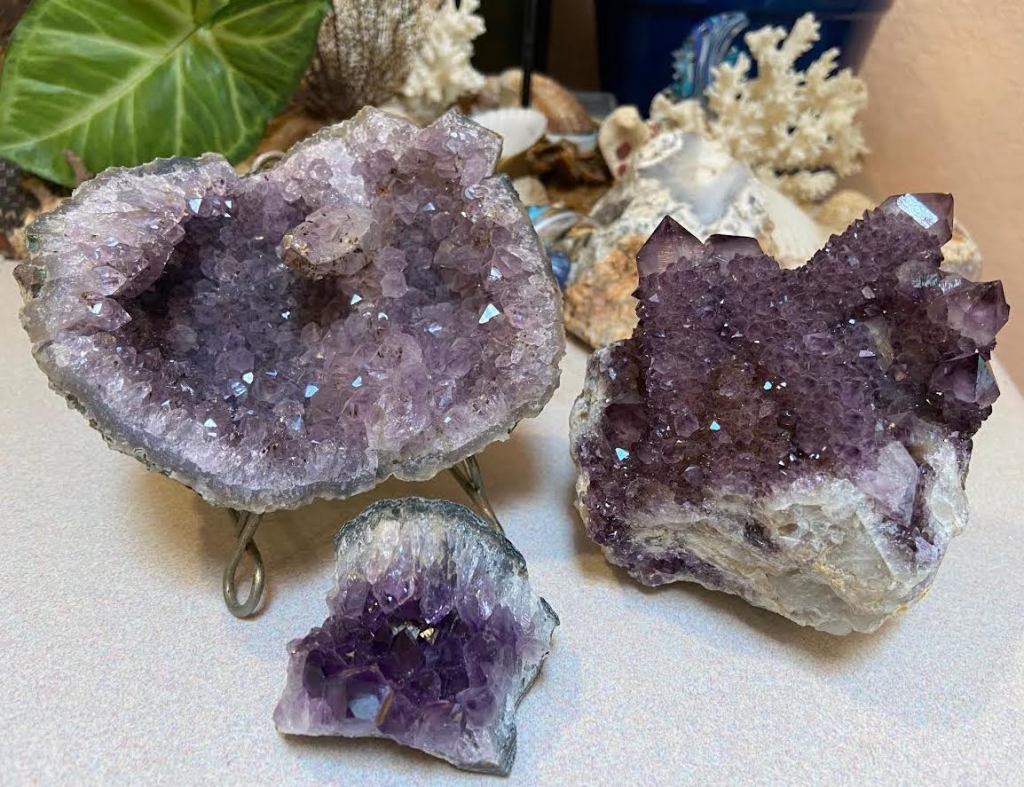
As I life-long rock collector, I have periodically run into folks who get all atwitter when they see my collection. Yes, my specimens are beautiful, but that’s not what they care about. They instantly begin talking about all the healing properties said rocks have. At which point, I’m not sure what to say. (A rare occurrence for me, but there you have it.)

Now, to me, my rocks are glorious bits of natural art, one-of-a-kind pieces in every color and shape you can imagine. However, in the interest of fairness, I popped on my reporter’s cap and did a bit of sleuthing, a dive that took me to one site espousing the following: “Crystals were the source of power in the ancient civilizations of Lamuria and Atlantis. The Altanteans developed patterns that created numerous forcefields of energy to serve a wide spectrum of needs. These people misused among others the crystal energy and it caused the disappearance of Atlantis.”

Um…I was a history teacher for a brief spell, so you can see why I might question such a goofy statement. Still, there’s no doubt that humans have been attracted to bright, shiny rocks probably since we lived in caves. The dazzling colors certainly excited early man, but the seemingly unnatural crystal forms probably gave people the idea that certain specimens were otherworldly. Today, all of those geometric shapes—tetragonal, orthorhombic, hexagonal pyramids, to name a few—sometimes look manmade, but they’re not.

The Greeks believed that amethyst could prevent drunkenness. In the interest of science, I tested that hypothesis. Nope!

According to the websites I visited, humans have, for millennia, believed that certain minerals have specific qualities that can improve both one’s physical and mental health. Jasper, for example, is said to eliminate stress. Bloodstone will improve circulation. Citrine will help your concentration and enhance creativity. Turquoise will soothe you when you’re feeling down. Tiger’s eye will provide motivation and lesson fear. And, the big gun, quartz crystal, is said to be a master healer.

Another popular mineral is amethyst. With its striking purple crystals, it’s considered the most powerful and protective of all stones. The name comes from the Greek “amethystos,” which means sober. Grecians believed the mineral could prevent drunkenness, among other things. However, I know from, um…personal research…this is not the case.

But before we start snickering at those crystal-healing believers, consider that WebMD—my go-to site when I have the sniffles—has a page devoted to crystals as medicine. And the folks there admit that, yes, it seems there is some truth to the idea that minerals can make people feel better. While there’s no scientific evidence proving that a hunk of crystal might heal your aching bones, neuroscientists and psychologists believe cuddling a rock just might lift your spirits.

Nothing makes me happier than finding a beautiful rock in the earth.

“The placebo effect is almost certainly at play,” said psychologist Stuart Vyse, author of Believing in Magic: The Psychology of Superstition. “And the mere act of doing something to take control of your destiny can often boost hope, brighten mood, and improve your ability to cope with a chronic condition. There is no scientific evidence to support the medical effectiveness of any of these remedies. But there is the possibility that they might have an indirect psychological benefit.”

And here is where I must admit that the alternative medicine folks might be right, because I can’t think of anything more uplifting than digging a beautiful rock from the earth. The feeling of joy is palpable.

So, perhaps, I shouldn’t throw stones. (Couldn’t help myself there.)

This image has an empty alt attribute; its file name is wolf-catcher-cover-with-gray-frame.jpg


The past and present collide when a tenacious reporter seeks information on an eleventh century magician…and uncovers more than she bargained for.

WOLF CATCHER

Anne Montgomery

Historical Fiction/Suspense

TouchPoint Press

February 2, 2022

In 1939, archeologists uncovered a tomb at the Northern Arizona site called Ridge Ruin. The man, bedecked in fine turquoise jewelry and intricate bead work, was surrounded by wooden swords with handles carved into animal hooves and human hands. The Hopi workers stepped back from the grave, knowing what the Moochiwimi sticks meant. This man, buried nine hundred years earlier, was a magician.

Former television journalist Kate Butler hangs on to her investigative reporting career by writing freelance magazine articles. Her research on The Magician shows he bore some European facial characteristics and physical qualities that made him different from the people who buried him. Her quest to discover The Magician’s origin carries her back to a time when the high desert world was shattered by the birth of a volcano and into the present-day dangers of archeological looting where black market sales of antiquities can lead to murder.

REVIEW COPIES OF WOLF CATCHER AVAILABLE UPON REQUEST

Review/interview requests: media@touchpointpress.com

Available where you buy books.

Who knew my dopey dog was so smart?

Beware if you come through the front door. You might end up with wet shoes.

We have always considered our dog Bella to be one of the dopier creatures in our pet parade. A blue-eyed cattle-dog mix, Bella came from a rescue organization when she was about one-and-a-half. The only background story was that she had been bathed and then dumped soaking wet on someone’s porch.

When the shelter folks chose us to take her in, a process that felt like we were adopting a child, we were thrilled. Even after we discovered that she had what is referred to in veterinary terms as a happy-water problem. (Okay. That’s not true. That’s what we call it.) The problem occurs when someone comes in the front door and Bella gets so excited that she pees on their shoes in delight.

Like the cats clawing the furniture—as I’ve said before, you can either love your cats or your belongings, not both—we decided we could live with Bella’s predilection.

What conspiracies might Bella be hatching with her dolly Mr. Avocado?

Lately, though, our old girl started having what’s referred to as OLDB: Old Lady Dog Bladder. (Again, this is our term, so don’t blame the vet.) We had her checked out and the doc said nothing was amiss. We were offered the chance to medicate her or try doggy diapers, but decided we’d rather work with Bella. So, we started treating her like a puppy. Paying attention to her more, praising her for telling us that she wanted to go outside, and giving her a cookie when she peed in the yard. “You are such a good girl!” we’d say. And she’d look up at us adoringly.

Bella and her buddy Sadie, who has already crossed over the Rainbow Bridge.

But then we noticed something odd. This dog—who we often joked at Christmastime should be gifted with a few more brain cells—started scamming us. She’d excitedly dance around as if she needed to go out. Then she’d pretend to pee and come running for a cookie.

Hummm? I didn’t know whether to be angry or sign her up for doggy MENSA. It made me wonder what else might be knocking around in her canine brain. Does she know more words than walk and cookie? Is she secretly plotting with the cats to take over the house? Or maybe she’s working undercover and the dopiness is all an act.

I do look at her a bit differently now. What’s really behind that big doggy smile?

I doubt we’ll ever know.

This image has an empty alt attribute; its file name is wolf-catcher-cover-with-gray-frame.jpg

The past and present collide when a tenacious reporter seeks information on an eleventh century magician…and uncovers more than she bargained for.

WOLF CATCHER

Anne Montgomery

Historical Fiction/Suspense

TouchPoint Press

February 2, 2022

In 1939, archeologists uncovered a tomb at the Northern Arizona site called Ridge Ruin. The man, bedecked in fine turquoise jewelry and intricate bead work, was surrounded by wooden swords with handles carved into animal hooves and human hands. The Hopi workers stepped back from the grave, knowing what the Moochiwimi sticks meant. This man, buried nine hundred years earlier, was a magician.

Former television journalist Kate Butler hangs on to her investigative reporting career by writing freelance magazine articles. Her research on The Magician shows he bore some European facial characteristics and physical qualities that made him different from the people who buried him. Her quest to discover The Magician’s origin carries her back to a time when the high desert world was shattered by the birth of a volcano and into the present-day dangers of archeological looting where black market sales of antiquities can lead to murder.

REVIEW COPIES OF WOLF CATCHER AVAILABLE UPON REQUEST

Review/interview requests: media@touchpointpress.com

Available where you buy books

Things I don’t understand

Sometimes, life can be rather confusing.

The older I get, the less I understand things. I’m not talking here about things I never understood, like chemistry and algebra. I’m wondering, for example, about the sign I passed the other day, one advertising a “dry bar.” Confusing, yes? How can a bar be dry? By definition a bar serves alcohol, which makes it decidedly wet. As a girl who went to college in a dry county, I do know the difference.

It seems a dry bar in today’s parlance is a place where one goes to get one’s hair “blown out.” Clients can choose a bouncy blowout, a wavy blow dry, a natural blowout and even a 90’s blowout, the ad for which proclaims, “Nineties hair is back in a big way — we’re talkin’ a gravity-defying fluffy blowout. Voluminous, low maintenance and low-key sexy…”

As one who lived through the 90s, I’m not sure a return to those colossal coiffures is a good idea. I’m also unsure about the advertised Brazilian blowout, which brings to mind a Brazilian wax, something I’ve worked hard to forget.

It appears that 90’s hairstyles are once again hot. Does anyone think that’s a good idea?

Then there’s the Nail Supply store I saw the other day. The place seemed large and I wondered just how much space might be needed for some nail clippers, emery boards, and an assortment of nail polish. Then I thought I might have it wrong. Maybe they were selling nails: framing nails, box nails, sinker nails, masonry nails. Those types of things. But again, the size of the store seemed massive if the only thing in the inventory was nails. Very curious.

How is it even remotely possible that a paper bag would prevent a wine bottle from breaking if you dropped it?

A little later, I walked into my favorite store: Total Wine. For those who live in parts of the country without this fabulous retailer, it’s a giant warehouse full of pretty much nothing but booze. Wine, liquor, and beer from every corner of the world. There’s also a smattering of eatables like cheeses and chocolate and upscale munchies, which makes the place the perfect go-to spot in the event of a zombie apocalypse. I plan to be inside when they lock those doors on such an occasion. And yet, I noticed something the other day that made me wonder. The clerk at the counter reached for a narrow, brown-paper sack in which she intended to place my wine bottle.

“It’s in case you drop the plastic bag,” she explained.

“The bottle will still smash anyway,” I said, pointing out the obvious.

I looked into the practice later and discovered that originally the bag was to give the buyer some privacy, the idea being that maybe they didn’t want anyone to know they were buying alcohol. Of course, I’m guessing most everyone knew what was in the sack, so the practice seems a bit silly. And, of course, the protective effects against broken glass are non-existent.

QR codes look a bit like Rorschach tests. I don’t know about you, but if I look at them too long, I get a headache.

Then there are QR codes. Now don’t jump on your soapbox and call me old technophobe. I know that one takes a picture of those weird, black and white, Rorschach-test looking things, in order to be linked with something online. I get the concept. I just can’t figure out how anyone came up with the idea. As I generally do when confused, I researched the issue. Turns out a Japanese engineer named Masahiro Hara invented the QR code back in 1994, in an effort to come up with a better way to track automotive parts. His idea was an extension of the barcode, only with a QR code information can be stored both vertically and horizontally, which is pretty damned brilliant. Methinks Mr. Hara probably never had a problem with chemistry or algebra.

I guess new things will always keep popping up. And maybe that’s for the best. It keeps us on our toes, don’t you think?

This image has an empty alt attribute; its file name is wolf-catcher-cover-with-gray-frame.jpg


The past and present collide when a tenacious reporter seeks information on an eleventh century magician…and uncovers more than she bargained for.

WOLF CATCHER

Anne Montgomery

Historical Fiction/Suspense

TouchPoint Press

February 2, 2022

In 1939, archeologists uncovered a tomb at the Northern Arizona site called Ridge Ruin. The man, bedecked in fine turquoise jewelry and intricate bead work, was surrounded by wooden swords with handles carved into animal hooves and human hands. The Hopi workers stepped back from the grave, knowing what the Moochiwimi sticks meant. This man, buried nine hundred years earlier, was a magician.

Former television journalist Kate Butler hangs on to her investigative reporting career by writing freelance magazine articles. Her research on The Magician shows he bore some European facial characteristics and physical qualities that made him different from the people who buried him. Her quest to discover The Magician’s origin carries her back to a time when the high desert world was shattered by the birth of a volcano and into the present-day dangers of archeological looting where black market sales of antiquities can lead to murder.

REVIEW COPIES OF WOLF CATCHER AVAILABLE UPON REQUEST

Review/interview requests: media@touchpointpress.com

Available where you buy books

The road to a happy retirement can be slippery

I used to have a lot of things to do, which is why retirement has been a bit difficult for me

Like most people, I’ve spent my life running from one responsibility to another. I was a teacher for 20 years, this following about 15 as a reporter in both television and print. All along the way, I was an amateur sports official, an avocation I practiced for four decades. And I’m a foster mom and an author. On top of all that, I worked out most of my life, so the gym and pool were a second home.

Today, I’m retired from my everyday job in the classroom. I no longer traverse football fields blowing whistles, and my workout regimen is a fraction of it once was. Adding to the strangeness is the fact that recently I became an empty-nester as the kids have all spread their wings and flown.

One fabulous aspect to all of this is that the alarm clock that used to brutalize me every morning is no longer an instrument of torture. I looked forward to this time in my life when I could sleep in and do anything I wanted, whenever I wanted. But it turns out retirement can be tricky.

In order to have a happy retirement, we need to consider that the process takes time and effort.

According to the American Psychological Association article “Retiring minds want to know” by Jamie Chamberlin, “Too few people consider the psychological adjustments that accompany this life stage, which can include coping with the loss of your career identity, replacing support networks you had through work, spending more time than ever before with your spouse and finding new and engaging ways to stay active.”

That part about losing your career identity is one I didn’t consider. Like many people, I believed my job was not just what I did, it defined who I was. Leaving the classroom and officiating fields behind left a big hole in my world. Which, considering my personality, is apparently not that strange.

“(P)eople with certain personality characteristics—such as being competitive and assertive—had more difficulty adjusting to retirement…compared with more mild-mannered people coming from low-pressure jobs,” said Chamberlin. “The very attributes that make people successful in their work life often work against them in retirement.”

“I worry that you won’t have enough to do,” my sweetie pie often says to me. “You can’t just do nothing. You always have to have a project. Why can’t you just relax?”

Perhaps because to me a successful day is one in which I accomplish lots of things: took care of the animals, prepared healthy meals, taught school, read the newspaper, answered e-mails, wrote a book chapter, officiated a ballgame, read a few pages of a novel before nodding off. Something like that. And I’d give myself extra credit if some unexpected responsibility crashed into my schedule and I got that done too.

But today the activities in which I used to participate have been pared back dramatically. I’m still writing books and doing all the promotional activities that come with that kind of work. (This blog, for example.) But I often find myself standing in a room wondering what I might do next.

Retirement looks different for everyone. Perhaps someday I’ll just learn to relax.

So, how can we be happy in retirement? First, understand that the process takes time. We’ve been working our entire lives. Stopping cold-turkey can give us whiplash. One way to cope might be part-time work, especially in a job that gives us pleasure. Another is to maintain a solid social circle, because in-person face time with others is good for our mental health. Volunteering is also an excellent way to fill all that free time we now have, because it provides both social interaction and psychological well-being. Studies show helping others can offset feelings of anxiety, stress, and anger, which in turn improves cardiovascular health.

Just remember that there isn’t a one-size-fits-all road to a happy retirement. The trick is to find what works for us individually.

I don’t have the answer yet, but I’m working on it.

This image has an empty alt attribute; its file name is wolf-catcher-cover-with-gray-frame.jpg

The past and present collide when a tenacious reporter seeks information on an eleventh century magician…and uncovers more than she bargained for.

WOLF CATCHER

Anne Montgomery

Historical Fiction/Suspense

TouchPoint Press

February 2, 2022

In 1939, archeologists uncovered a tomb at the Northern Arizona site called Ridge Ruin. The man, bedecked in fine turquoise jewelry and intricate bead work, was surrounded by wooden swords with handles carved into animal hooves and human hands. The Hopi workers stepped back from the grave, knowing what the Moochiwimi sticks meant. This man, buried nine hundred years earlier, was a magician.

Former television journalist Kate Butler hangs on to her investigative reporting career by writing freelance magazine articles. Her research on The Magician shows he bore some European facial characteristics and physical qualities that made him different from the people who buried him. Her quest to discover The Magician’s origin carries her back to a time when the high desert world was shattered by the birth of a volcano and into the present-day dangers of archeological looting where black market sales of antiquities can lead to murder.

REVIEW COPIES OF WOLF CATCHER AVAILABLE UPON REQUEST

Review/interview requests: media@touchpointpress.com

Available where you buy books

Let’s not forget the real meaning of Memorial Day

“That’s the blood in the red of the flag. The white is peace. The blue was the sky overhead. They gave their blood to have peace under blue skies…that’s the flag.”

Like many Americans, I used to think of Memorial Day as a reason to celebrate because it was a three-day weekend, one rife with parties and fun. I did know better. As a Girl Scout and a member of my high school’s marching band, I walked in those Memorial Day parades alongside veterans wearing military caps and colorful ribbons who’d wave to cheering people gathered along the route.

But the lure of having a day off and heading to a party with friends eventually blotted out the real meaning of Memorial Day. It wasn’t until I was called over to the editor’s desk, back when I was a newspaper reporter, that I started to rethink the holiday.

“Go and find all the fun events people can attend this weekend,” he said.

I frowned. “Fun events? That’s not what Memorial Day is all about.”

He looked confused.

“I know it’s a three-day weekend, which tends to give people license to party their brains out, but remembering those who died fighting for our country just doesn’t lend itself to Jello shots, does it?”

Okay, I probably wasn’t that glib, but he got my point.

“Write what you want,” he said before waving me away.

And that’s exactly what I did. The story ran on May 24, 2000, in the Arizona’s West Valley View.

Once upon a time on Memorial Day, proud veterans walked in town parades to the beat of high school marching bands. Red, white, and blue floats made of paper carnations rolled by as Boy Scouts and Girls Scouts marched behind honor guards holding high the American flag.

Now, Memorial Day seems to be nothing more than an excuse for a three-day weekend and a blow-out sale at the mall. Some still do visit graveyards where they place tiny flags by stones marking the war dead, but they are relatively few and their numbers are rapidly dwindling. You see, the ones who truly hold Memorial Day in their hearts are the ones who were there, the ones who fought alongside the soldiers who did not come home.

I interviewed a number of aging veterans for that story, men who despite their advanced years, recalled vividly those who were left behind.

“I was a foot soldier. Fifty-ninth field hospital. My brother was in the Seventh Armored Division. He chased me and I chased him, but he was killed before I got to him.”

“The pilot of the helicopter was going to lower me down into the water and I leaned out and took a look. Here was these huge fishes going around eating pieces of bodies. Sharks. And you know they couldn’t declare that person dead because they didn’t know if it was one person or two. I thought about it ever since.”

My dad served in World War II, and despite dementia near the end of his life, he always vividly remembered his time in the Navy.

“A buddy of mine…we went all the way through the war right to the end. Just outside of Cheb, Czechoslovakia he got captured and they stuck a pistol in his mouth and pulled the trigger. He was…22.”

I can still see these veterans as they recalled the unimaginable horrors they’d lived through. And, of course, there’s the memory of my own father—a machinist mate on a destroyer escort who helped push the Japanese back during World War II and was there in Tokyo Bay when the war ended.

“I was standing watch at night,” my dad said. “There were dead pilots lined up on the deck waiting to be buried at sea. They were covered except for their feet, that rocked back and forth as the ship swayed in the waves.”

My dad also told me about the young man he retrieved from the water badly burned. He asked my father for a cigarette then died in his arms.

My dad was one week shy of his 96th birthday when he died three years ago. He had the beginning stages of dementia and could rarely remember what you told him five minutes ago. And yet, he could talk about his time in the Navy in intricate detail, as if the war was happening now. I sense that might be the case with most veterans. War indelibly etches their consciousness, visions the rest of us can never quite see.

A quiet visit to a veterans cemetery is perhaps a more thoughtful way to celebrate Memorial Day than attending a party or heading to the mall for a big sale.

Go out to the cemetery. Go look at the graves,” one veteran told me. “That’s the blood in the red of the flag. The white is peace. The blue was the sky overhead. They gave their blood to have peace under blue skies…that’s the flag.”

And yet, it was a living veteran who made me think hard about the meaning of Memorial Day.

“There was one darkened room at the end of a long hallway, empty save for a man in a wheelchair. As I moved closer, I realized all his fingers were gone. With difficulty, I glanced at his face. Ears, nose, lips, and hair had all been burned away. His eyes were opaque white marbles. I spoke to him—of what I don’t remember—but he made no response, no movement of any kind. I hoped desperately that his mind had long ago fled to some better place. On Memorial Day we are supposed to remember those who have given their lives for their country. On Memorial Day I think of him. It makes it kind of hard to go shopping.”

This image has an empty alt attribute; its file name is wolf-catcher-cover-with-gray-frame.jpg


The past and present collide when a tenacious reporter seeks information on an eleventh century magician…and uncovers more than she bargained for.

WOLF CATCHER

Anne Montgomery

Historical Fiction/Suspense

TouchPoint Press

February 2, 2022

In 1939, archeologists uncovered a tomb at the Northern Arizona site called Ridge Ruin. The man, bedecked in fine turquoise jewelry and intricate bead work, was surrounded by wooden swords with handles carved into animal hooves and human hands. The Hopi workers stepped back from the grave, knowing what the Moochiwimi sticks meant. This man, buried nine hundred years earlier, was a magician.

Former television journalist Kate Butler hangs on to her investigative reporting career by writing freelance magazine articles. Her research on The Magician shows he bore some European facial characteristics and physical qualities that made him different from the people who buried him. Her quest to discover The Magician’s origin carries her back to a time when the high desert world was shattered by the birth of a volcano and into the present-day dangers of archeological looting where black market sales of antiquities can lead to murder.

REVIEW COPIES OF WOLF CATCHER AVAILABLE UPON REQUEST

Review/interview requests: media@touchpointpress.com

Available where you buy books.

An early adventure in computer dating

Computer dating has evolved into a massive pastime that is practiced by people of all ages.

Computer dating has been around longer than most people think. How do I know? I was part of an experiment back when I was in college for the first time. If memory serves—and it doesn’t always these days—it was 1976. I was walking through the student center at my university where I passed a table behind which sat a couple of people about my age.

“Do you want to try computer dating?” one asked hopefully.

Now, the word computer was not yet part of everyday lexicon back then, so I wasn’t sure what they wanted. Still, I dutifully filled out the form, identifying my likes and dislikes, hobbies and future plans. Then I walked away and forgot about it.

Historically speaking, computer dating has been around since 1965 when a couple of undergraduate Harvard brainiacs came up with the idea and charged fellow students $3 a pop. Today, about 40 million Americans are looking for love on the Internet, people of all ages. Not surprisingly, 18-to-29-year-olds are the most likely to participate, especially since all those dating apps are available on their smart phones. But 16% of those 50 and older are scrolling to the left, as well.

If you’re a dating traditionalist, you’re probably now scoffing at the idea that one might meet a suitable mate via myriad mouse clicks, but try not to be judgmental. Note that 54% of Americans say the relationships they started on line were just as successful as those that began in person.

That’s not to say that computer dating doesn’t have it’s drawbacks. I’m looking at the folks who doctor their images so drastically that they look nothing like them in person. And those who, let’s say, over-inflate their skills, talents, or financial status. Dating bios can be rather Facebooky, where people gush about their perfect children, fabulous career, massive house, and pets that don’t shed or claw the furniture. Methinks a little authenticity might alleviate some of those awkward, initial in-person meetings.

Searching for love on the Internet would go better if people just told the truth.

My sweetie pie and I have discussed what might happen when one of us shuffles off this mortal coil.

“Please, go find someone else if I die,” I said to Ryan.

“No! After you, I’m done.”

“Aren’t you sweet! But really…”

He shook his head.

“I know I’m hard to replace, but…”

“I’m never dating again!”

I know what’s discouraged him. The kids, all in their twenties now, have shared outrageous tales wrought by computer dating, some funny, some downright scary. Still, none of them seem put off by the process that has changed substantially since 1976, when there were no photos or bios to scrutinize. Instead, the computer worked it’s magic, sorting through my application answers in an effort to spit out my perfect, on-campus mate.

The results, by the way, were laughable. Now, I’m not saying computers are stupid. (Gosh, I don’t want some rogue AI taking me out for my insolence.) Still, my brush with computer dating didn’t turn out the way I expected. Who had the machine chosen as my perfect match? A young man named Greg who I loathed. I thought he was an ass and the feeling was obviously mutual. I can still see his face after we both got the news.

Soulmates? Please, there are probably thousands of people one could be happy with.

Clearly, no date ever occurred. And yet, since I’m not all that smart, I sometimes wonder what the computer saw that I didn’t. I don’t recall much about Greg, except that I found him insufferable. But was he the perfect match for me?

Luckily, I’ve never bought into that soulmate silliness. I mean, come on, with almost eight billion people on the planet, I’m pretty sure I could live happily ever after with maybe 100,000 them.

Then again, could Greg be one of the 100,000? I’m guessing I’ll never know.

This image has an empty alt attribute; its file name is wolf-catcher-cover-with-gray-frame.jpg

The past and present collide when a tenacious reporter seeks information on an eleventh century magician…and uncovers more than she bargained for.

WOLF CATCHER

Anne Montgomery

Historical Fiction/Suspense

TouchPoint Press

February 2, 2022

In 1939, archeologists uncovered a tomb at the Northern Arizona site called Ridge Ruin. The man, bedecked in fine turquoise jewelry and intricate bead work, was surrounded by wooden swords with handles carved into animal hooves and human hands. The Hopi workers stepped back from the grave, knowing what the Moochiwimi sticks meant. This man, buried nine hundred years earlier, was a magician.

Former television journalist Kate Butler hangs on to her investigative reporting career by writing freelance magazine articles. Her research on The Magician shows he bore some European facial characteristics and physical qualities that made him different from the people who buried him. Her quest to discover The Magician’s origin carries her back to a time when the high desert world was shattered by the birth of a volcano and into the present-day dangers of archeological looting where black market sales of antiquities can lead to murder.

REVIEW COPIES OF WOLF CATCHER AVAILABLE UPON REQUEST

Review/interview requests: media@touchpointpress.com

Available where you buy books.