If we’re not careful, we could lose our children to digital gaming on a grand new scale.
You’ve probably seen the Meta ad. A young teen stretched out on his bed, clutching a football. “I wanna be quarterback of the Dallas Cowboys,” he says. “I wanna carry eighty-thousand fans to victory.” Then, we see the boy again, this time in a stadium wearing a Cowboys-like jersey, throwing a pass. But the kid isn’t wearing a helmet. Instead, he’s donned his Meta Quest 2 Pro headset, a dandy little device that sells for $1,500.
It’s not only the exorbitant price of the virtual-reality apparatus that has me riled, it’s the whole idea of the ad. The kid reminds me of when I was still teaching. I did my best to sit down individually with every one of my students, an effort to tease out what they wanted from life and perhaps formulate a plan to help them get there.
When a kid came to me saying they wanted to be a professional athlete—as many did—I pointed out that there’s a lot of hard work and dedication on that path and no guarantees. Though I know the odds of being an athlete at the pro and Olympic levels are incredibly slim, I never tried to talk anyone out of it, though I always mentioned the need for a plan B, explaining that one awkward step can end an athlete’s career.
“So, you play on our team here at school. What’s your position?” I’d ask.
More times than I care to remember the kid would look at me quizzically and say, “I don’t play on the school team.”
“A club team then?”
“No, I just play in the neighborhood.”
Childhood obesity is on the rise. One reason is because children are addicted to video games, and the lure of the Metaverse promises to make things worse.
I would then gently point out that if they really wanted to become a pro athlete, they should actually play on an actual team. “That’s the way to learn,” I’d say. “You can’t become a great player without playing.”
And then they’d just stare at me, as if to say no effort should be required to reach their dream.
Now, back to the Meta ad. What is it really saying to young people? Are Mark Zuckerberg and his boys actually insinuating that wearing their high-tech goggles is better preparation for a career in sports than, um, actually playing in real games? That’s the impression the ad gives me. It seems the idea of hanging out in your room, interacting with pretend people is preferable to actually getting involved with a real coach and players. No weight training or sweating required. No learning the intricacies of your position. No need to develop the interpersonal skills involved with being a team member. No putting yourself on the line in front of actual fans. And if that imaginary pass you’re throwing to an imaginary receiver in an imaginary stadium goes awry, no worries. Just restart your imaginary game and give yourself a do over.
Is this really the message we want to send when one in five kids in the U.S. is clinically obese, which amounts to 14.7 million children and adolescents? Add to that the fact that almost 16% of 12-to-17-year-olds suffer from depression, a condition often brought about by isolation and loneliness. Perhaps their little Meta headset might make them feel like they have actual friends, but eventually they’ll learn the reality of virtual reality. There is nothing real about it. They will reside in a fake world and someday, when they need an actual friend, there might be no one to turn to.
Perhaps I’m wrong. Maybe, someday, some kid will play football or baseball or hockey in their pretend universe and then they’ll become pro players. Sounds ridiculous, doesn’t it. Because it is!
We should not allow children to slip into this world. Video games sucking up all their time are bad enough. The Metaverse will swallow them whole.
I know what some of you are thinking. She’s just an old teacher who doesn’t understand modern technology. These are just games. What’s the harm?
All I can say is take heed, parents. Don’t leave your kids for endless hours in their rooms where they will become increasingly addicted to their fabricated worlds.
I really hope I’m wrong.
But…I’m not.
Find Anne Montgomery’s novels wherever you buy books.
Every year for decades I have wondered whether the coming New Year’s Eve celebration could top the one I experienced in 1976. So far, nothing’s come close. So, in honor of that long ago evening, I will share the story again.
Vianden Castle is one of scores in Luxembourg, but it would be a castle in nearby France that would be the setting for an unforgettable New Year’s Eve.
Forty-seven years ago, I faced a young man I had just met.
“Come with me,” he said.
I had arrived in Luxembourg, that wee country squeezed by Germany, France and Belgium, just two days earlier, the beginning of a six-month stint abroad at my university’s branch campus. I had been placed with Kurt and Margareta Schroeder: Swedes, two of the loveliest people I have ever met. Lennart was their son.
“She’s an old friend,” he explained about the woman who owned the castle. “Every New Year’s Eve we go there and celebrate.”
I did not, at that point, sense there was something he wasn’t telling me. Sweet Margareta, who would, over the course of my stay, squeeze me orange juice and provide fresh-baked bread with honey and jam each morning, assured me that the short drive into France would be fun and that her blond, blue-eyed boy with the mass of unruly curls would take good care of me.
“Sure, I’ll go. What should I wear?”
“It’s a drafty, dirty old castle,” Lennart said. “Just wear jeans.”
Later, we drove past open fields and woodlands where trees stood naked and lacy, having long ago shed their leaves. Pewter clouds pressed from above. The chill made me glad to be wrapped in a turtleneck, heavy sweater, and ski jacket. My straight-legged Levi’s topped rugged hiking boots. As the countryside raced by, I wondered what a “dirty, old castle” might look like. I’d spent my life in New Jersey, a place pretty much devoid of castles of any kind.
Lennart turned onto a narrow road, like the rest, a quaint blend of forest and rolling pastures.
“This is part of the estate,” he said. “She inherited two thousand acres from her grandfather.”
A six-foot, white marble sculpture depicting this famous scene of Washington crossing the Delaware incongruously rested halfway up the castle’s front stairs.
When he pulled onto the circular drive, I stared at the massive, two-story stone structure that was maybe four-hundred years old. As we mounted a wide, white stairway, I considered the odd placement of a sculpture that appeared to be George Washington and his men on their fabled crossing of the Delaware. The piece rested halfway up the staircase. I would soon learn that the statue’s haphazard placement was a remnant of the castle’s World War II occupation by Nazi officers who were caught amidst their attempts to steal artwork. The sculpture was left on the stairs as the soldiers fled an attack by local French citizens and there it remained.
“The castle has sixty-four rooms,” Lennart said. “But we only use a few of them. It costs too much to keep the heat on.”
Marie greeted us in French and with two kisses, one on each check for Lennart. She eyed me quizzically. I couldn’t help but notice her modelesque frame squeezed into impossibly tight jeans. A scarlet, long-sleeved shirt similarly hugged her curves, revealing a hint of cleavage, and perfectly matching red lipstick highlighted her lips. Raven hair hung loose down her back. High, black heels clacked with each step.
My hiking boots suddenly felt heavy. My cuffed Levi’s a bit too rustic.
Marie chattered on with Lennart in French, one of five languages he conversed in fluently. “She doesn’t speak English,” he whispered.
My French was pathetic. I could read menus and road signs and order wine, if I had to. But I didn’t need to understand the language to see there was something between them.
Marie led us into a dining room where a long table was set with linens and crystal. A chandelier sparkled above, throwing shadowed light on 16th century oil paintings. Over the course of the evening, eight other Parisians would join us, not one of whom spoke English.
Multiple bottles of wine and champagne were uncorked. When we were all seated, a silver tray appeared from the kitchen bearing a massive fish. I wondered if poisson was the traditional New Year’s Eve repast, as I requested another serving. I didn’t notice I was the only one asking for seconds.
I was surprised when the next platter appeared. And even more so when subsequent others arrived. I knew, without being told, that to decline an offering would be rude. As I needed a pause before the next course circled the table, I was greatly appreciative when we ran out of wine and Lennart explained we would have to trek to the cellar for more. One dark-haired, animated man—who I was told was a popular French comedian—led us through the castle’s murky halls and stairways. He started singing Gregorian chants, which seemed both fitting and a bit sacrilegious when we arrived at the family chapel, replete with alter and pews and cross. More than a bit tipsy, we joined him, our voices echoing off ancient stone walls.
We wound our way through the dark halls of the castle until we reached a wine cellar, where some bottles were over 100 years old.
We retrieved myriad dusty bottles of wine, some over 100 years old. As you might expect, much of the rest of the evening is a bit of a blur. But sometime later, I woke in a bedroom shrouded in shadow. I could hear the ticking of a grandfather clock and loud stomping. Boots hitting the floor over and over. But my wine-addled brain and warm covers precluded me from investigating.
The next morning, I asked Lennart if I could see the clock. He translated my request. Marie, tilted her head.
“The clock was removed from that room many years ago,” Lennart said.
I wondered if the Nazis were to blame, but I didn’t ask.
“And the stomping?” I waited while Lennart spoke with Marie.
“That is the German soldier,” he translated. “He was caught in the courtyard when the Nazis were fleeing. He was killed there. Later, Marie’s grandfather took the man’s skull and placed it in his library. The soldier has been marching around the castle at night ever since.”
I stared at Marie. Her shrug told me a stomping Nazi ghost was no big deal in an old French castle.
On the drive back to Luxembourg, Lennart would confess that he and Marie had dated for years. This was the first New Year’s Eve celebration they weren’t a couple. He knew she was seeing someone and didn’t want to go to the castle alone. He did not disuuade the others when they inquired if we were dating.
Over four-and-a-half decades of New Year’s Eve celebrations have passed since my trip into the French countryside, an evening filled with subterfuge, fabulous food, old wine, a stomping ghost, and an invisble grandfather clock.
I’m pretty sure nothing will ever top that.
The past and present collide when a tenacious reporter seeks information on an eleventh century magician…and uncovers more than she bargained for.
WOLF CATCHER
Anne Montgomery
Historical Fiction/Suspense
TouchPoint Press
February 2, 2022
In 1939, archeologists uncovered a tomb at the Northern Arizona site called Ridge Ruin. The man, bedecked in fine turquoise jewelry and intricate bead work, was surrounded by wooden swords with handles carved into animal hooves and human hands. The Hopi workers stepped back from the grave, knowing what the Moochiwimi sticks meant. This man, buried nine hundred years earlier, was a magician.
Former television journalist Kate Butler hangs on to her investigative reporting career by writing freelance magazine articles. Her research on The Magician shows he bore some European facial characteristics and physical qualities that made him different from the people who buried him. Her quest to discover The Magician’s origin carries her back to a time when the high desert world was shattered by the birth of a volcano and into the present-day dangers of archeological looting where black market sales of antiquities can lead to murder.
REVIEW COPIES OF WOLF CATCHER AVAILABLE UPON REQUEST
Contact: Chelsea Pieper, Publicity Manager, Media Liaison
The other day, as I was lolling in the early-morning comfort of my bed, my smoke alarm went off. This was surprising not for the obvious reason, but for the fact that it actually worked. I’ve had a bad habit over the years of removing the batteries, because the thing always decides to beep its displeasure around three in the morning when the juice gets low.
In any case, I sprang—in my mind I sprang, more than likely I crawled—out of bed to see what was amiss and was assaulted by an odor reminiscent of jet fuel. I met my son in the living room.
My old girl was lost, then found, thanks to kind neighbors.
“What’s that smell?” he said over the blaring of the alarm.
“I don’t know!”
There was no visible smoke in the house, but when I opened the front door to see if the pungent odor was coming from somewhere else, I realized the problem was in my home. We switched off the alarm, opened the doors and windows, popped the cats into a carrier—they were not amused—and went outside.
A short time later, my sweetie pie called the air conditioner repair guys, convinced my ancient unit had finally succumbed to old age and had spontaneously combusted.
As we waited, I noticed my blue-eyed cattle dog was gone. Bella is almost 12 and has been acting oddly the past year or so. According to the vet, doggy dementia may be at work, a condition that sometimes causes her to stare at walls and ignore us when we call her. Since we brought her home from the shelter over a decade ago, she had never run away and walks with us happily without a leash, when it’s appropriate. Then, about a month ago, she slipped away while I was gardening. Luckily, a young neighbor recognized her and brought her home. But this time, despite searching all over, we couldn’t find her.
As anyone who’s ever had a pet go missing can attest, the not knowing is brutal. Happily, in our case, the panic was short lived. Neighbors who we don’t know took Bella in and called the animal control folks, using the number on her license. They texted me, but since I was looking for my dear dog, I didn’t see the message. Instead, they heard my son calling for her in the street and there was a happy reunion.
Later, after the AC man announced that it would cost a bit over eight thousand dollars to replace my burned out air conditioner—the fire had completely fried the interior and nothing could be saved—I winced, but didn’t whine.
You know why? I got my sweet dog back. Later, I delivered some cupcakes to my neighbors, because they were kind enough to care about an old lost dog.
The moral of the story? Always keep fresh batteries in the smoke detector and never, ever give up on humanity.
Find Anne Montgomery’s novels wherever you buy books.
There’s an important reason divers keep their hands and other appendages out of the way. One wouldn’t want to lose anything important to a hungry fish.
The big dive was coming up—number 100—so my sweetie pie and I were trying to sort out the specifics, because scuba tradition dictates that this dive is different.
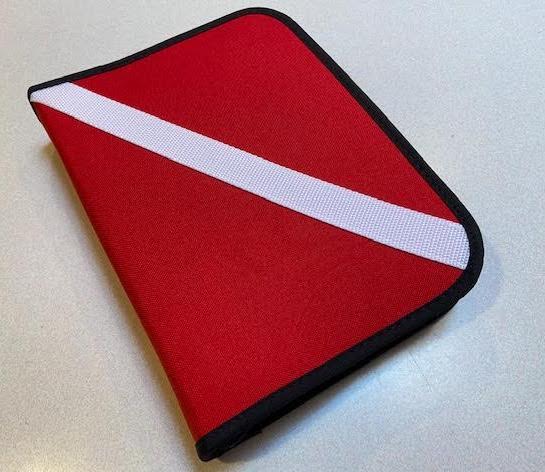
To backtrack a bit, note that scuba diving requires a lot of learning. Afterall, when underwater, one is on life support, so getting things right is imperative. With that in mind, divers keep a logbook where they reflect on their first 100 trips below the surface. What were the conditions: water temperature, visibility, dive profile, and depth? What creatures did they encounter? What did they do well? What do they need to improve upon, with special focus on things that might have put them in danger. As a former teacher, I think the log process a great idea and a fabulous learning tool that culminates in that centennial dive.
But as Ryan and I approached the 100-dive benchmark, we realized it also comes with a caveat. You see, at that point, custom dictates that divers descend…um…naked.
Long before we arrived at our little place in St. Croix in the US Virgin Islands we discussed diving au naturel. We always claimed we would perform the ritual, but the closer we got to the moment, the more we started to quibble.
“I don’t think I’m going to do it, Ryan said, as we stared at the sea.
Divers keep a log of their first 100 trips below the surface, in order to become better at the sport.
“You always said you would,” I answered wondering about his apprehension. I considered my own concern, which was mostly getting arrested for public indecency, but a scuba boat captain insisted that once underwater, rules about nakedness don’t apply. I’m not sure if that’s true, but I wanted to believe him. I stared at Ryan. “So, Mr. Tough Guy, what are you so afraid of?”
He let out a breath. “Dangling.”
I burst out laughing, but when I looked into it, it seems that, yes, men who dangle in the water, do sometimes lure passing fish into taking a nibble. It’s the same with fingers, if one isn’t careful.
We were on-island for ten days and had planned on doing our 99th and 100th dives, so the question of naked diving splayed before us. The plan was to walk in near the Frederiksted Pier, a place where people were always nearby, so my concern was the logistics of getting into my gear with a bathing suit and then having to remove it all and, upon exiting, putting it back on. It’s not a simple as it sounds. And, while there’d be no dangling, in my case, the thought of placidly swimming past a nice young family with my 67-year-old butt prominently displayed was a bit daunting.
A friend recommended that I just slip into a thong, which she felt, despite the flippers, would be easier to remove. I paused, considering whether she actually believed I might own such a garment. I was tempted to lead her to my top dresser drawer where my mundane undies resided in a heap, but I demurred.
As we considered the logistics of our 100th dive, weather intervened. A strange trough of cold wind rotated north of the island, churning up the biggest waves we’d ever seen in the Caribbean. Ten-to-12-foot swells pounded the shore on the cliff beneath us, sounding like a jet engine. The National Weather Service issued flooding and riptide warnings, explaining that even the most seasoned swimmers would be in danger if they headed into the water. We waited for the surf to calm, but the entire time we were there, the conditions persisted, as if the sea was warning us off.
In the end, we opted to save our dives for a later date. Still, while we’d been given a reprieve in regard to diving in our birthday suits, the issue of our 100th dive remains.
I’ll let you know how it goes.
Find Anne Montgomery’s novels wherever you buy books.
As a former reporter, I’ve always been capable of writing about anything. My assignments included just about every kind of sport, but I was also tasked with writing about how potato chips are made, the wonders of dairy farming, and archeological looting, to name a few. On top of that, I’ve written nine books.
Now, for the first time ever, I find myself stuck. The problem is…a love scene.
I’m not sure why I’m struggling. No one has ever labeled me a prude. (Stop giggling! I know who you are.) And still, every time I try to write the words, I get halfway through a sentence and stop.
Most of my novels have elements of romance, but that has never been the main theme. Scenes of that sort have always been mostly kiss and fade to black. But now I find myself needing a real love scene.
Because I was struggling, I contacted some of my author friends who specialize in romance and boy did they have a lot of suggestions.
“Refer to small things,” said author E. J. Lane. “(The) touch of their hands, he breathes in her hair, as he watches her drop her robe. She takes a quick breath in excitement at the expression on his face, as if he is seeing something precious.”
That’s good!
“I concentrate on feelings and emotions rather than continuation of the physical process,” said author Stella May. “All my love scenes were dictated by my lovebirds. The temperature of that ‘steam’ defined by the characters and their relationships. I just need to pay close attention, and find out if the whole scene will be more like a black-and-white sketch, or heavy on details (like an) oil painting, or a blurry surrealistic picture.”
I love author Tina Ruiz. She compared a love scene to a football game.
You can probably guess I’m leaning toward blurry.
Author Tina Ruiz compared a love scene to a football game, a lovely analogy for me, since I spent forty years officiating the game.
“Remember when you were on the grass during a game? There were tensions between players while spectators cheered or booed,” she said. “This moves the story forward. A hand touches a breast and she doesn’t pull away, he scores a point. She leans her body closer to his, he scores another point. His breathing changes and she now knows that this is going to go all the way.”
I now want to cue Chris Berman. I know some of you are now thinking about all those sports/sex analogies. Get your head back in the game!
Author Eris Perese made me feel a bit better when she admitted that she also struggles with love scenes. “I don’t exactly pull the blinds when I write love scenes, but I do have trouble. You have to give yourself permission to feel hot love again to write it.”
Hot love. Got it!
What’s a love scene without a little Barry White?
“One might assume that they have each been in love with someone in their earlier years. It might have been glorious, embarrassing, hurtful, or even degrading,” Perese said. “And so the love scene now might be more encompassing: their dreams, values, hurts, and willingness to try again. But because of that past experience, they may be tentative at first and then able to enjoy the freedom of being in love. Close the drapes, put on some music, and let the power of love flow.”
Why do I hear Barry White singing “Can’t Get Enough of Your Love, Babe?”
“My best advice is…action,” said author Vonnie Hughes. “Just don’t do a list of what they did, how they felt, what the room was like, etc. Some people like to write laundry lists, but I doubt the readers bother about all that. They want ACTION interpreted through emotion.”
Now, after all this advice, you’re probably wondering how my love scene turned out. I’m embarrassed to admit that I…um…skipped it. I wrote in big, red, capital letters Finish Later!
I’ll let you know how it goes.
The past and present collide when a tenacious reporter seeks information on an eleventh century magician…and uncovers more than she bargained for.
WOLF CATCHER
Anne Montgomery
Historical Fiction/Suspense
TouchPoint Press
February 2, 2022
In 1939, archeologists uncovered a tomb at the Northern Arizona site called Ridge Ruin. The man, bedecked in fine turquoise jewelry and intricate bead work, was surrounded by wooden swords with handles carved into animal hooves and human hands. The Hopi workers stepped back from the grave, knowing what the Moochiwimi sticks meant. This man, buried nine hundred years earlier, was a magician.
Former television journalist Kate Butler hangs on to her investigative reporting career by writing freelance magazine articles. Her research on The Magician shows he bore some European facial characteristics and physical qualities that made him different from the people who buried him. Her quest to discover The Magician’s origin carries her back to a time when the high desert world was shattered by the birth of a volcano and into the present-day dangers of archeological looting where black market sales of antiquities can lead to murder.
REVIEW COPIES OF WOLF CATCHER AVAILABLE UPON REQUEST
Far too many young people take to the roads without basic driving skills.
I was a high school teacher for 20 years, so I had a front-row seat as trends shifted in K12 education. I watched as general college prep curriculum gave way to science, technology, engineering and math—STEM—and Career Technical Education, with its focus on hands-on, certificate-based learning.
Now these are fine programs. However, because there are only so many hours in the school day and so much funding to go around, other courses, sadly, have been replaced. You’ve probably read about the disappearing classes in music, drama, art, and physical education. Sad, yes, but these losses don’t generally affect most of us day-to-day. There is, however, one course that’s disappeared that has a major impact on all of us: driving class!
I remember learning to drive at school, an actual class with a simulation program and a teacher who braved the roads with kids who sometimes didn’t know a gas pedal from a gas tank. I was told that if I didn’t pass drivers education, I wouldn’t graduate. But none of us argued because we all wanted to pass. A drivers license was a ticket to freedom.
Today, however, many young people eschew getting a drivers license. Some say they are happy to rely on ride sharing, others believe driving is too stressful. I’m guessing the latter has to do with being uncomfortable behind the wheel, because they’ve never learned to control a vehicle properly. Without a certified instructor, young people are forced to drive with Dad, or an older sibling, or some other random adult, people often not prepared to tutor someone in the delicate art of driving.
In the good old days, high school students were often required to pass drivers education.
Of course the outcome of learning driving skills freeform is that many people don’t know how to drive properly. You know who they are. Those who think a red light is just a suggestion. People who are seemingly unaware that there’s a device called a directional signal. Others who have no idea what those lines on the road mean. And the many who believe that they are perfectly capable of playing a videogame and eating a Big Mac while behind the wheel.
Here’s the thing. If you don’t want to learn to drive, that’s fine, as long as you can get where you want to be without coercing others to help out. And those who want to drive need to take a proper course, because when you get in the driver’s seat without the appropriate training, bad things can occur.
Note that some of the main causes of accidents are distracted driving, speeding, red-light running, and impaired driving, which means that approximately 80% of traffic accidents are said to be avoidable and preventable and are caused by human error. Approximately 46,000 people in the U.S. die annually in traffic accidents and over one-and-a-half million suffer injuries, some of whom wind up with life-long disabilities.
I know we can do better, even if we can’t get high schools to put drivers education back in the curriculum. It’s time we took driving seriously, because our lives literally depend on it.
Careful out there!
Find Anne Montgomery’s novels wherever you buy books.
See that sweet little girl rubbing Vicks on her dolly? Perhaps she’s a young serial killer, practicing for the future.
You know how you go about your life doing things you always thought were good for you and then you found out you were, um, poisoning yourself?
Well, that happened to me recently when I was struggling with a nasty head cold, the first I’ve had since I quit teaching high school three years ago. Before my retirement, I often faced children who had no qualms about coming to school sick, coughing and sneezing on me with wild abandon. Like most teachers, I suffered at least two or three colds every year.
I’d been blissfully free of that particular scourge, until some big bad bug recently tracked me down. And I’ll admit, I’d forgotten how horrid a simple head cold can be. I’m sure you’re aware of the coughing, sneezing, runny nose, headache, leave-me-the-hell-alone-I’m-dying-here symptoms that come with a cold.
As I’d been down that tissue-littered road before, I jumped into action. I drank hot peppermint and honey tea and copious quantities of water. I stayed in my jammies wrapped in blankets for five days. (Another great thing about being retired is that you can recline in your pajamas 24-hours-a-day without excuses and no one cares.)
And I knew something else that would make me feel better: Vick’s VapoRub. I bet every single one of you has that dark blue jar with the green top in your medicine cabinet right now. Come on, we were raised on the stuff. Moms would rub that slimy goo on us as if it was a magic cure-all. Some people even put it on their feet, though I’ve never tried that.
Somewhere along the line, maybe 20 years ago, I decided I liked the smell of Vicks. So, I got in the habit of putting a dab beneath my nose at bedtime. So soothing, yes?
Except that I just read you should never, ever, put Vicks under your nose. What?
I have often been a bit smug about my efforts to stay healthy. I never smoked and drink in moderation. (Okay, not always. But I do now.) While I’ll admit to dabbling lightly in illicit drugs in my youth—Come on! I grew up in the 70s and 80s!—that was a long time ago. I exercise regularly and get my rest. I eschew sugary drinks and eat healthy food. I take my medicine when the doctor looks at me, frowns, and tells me I must. I try to see the positive side of things. And yet, it seems, I’ve been poisoning myself all along.
With Vicks!
Vicks looks so harmless in that cute little blue jar.
In case you’re wondering, Vicks first appeared on the market back in 1905 and is owned by Procter & Gamble. It’s intended for “use on the chest, back and throat for cough suppression or on muscles and joints for minor aches and pains.” However, one of the main ingredients in Vicks is camphor, which is defined as “a neurotoxin with a chemical structure that allows easy penetration of the blood-brain barrier. Camphor also has irritant properties to skin and mucosa.”
Yikes!
Now, all this has me wondering about my mother, who, as I recall, always told us to put a bit of Vicks beneath our little red noses whenever we were sick. Not the maternal type, I’m now wondering if Mary Anne couldn’t wait for us to leave home for college and was trying to knock us off early, using Vicks as her weapon of choice.
I also read that Vicks should only be used up to three times daily when one has a cold. I began counting how often I’d recently placed some beneath my nose so I could breathe. When I ran out of fingers, I realized I might be doomed. I’m trying not to think about that blood-brain-barrier thing.
The irony is scientists don’t believe Vicks actually works. It just tricks your brain into thinking it works, so you feel better. But doesn’t that mean it works?
I’m so confused.
Now, I’m not saying Vicks is a bad product. It’s just that one should use it as recommended. Still, I did try to throw my Vicks away, but I just couldn’t. I promise I’ll try to break my addiction eventually. Perhaps there’s a 12-step Vicks program somewhere.
I’ll let you know how it goes.
Find Anne Montgomery’s novels wherever you buy books.
When the Powerball Jackpot edged up over a billion dollars recently, it was difficult not to get carried away with the possibilities, even with the astronomical odds against winning the big prize which were 1 to 292 million.
We almost never play the lottery, but when my sweetie pie came home holding a single ticket it was hard not to sit and dream.
“I’d buy a big house on St. Croix,” Ryan said.
“We already have a lovely condo there with a magnificent view of Christiansted Harbor,” I pointed out. “Do we really need something bigger?”
He stared at me for a moment. “Okay. What would you want?” he asked.
I thought for a while. What do I want? The question had me reflecting on a time in my life when money wasn’t an issue. I’d been engaged to a wealthy man back in the 80s. He didn’t want me to work and pretty much told me to buy whatever I wanted.
Sounds great, doesn’t it? But it turns out being able to purchase whatever you want doesn’t always make you happy. I remember one year when I took twelve vacations, some that were ridiculously expensive, like the time we chartered a magnificent sailboat and cruised the Caribbean with a captain, boatboy, and private chef, along with cases of our favorite libations.
I was in my mid-twenties at the time, and up until that point I’d wanted to be a sportscaster. I’d worked for years following that dream. But then my partner said there was no reason for me to work and that he preferred I not go into a career where I needed to access athletic locker rooms. I tried to convince myself that I’d be happy being Mrs. Him. And I’m embarrassed to admit that those no-limit credit cards made me forget my career goals, at least for a while.
But was I happy?
Years later, when I became a teacher, I tried to explain to my students that while money certainly makes life easier in some ways it doesn’t fix everything. “Here’s the problem,” I said. “If you can buy anything you want, whenever you want, eventually you run out of things to want.”
Mostly, they laughed and shook their heads like I was crazy.
“What’s really important is doing things you love. Making positive connections with people. Having work or hobbies that, most of the time, you look forward to doing.”
And still they weren’t convinced.
“I’d play video games all day!” one student said.
“I’d buy lots of pretty clothes and jewelry,” another said grinning.
If I won the lottery, I’d spend it on two things: a big beautiful chunk of aquamarine and First Class travel.Then I’d give most of it away.
“My friends and I will just hang out and do nothing!” came a voice from the back of the room.
“Ah, that might be a problem,” I said. “Your friends will probably have jobs and responsibilities and won’t have time to just hang out with you.”
I knew this from experience. What I recall from having all that money was that I was terribly lonely.
And I struggled with letting go of my dream of being a sportscaster. I remember a moment, late one evening, when I stared at a catalogue filled with pricy designer dresses. I ordered a black-lace, formal gown made by Norma Kamali. It was absurdly expensive. Afterward, I remember feeling nothing, because what I truly wanted was to be a sportscaster and no amount of money could buy that for me.
I still have that dress, and all these years later it reminds me of what I learned: Things don’t make us happy. Things lose their shine after a while. Making memories is the key. When I’m on my deathbed, the only thing I’ll have is stories. None of those purchases will be coming with me.
I stared at my sweetie pie.
“What do I want? World peace would be nice, but that’s not possible.” I smiled.
Eventually, I decided I would buy one thing: a big, beautiful piece of natural aquamarine. (I’m a rock collector.) Then, I would give a lot of that money away. After that, I’d travel the world.
And…I’d always spring for First Class.
The past and present collide when a tenacious reporter seeks information on an eleventh century magician…and uncovers more than she bargained for.
WOLF CATCHER
Anne Montgomery
Historical Fiction/Suspense
TouchPoint Press
February 2, 2022
In 1939, archeologists uncovered a tomb at the Northern Arizona site called Ridge Ruin. The man, bedecked in fine turquoise jewelry and intricate bead work, was surrounded by wooden swords with handles carved into animal hooves and human hands. The Hopi workers stepped back from the grave, knowing what the Moochiwimi sticks meant. This man, buried nine hundred years earlier, was a magician.
Former television journalist Kate Butler hangs on to her investigative reporting career by writing freelance magazine articles. Her research on The Magician shows he bore some European facial characteristics and physical qualities that made him different from the people who buried him. Her quest to discover The Magician’s origin carries her back to a time when the high desert world was shattered by the birth of a volcano and into the present-day dangers of archeological looting where black market sales of antiquities can lead to murder.
REVIEW COPIES OF WOLF CATCHER AVAILABLE UPON REQUEST
Former Giants skipper Dusty Baker finally got that World Series ring as the manger of the Houston Astros.
I’ll admit I didn’t especially care whether the Astros or the Phillies won the World Series. However, I was rooting for someone. I really hoped Houston skipper Dusty Baker finally got to go home with a ring as a manager. Though Baker earned the title as a player with the Dodgers in 1981, the prize had eluded him as a skipper for 24 years. But not anymore. With a game six, 4-2 victory over Philadelphia, Baker’s Astros became the 2022 World Series Champions.
Which brought to mind the time Dusty and I were involved in a little conspiracy.
Here’s what happened.
Back when I was still umpiring amateur baseball, I got a call asking if I’d like to work an exhibition game between the Los Angeles Dodgers and the Triple A Phoenix Firebirds. I was shocked and delighted. Though, if I’m being honest, the fact that I was assigned to work the plate was a little intimidating, as was the fact that the game would be broadcast live on TV.
It was May 12, 1994, and, much like today, women umpires were almost as rare as unicorns. Back then, I was often not accepted by my baseball brethren, and I sensed some animosity from the rest of the guys on the crew. No doubt, some of them would have relished working the plate. In fact, there was a last minute tussle when the powers that be tried to have me removed from my assignment. But, in the end, there I was at home plate taking a lineup card from Dusty.
Other umpires often criticized me saying my strike zone was too big.
Before I go on, I have to address one of the most confusing issues in baseball: the strike zone. It probably comes as no surprised that the definition of the strike zone has been awfully hard to pin down over the years. Major League Baseball explains it this way: “The official strike zone is the area over home plate from the midpoint between a batter’s shoulders and the top of the uniform pants–when the batter is in his stance and prepared to swing at a pitched ball—and a point just below the kneecap. In order to get a strike call, part of the ball must cross over part of home plate while in the aforementioned area.”
When I was a baby umpire, I took that definition seriously, which had other umpires laughing at me. According to them, my strike zone was too big. I started watching the way other umps called pitches, and realized that, despite the way the rule is written, the strike zone had been whittled down to a space the size of a postage stamp. As I’m rather literal in regard to rules, I struggled to comply.
After accepting the lineup cards that afternoon at Phoenix Municipal Stadium, Dusty lingered by the plate. When the other manager retreated into the dugout, he leaned in. “Did I mention we have a plane to catch?” He graced me with that big Dusty grin. I paused. Then I smiled too. I knew exactly what he wanted me to do.
When Dusty Baker handed me the lineup card that day, he made it clear what he wanted me to do.
After he left, I watched the pitcher warm up. I realized I’d take a lot of grief if I complied with Dusty’s wishes. I looked at the other umpires in the field, then considered all the fans in the seats and the players in the dugouts. Would they all think I was a terrible umpire for doing nothing but following the rules?
I can’t say I wasn’t concerned. But when that first pitch rocketed in and though it might have been considered a little high by some, I called, “Strike!” The batter turned and stared at me, but said nothing. A short time later, I called him out looking. I’d made my point. For the rest of the game, I felt as if I’d been freed, released to finally call the strike zone the way it’s written.
The game ended in just under two hours. Did I take some crap? Sure I did. But that’s generally part of the game.
When it was over and the players had all headed into the dugout, I noticed Dusty standing down the third base line. A beautiful Sonoran Desert sunset lit the sky behind him: peach, purple, pink. Then, Dusty looked at me, grinned, and nodded his thanks, before he too disappeared into the tunnel.
Today, I say congratulations to Dusty Baker on his World Series victory! And I say thank you for one of my favorite baseball memories.
The past and present collide when a tenacious reporter seeks information on an eleventh century magician…and uncovers more than she bargained for.
WOLF CATCHER
Anne Montgomery
Historical Fiction/Suspense
TouchPoint Press
February 2, 2022
In 1939, archeologists uncovered a tomb at the Northern Arizona site called Ridge Ruin. The man, bedecked in fine turquoise jewelry and intricate bead work, was surrounded by wooden swords with handles carved into animal hooves and human hands. The Hopi workers stepped back from the grave, knowing what the Moochiwimi sticks meant. This man, buried nine hundred years earlier, was a magician.
Former television journalist Kate Butler hangs on to her investigative reporting career by writing freelance magazine articles. Her research on The Magician shows he bore some European facial characteristics and physical qualities that made him different from the people who buried him. Her quest to discover The Magician’s origin carries her back to a time when the high desert world was shattered by the birth of a volcano and into the present-day dangers of archeological looting where black market sales of antiquities can lead to murder.
REVIEW COPIES OF WOLF CATCHER AVAILABLE UPON REQUEST
Recently, it’s come to my attention that something is missing in society. Perhaps you’ve noticed too. It seems that manners have disappeared. As a devotee of British mystery shows, I’m wondering if it would be prudent to put some detective inspectors on the trail, because if we’ve lost manners—which are basically human kindness—I’m deeply worried.
Just the other day, I sat in the whirlpool at the health club waiting for a swim lane. As is generally the case, I was relaxed and happy in all that hot, swirling water. Then a large man wearing a Speedo walked over with goggles in hand. When one of the swimmers signaled to me that he was done and I could have the lane, I smiled and walked out of the whirlpool. I nodded at the man who had just arrived, and, in jest, teased that I’d wrestle him for the lane. To my surprise he frowned. “What are the rules here?” he barked. “You weren’t standing by the pool waiting!”
“Um…I was trying to stay warm.” I gestured toward the spa.
He frowned again and continued to complain, which prompted me to bend at the waist and wave my hand toward the pool. “You take it then.” To my surprise, he did.
Anyone who’s driven a car lately, certainly knows there’s no civility on the road. A red light has become a mere suggestion to some. Other drivers cut you off, then flip you off for the smallest things. And when’s the last time someone held the door open for you? Be honest. That used to happen with regularity, but no more. And please don’t tell me holding a door is sexist. I hold doors for men and women, young and old. How is that offensive?
I don’t even want to mention basic table manners or the folks that think it’s just fine to play loud music until three in the morning. And let’s not forget those very important souls who talk incessantly on their phones in public, sharing their personal information loudly in restaurants and even public restrooms.
Understand, I’m not talking about using the right fork at dinner here, or a man chivalrously hurling his overcoat upon a puddle, so a woman won’t damage her dainty shoes. It’s just basic everyday human kindness I’m concerned about.
I suppose we could blame parents for the current lack of civility. Wasn’t it their job to make little Johnny learn “Please!” and “Thank you!”, and “Don’t you look nice today, Aunt Lou!” In fact, I read that home is the best place to acquire manners, since, as all teachers know, it takes a lot of practice to get something right.
Apparently, the decline of a more courteous world is not new. Fred Astaire, the charming dance-master of 20th-century American film, is quoted as saying, “The hardest job kids face today is learning good manners without seeing any.”
And now…a confession. I was once a reporter and an amateur sports official. It should come as no surprise that newsrooms and athletic fields are not always the most mannerly of places. So, when I became a teacher, I carried some of that behavior with me. A sweet colleague took me aside and suggested I try a little nice. “Just say good morning to everyone you see,” she suggested.
I thought the idea was silly, but still I gave it a try. And she was right. That small gesture seemed to make the day more positive. Though I’m now retired from the classroom, every day when I walk the dog, I smile and say good morning to anyone I meet. And though some people ignore me, others will beam a beatific smile my way and say good morning right back. It’s a little thing, I know. But a little nice goes a long way.
Maybe you’d like to give it a try.
The past and present collide when a tenacious reporter seeks information on an eleventh century magician…and uncovers more than she bargained for.
WOLF CATCHER
Anne Montgomery
Historical Fiction/Suspense
TouchPoint Press
February 2, 2022
In 1939, archeologists uncovered a tomb at the Northern Arizona site called Ridge Ruin. The man, bedecked in fine turquoise jewelry and intricate bead work, was surrounded by wooden swords with handles carved into animal hooves and human hands. The Hopi workers stepped back from the grave, knowing what the Moochiwimi sticks meant. This man, buried nine hundred years earlier, was a magician.
Former television journalist Kate Butler hangs on to her investigative reporting career by writing freelance magazine articles. Her research on The Magician shows he bore some European facial characteristics and physical qualities that made him different from the people who buried him. Her quest to discover The Magician’s origin carries her back to a time when the high desert world was shattered by the birth of a volcano and into the present-day dangers of archeological looting where black market sales of antiquities can lead to murder.
REVIEW COPIES OF WOLF CATCHER AVAILABLE UPON REQUEST










 Author Anne Montgomery