My life-long obsession with … rocks
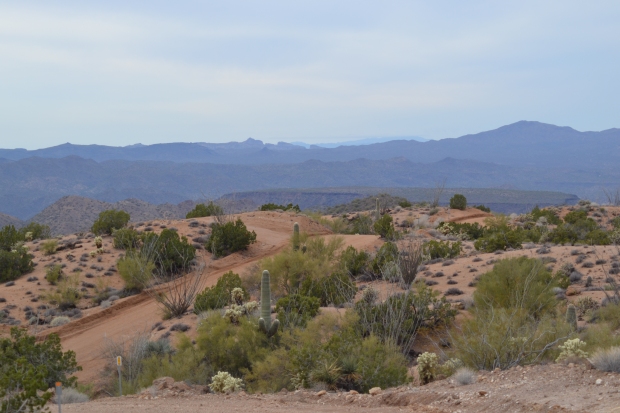
On a recent rocking excursion in Arizona’s Sonoran Desert a rushing stream blocked access to the mine we sought. But, no matter, the view was more than worth the trip.
People stare when you say you collect rocks. It’s almost as if they can’t quite wrap their heads around an adult’s desire to get nose-deep in dirt in pursuit of a stone.
I have been collecting rocks all my life. There are old photos of me standing near a large mound of soil, diligently putting pebbles in a cup when I was still toddling about in diapers. My mother, now 92, often recounts my arrival home from Girl Scout camp when I was maybe 10. My suitcase rested on the sidewalk in a line with others, having just been retrieved from the belly of a bus. When she lifted the bag, the handle broke off and, upon hitting the ground, the latch gave way, spilling not clothes but rocks onto the pavement. As I scrambled to gather up my prizes, she stood red faced, pretending, perhaps, that I wasn’t her child.
How did I end up with a life-long fascinating with rocks? Considering her sometimes discomfiture with my predilection – she periodically tossed my collection into the garden when cleaning – my mother might be the one to blame. After all, she was the one that trundled me into New Your City to the vaunted Museum of Natural History that houses one of the world’s premier collections of rocks and minerals, glittering jewels that dance in the light, all the more fascinating because someone, somewhere, dug them from the earth.
Because I spent a great deal of time moving about the country when I was pursuing my career as a TV reporter, the issue of my collection sometimes cropped up. When I went to work at ESPN, the moving company’s bill neatly itemized 500 pounds of rocks among my possessions. A skeptical HR employee wondered if there was some kind of mistake. Of course, there was not.
When people peruse my collection – I have about 400 specimens in my living room alone – they sometimes ask what my rocks are worth. Though some are quite beautiful, I do not consider their value in dollars, but rather in memories. While I don’t claim to recall the origin of every single stone in my collection, a great many remind me of certain places or people or periods in time. The pockmarked piece bearing green prenite and a splash of blue chalcedony that I dug out of a brook in New Jersey when I was 12. The smoky-gray geode that was a gift from my best friends for my 16th birthday. The apple-green chrysophrase I found in Australia, where I befriended an old miner who I think I may have known in another life and who later sent me an emerald nestled in grayish matrix. And the myriad specimens I gathered on my journeys with my dear friend Alice, who died a few years ago at 93.
Not all the memories my rocks evoke are idyllic. There are the two swirled reddish-white stones I picked up the day I suffered a horrendous bout of food poisoning ten miles from the nearest town. And the strange gray rock, etched with almost perfect rectangles, the origin of which I’ve never been able to ascertain, that I collected when I got lost in the desert with two dogs and subsequently ran out of water. I periodically reflect that my pets and I could be nothing but bleached bones today, had we not been rescued. It was the last time I went collecting alone. And though the situation was horrifying, those rocks remain nestled in with the rest, a reminder.
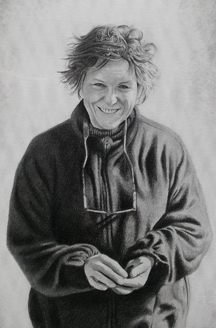
My beau claims this is his favorite picture of me. The pencil drawing, rendered by his friend, was taken from a photo of me moments after I discovered a pretty rock.
The curious thing about rock collecting is that one need not always find something to add to the collection. Those who love me and who have been willing to head into the wilderness in pursuit of rocky treasures know that, often, we don’t find the collecting site we’re looking for. And that’s OK. The thrill is in the hunt, and being away from civilization, beyond the reach of electronics and traffic and walls.
While on my rocking treks, I occasionally climb slippery tailings piles to sit and stare at hawks that swoop above wild desert land. Other times, I venture beneath stony outcroppings, 48-once sledge hammer in one hand, chisel in the other, in the hope of liberating colorful crystals without smashing them to bits. Sometimes, on hands and knees, I scour the ground and smell the earth. And, every so often, when I’m very lucky, I find a rock to take home. One that, when I’m in need of a wild place, will take me there. All I have to do is look.

Anne Montgomery’s novel, The Scent of Rain, tells the story of two Arizona teenagers whose fates become intertwined. Rose flees into the mountains to escape from her abusive polygamous community where her only future is marriage to a man older than her father. Adan, whose only wish is to be reunited with his mother, is on the run from the cruelties of the foster care system. Are there any adults they can trust? Can they even trust each other? The Scent of Rain is available at https://www.indiebound.org/book/9780996390149 and wherever books are sold.
On being a teacher

I’m a teacher. I can say this now, midway through my eighteenth year at the head of my inner-city, high school classroom. But I did not feel like a teacher for a long time and I’m still sometimes surprised to find myself here, considering the circuitous route that deposited me before of all of these expectant faces at the tender age of 45.
My job, I’m told, is to prepare my pupils for a future filled with “college, career, and life.” So students are often asked to ponder what their lives might look like 10, 15, 20 years down the road.
“What should you consider when choosing a career?” I ask.
Blank faces all around.
“You will spend more time working than doing anything else. If you don’t enjoy your job, life can be depressing.”
Crickets.
“Think of the adults you know,” I urge. “How many times have you heard them say they hate their jobs?”
A few heads turn. One child nods. Then another. A hand in the back goes up. “Ms. Montgomery, why’d you become a teacher?” The dark-haired boy grinned, incredulous that anyone would love my chosen profession. “Do you really enjoy this?”
All eyes are on me.
I was one of those “professional people” who thought life in the classroom would be easy. And since I’d devoted a few decades to officiating amateur-level sports, I had spent a great deal of time around kids. The teacher-thing should be cake, I’d incorrectly opined.
With a background as a TV and print reporter, I barged into my first classroom, bursting with the knowledge my video-journalism students needed to conquer the world. My deadlines and standards were strict and unyielding.
I know what your thinking. “Good for you, teach! Be tough on those kids. The world is a harsh place and they need to be ready!”
And, you’re right. However, I forgot to consider that I was dealing with children who were confronting all sorts of heartache forced on them by the poverty in which most of them live.
I was compelled to recognize my error early one morning when a shy boy was, once again, tardy for class. Frustrated at his constant losing battle with the clock, I took him outside where I berated him for his inability to get to my room on time.
“I’m sorry,” he said quietly, not meeting my eye. “It’s just that…”
“There are no excuses for being late,” I pontificated. “When I was in television, I couldn’t be one second late getting on the set. If the red camera light went on and I wasn’t in my seat, what do you think would have happened?
“I would have been fired!” I said, not giving him a chance to respond.
He nodded, still staring at the ground. “I’ll do better. But…”
“But what?” I crossed my arms.
“It’s just that . . . I’m never sure where I’ll be sleeping.”
“What?”
“I stayed on my uncle’s coach last night, and I didn’t realize how long it would take to get to school.” Brown eyes looked past me.
Though I’d seen them often enough driving to school, I’d never known a homeless person. The child before me was living on the streets and here I was chastising him for being a few minutes late.
It was then that I learned there was more to this teaching gig than imparting information. All these years later, I am still strict and, admittedly, demanding, but now I realize my job also entails getting to know my young charges, seeing the world through their eyes, and trying in every way possible to make the future look a whole lot prettier than the present.
“How do we pick a career?” I ask my students.
They consider the question.
“Find something you like to do,” I say. “Something you’re good at. And something someone will pay you to do. Then, you will enjoy life.”
I should know.
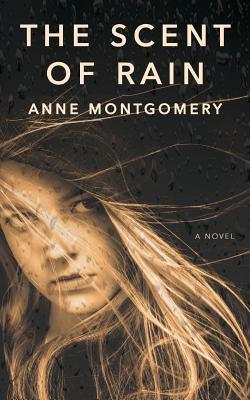
Anne Montgomery’s novel, The Scent of Rain, tells the story of two Arizona teenagers whose fates become intertwined. Rose flees into the mountains to escape from her abusive polygamous community where her only future is marriage to a man older than her father. Adan, whose only wish is to be reunited with his mother, is on the run from the cruelties of the foster care system. Are there any adults they can trust? Can they even trust each other? The Scent of Rain is available at https://www.indiebound.org/book/9780996390149 and wherever books are sold.
“Essential reading for both young adults and adults alike. There is literally nothing else I can say, except buy this book.”
My thanks to Childishly Passionate Reviews, a book blog dedicated to the best young adult and middle grade literature, for their 5-Star Review of my novel The Scent of Rain.
https://childishlypassionate.wordpress.com/2017/11/21/review-the-scent-of-rain-by-anne-montgomery/
Anne Montgomery’s latest novel, The Scent of Rain, tells the story of two Arizona teenagers whose fates become intertwined. Rose flees into the mountains to escape from her abusive polygamous community where her only future is marriage to a man older than her father. Adan, whose only wish is to be reunited with his mother, is on the run from the cruelties of the foster care system. Are there any adults they can trust? Can they even trust each other? The Scent of Rain is available at https://www.indiebound.org/book/9780996390149 and wherever books are sold.
Grateful for the value of words

My middle boy, Ziggy, a budding film director, helped me learn how important simple words can be.
I grew up in a family where terms of endearment were never uttered. I’m not saying my parents didn’t care about me and my siblings, it’s just that the words “I love you” were not spoken. In my forties, when I became a teacher, I learned that children often become what they see growing up, so the fact that I struggled with these three small words seemed to make sense.
Those of us unable to verbally share our feelings of affection often struggle, especially when we have relationships with people who come from families where “I love you” gets tossed around like a Frisbee at a weekend barbecue. Then there are the young people, teens and twenty-somethings, who shout out “I love yoooo!” to friends after every momentous occasion, like parting after that daily trip to Starbucks, waving goodbye at the end of the school day, and every time they’re poised to hang up the phone.
It might sound silly to those not afflicted, but hearing such a serious phrase flung about so wantonly and seemingly without much forethought always made me cringe.
My beau of over two decades is one of those people that comes from a family where “I love you” rolls quite easily off the tongue. Early in our relationship, I would sense his disappointment when my response to these words would be a bit muddled, a hurried comment mumbled under my breath. Over the years, he managed to wear my reluctance down a bit. We came up with the acronym LOML – Love of My Life – which is how we end our conversations today.
Still, I did not truly understand the power of those three small words until about a year-and-half ago. I was having dinner with my middle son at a restaurant in Tucson. I have written before about the fact that I am a foster mom, and, though my three boys are now in their 20s, Mom I remain. I sensed he wanted to tell me something. But, as I sometimes – OK often – do, I was dominating the conversation. He was heading into his junior year at the University of Arizona. I was excited at the thought of him studying a semester in another country. But my usually animated boy was strangely quiet and withdrawn.
“There are ways to be successful without getting a college degree,” he said.
I paused, fork-full of dinner half way to my mouth. “What do you mean?” He wouldn’t meet my eye.
“A company offered me a job.” He stared at his plate.
“You want to drop out?” The teacher in me winced. I tried to compose myself. “Don’t you want to study abroad? I think you’d really like it.”
An uncomfortable silence hung over us. I reached for my wine glass, struggling for something to say. Then, he looked at me, despair etched on his face, an expression that broke my heart. Without a moment’s hesitation I said, “I love you no matter what you decide to do.”
When I saw the tears slip down his cheeks, I finally understood the power of those three little words I had so long been avoiding.
Ziggy is now following his dream of one day becoming a film director. I, meanwhile, am becoming more adept at using the words I used to find so uncomfortable.
“Careful out there,” I say to my students every day when the bell rings. “Wear your seat belts.” And, every once in a while, it just sneaks out. “I love you.”
Anne Montgomery’s latest novel, The Scent of Rain, tells the story of two Arizona teenagers whose fates become intertwined. Rose flees into the mountains to escape from her abusive polygamous community where her only future is marriage to a man older than her father. Adan, whose only wish is to be reunited with his mother, is on the run from the cruelties of the foster care system. Are there any adults they can trust? Can they even trust each other? The Scent of Rain is available at https://www.indiebound.org/book/9780996390149 and wherever books are sold.
Why now?

“Why now?” my beau of two decades wanted to know about the current spate of sexual abuse allegations. “This stuff happened twenty or thirty years ago. There’s a statute of limitations.”
“And it’s ‘he said, she said,’” my twenty-year-old son chimed in.
I walked out of the room, angry, at first. Why now?, indeed.
Bill Cosby, Harvey Weinstein, Kevin Spacey, Roy Moore, Louis C.K., Roger Ailes, Bill O’Reilly. The list of people these and other men have been accused of sexually harassing and assaulting has avalanched onto our collective consciousness. The first 24 hours of the Facebook “Me Too” hashtag – where women were asked to share their stories about sexual abuse and harassment – saw roughly 12 million posts. The topic trended in 85 countries. Women and, yes, some men, crying out “We’re not going to take it anymore!”
I was a victim of sexual assault when I was a student in college. According to statistics gathered by the Rape, Abuse & Incest National Network, over 23% of female college students experience rape or sexual assault through physical force, violence, or incapacitation. All women between the ages of 18 and 24 are the most likely to be targeted by sexual predators. While it’s true that males are also sexual assault victims, the numbers clearly indicate that the vast majority – 90% – of adult rape victims are female.
I am a high school journalism teacher, so my students and I examine important and often difficult-to-discuss issues on a daily basis. Nothing is out of bounds. My students are encouraged to ask me anything. My promise is that I will always tell them the truth. Periodically, I’m asked whether there is anything in my life I regret. And the answer is always the same.
I look back on that night in 1975, when I went on a dinner date with a sweet-faced farm boy. He was on crutches, convalescing from a football injury. If memory serves, he was about six-foot-three and probably around 250 pounds, still I never for a moment had a bad feeling, nor the least concern when, after dinner, he invited me up to his dorm room. The stare from his roommate still registers. Another member of the football team, who would go on to play in the NFL, simply picked up his typewriter, walked out, and closed the door.
My date, in what seemed like an instant, stripped the clothes from my body. I fought, which made him smile. “You know I can do anything I want to you,” he said. “And there’s nothing you can do about it.”
In that instant, I came to understand I couldn’t fight my way out of a situation. I’d always considered myself strong and athletic, so I resisted. But, as he pinned me to the bed, I realized he enjoyed the battle. The more I struggled, the more aroused he became.
Strangely, at that moment, I recalled something my father said before sending me off to college. He’d given me just one piece of advice. He looked me in the eye and said, “Nothing is worth your life.” When I didn’t respond, he repeated the message. “Nothing is worth your life.”
I stopped fighting my attacker, believing my father’s words. To my astonishment, he backed off and yelled, “What’s the matter with you?” It was then that I understood he wanted me to fight, to scream, to cry, to plead. Instead, I laid on the bed, unmoving, my eyes fixed on the ceiling. Nothing was worth my life.
He pushed himself off me, grabbed my clothes, and tossed them on the bed. I dressed and ran.
The next morning, a tiny girl approached me in my dorm hallway. “Can I ask you a personal question?” she said.
She wanted to know if I’d gone out with the football player. I said I had.
“Did he strip you?”
“Yes.”
“He stripped me, too.” She turned and walked away. I don’t know if he raped her. I didn’t ask.
Later that day, a dear friend who played on the football team marched angrily toward me at lunch and pulled me aside. “What were you thinking? Everyone knows about him!”
Clearly, he was wrong. I didn’t know there was a rapist living in the quad. Neither did the girl who approached me. But, apparently, others were aware. How many of them were victims? And if his behavior was common knowledge, why was he still living on a college campus?
So, what do I regret? Like the vast majority of victims, I said nothing. According to the National Research Council, 80% of sexual assaults go unreported to law enforcement. I rationalized that he was a football player and I was no one important. I’d willingly walked into his room after having a few beers. All I wanted was to forget it ever happened, so I filed the attack away and never made a formal complaint.
Sometimes, I wonder how many women he’s brutalized over the years? Could I have prevented some of those assaults, had I found the courage to speak up? My logical mind tells me nothing would have been done, had I gone to the police. Sadly, forty years later, this attitude still prevails and we now face an epidemic, a plague with life-long effects.
So, why now? Rape and sexual-assault victims world wide now see they are part of a movement, one that removes the stigma and encourages individuals to speak up and shout out “Me too!” There is relief in making that public statement, a catharsis that lifts the mantle of victimhood, replacing that sad and lonely label with survivor.

You can help combat sexual assault and rape. RAINN can tell you how: “You can make a difference: There are as many ways to get involved as there are willing volunteers. Whether you have five minutes, five days, or five months, there’s a path for you to make a difference in the lives of survivors of sexual violence. No matter how you choose to get involved, know that every bit counts.” Contact RAINN at https://www.rainn.org/get-involved. To reach the National Sexual Assault Hotline call 800-656-HOPE or 800-656-4637.
Anne Montgomery’s novel, The Scent of Rain, tells the story of two Arizona teenagers whose fates become intertwined. Rose flees into the mountains to escape from her abusive polygamous community where her only future is marriage to a man older than her father. Adan, whose only wish is to be reunited with his mother, is on the run from the cruelties of the foster care system. Are there any adults they can trust? Can they even trust each other? The Scent of Rain is available at https://www.indiebound.org/book/9780996390149 and wherever books are sold.
“Situations go from bad to worse, but among all the pain and sadness, a love story emerges…”
Rosie’s Book Review Team
Rosie’s #Book Review Team #RBRT The Scent of Rain by Anne Montgomery @amontgomery8
Anne Montgomery’s novel, The Scent of Rain, tells the story of two Arizona teenagers whose fates become intertwined. Rose flees into the mountains to escape from her abusive polygamous community where her only future is marriage to a man older than her father. Adan, whose only wish is to be reunited with his mother, is on the run from the cruelties of the foster care system. Are there any adults they can trust? Can they even trust each other? The Scent of Rain is available at https://www.indiebound.org/book/9780996390149 and wherever books are sold.
The walls of the FLDS are crumbling
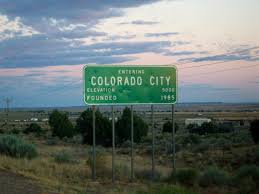
The people of Short Creek – the towns of Colorado City, Arizona and Hildale, Utah – are finally breaking free from the FLDS cult.
All the votes are not yet counted, but it appears Donia Jessop might be elected mayor of tiny Hilldale, Utah. Hilldale and Arizona’s Colorado City, collectively known as Short Creek, are the home of the Fundamentalist Church of Jesus Christ of Latter-Day Saints, a warped, polygamous off-shoot of the Mormon religion.
The fact that Jessop is even running for mayor is astonishing. Five years ago, she was one of the myriad women in the population of nearly 8,000 that was straight-jacketed into the neck-to-ankle prairie dress prescribed by the “prophet” Warren Jeffs, who is now in a Texas prison doing life plus twenty years for sexually abusing underage girls.
Jessop left the church and is hoping to lead the community to a better future. Those of us who grieve for the people who suffer at the hands of the FLDS can only be delighted at the prospect of this rural community moving forward.
For more on the story see:
http://abcnews.go.com/US/wireStory/power-polygamous-group-wanes-tiny-town-red-rocks-50903932
Anne Montgomery’s novel, The Scent of Rain, tells the story of two Arizona teenagers whose fates become intertwined. Rose flees into the mountains to escape from her abusive polygamous community where her only future is marriage to a man older than her father. Adan, whose only wish is to be reunited with his mother, is on the run from the cruelties of the foster care system. Are there any adults they can trust? Can they even trust each other? The Scent of Rain is available at https://www.indiebound.org/book/9780996390149 and wherever books are sold.
A chat with (e)Book Nerd about The Scent of Rain
Ashley at (e)Book Nerd – Reviews, chats and news about the latest and greatest titles – and I sat down and talked about my novel The Scent of Rain.
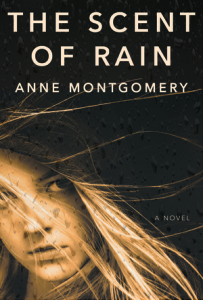
Anne Montgomery’s novel, The Scent of Rain, tells the story of two Arizona teenagers whose fates become intertwined. Rose flees into the mountains to escape from her abusive polygamous community where her only future is marriage to a man older than her father. Adan, whose only wish is to be reunited with his mother, is on the run from the cruelties of the foster care system. Are there any adults they can trust? Can they even trust each other? The Scent of Rain is available at https://www.indiebound.org/book/9780996390149 and wherever books are sold.
“I can’t say enough good things about this book.”
My thanks to (e)Book Nerd for a 5-star review of The Scent of Rain.
https://ebooknerdreviews.wordpress.com/?s=the+scent+of+rain
Anne Montgomery’s novel, The Scent of Rain, tells the story of two Arizona teenagers whose fates become intertwined. Rose flees into the mountains to escape from her abusive polygamous community where her only future is marriage to a man older than her father. Adan, whose only wish is to be reunited with his mother, is on the run from the cruelties of the foster care system. Are there any adults they can trust? Can they even trust each other? The Scent of Rain is available at https://www.indiebound.org/book/9780996390149 and wherever books are sold.
 Author Anne Montgomery