We authors love when reviewers take the time to read and comment on our books. Ashley Hasty, of the Hasty Book List, recently packed up The Scent of Rain and headed off to Cabo San Lucas for some reading in the sun.
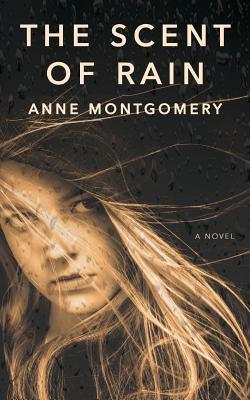
Anne Montgomery’s novel, The Scent of Rain, tells the story of two Arizona teenagers whose fates become intertwined. Rose flees into the mountains to escape from her abusive polygamous community where her only future is marriage to a man older than her father. Adan, whose only wish is to be reunited with his mother, is on the run from the cruelties of the foster care system. Are there any adults they can trust? Can they even trust each other? The Scent of Rain is available at https://www.indiebound.org/book/9780996390149 and wherever books are sold.
What do you want to be when you grow up? I’ve addressed this issue before. What I never realized when I was young was that I would want to be so many things.
I also never considered that, over the course of my life, the goals I yearned for would keep changing. Proof? If you’d have told me I would spend two decades in a high school classroom, I would have scoffed. Yet, here I am, two years away from retiring after 20 years.
And what do I want now? After being a sports broadcaster and a print reporter and a sports official in football, baseball, ice hockey, soccer, and basketball, as well as a teacher, it seems I should sit back and be content. But, I’m just not wired that way. (I’m working on that relaxing-thing, but it continues to be a struggle.)
My aspiration now is to make a living as an author, a career goal almost as daunting as that sportscaster idea back in the 70s. Thanks to the advent of the personal computer, somewhere between 600,000 to 1,000,000 books are published in the US every year. Finding any of my sweet babies – yes, we authors tend to think of our books as our children – in that pile is like locating that proverbial needle in a haystack.
And here’s where you come in. Amazon – love or loathe the great behemoth – is the place authors careers are made. It is the word-of-mouth of yesteryear. So, I’m asking for a favor. It is reviews that sell products on line. And reviews are especially important when selling books. Leaving one is easy. Go to the page for The Scent of Rain: https://www.amazon.com/Scent-Rain-Anne-Montgomery/dp/0996390146. Click on customer reviews. The cover art will appear next to five stars. Click on the number of stars you think the book is deserving of and you will get an option to make comments.
And this is really important! You must be totally honest. If you don’t like the book, that’s perfectly OK! How can an author improve without honest criticism? We cannot.
So, if you’ve read The Scent of Rain and feel called to comment, I thank you. I can’t tell you how much every single review matters.
Now, I’m putting my author cap back on. It’s time to start a new story.
Anne Montgomery’s novel, The Scent of Rain, tells the story of two Arizona teenagers whose fates become intertwined. Rose flees into the mountains to escape from her abusive polygamous community where her only future is marriage to a man older than her father. Adan, whose only wish is to be reunited with his mother, is on the run from the cruelties of the foster care system. Are there any adults they can trust? Can they even trust each other? The Scent of Rain is available at https://www.indiebound.org/book/9780996390149 and wherever books are sold.
Why are ads for little blue-pill substitutes gouging out large sections of my sports page?
I read the sports page every day. I’m old school, so I’m talking the ink-and-paper version. I believe there are a lot of women out there like me, those who find pleasure in perusing the box scores and checking up on favorite players.
That’s why the plethora of ads promoting those little blue-pill substitutes for men are starting to bug me. Back when I first took up the sports page, I’m guessing women interested in that section of the paper were few and far between. But with the advent of Title IX – that lovely law that proclaimed girls should have the same extra-curricular rights as boys and which subsequently led to an avalanche of women having their college educations paid for via sports scholarships – more women than ever before find the sports news interesting.
It’s hard to miss the giant headlines we face while reading about our local teams: “New Pill Triggers All-Day Arousal in Men,” screams one headline, which makes me wonder if that particular condition might prove to be painful, because I’ve heard that other declaration so often: “Seek immediate medical help if you experience an erection lasting more than four hours.”
The ad does it’s best to look like actual news. And it takes up half an entire page, so somebody is paying big bucks to get the message out. For reasons I can’t quite explain, I felt the need to pop on my reporter’s cap and take a look.
First, I noted the “article” was written by Ryan Steele of the Mens Health News Syndicate. A few clicks of the mouse and … how strange … neither Mr. Steele nor his syndicate can be found on the Internet. Surely, there must be some mistake. Then, I wondered … Man of Steel? An in-your-face product endorsement?
I did discover that the company behind the advertised supplement is called Innovus Pharma Laboratories and they do exist, or so says a glossy website, upon which I found their board of directors, who seem like a fine group of folks, though their collective bios are rather cumbersome to read – perhaps by design – and statements like “serves on the Board of Directors at several privately held pharmaceutical companies,” gets my Spidey senses tingling.
The article talks about a “key sex molecule” defined as both “critical” and a “miracle”, but leaves one guessing as to what it actually is. Then there’s this: “And since it’s natural there are no unwanted side effects.” Note that anthrax, lead, asbestos, and arsenic are all natural substances.
Readers are encouraged to “take advantage of this limited offer” and call the “special TOLL-FREE hotline”, because “If you miss out on our current product inventory you will have to wait until more becomes available.” Whew!
Here’s the thing. The product in question, called Vesele, is basically two amino acids you can buy over the counter. If you want to give them a try, go ahead and fork over about thirty bucks at your local Walgreens. Or you can shell out over double that to the people sponsoring the ad. Even better, contact your local health care professional, instead.
My question now is why is this stuff advertised in the sports pages? A similarly-long article, touting an arthritis drug that claims it will give me “immediate relief that lasts for hours” and which is also written by an unknown reporter for a non-existent media source, and, surprise, marketed by Innovus Pharma Laboratories, is in the news section. When I consider the myriad sports-related misadventures I’ve stumbled through over the years, requiring the vast majority of my parts to undergo X-rays, perhaps it should be the other way around. Unless, of course, one considers sex a sport. Um … I think I’ll save that for another day.
In the meantime, you know what I’d like to see more of in the sports pages? Sports.
Anne Montgomery’s novel, The Scent of Rain, tells the story of two Arizona teenagers whose fates become intertwined. Rose flees into the mountains to escape from her abusive polygamous community where her only future is marriage to a man older than her father. Adan, whose only wish is to be reunited with his mother, is on the run from the cruelties of the foster care system. Are there any adults they can trust? Can they even trust each other? The Scent of Rain is available at https://www.indiebound.org/book/9780996390149 and wherever books are sold.
“The characters in ‘The Scent of Rain’ added to an already amazing storyline. The various points of view give us a wide perspective of what is going on the FDLS community.” The Book Return
Anne Montgomery’s novel, The Scent of Rain, tells the story of two Arizona teenagers whose fates become intertwined. Rose flees into the mountains to escape from her abusive polygamous community where her only future is marriage to a man older than her father. Adan, whose only wish is to be reunited with his mother, is on the run from the cruelties of the foster care system. Are there any adults they can trust? Can they even trust each other? The Scent of Rain is available at https://www.indiebound.org/book/9780996390149 and wherever books are sold.
I was very fortunate to have attended Miami University in Oxford, Ohio as an undergrad. My professors at Miami, one of the oldest public universities in the country, chartered in 1809, taught me to question the world around me and gave me the opportunity to explore new cultures when I attended the school’s branch campus in Luxembourg. So, I feel honored that I was asked about my thoughts on teaching in the new edition of the school’s magazine, The Miamian.
Anne Montgomery’s novel, The Scent of Rain, tells the story of two Arizona teenagers whose fates become intertwined. Rose flees into the mountains to escape from her abusive polygamous community where her only future is marriage to a man older than her father. Adan, whose only wish is to be reunited with his mother, is on the run from the cruelties of the foster care system. Are there any adults they can trust? Can they even trust each other? The Scent of Rain is available at https://www.indiebound.org/book/9780996390149 and wherever books are sold.
Recently, I wrote an article about my road to becoming a sportscaster, which began when I was in high school in 1972. I got my first job in front of the camera in 1983 at WRBL-TV in Columbus, Georgia, which and led to positions at WROC‐TV in Rochester, New York, KTSP‐TV in Phoenix, Arizona, and ESPN in Bristol, Connecticut where I anchored SportsCenter. I finished my on‐camera broadcasting career with a two‐year stint as the studio host for the NBA’s Phoenix Suns.
Flash forward to 2018. Women sportscasters are certainly more prevalent than in those nascent days. But while the number of women working in TV sports has risen exponentially, the acceptance rate has, perhaps, remained little changed.
When the NFL gave Beth Mowins the opportunity to call a game on Monday Night Football this season, there was certainly rejoicing that another glass ceiling had shattered. That is, until the negative comments commenced.
Two steps forward, one step back.
Anne Montgomery’s novel, The Scent of Rain, tells the story of two Arizona teenagers whose fates become intertwined. Rose flees into the mountains to escape from her abusive polygamous community where her only future is marriage to a man older than her father. Adan, whose only wish is to be reunited with his mother, is on the run from the cruelties of the foster care system. Are there any adults they can trust? Can they even trust each other? The Scent of Rain is available at https://www.indiebound.org/book/9780996390149 and wherever books are sold.
I was a sportscaster back when women in the field were extremely rare. The long road that took me there began in high school.
“This is your local sports announcer!” says the last line of the caption over my picture in my high school year book.
It was 1973. A time when there were virtually no women sportscasters, save those like Peggy Fleming, who appeared once every four years to comment on Olympic figure skating, and a few women picked not for their journalistic skills or sports knowledge, but primarily for their beauty.
Early in my senior year, my mother faced me across the kitchen table. “What do you want to be?” She peered through cat-eye glasses. “It’s time to find a college.”
I had already longed to be a competitive ice skater – too big and too awkward – and a Broadway actress – mediocre singing voice and limited dancing skills.
“Well?”
I knew I liked an audience, but beyond that, I hadn’t a clue.
The question of my future continued to loom. I was not a highly adept student, having met brick walls in the forms of algebra, chemistry, and French. My class ranking showed I was absolutely “average”, and had it not been for music and drama and speech classes, I, no doubt, would have found myself buried much deeper on the academic depth chart.
In 1973, the question of a woman being a sportscaster was preposterous. Still, as my yearbook caption attests, that was my goal.
Even back in my tender teen years, I realized one should ascertain what they’re interested in and what they’re good at when pondering a career. I adored ice hockey, enjoyed football, and though I didn’t quite understand the curious rules of baseball until I mastered the art of keeping a box score, I would later learn to love the iconic American sport. I held a position on my school’s broadcast crew, a rather rag-tag group of students who did the morning announcements each day. My voice was a natural Alto II and, after years of performing in play productions, my speech was clear, my pronunciation crisp. I also served as statistician on the varsity hockey team. As a member of the squad – don’t scoff, I actually received a varsity letter for my efforts – I often found myself in possession of announcements sent in by the coach.
One morning, I sorted through the requests, and, for reasons I can’t quite explain, I selected all of the sports announcements. I began reading out loud, practicing for the broadcast.
“Girls aren’t sportscasters,” one crew member informed me.
“Why not?”
“They just aren’t.” He took the announcements from me.
The next day, I grabbed the sports notices again, and this time two of the boys insisted I had no right to read them. At that moment, the drama teacher, who was the head of the broadcast crew, came into the booth to see what we were arguing about.
“Of course she can read the sports,” he said, rolling his eyes before he walked out the door.
Later, not happy with my new title of in-house sportscaster, the boys on the crew decided I needed opening music and a nickname. So, every morning, before I went on, the theme from Mission Impossible blared through the classrooms and hallways of my school.
“Dant-dant-dan-dah dant-dant-dan-dah … And now, Big Anne with the sports!”
Though I realized the point was to embarrass me, I enjoyed the music and even the sobriquet. Soon, people began to seek me out, athletes and coaches asking if I would read their announcements.
When my mother again cornered me, asking about my future plans, I smiled. “I want to be a sportscaster!”
I would work as a sportscaster at five TV stations, including a stint at ESPN where I anchores SportsCenter.
She stared. “I’m trying to have a serious conversation with you.”
“I want to be a sportscaster.”
She walked away.
In retrospect, I can’t say the whole sportscaster-trek was easy. All along the way, people shook their heads and explained that a woman could not be a sportscaster. Though I was a sports reporter in college, the football, baseball and basketball coaches refused to be interviewed by me and my professors cautioned that my goal was unrealistic. I became a certified amateur sports official in football, baseball, ice hockey, soccer, and basketball in the hope that someone somewhere would believe I understood sports well enough to sit behind a microphone. I diligently read the sports pages everyday and Sports Illustrated weekly cover-to-cover. Still, I was 28 before I got my first TV job, which led to four more stations where I reported and anchored sports at both the local and national levels, including a stint at ESPN where I anchored SportsCenter.
I used to wonder if I would have aspired to sportscasting had I’d known I would “age out”, an unfortunate consequence of being a woman who plies her trade in front of a camera. The answer is, yes! Of course! I wouldn’t have missed those fascinating years for anything. And I’m sometimes reminded when I face my high school students that, had I not been a reporter, I would not be teaching them journalism today.
In hindsight, I would tell my teenage self that planning for the future is a tricky task, one filled with myriad opportunities and diverse, unexpected paths. Be open to new ideas. Don’t be afraid when life surprises you. The thrill is in the challenge.
Anne Montgomery’s novel, The Scent of Rain, tells the story of two Arizona teenagers whose fates become intertwined. Rose flees into the mountains to escape from her abusive polygamous community where her only future is marriage to a man older than her father. Adan, whose only wish is to be reunited with his mother, is on the run from the cruelties of the foster care system. Are there any adults they can trust? Can they even trust each other? The Scent of Rain is available at https://www.indiebound.org/book/9780996390149 and wherever books are sold.
Anne Montgomery’s novel, The Scent of Rain, tells the story of two Arizona teenagers whose fates become intertwined. Rose flees into the mountains to escape from her abusive polygamous community where her only future is marriage to a man older than her father. Adan, whose only wish is to be reunited with his mother, is on the run from the cruelties of the foster care system. Are there any adults they can trust? Can they even trust each other? The Scent of Rain is available at https://www.indiebound.org/book/9780996390149 and wherever books are sold.
A preoccupation with beauty, fueled by 24/7 internet postings, has many young women obsessed with their looks.
I’ve been working out in some form or another all my life. Though I used to be more of a gym rat, today I primarily swim laps, a habit that leaves me with goggle-eye indentations, smudged make-up, and wet hair spiking in all directions. Often, due to the insanely short life span of some of my Speedos, my suits tend to lack the elasticity required to hold my 68-year-old physique in place. I know what you’re thinking. Not a pretty picture.
But for the brief, big hair, sparkly spandex, workout era of the 80s, the health club has mostly been a place where pretty wasn’t important. Perhaps that’s why she had me so nonplussed.
The attractive young woman, probably in her early twenties, stared into her phone. Tight black shorts and a crop top encased her frame. She pursed her lips and lifted her chin. Then, looking over her shoulder at the mirror behind her, she snapped a series of selfies, shots aimed to highlight her, um, posterior.
I tried not to stare, but as I dried off after my shower and dressed, I couldn’t help but sneak a peek, now and then. The camera clicked away. She turned her hips a fraction of an inch and the snapping resumed.
I grew up in the world of Barbie, a perfectly proportioned piece of plastic that, no doubt, led to a generation of women with body-image issues. And while there were also magazine and TV beauties to contend with, our experience was relatively benign compared to the image assault young women must deal with today: a 24-hour stream of internet images highlighting impossibly beautiful, often photoshopped, people. Sadly, approximately 91% of women in the U.S. are unhappy with their bodies.
Barbie’s perfect proportions created a generation of women with body-image issues.
I’m a high school teacher and I worry about the pressure that’s being placed on our young people. Those unhappy with their looks can suffer from low self-esteem, which can lead to eating disorders, early sexual activity, substance use, and suicidal thoughts.
I was approached by one of my journalism students recently. She was writing a story about body-image issues. “Ms. Montgomery, when do women finally become happy with their bodies?”
“Never,” I said, without thinking. Her face fell. “I mean, when you get older, other things become more important.” I scrambled to put a positive spin on my answer, but could see the damage was already done.
A week after I first saw her, the girl at the health club reappeared. This time, she faced a different mirror and, after lifting the edge of her shirt to reveal solid abs, she began taking pictures again. After myriad photos, she slumped onto a bench and scrolled through the images, all the while frowning into her phone.
As I gathered my things to leave, she walked in front of another large mirror and paused, staring at the floor, wanting, perhaps, to just pass it by. But something compelled her to stop and lean in close, turning her face one way then the other, as she batted long false eyelashes and tossed her hair.
Pretty can certainly be nice. In fact, studies have shown that, fair or not, attractive people are more likely to get hired, receive promotions, and have larger paychecks than those who might be lacking in the pulchritude department. However, as those pretty folks will eventually learn, physical beauty does not last.
“Ms. Montgomery, when do women finally become happy with their bodies?”
“It all depends,” I should have said to my student reporter. “Perhaps, when we focus on all the fabulous opportunities life throws at us, face our aspirations head on, and surround ourselves with people who love us and make us laugh, maybe then we stop worrying about things that are really not important.”
As I watched the girl wrench away from the mirror, I hoped she might have goals to dream about, hobbies she enjoyed, and people in her life who would love and cherish her, even on those bad-hair days. I wanted to tell her, but I did not. I think there are some things we just need to learn on our own.
Anne Montgomery’s novels can be found wherever books are sold.
Anne Montgomery’s novel, The Scent of Rain, tells the story of two Arizona teenagers whose fates become intertwined. Rose flees into the mountains to escape from her abusive polygamous community where her only future is marriage to a man older than her father. Adan, whose only wish is to be reunited with his mother, is on the run from the cruelties of the foster care system. Are there any adults they can trust? Can they even trust each other? The Scent of Rain is available at https://www.indiebound.org/book/9780996390149 and wherever books are sold.





 Author Anne Montgomery